Omani Architecture

  1. ArchDaily
  2. Countries
  3. Oman

Latest projects in Oman

Latest news in Oman

Foster + Partners Reveals Agricultural City Master Plan in Southern Oman

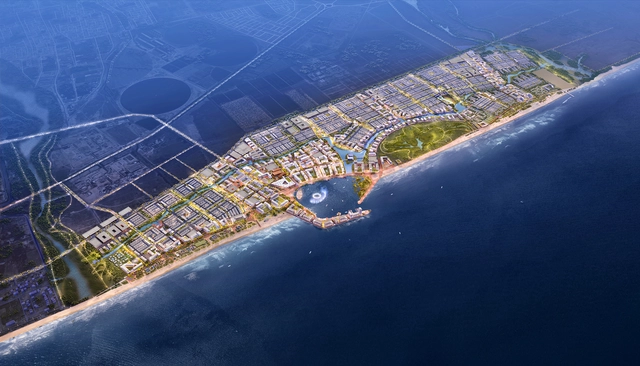
Foster + Partners, in collaboration with Dar Al-Handasah, has revealed the master plan for Al Najd Agricultural City in Dhofar, southern Oman. Covering approximately 54 million square feet, the development is conceived as a self-sustaining agricultural and urban settlement designed to respond to the region's environmental conditions and agricultural landscape. Commissioned by the Ministry of Housing and Urban Planning and the Ministry of Agriculture, Fisheries, and Water Resources, the project forms part of the objectives outlined in Oman Vision 2040, which seeks to strengthen food security, diversify the national economy, and support sustainable development initiatives.

The Ecological Intelligence of Sacred Landscapes

Subscriber Access | 

Architecture often speaks about ecological design as though it were a recent discovery. Biodiversity corridors, regenerative landscapes, sponge cities, and more-than-human urbanism are presented as emerging responses to contemporary environmental crises. Across India and the SWANA region, landscapes shaped through religious practice have long organized relationships between people, water, vegetation, and animals. Long before ecological performance became a design metric, temple tanks stored monsoon water, sacred groves protected biodiversity, and oasis settlements sustained life in some of the world's most arid environments. Few of these places emerged from explicit environmental agendas. They emerged through cultural and spiritual practices. Their environmental logic remains highly relevant today. Many of the conditions now discussed through more-than-human design have existed for centuries within landscapes architects rarely study as ecological infrastructure.

Architects of the Global South: 10 Pavilions and Installations That Shaped 2025

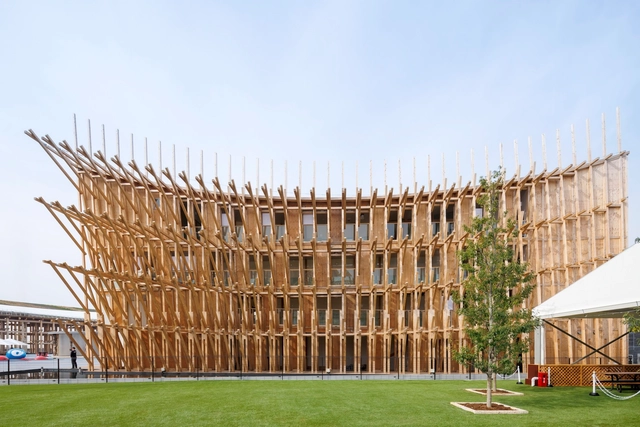
In a global landscape marked by accelerated change, 2025 emerged as a decisive year for architecture—not only because of the major events that animated the international circuit, but above all because of the voices that stood out within them. From the Venice Architecture Biennale to Expo Osaka, pavilions and installations from the Global South ceased to function as mere exhibition gestures and instead asserted themselves as territories of memory, resistance, and imagination, articulating narratives that expand the horizons of contemporary architectural debate.

Oman’s First-Ever Pavilion at the Venice Architecture Biennale 2025 Explores the Communal Sablah as a Model for the Future

The Sultanate of Oman has made its first appearance at the 19th International Architecture Exhibition - La Biennale di Venezia, presenting its debut national pavilion titled Traces. Curated by Omani architect Majeda Alhinai and commissioned by Sayyid Saeed bin Sultan bin Yarub Al Busaidi, Undersecretary of the Ministry of Culture, Sports and Youth for Culture, the pavilion is part of the exhibition's central theme, "Intelligens. Natural. Artificial. Collective." It will be on view until 23 November 2025 at the Arsenale in Venice, Italy.

10 Pavilion Highlights from the London Design Biennale 2025

The fifth edition of the London Design Biennale is taking place at Somerset House from 5 to 29 June 2025. The theme of this year's edition is "Surface Reflections," an invitation to explore "the dynamic interplay between internal experience and external influence." The curatorial proposal, set by British artist and designer Samuel Ross, encourages a focus on the underlying layers of the objects, systems, and spaces that shape our daily lives. The Biennale exhibition is a journey through 35 pavilions by countries, institutional design teams, and curators, presenting soundscapes, immersive experiences, and performances, as well as sculptural and evocative objects. To confront contemporary global challenges, topics include identity, memory, innovation, technology, craftsmanship, ecology, and belonging.

Reframing Cultural Landmarks: A Local Approach to Architecture in the Middle East

Subscriber Access | 

A previous exploration of cultural landmarks in the Middle East designed by international architects highlighted recurring themes such as architecture as an extension of the landscape, climate-responsive design, and abstraction of traditional forms. These projects often introduced high-tech environmental solutions, used monumental forms to reinterpret local identity, or positioned themselves as landmarks within the broader urban or desert landscape. While these approaches have defined many of the region's most recognizable cultural institutions, they represent just one side of the architectural discourse. An equally significant yet distinct trajectory emerges from local architects, who work within existing structures, historical contexts, and lived environments to create institutions that feel deeply embedded in their surroundings. This approach prioritizes continuity, transformation, and accessibility, ensuring that architecture remains an evolving part of the cultural fabric rather than a self-contained object.

Sasaki Reimagines Oman’s Second-Largest City with a New Waterfront Masterplan

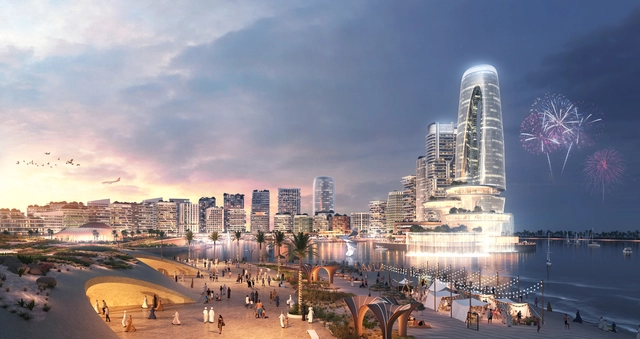
Salalah is Oman's largest logistics port and its second-largest city. Located within a two-hour flight from Dubai and a 90-minute flight from Muscat, the city attracted over one million tourists in 2024. As part of the Oman Vision 2040 investment plan, Oman's Ministry of Housing and Urban Planning has commissioned Sasaki to develop a master plan for redesigning the city's waterfront. The plan includes renovating the city's coastal public spaces and constructing new housing and infrastructure to accommodate projected growth. The project is part of a broader initiative to double tourism's contribution to the nation's GDP by 2030, with on-site construction set to begin later this year, in 2025.

Zaha Hadid Architects Reveals Climate-Resilient Design for Al Khuwair Waterfront in Oman

Zaha Hadid Architects have unveiled a large-scale project for the redevelopment of the Al Khuwair waterfront in downtown Muscat, the capital of Oman. The $1.3bn project covers an area of 3.3 million square meters. It aims to revitalize the area through sustainability-led design principles to accommodate the expected population growth, which is expected to almost double by 2040. The plans are developed in collaboration with Buro Happold to incorporate and transform the existing buildings on site, introduce coastal and climate resilience measures, and create an efficient transit-oriented infrastructure.

Unveiling Oman's New Mountain Destination: Jabal al Akhdar Mixed-Use Development

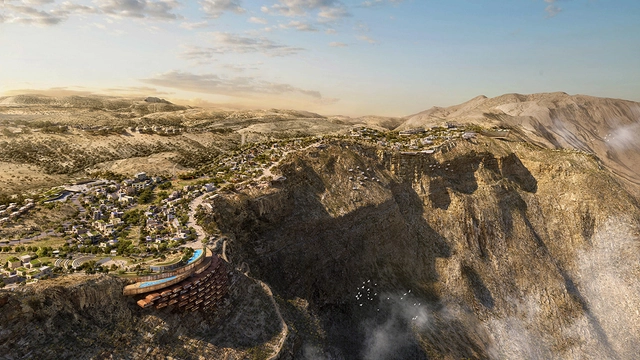
Oman has just announced plans for a $2.4 billion mixed-use project, the new Omani Mountain Destination on Jabal al Akhdar. Masterplanned by AtkinsRéalis, the scheme aims to attract sustainable development opportunities, hoping to "operate as Net Zero Carbon and striving to use 100% renewable energy." The project is in alignment with Oman Vision 2040, seeking a developed, diversified, and sustainable economy;, featuring residences, hotels, and a health village.

Spiritual Journeys: Religious Architecture in the Global South

Subscriber Access | 

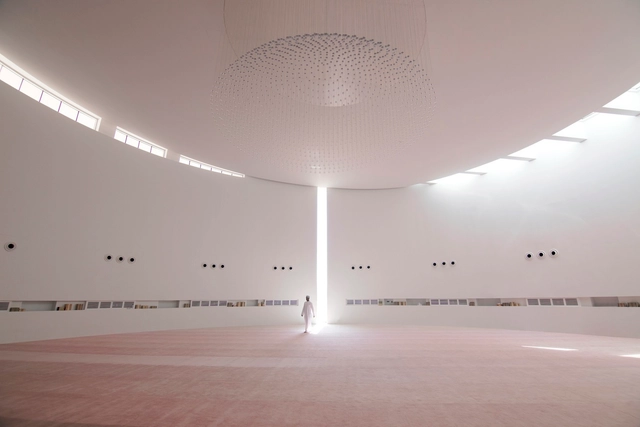
Religious architecture has always had a unique power to transcend the physical realm, transporting visitors to a spiritual journey. In many belief systems, it serves as a space between the earthly and the universal divine. This designed experience can often be facilitated through different choices, where light, form, materiality, and circulation play essential roles. Furthermore, architecture and design hold the power to have a profound impact on one’s lived spiritual experience.