Not long ago, recent enough to feel current, architecture entered a moment in which buildings became legible as products. The framing offered discipline and a refreshed perspective to an industry that often deems novelty more precious than operational clarity. Nudging exercises of "form" towards repeatability, user experience, performance, and scalability prepared buildings to be a "product" that could now be evaluated. Architecture is more answerable to how well it works, how clearly it communicates its use, and how consistently it delivers its intended experience.
The discipline of product design refreshes the perspectives of architects designing for a changing future. Along with offering a new vocabulary and a rubric for design, the field brings in accountability: a product must perform reliably across time and context. It must hold together as a system of decisions rather than a collection of parts. Quality, therefore, is no longer measured solely by uniqueness, but by consistency and by the ability to produce a predictable experience for its occupants.
Much more than merely as a protective skin, the building envelope functions as a thermal regulator that influences operational energy demand, indoor comfort, and long-term efficiency. And before renewable systems or mechanical strategies are introduced, performance begins in section. The way walls, roofs, windows and floors are layered determines how much heat is lost in winter, gained in summer, and ultimately how much energy a building consumes. At the center of this evaluation lies a fundamental metric: the thermal transmittance, or U-value. Understanding how to calculate it is essential for assessing whether an envelope conserves energy or allows it to escape.
Conceptually, thermal transmittance relates heat flow to both surface area and temperature difference. It expresses how much energy crosses one square meter of envelope for each degree of thermal gradient between its two faces.
If we divide 1 m2 of our envelope by the temperature difference between its faces, we will obtain a value that corresponds to the thermal transmittance, also called U-Value. This value tells us a building's level of thermal insulation in relation to the percentage of energy that passes through it; if the resulting number is low we will have a well-isolated surface and, on the contrary, a high number alerts us of a thermally deficient surface.
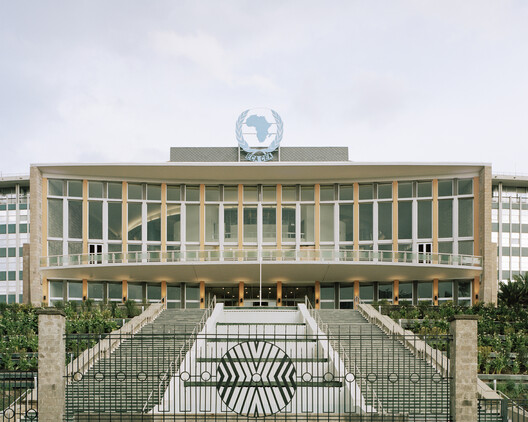
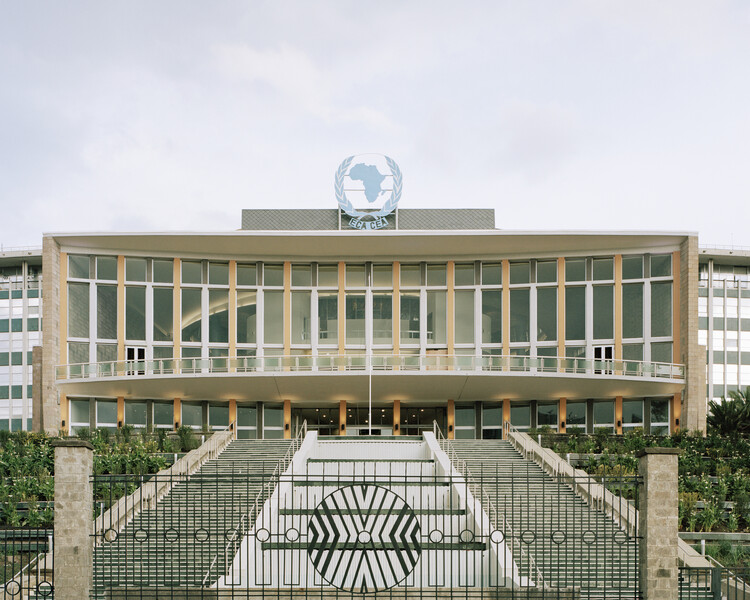
In January 2026, the World Monuments Fund/Knoll Modernism Prize was awarded to Australian firm Architectus for their conservation of the Africa Hall in Addis Ababa, Ethiopia. The award recognizes that Modernist buildings, once seen as a vanguard of architecture, are falling into disrepair and are underappreciated by the public. The situation in Africa is typical of this global sentiment, and this was the first time a building on the continent was graced with this award. The prize also spotlights Ethiopia's rich Modernist inventory, which marks its continental role in the mid and late twentieth century.
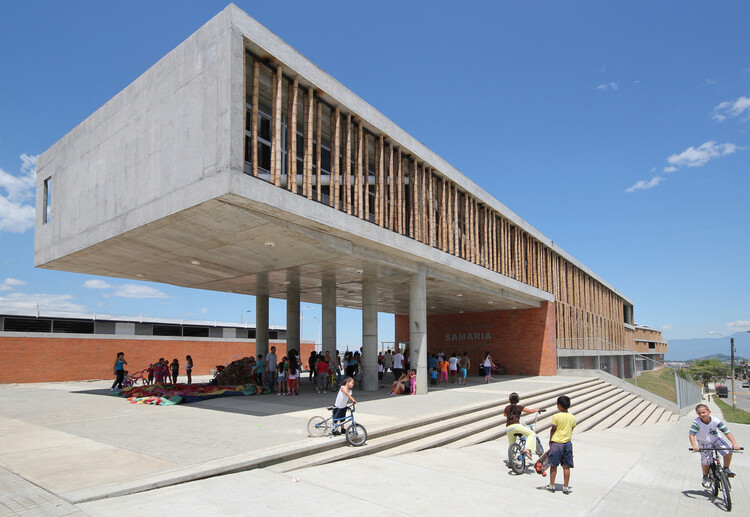
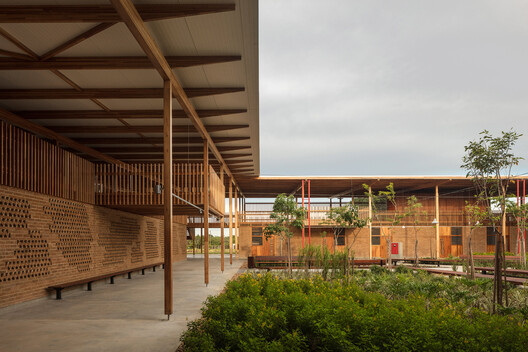
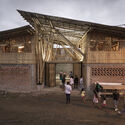
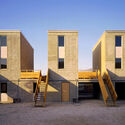
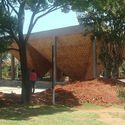
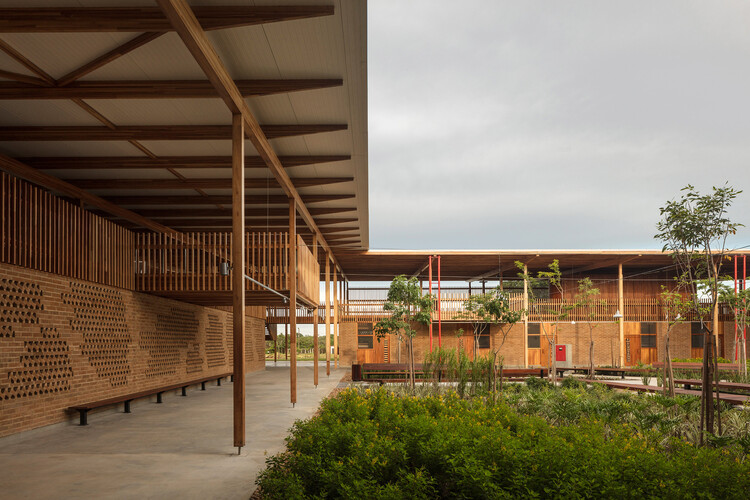
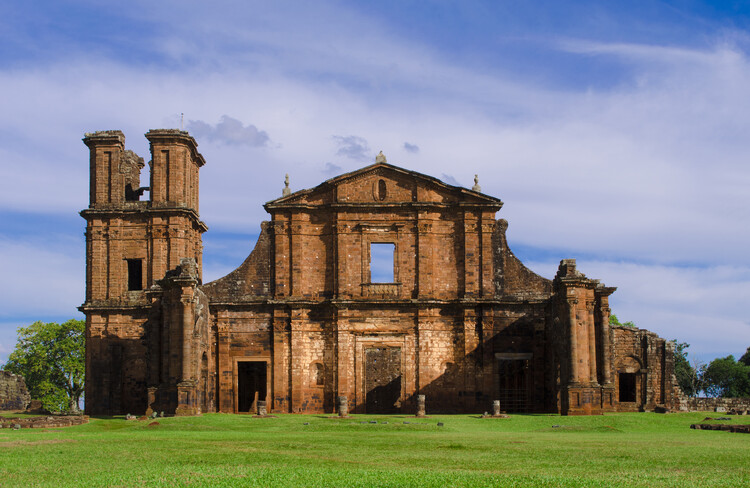
Across South America, architecture endures through the materials it uses, those that persist over time. Bamboo, brick, wood, and concrete appear across regions, connecting climate, labor, and culture in ways that ensure their persistence through generations. Their continuity does not depend solely on preservation or heritage. It depends on use.
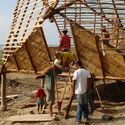
In this context, cultural memory does not reside primarily in monuments or images, but in practice. It survives in repeated gestures: laying bricks, tying guadua joints, assembling wood frames, casting slabs that anticipate another floor. These actions are transmitted less through manuals than through participation. Over time, they form systems of knowledge embedded in habit and necessity. Materials endure not because they symbolize the past, but because they continue to work.
In most cases, the power of decision lies with specialized professionals—historians, museologists, architects, geographers. But on what basis are these decisions made? Can the complexity of history be reduced to a checklist? Or, more fundamentally, which version of history underlies these choices?
Eighteen years ago, two architecture students decided that they had a project worth pursuing. It wasn't a built structure, but a digital project that ended up revolutionizing the way people around the world consume architectural content. This was how ArchDaily was founded, and it still guides our work to this day. The future of architecture is continuously being shaped in classrooms, studios, and workshops around the world, and we want to continue supporting the students who are actively participating in this evolution. Recognizing the creativity and vision of students who are redefining architectural discourse around the world is what led us to create the Student Project Awards.
We are now pleased to present the longlisted projects for this first edition of the ArchDaily Student Project Awards. With hundreds of projects submitted from around the world, our in-house team of architects and editors carefully combed through every single entry, narrowing them down to 104 longlisted projects. The students who participated represent the diversity of the architectural landscape itself, with submissions from every continent, all levels of study, and in various scales and typologies.
https://www.archdaily.com/1039110/explore-the-longlist-of-the-archdaily-student-project-awardsDaniela Porto
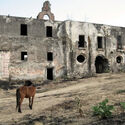
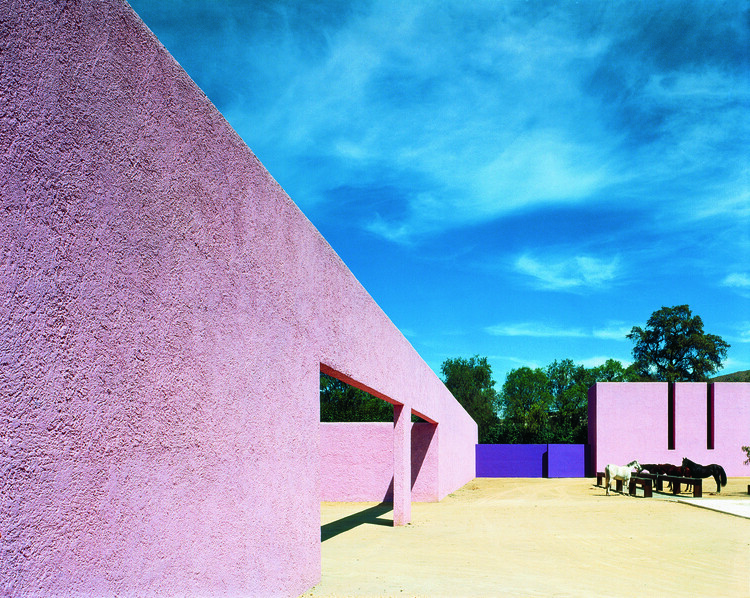
In the architectural history of the Mexican territory, the built environment has functioned not merely as a human stage, but as a biological infrastructure designed to organize proximity between species. The resulting spatial logic is not a solo performance, but a negotiated coexistence between human and animal bodies. To examine this heritage today is to shift the analytical focus away from stylistic authorship and toward a more fundamental phenomenon: the persistence of spatial practices that emerged to sustain shared forms of life.
Many of the architectural features now interpreted as cultural or aesthetic markers — oversized thresholds, expansive patios, and durable surfaces — can be understood instead as material traces of an interspecies contract. For centuries, horses, mules, and livestock were not external to architecture but essential inhabitants whose physical presence shaped scale, circulation, and material choices. Their bodies left measurable imprints in space, from the height of entrances that accommodated mounted riders to paving systems designed to withstand hooves, friction, and biological wear. Nowhere was this contract more visible than at the ground level of the colonial house.
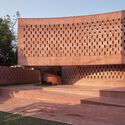
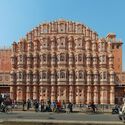
On a hot afternoon in May, when the air over western India turns metallic with heat, no one remembers façade composition. They remember where the shade falls. They remember which corridor breathed. They remember the house that was cooler than the street. What stays in memory is comfort beyond the form. Repeated thermal preference stabilizes into spatial configuration, and over time, those configurations become building types.
Azm / Samu by Hassan Qureshi. Image Courtesy of Riyadh Art
For centuries, sculpture has been associated with the materialization of religious values, the celebration of heroic achievements, or the consolidation of political power. Today, it also operates as a critical instrument and an urban mediator. Many contemporary works interrogate the present, challenge scale, engage with movement and circulation, and reshape perceptions of public space. Sculpture is no longer conceived as an isolated object, but as part of broader processes of urban transformation.
Riyadh, the capital of Saudi Arabia, exemplifies a city undergoing intense expansion and restructuring. Particularly under the Vision 2030 agenda, it has invested in upgrading public spaces, diversifying its cultural landscape, and consolidating an urban identity that brings together tradition, infrastructure, and global projection. Within this context, cultural production plays a structuring role, contributing to the redefinition of everyday urban experience and expanding the city's symbolic references.
ArchDaily is looking for Expert Contributor to join our Sponsored Content team. In this role, you will produce high-quality, editorially strong content that highlights architectural products, materials, and projects while maintaining the editorial integrity and design-focused voice that ArchDaily is known for.
This role requires a strong understanding of architecture and design, experience with branded or sponsored content, and the ability to communicate complex ideas in a clear, engaging, and professional manner. Sponsored content at ArchDaily is brand-funded writing created with partners that presents products, projects, and ideas in ArchDaily's editorial voice, with the aim of informing, inspiring, and engaging readers.
https://www.archdaily.com/1038256/open-call-for-expert-contributors-at-archdailyArchDaily Team
In Hong Kong, where interiors and small buildings are routinely caught between two extremes—high-gloss "luxury" finishes on one end, and budget-cautious industrial roughness on the other—a third attitude has emerged through the calibration of both: a uniquely precise, relevant, and materially honest execution that is not dependent on price point. This is calibrated rawness. Calibrated rawness describes an architecture that retains the directness of matter and materiality—concrete, metal, blockwork, exposed structure, visible services—while subjecting it to rigorous control.
The "raw" is not a costume, and the "refined" is not polished; it is a discipline of precise execution, producing spaces that feel balanced and considered, yet never "made up" or overworked. Studio 1:1 demonstrates this attitude consistently across its work—and its upcoming publication, Architecture under the Radar: Three Projects in Asia (with a foreword by Nader Tehrani), offers a timely frame through which to read this ethos as more than an aesthetic, but as a repeatable architectural method.
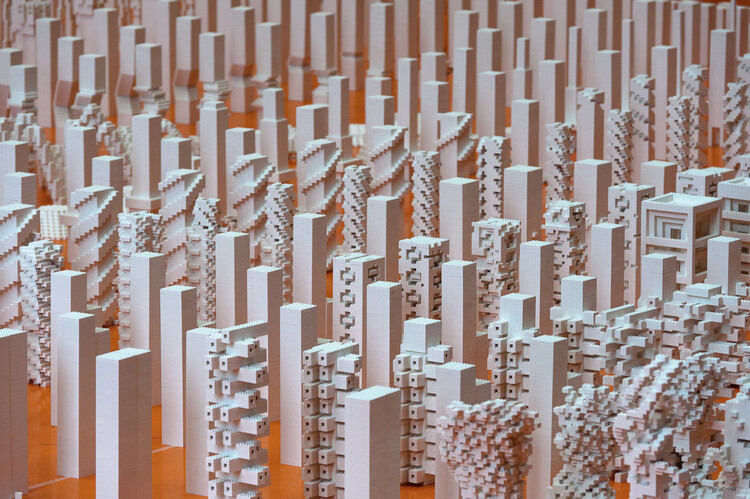
Porous City / MVRDV and The Why Factory. Image Courtesy of Frans Parthesius, MVRDV and The Why Factory
This article is part of our new Opinion section, a format for argument-driven essays on critical questions shaping our field.
Every architectural epoch has been defined by its instruments. The compass, the drawing board, the camera, and the computer have each altered how architects think and produce. Yet the current moment feels qualitatively different. As artificial intelligence and generative systems enter daily workflows, tools cease to be passive extensions of the architect's hand and begin to operate as semi-autonomous agents. They propose, optimize, and simulate, producing outcomes that are, at times, beyond the author's full anticipation.
Urban masterplans remain an exploratory ground for unbuilt speculation, offering insight into how cities might recalibrate mobility, ecology, and collective life in response to accelerating environmental and social pressures. In this Unbuilt edition, submitted by the ArchDaily community, the selected projects bring together a range of large-scale proposals that examine urban centers, waterfront districts, infrastructural corridors, and cultural landscapes as spatial frameworks for reconnection and resilience. Rather than treating the masterplan as a rigid blueprint, these projects approach urbanism as an adaptive system shaped by climate, topography, infrastructure, and public space.
Across varied geographies, from Northern European town centers and Mediterranean coastal districts to Central Asian polycentric hubs and Gulf megacities, the proposals explore diverse architectural and urban strategies. They range from park-led civic transformations built over highway tunnels to elevated pedestrian networks above active transport systems, mixed-use blocks structured by historic planning logics, marina developments integrating environmental stewardship, and research-driven models for equitable landscape urbanization.
In the first days after birth, the bee remains inside the nest, cleaning cells and being fed by other workers. Over time, it begins organizing pollen stores, regulating the hive's temperature, and guarding the entrance. Only in the final weeks of its life does it leave the shelter to fly. It is in the moment of flight that its trajectory begins to intersect with architecture and the city. In search of nectar, it moves across a territory shaped not only by its spatial memory and the availability of flowers, but by the way we construct the built environment. Each movement becomes a negotiation with urban space: impermeable surfaces that disrupt natural cycles, air currents intensified between buildings, vegetation-free voids, scattered green fragments between lots, and technical rooftops.
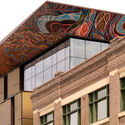
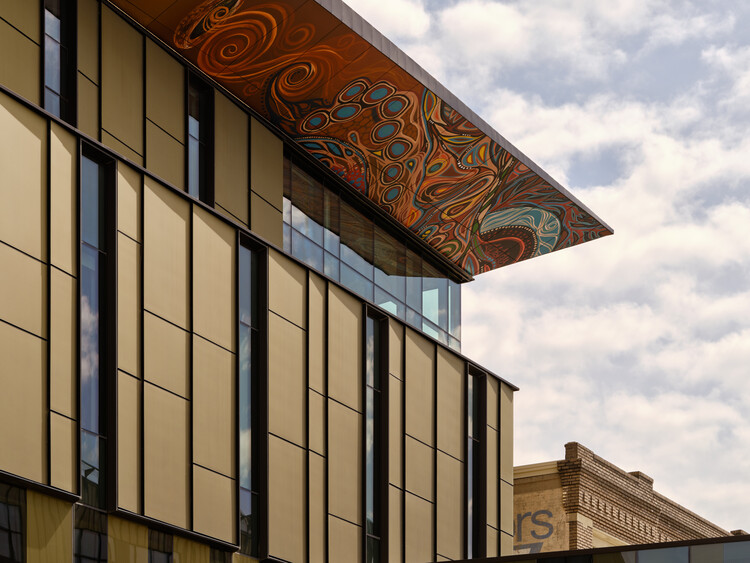
Courtesy of SolarLab, Photo by doublespacephoto.com. Image RRC Polytech Manitou a bi Bii daziigae / Diamond Schmitt Architects & Number TEN Architectural Group
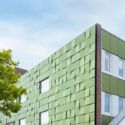
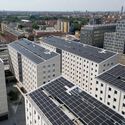
As environmental accountability becomes embedded in design culture, the building envelope is being reconsidered not just as a protective skin, but as an active energy-producing surface. Treating solar technology as a material rather than an attachment reshapes how architecture is conceived and detailed. Color, texture, rhythm, and assembly become inseparable from performance. Building-Integrated Photovoltaics (BIPV) operate within this expanded definition of materiality. By integrating solar technology into façades and rainscreens from the earliest project stages, architects can reduce redundancy, align energy goals with design intent, and rethink how envelopes are composed. Yet translating this ambition into buildable systems requires technical precision and construction intelligence.
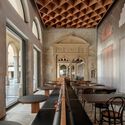
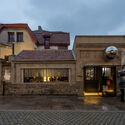
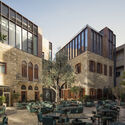
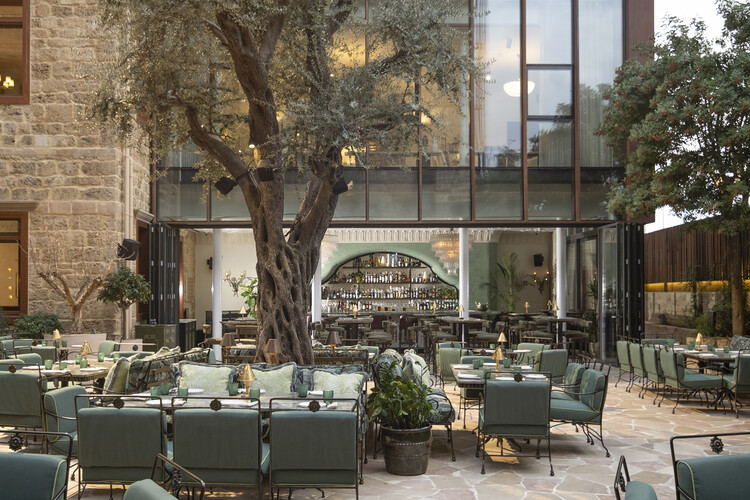
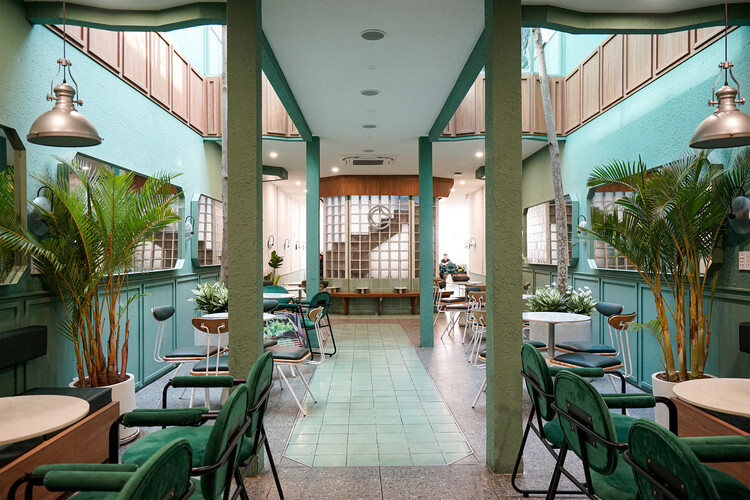
Hospitality-driven programs, specifically coffee shops and social hubs, are partly defined by their role as "third places": social anchors that bridge the gap between private and public life. Unlike residential or commercial office programs that require rigid partitioning for privacy and utility, they rely on expansive, open-plan environments. This allows for an architectural strategy of minimal intervention, allowing the structural envelope to remain intact. By avoiding the subdivision of space, architects maintain uninterrupted sightlines to original masonry, timber frames, or decorative ceilings, ensuring the building's historical narrative remains the protagonist. Simultaneously, the commercial activity provides the necessary maintenance and public engagement to ensure the site's continued existence.
As the primary interface between interior spaces and the external environment, facades play a central role in both the performance and architectural expression of buildings. Increasingly, they are no longer seen as static envelopes, but as active mediators between climate, energy, use, and aesthetic. In dense urban contexts, however, they are also gaining relevance for another reason: while roof surfaces are often limited, fragmented, or already occupied by technical equipment, vertical envelopes remain largely underutilized in terms of energy production.
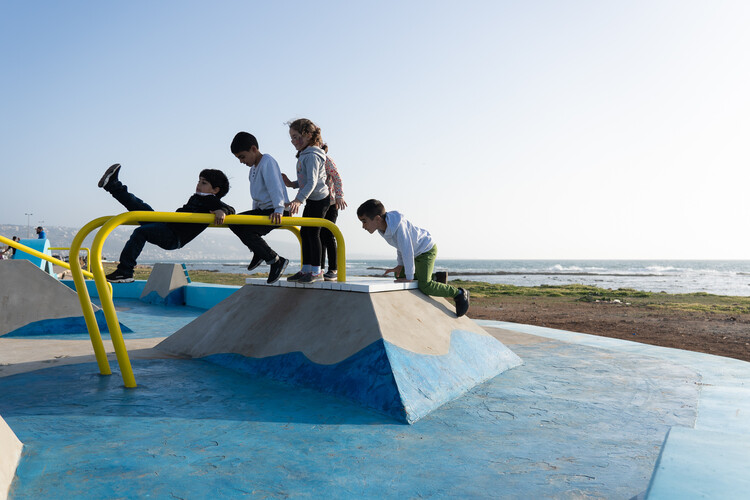
Architecture is often evaluated through finished forms, yet some practices operate in a different register, one where design unfolds through relationships, time, and use rather than through a single outcome. For CatalyticAction, participation is not a parallel social activity, but the means through which spaces are conceived, constructed, and sustained over time.
Based between Beirut and London, the practice has worked across the Middle East and Europe, developing public spaces, schools, playgrounds, and everyday urban infrastructures through long-term collaboration with local communities. Grounded in participatory research and collective decision-making, this approach was recognized through ArchDaily's 2025 Next Practices Awards, highlighting a mode of practice where architecture is understood as a shared, evolving process rather than a fixed object. In this context, architectural value is measured through continuity, use, and collective ownership, rather than through form alone.
Contemporary workplaces promise collaboration, yet they increasingly struggle to provide spaces for privacy. In an era dominated by open-plan layouts, small acoustic spaces like phone booths and focus pods have become essential for maintaining productivity and privacy. However, the paradox of "booking conflicts" alongside "underutilized spaces" has turned these areas into operational challenges. The question, then, is how workplaces can balance efficiency, productivity, and individualized user experiences within increasingly complex environments.
Bir Ettin Restoration / Bled El Abar Collective. Image Courtesy of Bled El Abar Collective
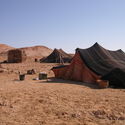
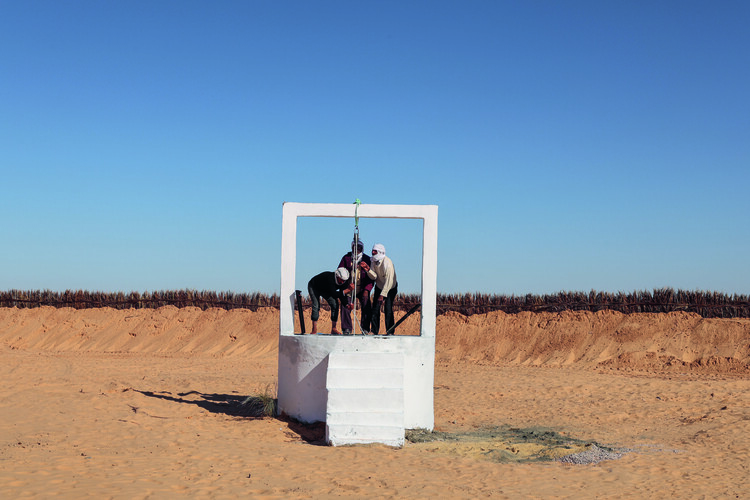
In some languages, the very word for building refers to its immovability. The discipline of engineering related to buildings is referred to as statics. Thus, architecture is closely related to the fixed and the immobile. And yet, for millions of nomadic people around the world, shelters must be of a light and distinctly movable structure, while home is the vast landscape in which they reside. Such lifestyles, which carry centuries of traditions, are constantly under threat from the pull factors of sedentary life in towns and cities. In Tunisia, one project acknowledges the risk of heritage loss and attempts to improve conditions for nomadic herders.
Tokyo 2020 Olympic Games- Athletes Village (HARUMI FLAG). Image via Wikimedia Commons CC 2.0
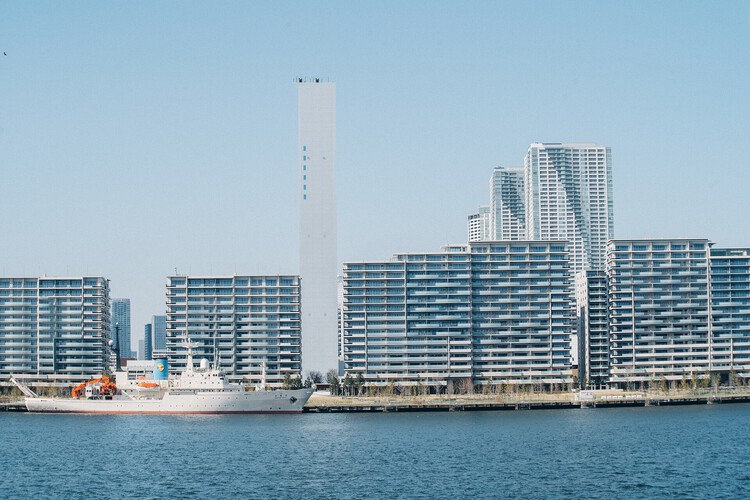
With the Milano–Cortina 2026 Winter Olympics underway, it is worth looking back at how the Olympic Village has evolved from a purely functional solution into a strategic urban project. From improvised housing compounds to key pieces of urban regeneration, Olympic Villages have repeatedly functioned as large-scale experiments in how parts of the city can be built within a short period of time.
Designed under intense time pressure and for a highly specific population, these environments reveal shifting ideas about housing, collective life, and the urban legacy of mega-events. Across different editions, the Olympic Village reflects broader ways in which events, housing, and cities intersect under conditions of urgency.
To fully know a city's architectural heritage, one must look beyond its designated sites and iconic buildings. For many, understanding a city's urban fabric and what makes it tick also means discovering the smaller-scale, locally appreciated, conserved buildings and popular gathering spaces. This is especially true when considering bustling Vietnamese cities, with their peculiar architectural characteristics, which can only be appreciated when learning about their many inspirations and historic layers, combining traditional Vietnamese motifs, modernism, local materiality, and climatic design solutions, but mostly by learning about the site constraints that are addressed through the implementation of the narrow tube houses and low-rise buildings.
These key styles and architectural movements are often maintained and even highlighted, as architects give a second life to many rundown or abandoned buildings, transforming them into popular coffee joints. They are reviving smaller heritage sites by pushing for their restoration and regular use by the community, encouraging visitors to acknowledge the historic relevance of the space, as they covet it.