
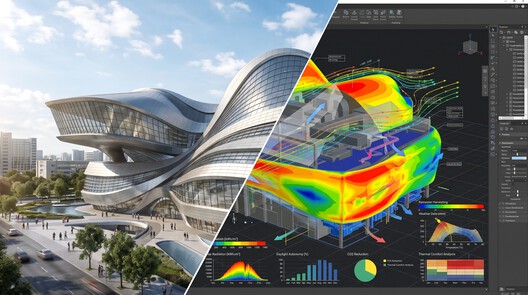
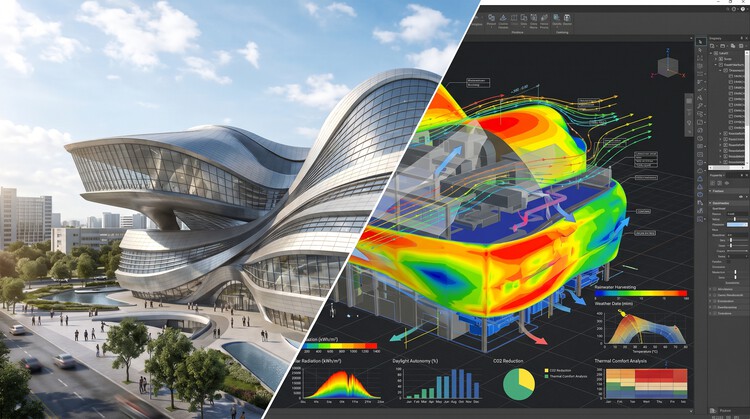
Architecture reaches people through whatever medium carries it, and each new medium changes our picture of what a good building looks like. For example, when 3D modeling software arrived, the novelty of complex shapes drove the starchitecture era of the 2010s, and projects built on those experiments earned awards such as the Pritzker Prize. Today the medium is the social media feed. A building exists first as a model and then as a render, long before it exists as a place. Meanwhile, research in neuroarchitecture is building a different picture based on how people actually experience buildings. So how could those two seemingly unrelated topics close a loop that may lead to the profession's next creative frontier?



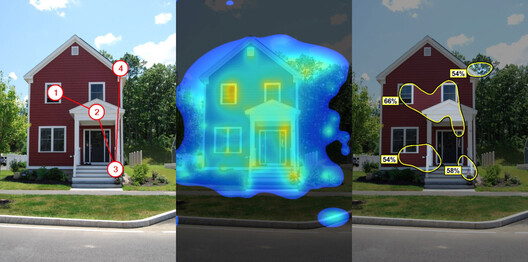
In the book Cognitive Architecture, Ann Sussman and Justin Hollander examine how the brain reacts to the built environment. In their research, people looked at photographs of buildings while their eye movements were tracked. Viewers tended to skip blank, featureless facades but lingered on details, contrast, and other people. One case study, the Stapleton Library in New York, shows how much fenestration patterns matter: windows provide areas of contrast that the eye seeks out and stays with. Their study suggests that architecture tuned to these cues could serve its occupants at a layer deeper than aesthetics. Sussman's broader argument is that the brain works at walking speed and eye level, hunting for faces, contrast, and activity at the ground floor.
Anjan Chatterjee's lab at the University of Pennsylvania adds nuance to this picture. They summarize architectural experience in three elements: coherence, or how organized and legible a space is; fascination, or how rich in information an environment is; and hominess, or how comfortable it feels. Everyone weighs these differently, but people with an architectural background seem to give coherence more weight than non-architects do. At the same time, he also makes a second point: architects often predict how a building will work, but they rarely collect post-occupancy information to test those predictions.
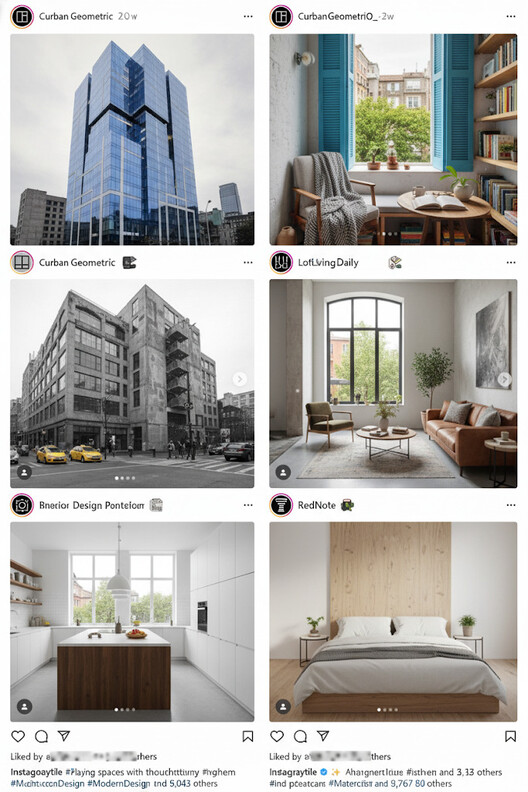
However, these days, a building lives first as a render, which later gets transferred to a company's social media feed. That matters a lot, because a legible, coherent silhouette that grabs attention is often what the algorithms reward. In some cases, this might even put the architectural brief at risk of becoming a framing exercise: a legible silhouette, a dramatic angle, a frontal moment that survives a person's attention span. In fact, a study of Instagram posts from the Technical University of Munich suggests that architecture is increasingly interacting with social media platforms and, in doing so, taking on their trends and logic. Interestingly, the authors also conclude that spectacle alone does not sustain public interest; popularity is also maintained through function, which depends on repeated documentation of the building's use.
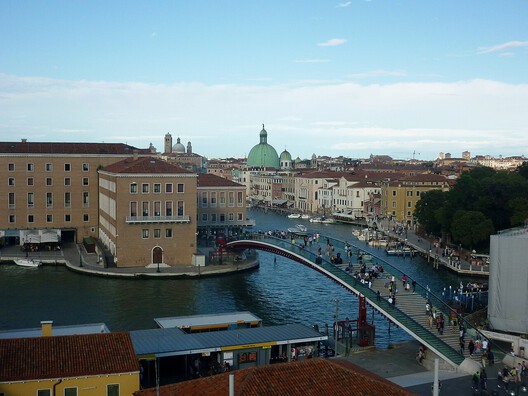
In that sense, the city of Venice in Italy offers an early case study. Photographs of Calatrava's glass-and-steel Ponte della Costituzione are beautiful, but its glass steps proved slippery in the rain, causing people to fall. Finally, years of complaints led the city to consider replacing the glass with stone. The failure was physical rather than perceptual, but it shows the same gap: the picture and the place were judged by different tests, and only one of them was being taken into account before the bridge was built.
That is the dichotomy that architecture tends to fall into: the "money shot" is taken from far away, standing still, usually with a few people around. The brain, as Sussman describes it, works at walking speed and eye level. The gap, in that sense, seems to be a missing feedback loop. Researchers at the Technical University of Denmark describe a performance gap between how buildings are expected to perform and how they actually do; in one of their studies, desk sensors showed that an assumed 100 percent occupancy during design was closer to 70 percent in practice. This is the post-occupancy problem Chatterjee describes: predictions are made, but rarely tested.
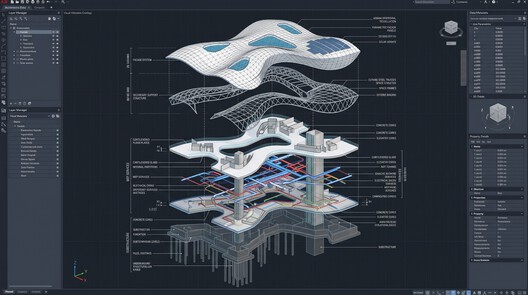
The tools architects use in their everyday work should close this gap, but they are not able to just yet. BIM software, for example, works like a giant spreadsheet: a database of walls, doors, and quantities that happens to have a 3D view. Dave Lemont, who led Revit's technology before Autodesk acquired it, explained in an ArchDaily interview that moving a wall updates every plan, section, and schedule, while changing a material often sends the team back to specifications, spreadsheets, and drawings, which are changed by hand. But the underlying common ground in this topic is not fragmentation, but rather that the model records what was intended, not what happened after construction.
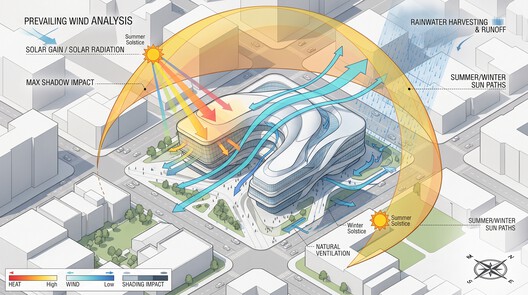
Therefore, it is possible to see BIM as one more medium that represents a building, while the interesting part could be the shift from representing intent to recording use. Imagine adding the missing column to that spreadsheet: how the building is actually used. Temperature, daylight, noise, density, and anonymized demographics, from every building a firm completes. Because neuroscience is about perception, not just physical conditions, the column would pair those sensor readings with simple occupant feedback on how coherent, engaging, and comfortable a space feels, and with observations of where people actually linger. Over time, this could become a database of what worked, for whom, and in which climate and specific conditions. Architecture's next creative frontier may not be bolder forms, but a humbler habit: go back, measure, and let the building tell you what actually worked.
This article is part of the ArchDaily Topic: Beyond Buildings: Architectural Imaginaries and the Evolving Language of Design, proudly presented by Gendo.
Gendo is an AI design canvas built for architecture studios. Gendo supports this topic because the tools architects use to imagine have always shaped what they build. Understanding that shift matters more than any single render.
Every month we explore a topic in-depth through articles, interviews, news, and architecture projects. We invite you to learn more about our ArchDaily Topics. And, as always, at ArchDaily we welcome the contributions of our readers; if you want to submit an article or project, contact us.