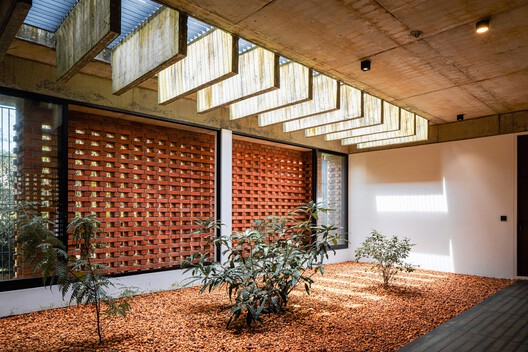
A brick façade does more than define the façade of a house. When designed as a porous screen, it becomes an intermediary between inside and outside, shaping the atmosphere and environmental conditions of the spaces behind it. Across contemporary Indian residential architecture, brick jali — a perforated or lattice brick screen — has been reinterpreted with a contemporary sensibility, drawing on vernacular architectural elements.

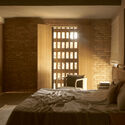
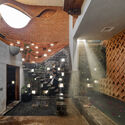
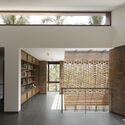
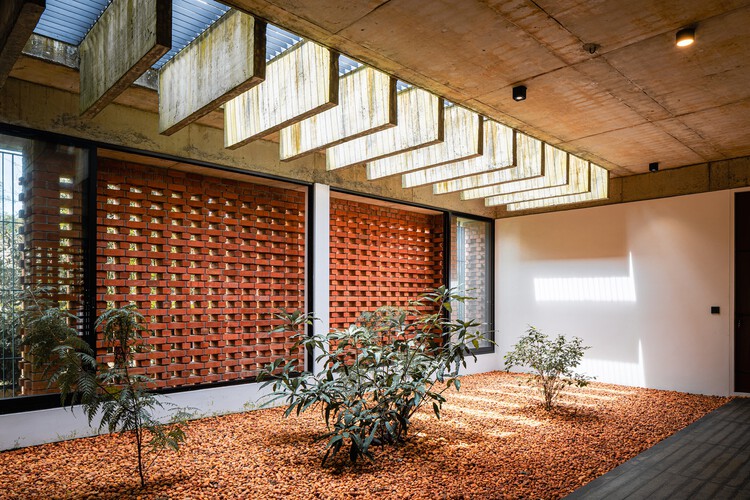
Porous brick envelopes mediate light, air, heat, and views. Carefully arranged openings allow sunlight to penetrate the interior in a softened, dappled manner, creating a constantly changing rhythm of light and shadow. At the same time, the screens temper solar exposure and heat gain while allowing air to move through the house. In some houses, porous brickwork works together with courtyards, voids, staircases, and other passive strategies to support natural ventilation. In some houses, perforated bricks mediate between bedrooms, an adjacent terrace, and exterior space, embracing the sanctuary of intimate moments.