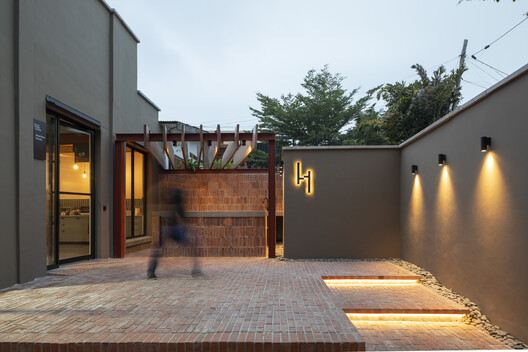
The African Futures Institute (AFI) has completed its new headquarters in Accra, Ghana, transforming a former tile warehouse in the city's Osu neighbourhood into a centre for architectural education, research, exhibitions, and public programmes. The project retains the existing industrial structure while introducing spaces for teaching, workshops, performances, screenings, and gatherings. Its completion gives the Institute a permanent base in Accra after several years of operating through programmes, partnerships, and temporary spaces across Africa and beyond.

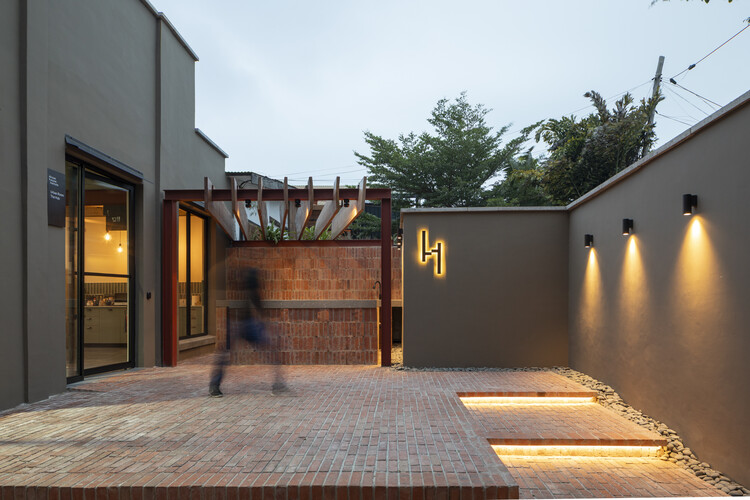
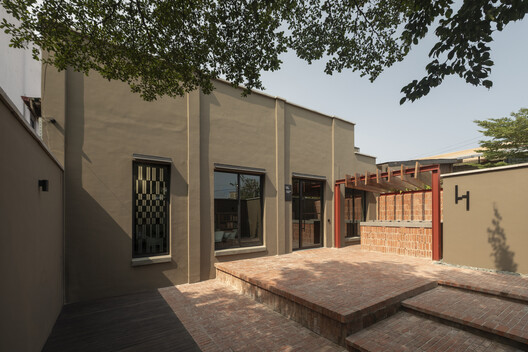
The project was developed by Professor Lesley Lokko OBE, Patrick Gentilezza of Buro Ghana, Patti Anahory, Laurence Lord, and Fred Swart. Their work covered architectural direction, design development, construction, and fabrication, with the project progressing through a hands-on process on site. Buro Ghana, AFI's landlords and partners, also contributed to the transformation of the warehouse and the establishment of the new headquarters.
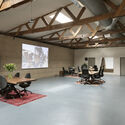
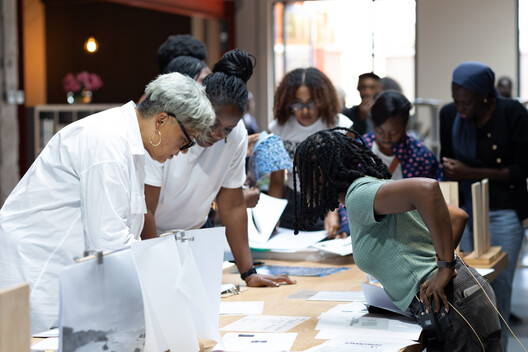
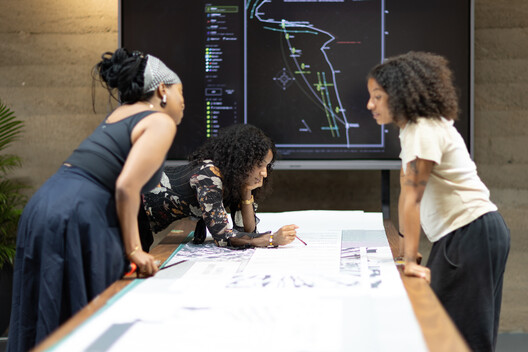
The existing warehouse forms the basis of the project, with its scale and industrial character retained rather than replaced by a new structure. The intervention adds the infrastructure required for AFI's educational and cultural work while making use of the building already on site. Construction and design developed alongside one another, with the team adjusting the project as they encountered the practical conditions of the existing building. A central space within the headquarters is the Urban Room, which can be used for lectures, studio sessions, exhibitions, film screenings, workshops, and gatherings. Other parts of the building accommodate AFI's team, archive, research work, and educational programmes. The arrangement allows the headquarters to function as both a workplace and a venue for events open to the public.
Related Article
MoMA Opens Architects of Liberation Exhibition on Independence-Era West African Modernism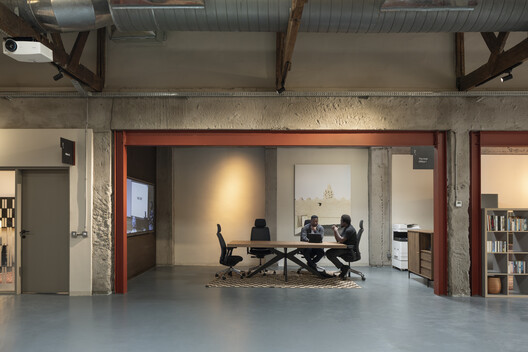
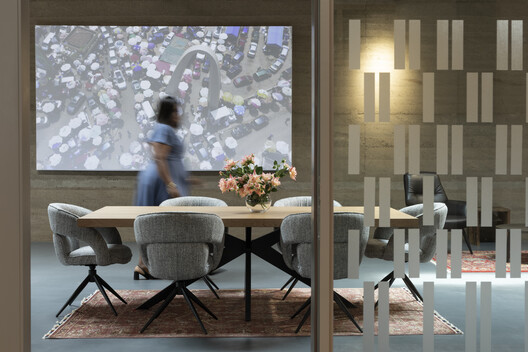
We wanted a building that could hold many futures at once. Not a monument to an institution, but a framework for activity — somewhere that can be a school in the morning, a studio in the afternoon and a public room at night. Architecture, for us, begins with the possibility of bringing people together. – Lesley Lokko
The building will host AFI's educational programmes, including the Nomadic African Studio, alongside lectures, exhibitions, film screenings, workshops, residencies, and other public events. Its location in Osu places the Institute's work within the everyday setting of Accra, where AFI was founded. The headquarters also provides space for the Institute's archive and ongoing research. Founded by architect and educator Lesley Lokko in Accra in 2021, the African Futures Institute began with a focus on teaching, research, and public events. It has since expanded into curatorial practice, exhibitions, and publishing, including its work around the Venice Architecture Biennale and the annual Nomadic African Studio. The completion of the Accra headquarters marks the Institute's move into a permanent setting for this expanding body of work.
In other recent news, the UN General Assembly has voted to promote equal-area map projections, with a resolution introduced by Togo calling for greater use of maps that more accurately represent the relative size of continents. Elsewhere, the Great Green Wall continues as a large-scale landscape and environmental initiative addressing desertification across the Sahel, while related efforts in China target the Gobi Desert. Meanwhile, the Museum of Modern Art in New York has opened Architects of Liberation: Modernism in Western Africa, an exhibition examining modern architecture in Benin, Cameroon, Côte d'Ivoire, Ghana, Nigeria, Senegal, and Togo from the late 1950s through the early 1980s.