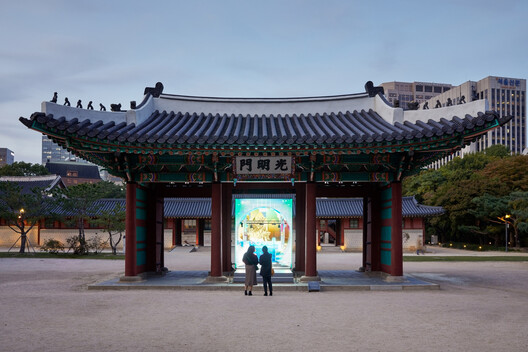
The most innovative and impactful design projects arise from the intersection of different fields. The architecture community has always borrowed from, or been inspired by, other forms of cultural production such as film, photography, literature, and theatre. In the theatricality of Baroque churches and the cinematic sequences of contemporary museums, architects have looked beyond the building itself to understand how space can shape a story and construct an experience.
Worldbuilding takes this one step further. Instead of designing only the architecture of a place, it asks architects to establish the social rules, narratives, technologies, economies, atmospheres, behaviors, and relationships that make that place believable. Rather than beginning with, "What should this building look like?", worldbuilding suggests beginning with, "In what kind of world would this building make sense?"




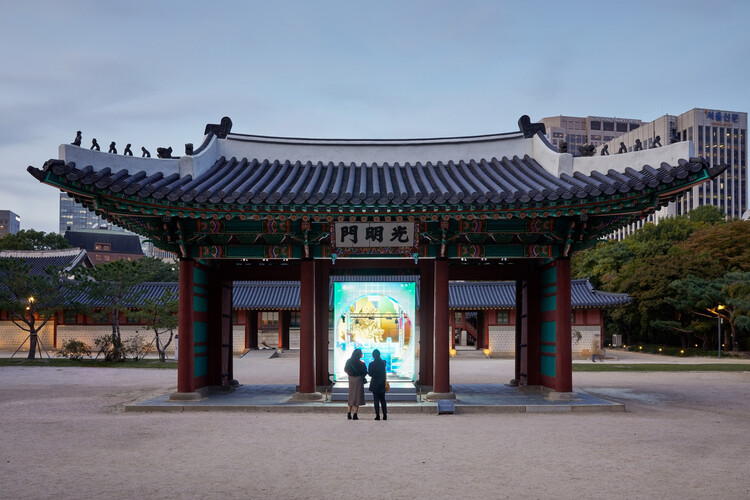
Worldbuilding is familiar territory in creative fiction. A world in a film or game needs its own logic, such as the culture, forms of governance, technologies, and even economies that sustain it. Film has long understood that spatial design can do more than provide a scenic backdrop. A city can become a character, a corridor can establish suspense, and a room can tell us something about the person who inhabits it before they ever appear on screen.
Related Article
The Soft Control of Space: Design for Decision-Making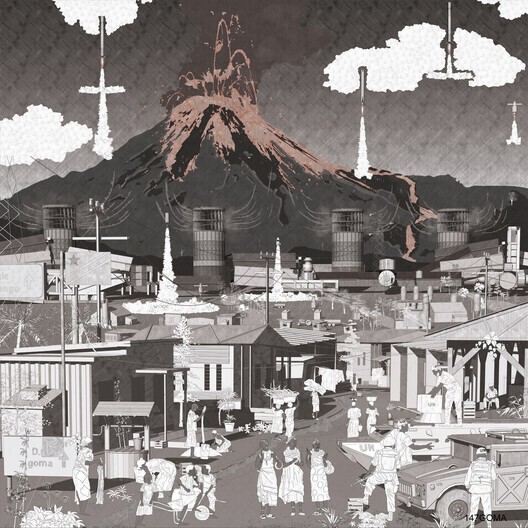
Science fiction, in particular, has used spatial design to make unfamiliar futures feel coherent and logical. The buildings of Blade Runner reimagine Los Angeles as a dystopian version of the real city, with its own density, infrastructure, and signage.
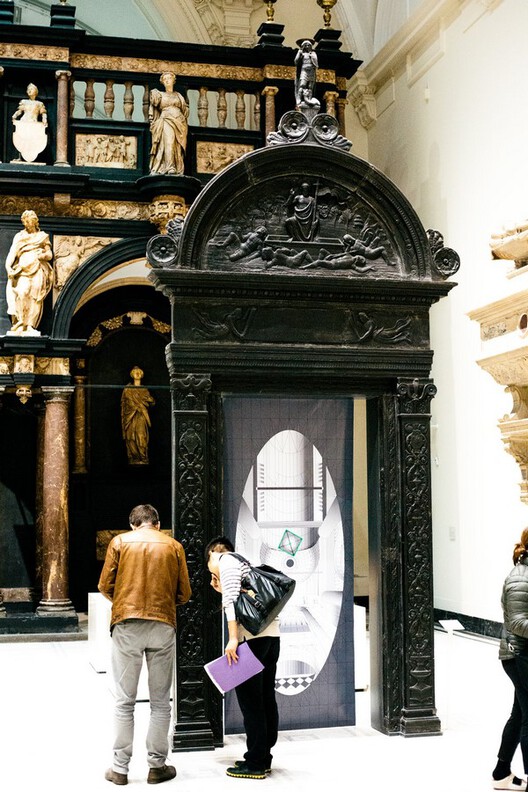
Games take this relationship further because the world has to be functional as well as aesthetic. A player learns a game's world through its rules, and the consequences follow. Here, space serves as both setting and interface. Translating the spatial logic of video games into physical installations, Architecture (AFTER GAMES), a V&A-commissioned installation project, converted elements of video-game environments into a gallery setting. The project invited visitors to consider how game worlds organize movement, navigation, scale, and spatial perception.
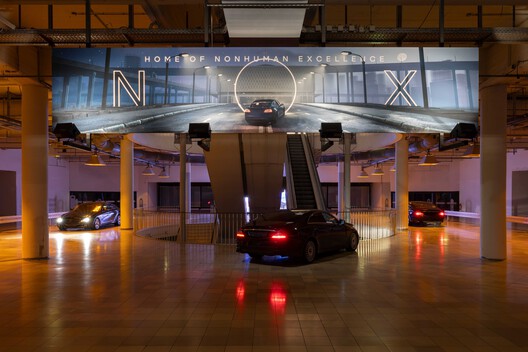
Lawrence Lek's NOX explores a similar relationship with his installation at Kranzler Eck in Berlin. Staged within a former department-store complex, the project constructed a fictional AI-driven urban environment. It combined exhibition architecture, computer-animated video, locative sound, installation, and game design. Visitors encountered a simulated rehabilitation center for sentient autonomous vehicles. The architecture becomes the operating system for the story, rather than merely its container.
Designing the World Around the Building

This way of thinking also appears in avant-garde architectural education. At UCLA Architecture and Urban Design, the Speculative Worlds Studio has shifted from a narrower emphasis on filmmaking towards speculative worldbuilding. Students are encouraged to take greater control over the architectural, environmental, and cultural dimensions of their imagined worlds, with outcomes ranging from installations and publications to speculative apps, game environments, immersive websites, and films.
The studio's premise is particularly interesting because it treats worldbuilding as a design problem rather than a representational exercise. Students have to construct enough of a world's logic for someone else to enter it.
This is also why worldbuilding can be useful beyond speculative studios. Museums, exhibitions, theme parks, and other experiential spaces already operate through many of the same mechanisms. Their designers construct worlds with their own narratives, rules, and forms of participation.
The Guggenheim's web-based exhibition, Åzone Futures Market, approached speculative futures almost literally, as a world with its own economy. Participants received fictional currency to invest in simulated futures tied to emerging technologies. The project turned ideas about technological development into an experience governed by participation and exchange, creating a small system in which visitors could act within a speculative future. The Guggenheim's exhibition announcement provides further detail about the market's rules and fictional currency.

The appeal of worldbuilding, however, goes beyond allowing architects to invent more interesting futures. It can also give architecture some distance from the present. A fictional world does not have to predict the future to be useful. It can exaggerate something already present, make an invisible system visible, turn an assumption into a physical environment, or allow us to experience the consequences of a choice before that choice becomes reality.
Instead of beginning with a building and then asking how people might use it, the architect could begin with the conditions that make that building necessary. The building would become one artefact within a much larger system, much like a set, a game environment, or a fictional city is only one component of the world to which it belongs.
This approach makes spatial design more consequential. In that sense, worldbuilding is another way of asking what architecture has always asked: What kinds of places do we want to build? What kinds of worlds do those places allow us to inhabit?
This article is part of the ArchDaily Topic: The Lure of Escapism in Architecture and Alternative Worlds. Every month we explore a topic in-depth through articles, interviews, news, and architecture projects. We invite you to learn more about our ArchDaily Topics. And, as always, at ArchDaily we welcome the contributions of our readers; if you want to submit an article or project, contact us.


