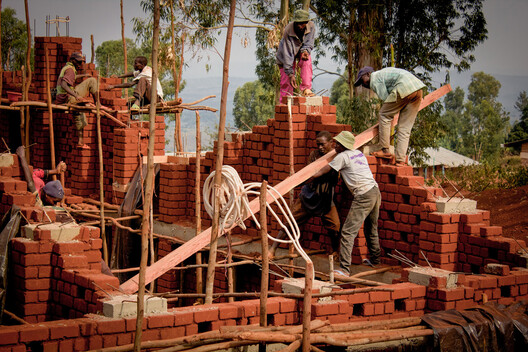
There has never been a more celebrated moment for craftsmanship in architecture. Across magazines, awards, and international exhibitions, handmade brick, lime plaster, carved stone, woven bamboo, and rammed earth have re-emerged as symbols of environmental responsibility, cultural continuity, and architectural authenticity. Beyond these carefully documented projects lies another reality. The overwhelming majority of buildings constructed today, from apartment blocks and office towers to public housing and commercial developments, continue to rely on industrialized systems that leave little room for skilled artisans. Craft has become increasingly visible at the very moment it has become increasingly uncommon. In countries such as India, the contrast is difficult to ignore. Centuries-old building traditions continue alongside one of the world's fastest-growing construction industries. To reframe the question of why craftsmanship is returning, perhaps the intrigue is why it now appears primarily where construction budgets, timelines, and clients can afford it.
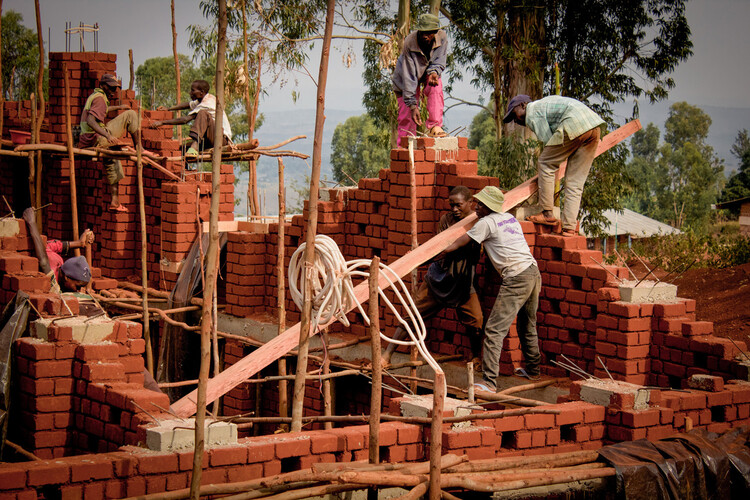
This transformation is often described as a cultural shift, framed as the inevitable disappearance of traditional knowledge in the face of modernization. The reality is more complex. Craft has not vanished because better technologies replaced it, nor because artisans ceased to exist. It has been economically repositioned. The question is no longer whether skilled making remains valuable, but under what conditions contemporary construction still finds it worthwhile. The answer lies less in materials or architectural aesthetics than in the political economy of construction: procurement systems, labor structures, project timelines, and market incentives that shape buildings long before materials are specified.
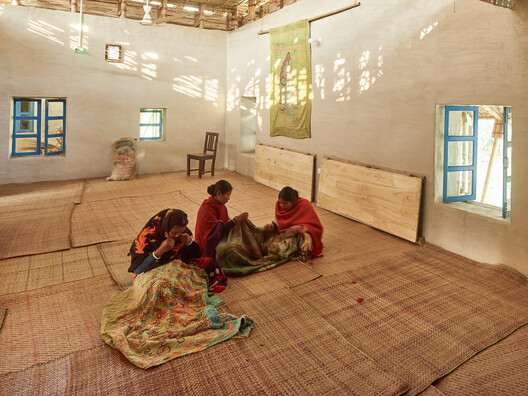
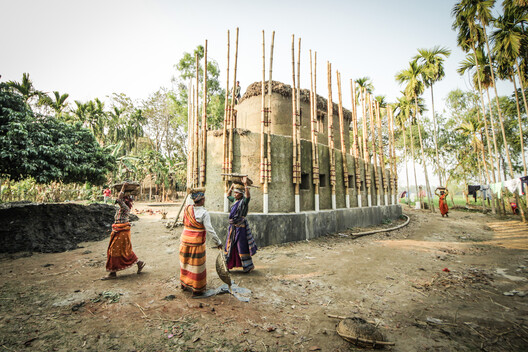
Today, craftsmanship is concentrated in project types capable of accommodating the labor, coordination, and uncertainty that skilled making demands. Boutique residences, hospitality projects, museums, and cultural institutions increasingly celebrate handmade construction because they operate under fundamentally different economic conditions than speculative development. Their clients often accept longer construction schedules, iterative design processes, and close collaboration with specialist craftspeople. A handmade brick wall or carved stone screen appears only when the project can absorb the months of coordination that such work demands. Contemporary practices such as Studio Mumbai, Wallmakers, BC Architects, and Anna Heringer's work in Bangladesh demonstrate that craftsmanship continues to flourish when construction is treated as a collaborative process rather than a standardized transaction. Their projects are frequently discussed through the language of sustainability or regional identity, yet they also reveal something less often acknowledged: skilled labor survives where the economics of construction allow it to.
Related Article
Peru’s 2025 Venice Biennale Exhibition Honors Uros and Aymara Ancestral Construction Techniques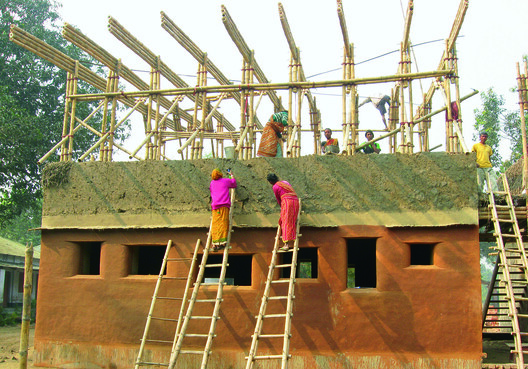
This concentration of craft within bespoke architecture reflects a broader shift that extends well beyond individual projects. UNESCO's recent programmes supporting artisan enterprises increasingly frame craftsmanship as part of the creative economy, emphasizing entrepreneurship, market access, and livelihood generation rather than preservation alone. Similarly, The Economics of Indian Craft, published by the Institute for Human Development and the Crafts Council of India, argues that craft remains a significant contributor to employment despite being consistently underestimated within formal economic statistics. What changes is not the knowledge itself but the market through which it circulates. Handmade construction survives, increasingly, in economies that reward rarity and bespoke production rather than ordinary building.
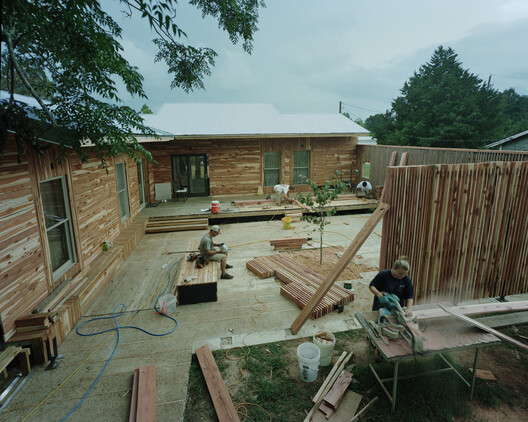
If craftsmanship appears expensive today, however, the premium lies less in traditional materials than in the labor systems required to transform them into architecture. Lime, earth, bamboo, and brick remain widely available across many regions. Their cost emerges through the knowledge needed to work with them. Lime plaster requires multiple carefully timed coats, curing periods, and experienced applicators. Rammed earth depends on precise moisture content, careful compaction, and continuous quality control throughout construction. Bamboo becomes structurally reliable only through skilled joinery and detailing, while carved stone represents hundreds of hours of accumulated expertise rather than the value of the stone itself. These materials have not become inherently costly; the expertise surrounding them has.
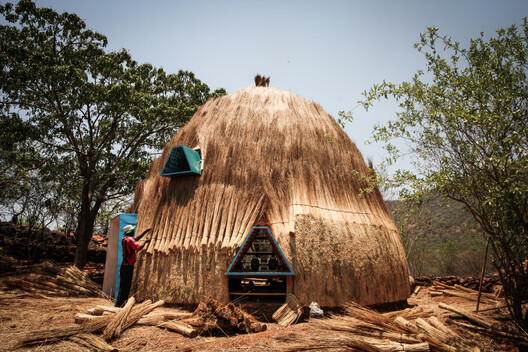
The difference becomes clearer once labor is separated from material. Craftsmanship is built upon tacit knowledge accumulated through repetition, patience, and practice. Such knowledge cannot be industrialized simply by documenting techniques or digitizing workflows. It depends on relationships between craftspeople, apprentices, contractors, and designers that evolve over time. These relationships sit uneasily within procurement systems optimized for compressed schedules, standardized specifications, and measurable efficiencies. What clients ultimately pay for is not expensive material but the economic conditions required to sustain skilled labor.
Viewed economically, construction begins to look very different. Across much of the world, building production has become increasingly fragmented through layers of subcontracting, temporary labor arrangements, and competitive tendering. It's been described as an industry where construction employment is frequently informal, project-based, and organized through short-term contractual relationships rather than long-term craft traditions. Under these conditions, craftsmanship does not disappear because knowledge has been lost. It becomes difficult to employ consistently.
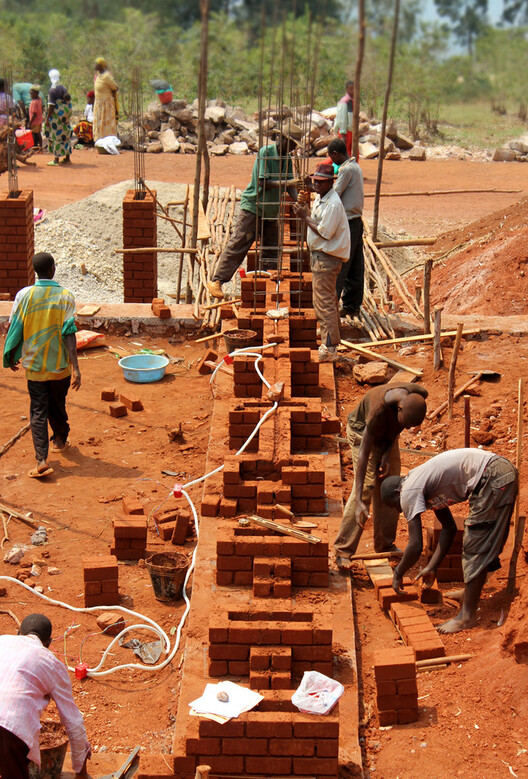
This distinction shifts the conversation away from narratives of cultural decline. Traditional building knowledge continues to exist across India and many other regions, sustained by masons, carpenters, stone workers, bamboo builders, and lime specialists whose expertise has often passed through generations. What has changed are the economic opportunities available to them. Skilled craftspeople are increasingly commissioned for exceptional projects rather than everyday construction, called upon when clients seek authenticity or cultural distinction rather than when buildings simply need to be built. Architecture increasingly treats craftsmanship as scarce. The scarcity, however, is economic rather than technological. The challenge is no longer preserving knowledge that already exists, but creating construction systems capable of employing it once again.
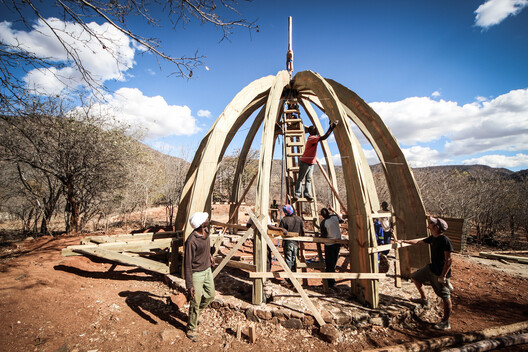
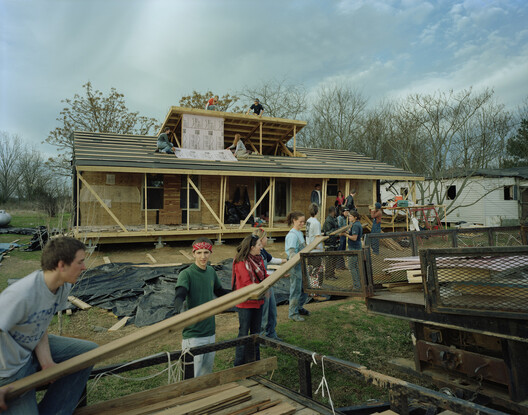
The implications of this shift extend beyond labor markets to the role architects themselves play in organizing construction. Material decisions are inseparable from decisions about procurement, sequencing, and collaboration. Together they determine whether craftsmanship shapes a building or survives only as its finish. When architects engage craftspeople only after design decisions have been finalized, handmade work is often treated as a bespoke finish layered onto an otherwise industrial process. By contrast, practices that involve artisans from the outset allow construction methods, structural systems, and material dimensions to evolve together. In these projects, construction methods begin shaping design from the outset. It becomes the logic through which architecture is conceived.
This approach is evident in practices that have deliberately reorganized the relationship between design and making. Studio Mumbai has long described architecture as an iterative dialogue between architects, carpenters, masons, and craftspeople working collectively in workshops and on site. Rather than separating design from construction, the practice allows details to emerge through making itself. Similarly, Belgium-based BC Architects integrates local earth construction and regional craftspeople into the earliest stages of design, treating material knowledge as an active design tool rather than a constraint. In India, Wallmakers' experiments with rammed earth, debris walls, and compressed earth systems similarly rely on close collaboration between designers and skilled construction teams capable of adapting techniques throughout the building process. What links these practices is not a shared material palette but a shared way of organizing production.
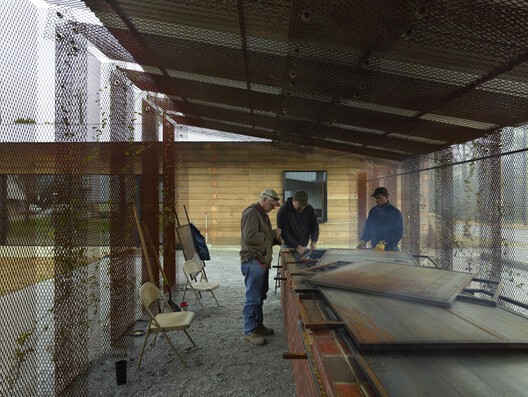
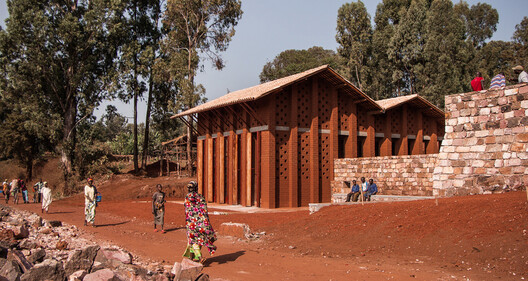
Their environmental performance receives most of the attention. Their organizational model may prove the more enduring contribution. By maintaining long-term relationships with craftspeople, investing in skill development, and designing around local construction capacities, they demonstrate that architecture can actively cultivate the conditions under which craftsmanship survives. Similar lessons emerge from Rural Studio in the United States, where design-build education treats construction as a form of architectural research, and from the Auroville Earth Institute, whose work combines technical innovation in earth construction with extensive training programmes for builders across multiple countries. In each case, craftsmanship is sustained not through nostalgia or preservation campaigns but through continuous practice, knowledge exchange, and stable opportunities for skilled work.
These experiments should not be mistaken for evidence that craft can simply replace industrial construction or scale effortlessly across contemporary housing markets. The realities of urbanization, labor shortages, housing demand, and construction finance make such conclusions difficult to defend. Their significance lies elsewhere. They reveal principles that could reshape mainstream construction without romanticizing the past. Procurement systems that reward long-term collaboration rather than lowest cost alone, public projects that invest in regional skill networks, contractor models that retain specialist knowledge across multiple commissions, and educational programmes that reconnect architectural training with construction practice all point toward ways of strengthening the economic foundations of skilled making. None of these proposals require abandoning technological innovation. Rather, they ask how technology, policy, and craftsmanship might operate together instead of being positioned as opposing futures.
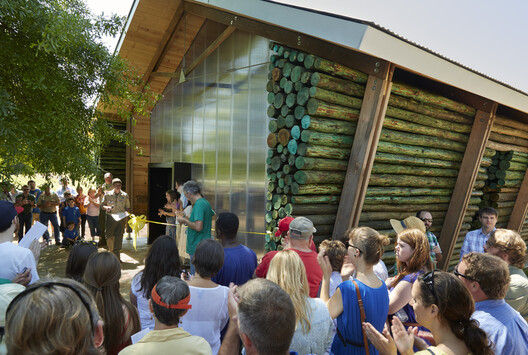
This broader perspective also challenges how sustainability itself is understood within architecture. Discussions around low-carbon construction often focus on materials, operational energy, or emerging technologies, while paying comparatively little attention to the labor systems that enable buildings to exist. Every construction method embodies an economic model as much as a technical one. Choosing rammed earth instead of concrete, lime instead of cement, or locally sourced stone instead of imported cladding is not simply a material substitution; it redistributes value across supply chains, construction timelines, and labor markets. The environmental performance of traditional materials cannot be separated from the social and economic structures required to build with them. If sustainable architecture seeks to reduce environmental impact while strengthening local resilience, then the future of craftsmanship becomes inseparable from the future of sustainable construction itself.
The current revival of craft therefore leaves architecture with a choice. Handmade construction can remain an exclusive language reserved for boutique commissions, where rarity itself becomes part of its cultural and commercial appeal. Or it can become the starting point for reconsidering how buildings are procured, financed, and assembled more broadly. The first path celebrates craftsmanship as an exceptional product. The second recognizes it as an everyday system of knowledge that still holds relevance for contemporary construction. The distinction is significant because it shifts attention away from preserving objects toward sustaining the conditions that make skilled work possible.

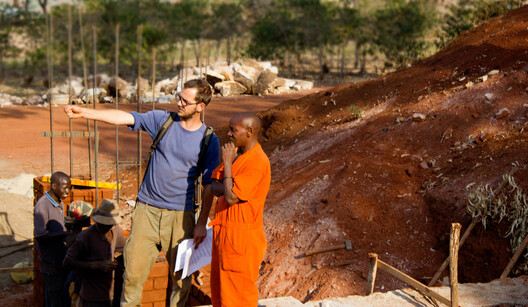
The future of craftsmanship does not depend on rediscovering forgotten techniques or romanticizing pre-industrial construction. Much of this knowledge has never disappeared. It continues to exist in workshops, villages, construction sites, and among craftspeople whose expertise remains essential whenever architecture chooses to engage with it. The real difficulty is not preserving knowledge but creating enough work for that knowledge to remain active. Contemporary construction has become exceptionally good at optimizing speed, standardization, and predictability, but far less capable of supporting the slower forms of collaboration through which craftsmanship flourishes. Handmade construction will survive only if the economics of building change with it. The future of craft depends less on remembering old techniques than on creating ordinary projects in which those techniques are once again worth using.
This article is part of the ArchDaily Topic: The Architecture of Craft: Handmade Stories in a Digital Age. Every month we explore a topic in-depth through articles, interviews, news, and architecture projects. We invite you to learn more about our ArchDaily Topics. And, as always, at ArchDaily we welcome the contributions of our readers; if you want to submit an article or project, contact us.