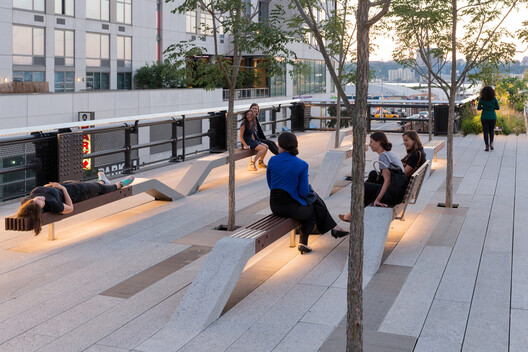
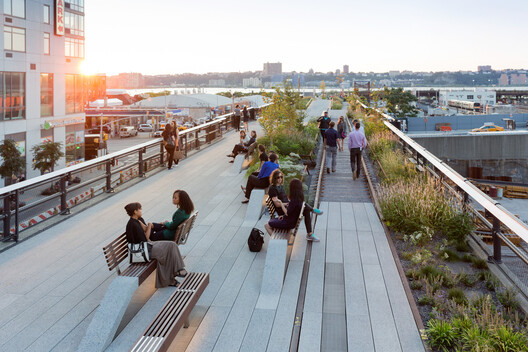
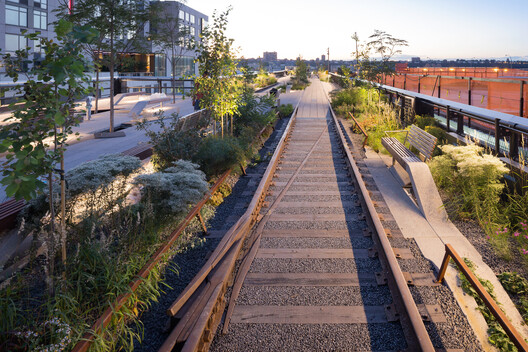
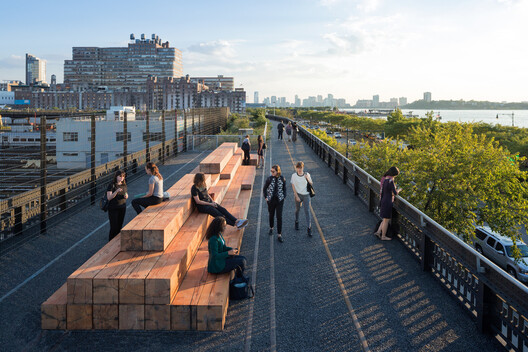
Images of the benches at New York City's High Line Park spread around the world when the project opened in 2009. Emerging diagonally from the same material and modular pattern as the paving, they transition seamlessly from concrete to wood, evoking the railway tracks that once occupied the site. To withstand decades of exposure to the elements, the project required a wood species of exceptional durability, and ipe, harvested from the Brazilian Amazon, was selected. Its slow growth produces a dense, low-porosity hardwood that is naturally resistant to wear, moisture, and biological decay. The choice, however, sparked controversy at the time amid concerns over the certification of the timber's forest management. This broader view changes how we think about materials. Their origin still matters, but so does what happens after the building's life comes to an end.
The forest where that wood grew also depends on exchanges that extend well beyond its own boundaries. Every year, winds carry vast quantities of dust from the Sahara across the Atlantic. Some of it settles over the Amazon Basin, bringing phosphorus, a nutrient essential to the growth of trees such as ipe. Because Amazonian soils contain relatively little phosphorus and heavy rainfall constantly washes nutrients away, this dust helps replenish what the forest loses each year. According to NASA, roughly 27.7 million metric tons of Saharan dust reach the Amazon annually, carrying about 22,000 metric tons of phosphorus, nearly the same amount the forest loses through rainfall and flooding.
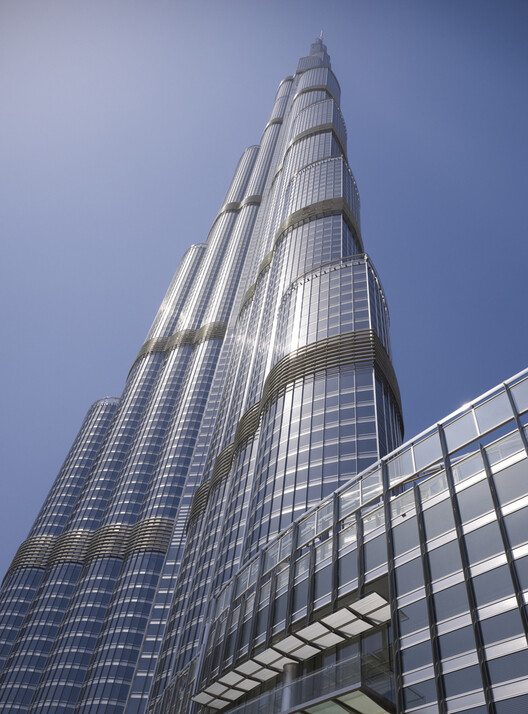
These movements are not unique to nature. Building materials follow similar paths. In a world connected by trade, migration, manufacturing, and information, very little of what makes up a building remains where it originated. Dubai offers a striking example. Although surrounded by desert, the city imported sand from Australia for the construction of the Burj Khalifa because thousands of years of wind erosion had rounded the local sand grains until they became unsuitable for concrete.
For centuries, these movements were largely invisible. We knew where Italian marble or German steel came from, yet rarely thought about the countless other components assembled into a building or how far they had traveled. As supply chains expanded, understanding a material came to mean more than identifying its source. It also meant understanding the route it took before arriving on site and where it might go afterward.
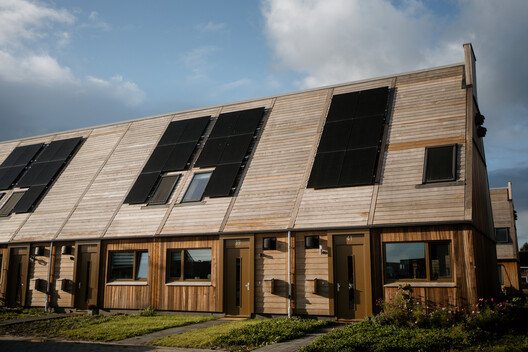
One response has emerged in Europe through material passports. Projects such as Buildings as Material Banks (BAMB) document the origin, composition, and reuse potential of every building component. The objective is simple: when a building reaches the end of its service life, its materials should be recovered and used again rather than discarded. The project's name captures the idea well. Buildings are not the final destination of materials but temporary repositories.
Steel rolled in a mill thousands of miles away. Glass manufactured within another industrial network. Workers who arrived from another region. Building codes inherited from different construction traditions. Design software developed on another continent. Before becoming architecture, each of these belonged somewhere else. After a building is dismantled, they will belong somewhere else again, whether through reuse, recycling, or disposal. For much of architectural history, the main question was where materials came from. Today it is equally important to ask where they will go next.
Only the scale and speed of these movements have changed, together with our ability to trace them. Ancient Rome was already built with materials transported across the Mediterranean. Marble from Greece, Egypt, and present-day Türkiye traveled thousands of miles to clad temples, forums, and palaces. Today those same routes span oceans and can be documented through certification systems or digital material passports.
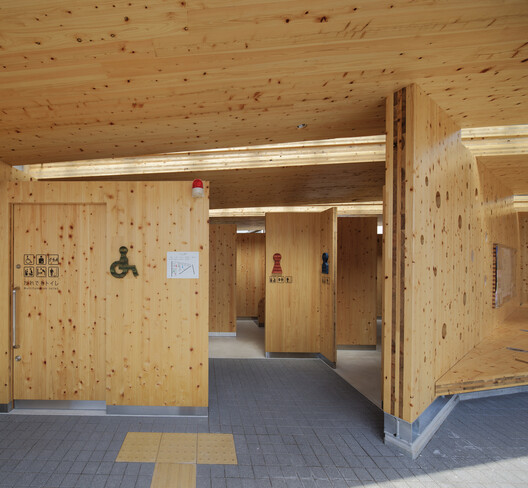
This raises an uncomfortable question: what does local architecture mean when almost nothing in a building is truly local? Even if its structure uses stone or earth extracted nearby, a faucet, an elevator, or a window frame quickly reveals a supply chain that extends across continents. Materials have always traveled. What has changed is our awareness of those movements and our ability to decide whether they produce places with distinct identities or buildings that look increasingly alike.
Later phases of the High Line replaced the original ipe with reclaimed teak salvaged from old buildings, bridges, and other structures across Southeast Asia. The wood no longer came directly from the forest. It came from another building. The park became another chapter in the life of that timber rather than its starting point. Architecture is still made from things that came from somewhere else. The difference is that "somewhere else" is often another building.
Of course, reconstructing every previous life of a material is rarely possible. Material passports can reveal only part of that story. Yet even partial knowledge changes the way we design. It shifts the question from simply Where did this material come from? to What are the consequences of choosing it? Its origin, the distance it traveled, its potential for reuse, and the life it may have after demolition all become part of the design decision.
This article is part of the ArchDaily Topic: Architectures of Movement: Land, Borders, and the Politics of Belonging. Every month we explore a topic in-depth through articles, interviews, news, and architecture projects. We invite you to learn more about our ArchDaily Topics. And, as always, at ArchDaily we welcome the contributions of our readers; if you want to submit an article or project, contact us.


