During July and until August 19, Aedes – Architecture and Space in Berlin will be showcasing the exhibition "A Structure of Feeling: On a New Generation of Architects in China." Aedes is a non-profit cultural institution founded in 1980. Focusing on the intersections of architecture, the city, and society, its continuous public program has presented around 600 exhibitions over more than four decades of work. In 2001, the space presented TUMU, an exhibition bringing a generation of young independent Chinese architects to international attention. Twenty-five years later, "A Structure of Feeling" showcases the work of a new generation working under changed conditions. Nine practices are represented in twelve projects transforming the existing urban fabric, rural development, and contemporary forms of spatial production.
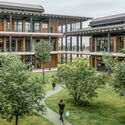
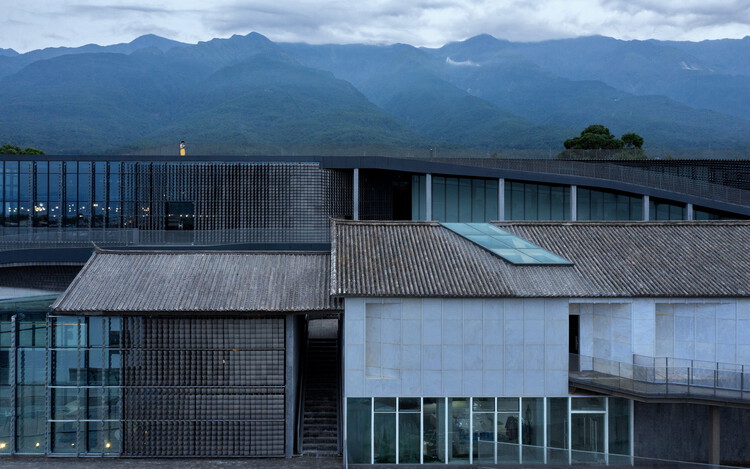
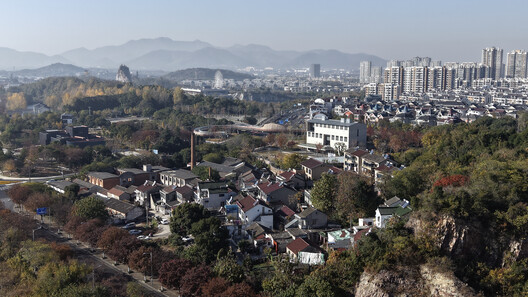
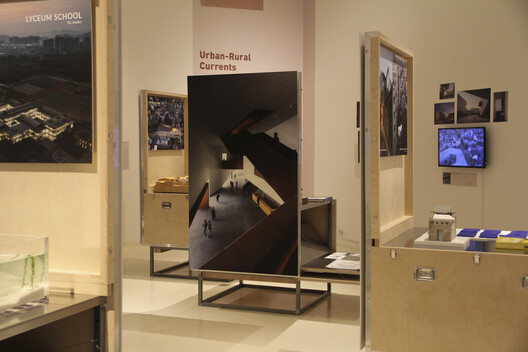
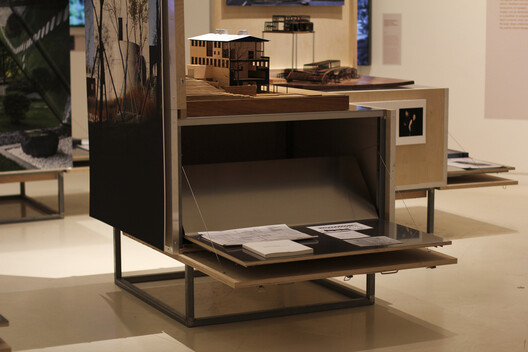
The curatorial approach by Gao Changjun (Kris) and Li Xiangning describes this new period as an unbridled expansion that has given way to a more differentiated mode of building, with altered scales and demands. The title references the concept of the 'structure of feeling' coined by cultural theorist and literary scholar Raymond Williams (1921–1988), defined by the institution as "a shared experience in the process of becoming, which resists straightforward description." The exhibited models, films, photographs, and graphic works are displayed to make the traces of that shared experience legible to the public, as "a snapshot of shifting architectural practice."
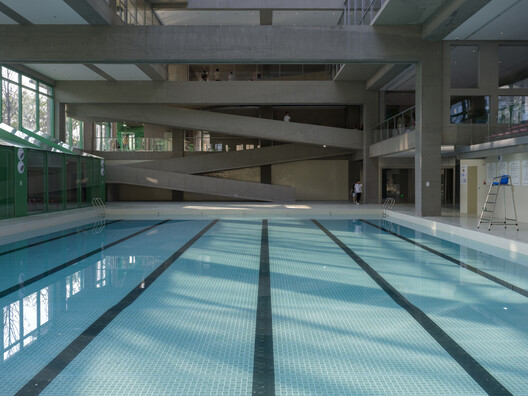
The exhibition, therefore, takes the condition of change and process as its starting point. The curators do not propose a vision or ask what Chinese architecture ought to be, but rather pose the question of what forces, and within what contradictions, it is currently taking shape, involving economic, institutional, cultural, and geographical aspects. The exhibited works are designed by architects working outside China's state-owned design institutes and beyond what the institution describes as "the logic of property-driven mass production", recognising that through architectural practice they remain entangled in both. They also share the experience of international trajectories shaping their practice.
Related Article
"Beauty in Itself Is Dangerous:" Xu Tiantian on Moving Beyond Starchitecture in Louisiana Channel InterviewThe exhibition is structured around three dimensions: the urban, the economic-geographical, and the epistemological. How can agency be gained within a system that has opened up without truly being open? What justifies building amid the entangled economies of city and countryside? How does architectural judgement develop in the absence of stable frames of reference? The works on show propose a cross-section for that investigation, and not a representative or coherent panorama. Twelve selected projects from a wide range of typologies and geographical contexts are complemented by works from the artists Drawing Architecture Studio (Li Han, Hu Yan and Zhang Xintong), with Ideal City; Ouyang Shizhong, with New Zone – Mansions; and Yang Yongliang, with Artificial Wonderland II – Travellers Among Mountains and Streams. The shipping crates used to transport the exhibits from China to Berlin by rail were also integrated into the spatial display.
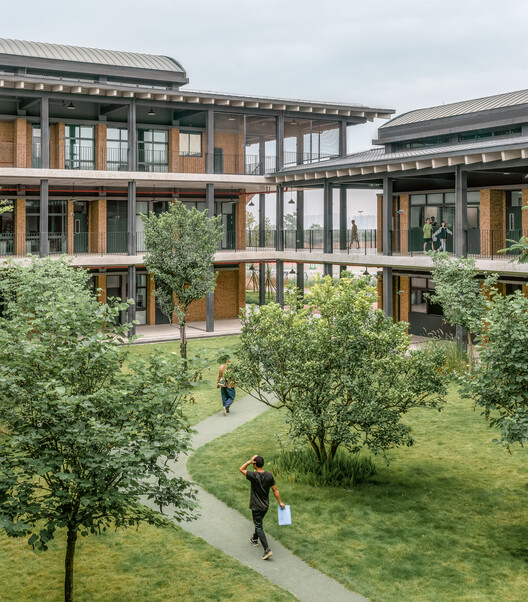
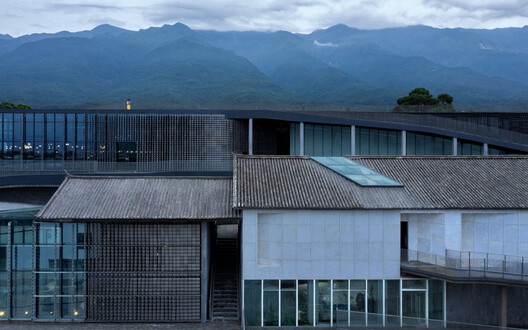
The exhibition features work from nine architectural practices spanning China. Atelier Alter Architects, led by Bu Xiaojun and Zhang Yingfan, presents the Dali Transformer Factory Theatrical District in Dali, Yunnan, completed in 2023. Atelier XÜK, run by Liu Kenan and Zhang Xu, contributes two projects: the Wu Guannan Art Museum in Yixing, Jiangsu, from 2024, and the Kunshan Wutong Experimental School in Kunshan, Jiangsu, from 2023. genarchitects, formed by Fan Beilei, Xue Zhe and Kong Rui, shows the Dining and Swimming Complex of Shanghai Zhonghua College, completed in 2025. line+ studio, led by Meng Fanhao, presents two works: the Mansion on Lotus Mountain in Changchun, Jilin, from 2022, and the Lishui Guyanhuaxiang Art Center in Lishui, Zhejiang, from 2024. DL Atelier, founded by Liu Yang and Xu Dan, exhibits the LYCEUM School in Chongzuo, Guangxi, completed in 2022.
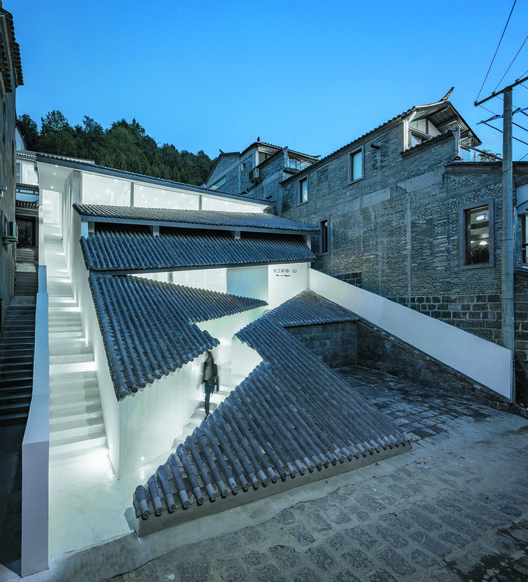
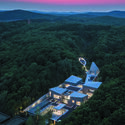
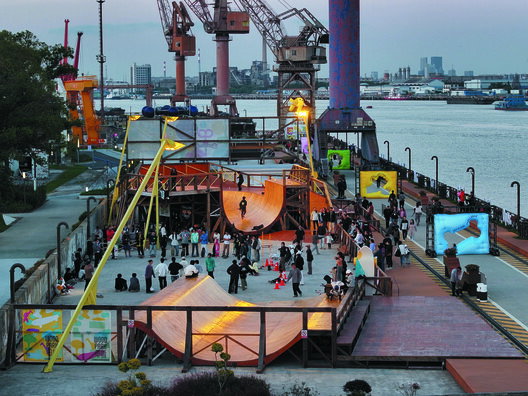
People's Architecture Office, led by James Shen, He Zhe and Zang Feng, presents the Plugin House in Shenzhen, Guangdong, from 2018. Yanfei Architects, headed by Shui Yanfei, shows two projects: Deckground in Shanghai, from 2025, and the Haiyan Ke Tang in Kunming, Yunnan, from 2023. Studio QI Architects, led by Qi Shanshan, contributes Annoso · Hill in Tengchong, Yunnan, completed in 2019. Finally, BUZZ, also known as Büro Ziyu Zhuang and led by Zhuang Ziyu, presents the Poodom Deqin Meri Hotel in Diqing, Yunnan, completed in 2024.
This year, other exhibitions will present contemporary perspectives on architectural production, both historical and current, from around the world. The Museum of Modern Art in New York inaugurated the exhibition "Architects of Liberation: Modernism in Western Africa" on July 5, 2026. It is on view through January 2, 2027, and examines African modern architecture in the context of political independence in the region. The third edition of the Sharjah Architecture Triennial (SAT03) will take place from November 14, 2026, to April 14, 2027, bringing together 32 participants working across architecture, anthropology, urbanism, art, design, education, and community-based practices. Austria has announced "Koncesija / Konzession / Concession(e)" as its contribution to the 20th Venice Architecture Biennale, examining questions of national representation, diplomacy, and architectural exchange.


