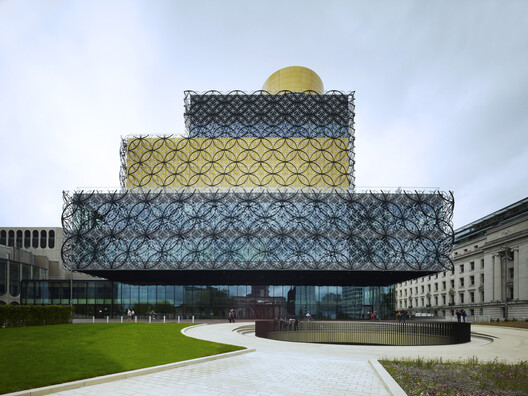
The architecture of Birmingham reflects the city's history as one of the first industrial centers of England. The wealth generated in the city and the surrounding region led to the grandeur of the Victorian era in the nineteenth century. Heavy bombardment during the Second World War caused widespread destruction. This was followed by rapid reconstruction in the 1950s-70s, introducing rational modernism and brutalist ambition, which characterizes large parts of the city center today. A few decades later, erasure returned to Birmingham, with reconsideration of some of the decisions of the mid-twentieth century. Famously, the Bullring Centre and the Birmingham Library were torn down to make way for twenty-first-century redevelopments, adding new layers of richness to the city's built environment.

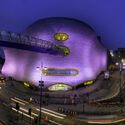
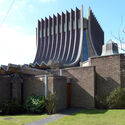
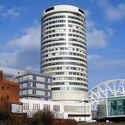
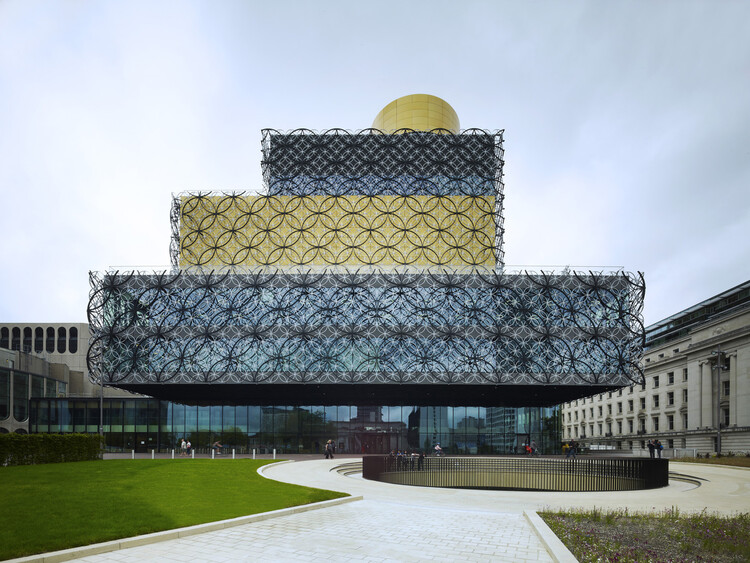
Chamberlain Square has been the city's civic heart since Victorian times. Sited prominently is Birmingham Town Hall, an impressive example of neoclassicism modeled after a Roman temple, with the Birmingham Museum and Art Gallery to one side. A short walk down is Centenary Square, home of the Library of Birmingham. Designed by Dutch architect Mecanoo and inspired by the city's jewelry-making heritage, it replaced the former brutalist upturned-ziggurat building from 1974. Brindleyplace, to the west, is a canalside former industrial district famous for its bars and restaurants. To the east of New Street train station is the Bullring area, with landmarks such as the Rotunda and the Ringway Centre from the early 1960s, and the Selfridges department store, completed in 2003.


