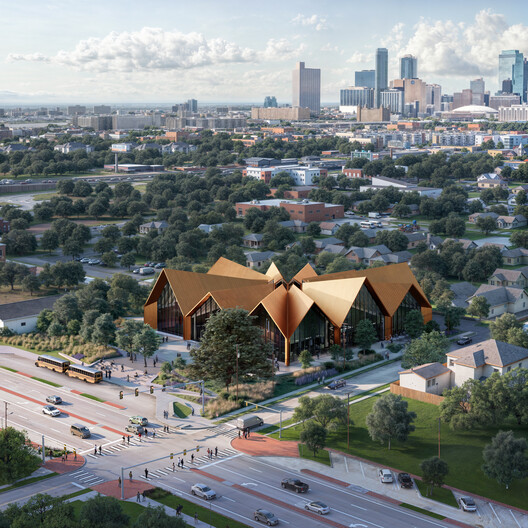
Bjarke Ingels Group (BIG) has unveiled new images of the National Juneteenth Museum, offering a closer look at the design of the 72,000-square-foot institution planned for Fort Worth, Texas. Designed in collaboration with Alligood Song Architecture and architect of record KAI Enterprises, the project is scheduled to begin construction in fall 2026 and will serve as a national center dedicated to preserving the history and legacy of Juneteenth. Led by activist Dr. Opal Lee, widely recognized as the "Grandmother of Juneteenth," the museum combines exhibition spaces with community-oriented programs intended to support both cultural preservation and neighborhood revitalization.



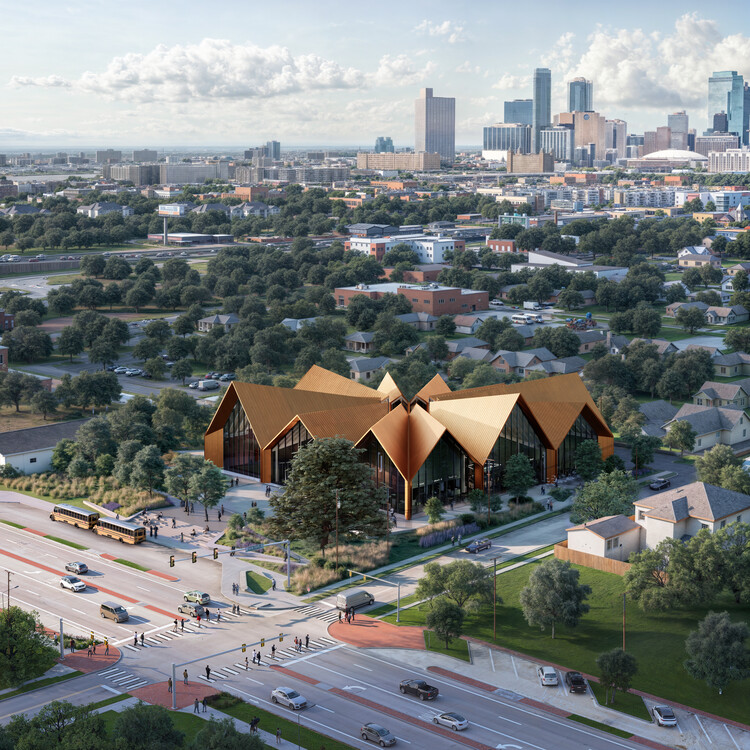
Located in Fort Worth's Historic Southside, a neighborhood divided by the construction of Interstate 35W in the 1960s, the museum has been developed in close collaboration with local residents. Beyond documenting the history of Juneteenth and African American freedom, the institution is envisioned as a civic and economic anchor for one of the city's historically underserved communities. Alongside immersive galleries, the program includes a business incubator, a food hall for local vendors, a theater, Black Box flexible event space, and additional gathering spaces designed to support year-round public activities.
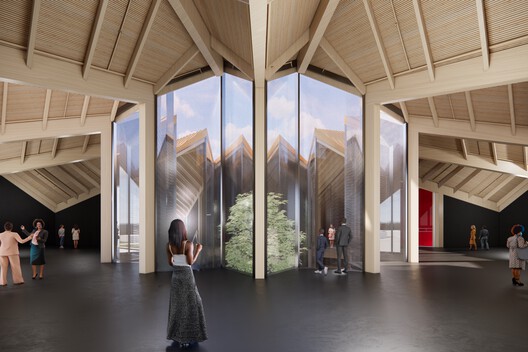
The newly released images highlight the project's mass timber structure, organized around a publicly accessible "nova star" courtyard inspired by the Juneteenth flag. The undulating roof creates a series of ridges, peaks, and valleys that converge to form the central gathering space, translating symbolic references into the building's architectural language. At the center of the courtyard, a five-point star is embedded within the terrazzo paving, referencing both Texas, the last state where enslaved African Americans learned of their freedom on June 19, 1865, and the broader recognition of freedom across all 50 U.S. states.
Related Article
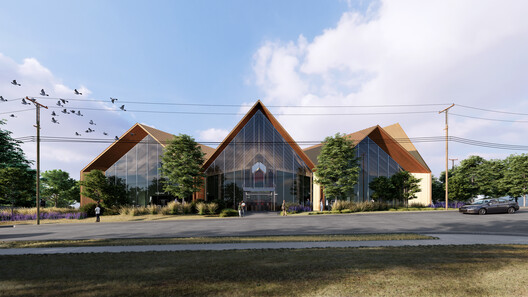
On Juneteenth, Discover 8 Museums and Cultural Institutions Dedicated to African American History and CultureDrawing from the gabled rooflines and front porch typologies characteristic of the Historic Southside, the museum reinterprets familiar residential forms as civic architecture. Five street-level entrances allow galleries and public programs to operate independently, while two covered portals connect directly to the courtyard and primary exhibition spaces. The exposed mass timber structure extends into the interior, creating visual continuity between the exterior and interior spaces. Inside, the museum is organized around a circular circulation route that wraps the central courtyard and connects the exhibition spaces across two levels. Visitors enter through a reception area before ascending to a light-filled mezzanine, where galleries overlook the public courtyard through extensive glazed openings. A star-shaped opening carved into the roof introduces daylight deep into the interior while creating visual connections between the museum's exhibition spaces and the civic activities taking place below.

Juneteenth was designated a federal holiday in the United States in 2021 following the signing of the Juneteenth National Independence Day Act. Once completed, the National Juneteenth Museum will provide a permanent venue for exhibitions, educational programs, and public events dedicated to preserving and interpreting the history and legacy of the observance. Coinciding with this year's Juneteenth celebrations, the Obama Presidential Center recently opened in Chicago's Jackson Park, adding another major cultural institution focused on African American history, civic engagement, and public education. In other recent news from BIG, the practice unveiled the design for a new STEM university campus in Bentonville, Arkansas, and revealed plans for the new Tennessee Performing Arts Center in Nashville, expanding its portfolio of cultural and educational projects across the United States.