
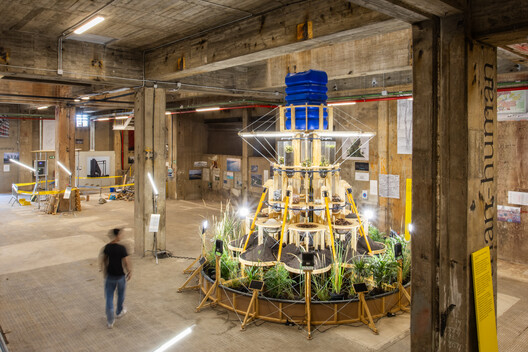
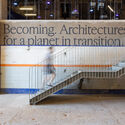
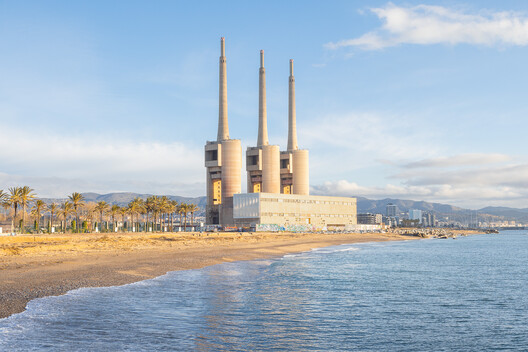
The UIA 2026, the 29th edition of the triennial international event for architectural dialogue organised by the International Union of Architects, has opened its doors on Sunday, June 28th, with an inaugural event held at Three Chimneys, a former power plant in Sant Adrià de Besòs. Each Congress focuses on a pressing topic relevant to the profession, articulated through a central theme. The topic for 2026 is "Becoming. Architectures for a Planet in Transition," calling for a broad and critical overview of the possible futures of architecture. The event runs through July 2, 2026, as a distributed event across multiple venues and urban contexts. With a multidisciplinary approach, Barcelona, the UNESCO World Capital of Architecture 2026, is set to become a global laboratory and hub for debating forthcoming ecological, social, material, and cultural transitions.
Three decades after it first hosted the event, Barcelona once again becomes the host of the global disciplinary debate. The UIA World Congress of Architects 2026 Barcelona aims to bring together 10,000 professionals, students, and institutional representatives from more than 130 countries. Discussions address topics such as the climate emergency, the housing crisis, the circularity and sustainability of materials, and the evolution of public space at large and small scales, as well as more specific topics such as the future role and responsibility of architectural awards or conferences dedicated to the DANA floods in Valencia. The daily program will be marked by two plenary sessions each day, at the start (09:00) and at the end (16:45).
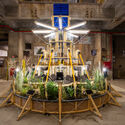
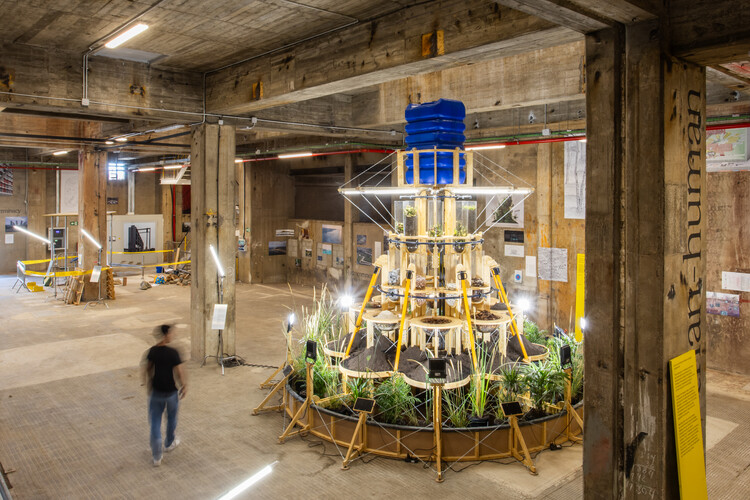
The UIA 2026 program is structured around six thematic axes: Becoming More-than-human, Becoming Circular, Becoming Embodied, Becoming Interdependent, Becoming Hyper-Conscious, and Becoming Attuned, which frame discussions on ecology, resource cycles, construction practices, governance, digital systems, and cultural production. The central program of the Congress was curated by Pau Bajet, Mariona Benedito, Maria Giramé, Tomeu Ramis, Pau Sarquella, and Carmen Torres, together with the Scientific Committee under the honorary presidency of Fuensanta Nieto. The Central Exhibition of the Congress, also located at Three Chimneys, presents the unpublished results of 12 Research by Design projects in the form of installations, videos, objects, and drawings. It will also show the results of the international Emerging Workshop, developed during the week prior to the Congress, with 180 students from around the world across 12 research workshops, as well as the winners of the international student competitions.
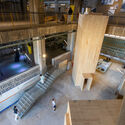
The overall Congress structure extends during and after the event through exhibitions, workshops, and itineraries that unfold across the region and concentrate in three main Barcelona venues. The CCIB, the Barcelona International Convention Centre, will host over 250 international speakers and 60 participants linked to the UIA's working bodies, who will take part in more than 40 sessions, including plenary sessions, debates, open forums, workshops, presentations of new research, award ceremonies, and public celebrations. The Disseny Hub Barcelona (DHub), with free access open to the public, will bring together talks, debates, and activities linked to some of the most relevant architecture schools, institutions, and associations in the world, hosting an exhibition of 207 works showcasing the best of Spanish architecture over the last 30 years. The core program and Central Exhibition will be held at the Three Chimneys complex in Sant Adrià de Besòs, along with the afternoon Open Forum gatherings and festive events.
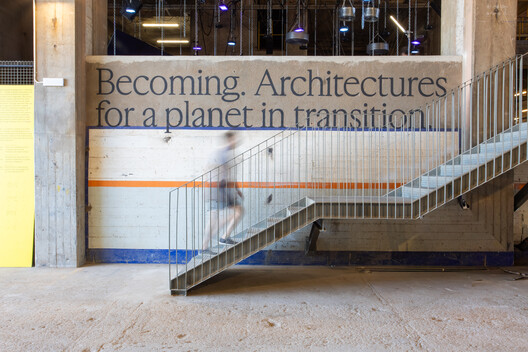
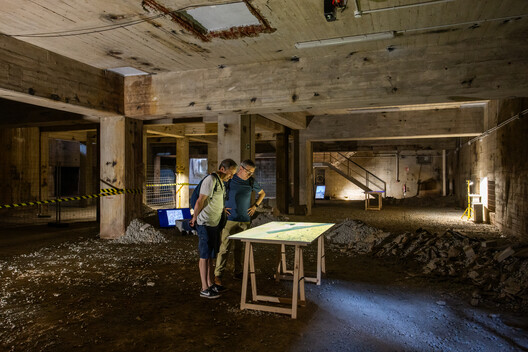
The Central Exhibition, Becoming. Architectures for a Planet in Transition transforms the turbine hall of the Three Chimneys complex into a 4,000-square-meter laboratory of architectural experimentation and exchange. Bringing together 12 Research by Design commissions alongside over 200 contributions from Congress speakers, the exhibition addresses water, materials, housing, legislation, and the poetics of space through models, prototypes, full-scale installations, and audiovisual works. Among the highlights are projects by Colectivo C733 addressing water scarcity in Mexico City through local infrastructure for wastewater reuse, BAUKUNST and BC Architects on circular construction using mineral and organic waste, H Arquitectes and BRUTHER on the atmospheric and invisible forces that shape space, and Forensic Architecture on spatial investigation as a tool for public accountability. The exhibition also presents the results of the International Emerging Workshop, as well as selected projects from the UNESCO-UIA student competition Catalysts of Resilience and the young architects competition Architecture in the Aftermath of Disasters. Open to accredited participants from June 28 to July 2, the exhibition will then welcome the general public free of charge from July 3 to 19, activated throughout by public events, debates, and gatherings.
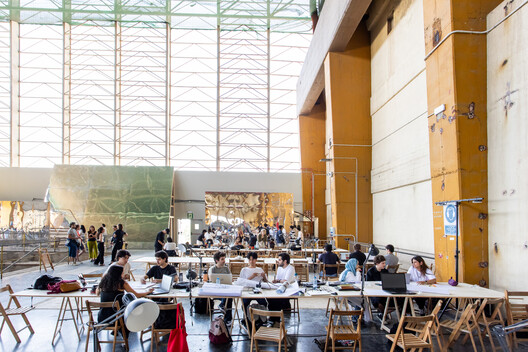
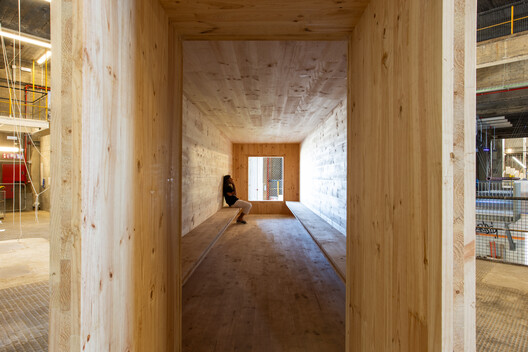
Monday, June 29, opens the Congress with ecology and circularity as twin frameworks, featuring Junya Ishigami on the dissolution of boundaries between architecture and nature, Kate Orff and Dirk Sijmons on water and coastal adaptation, and Lacaton & Vassal in conversation with H Arquitectes on the long life of buildings. On Tuesday, June 30, the conversation will turn to materials and housing, with Marina Tabassum and Palinda Kannangara reflecting on climate-rooted construction, Jan Gehl on urban design and social trust, and Mariana Mazzucato on the economics of the common good. The evening's highlight is the UIA Gold Medal ceremony, held at the Sagrada Família. On Wednesday, July 1, the Congress will move into more speculative territory, with Mario Carpo tracing the history of computation and AI in architecture, Forensic Architecture on the geopolitics of space and territorial violence, and afternoon sessions exploring the poetic and ephemeral dimensions of the discipline through the work of Smiljan Radić and Alexander Brodsky. Thursday, July 2, brings the event to a close with the reading of the Congress Manifesto and the institutional handover to Beijing, the next host city of the UIA World Congress of Architects in 2029.
This article is sponsored by VELUX, a global leader in daylight and ventilation solutions, and official partner of both the UIA 2026 World Congress of Architects and Barcelona 2026 World Capital of Architecture. As part of ArchDaily's coverage of the UIA 2026 World Congress of Architects, this series explores topics related to the Congress's curatorial theme, 'Becoming. Architectures for a Planet in Transition.'
At the Congress, VELUX will introduce Re:Living, an approach initiative exploring how existing buildings can be transformed from degenerative structures into regenerative catalysts for human and planetary health, positioning renovation as a critical pathway for addressing the interconnected climate, housing, health, and affordability challenges facing Europe.


