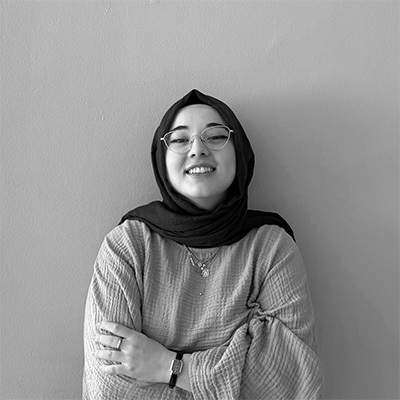
Mexican sculptor Pedro Reyes has developed a multidisciplinary practice that spans sculpture, architecture, social engagement, and activism. Trained as an architect, Reyes approaches sculpture as both a material and a collective process, combining traditional stone carving with participatory projects that address contemporary social issues. His work frequently explores transformation, whether through physical materials or community action, positioning sculpture as a tool for reimagining social realities. In a 2025 interview with Louisiana Channel, Reyes discusses the influence of architecture on his artistic practice, the concept of "social sculpture," and the importance of preserving craft traditions in an increasingly automated world.
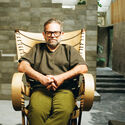
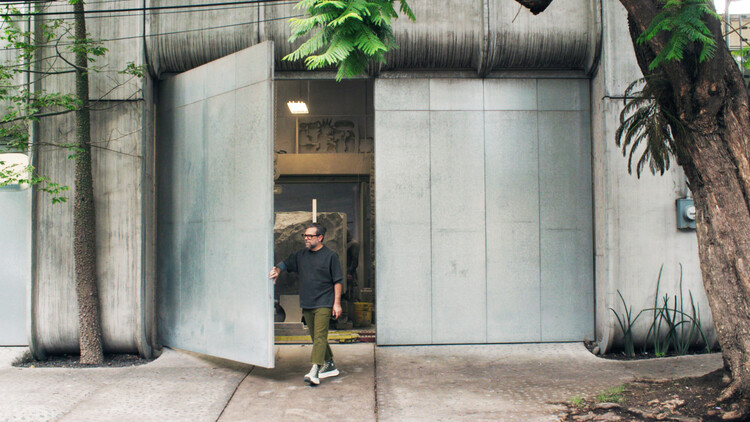
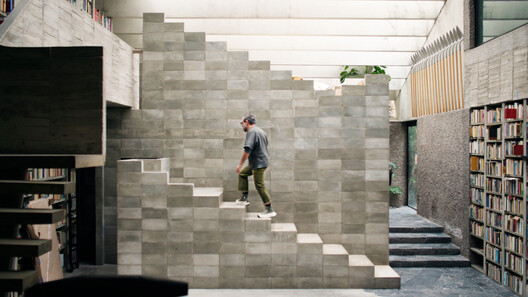
Reyes defines sculpture as "changing the shape of things, taking a material and giving it a new form," a process that extends beyond physical objects to include social contexts. While part of his practice remains rooted in classical techniques such as carving and modeling, he also embraces what he calls "social sculpture," in which participation and collective action become the primary medium. In both cases, sculpture is understood as an act of organizing and transforming matter, regardless of whether that matter is stone, metal, or human relationships.
His background in architecture continues to shape this understanding of artistic practice. Rather than approaching art as purely aesthetic production, Reyes draws on architecture's emphasis on function and problem-solving, arguing that artistic work should also serve a purpose. "I have wanted art to be used and to have a measure of effectiveness that is not purely aesthetic," he explains. Influenced by figures such as Joseph Beuys and by Mexico's tradition of socially committed artistic practice, Reyes sees sculpture as a discipline capable of connecting material experimentation with social responsibility.
Related Article
"My Solutions Are Not Polite:" Liam Young on Architecture in the Age of Polycrisis in Louisiana Channel InterviewThis approach is exemplified by Palas por Pistolas (Shovels for Guns), one of his best-known participatory projects. Developed in response to gun violence in Mexico, the initiative organized the voluntary collection of 15,000 firearms, which were melted down and transformed into 1,500 shovels used to plant 1,500 trees. Reyes describes the project as "not only a physical transformation of the metal, but also a psychological transformation and hopefully a social transformation," turning "something that is an agent of death" into "an agent of life." The growing trees, he suggests, function as living monuments that extend the project's impact over time.
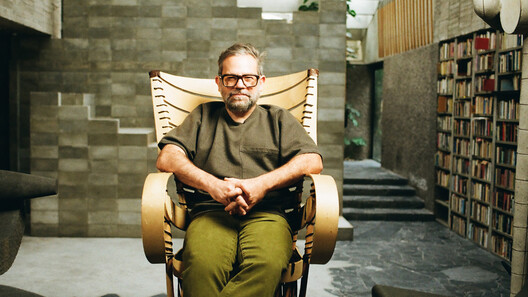
Sculpture is like a time machine, where you make different stops in different centuries and across different regions of the world in order to find solutions that you can use.
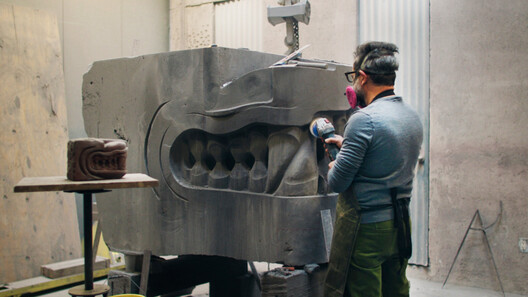
Alongside these socially engaged works, Reyes maintains a practice grounded in traditional stone carving. Working with volcanic stone collected near Mexico City, he describes sculpture as a negotiation between the material's inherent qualities and the ideas it is intended to express. Rather than imposing a predetermined form, the carving process unfolds through continuous adaptation to the stone's textures, cracks, and imperfections. For Reyes, this dialogue connects contemporary practice with ancient traditions, allowing sculpture to operate across different historical and cultural contexts.
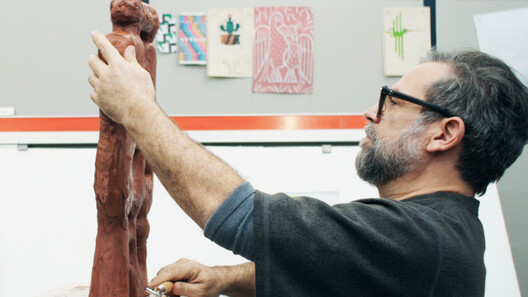
"I think that what you do in sculpture is to somehow take matter and try to make a transmission of spiritual energy into matter," Reyes explains, describing artworks as objects capable of communicating beyond their material presence. He concludes by positioning artistic practice between imagination and reality, suggesting that art functions as "a surplus reality" where experimentation, play, and error become essential tools for envisioning alternative ways of living and transforming the world.
Louisiana Channel is a series of video interviews on art, literature, architecture, design, and music produced by the Louisiana Museum of Modern Art. Recent conversations have featured architects and designers, including Liam Young, Tsuyoshi Tane, Xu Tiantian, and Zhu Pei, exploring topics ranging from speculative futures and memory to material culture and the evolving role of architecture in contemporary society.