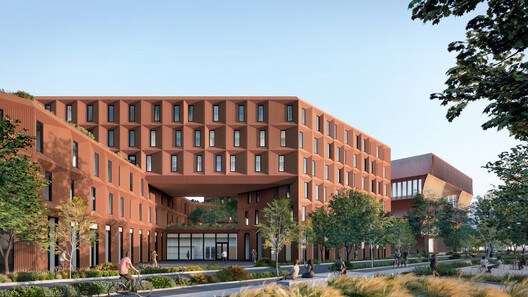
This week's coverage brought together a range of news, projects, and announcements from across the architectural world. Stories included conversations ahead of the UIA World Congress 2026, where architects, critics, and award organizers are set to discuss the evolving role of architectural recognition, alongside BIG's proposal for a new university campus in Bentonville, Arkansas. The week also featured updates on major public and cultural projects, from the redevelopment of New York's Penn Station to the ongoing transformation of London's Olympia and the completion of a new cultural center in Dongguan, China. It also marked the passing of Lorcan O'Herlihy, founder of LOHA, whose practice became known for its commitment to housing, urban density, and socially engaged design across Los Angeles and beyond.

Architecture's Institutions, Legacies, and Future Directions
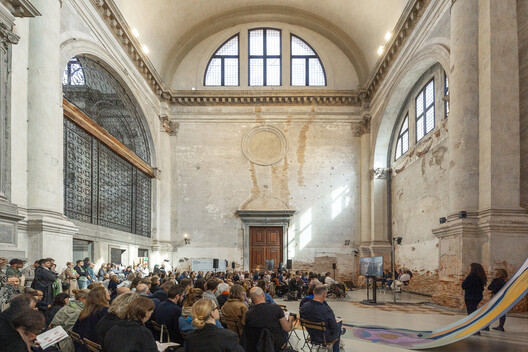
This week brought renewed attention to the institutions, individuals, and educational initiatives shaping the future of architecture. Ahead of the UIA World Congress 2026 in Barcelona, representatives from some of the world's leading architectural awards announced a collective discussion, "Beyond Recognition: Exploring the Role of Architectural Awards," examining whether awards should move beyond recognition toward greater responsibility in addressing contemporary environmental and social challenges. Building on conversations initiated during the 2025 Venice Architecture Biennale, the event will bring together award directors, architects, critics, and editors to reflect on how systems of evaluation influence architectural discourse, professional priorities, and public perception.
Related Article
Shamballa Opens in Italy as a 3D-Printed Research Site Exploring Self-Sufficient Sustainable Living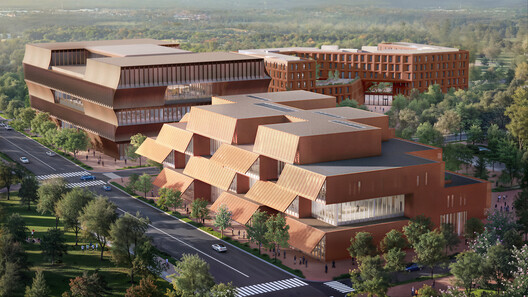
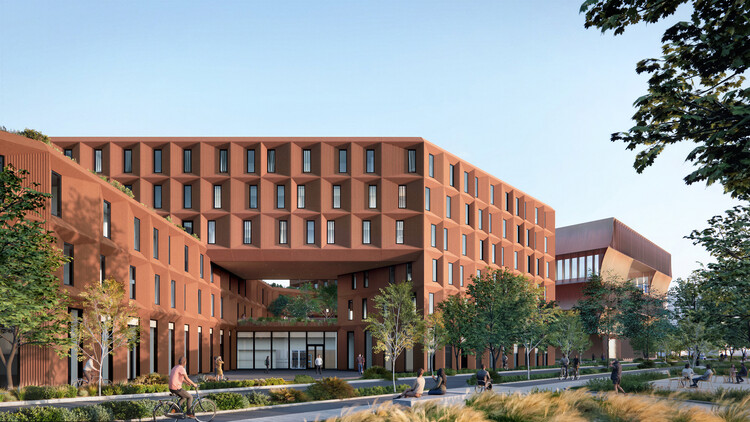
Questions about the future of architectural education emerged as BIG unveiled designs for a new STEM-focused university campus in Bentonville, Arkansas. Planned on the former site of Walmart's headquarters, the project proposes an integrated academic environment comprising teaching facilities, makerspaces, student housing, and public open spaces. Organized around a historic rail corridor and designed to blur the boundaries between campus and city, the proposal reflects growing interest in educational institutions as active participants in civic and community life.
Reimagining Public and Cultural Destinations
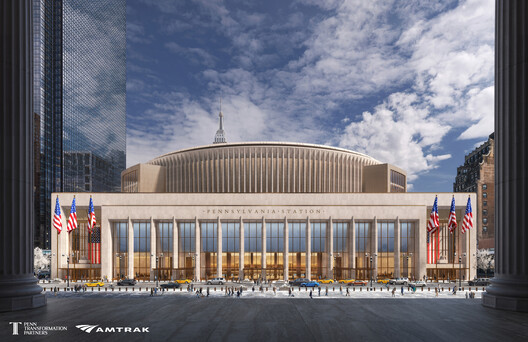
Across different contexts, major projects announced and completed this week demonstrate how large-scale civic, cultural, and transportation destinations are being adapted to meet contemporary demands while reinforcing their public role. In New York City, PAU, together with HNTB and HOK, unveiled designs for the redevelopment of Penn Station, introducing expanded concourses, a new train hall along Eighth Avenue, improved accessibility, and upgraded passenger facilities. The proposal seeks to transform one of North America's busiest transportation hubs while responding to longstanding concerns regarding circulation, capacity, and user experience.
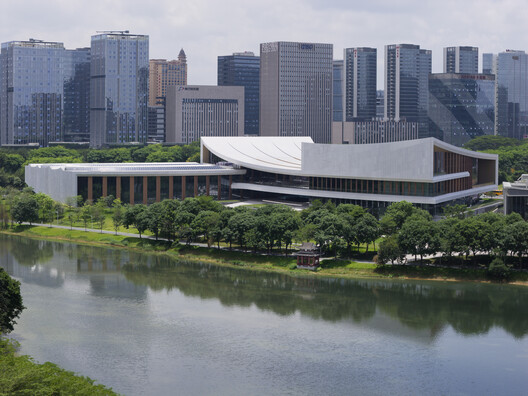
In London, Heatherwick Studio and SPPARC revealed the first completed phase of Olympia's ongoing transformation from a historic exhibition complex into a mixed-use cultural destination. The opening includes a new public canopy and elevated pedestrian routes that reconnect previously inaccessible areas of the site, forming part of a broader strategy to introduce new public spaces, cultural venues, and hospitality programs while preserving the character of the Victorian landmark. Meanwhile, in Dongguan, China, ZHA and the Beijing Institute of Architectural Design completed the Songshan Lake Exhibition and Performance Center, a new cultural facility serving the Guangdong-Hong Kong-Macao Greater Bay Area. Combining theaters, exhibition spaces, waterfront public areas, and landscaped terraces, the project is intended to function as both a civic gathering space and a regional cultural anchor within one of China's leading innovation districts.
On the Radar
Snøhetta Unveils Sculptural Tower for Rohde & Schwarz Headquarters Expansion in Munich
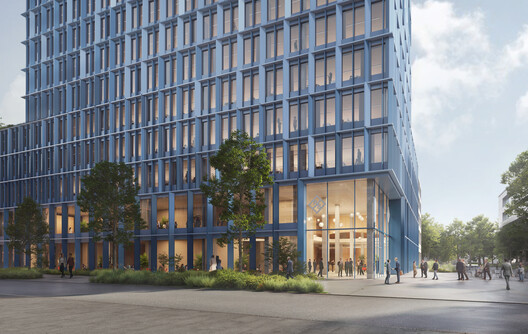
Snøhetta has unveiled the design for a new 65-meter-high tower as part of the expansion of Rohde & Schwarz's headquarters in Munich's Werksviertel district. The project is part of a broader campus development that includes a five-story podium building, offices, research and development spaces, and a publicly accessible experience center. The tower is composed of a gently tapering, S-shaped volume inspired by a sine wave, producing a continuous form that changes in perception depending on viewpoint and light conditions. The facade is articulated with vertical shading elements and a blue gradient finish that emphasizes the building's vertical proportions. The design incorporates photovoltaic panels integrated into the envelope, along with passive shading strategies intended to reduce solar gain. At ground level, the building connects directly to the surrounding plaza, extending the public interface of the Werksviertel campus.
RSHP Unveils Dubai Peninsula Waterfront Development in Dubai
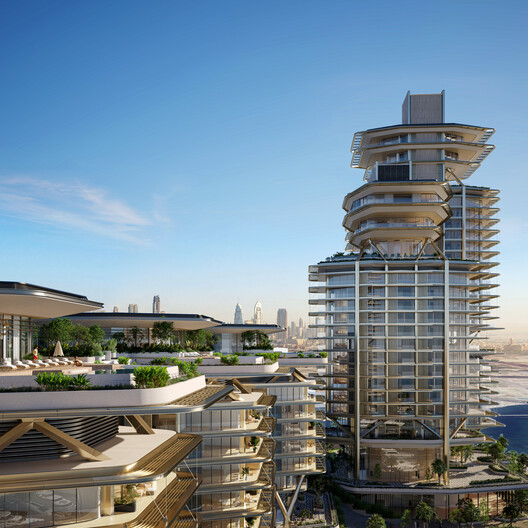
RSHP has unveiled its design for the Dubai Peninsula, a mixed-use waterfront development located on reclaimed land at the confluence of the Dubai Canal and the Arabian Gulf. Developed for H&H, the scheme consists of six interconnected pavilion buildings and two residential tower pairs organized around a new marina. The program includes luxury residential units, a five-star hotel, serviced apartments, retail, food and beverage spaces, and a 32-berth marina. The hotel pavilions are linked by elevated glazed bridges, while rooftop levels accommodate amenities including a restaurant, sky bar, and swimming pool with views across the waterfront. The lower levels are designed as a continuous promenade incorporating retail and dining spaces. The project integrates shading devices, vertical screens, and massing strategies intended to reduce solar exposure and respond to the local climate conditions.
Bukhara Biennial Names Kulapat Yantrasast as Artistic Director for 2027 Edition
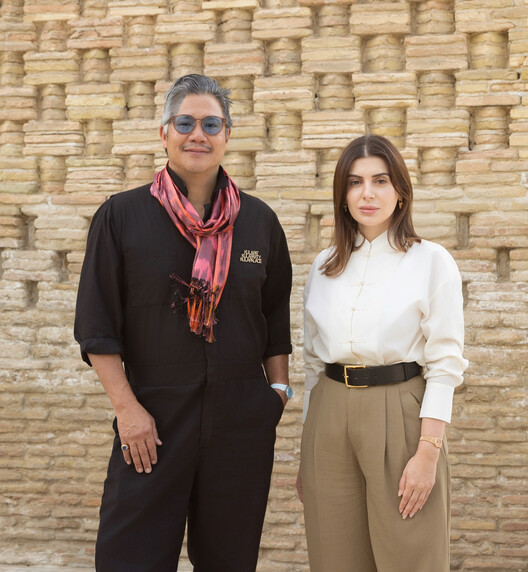
Kulapat Yantrasast, founder and creative director of WHY Architecture, has been appointed Artistic Director of the 2027 Bukhara Biennial, which will take place in Uzbekistan from September 3 to November 21, 2027. Conceived and commissioned by Gayane Umerova and the Uzbekistan Art and Culture Development Foundation (ACDF), the upcoming edition will expand the biennial's footprint across newly restored historic sites, caravanserais, madrasas, and public spaces throughout Bukhara, continuing its interdisciplinary focus on art, craft, and cultural exchange. Building on the inaugural 2025 edition, the 2027 program will further develop its collaborative framework, bringing together international artists, Uzbek master artisans, and professionals from fields such as ecology, scholarship, and economics.