
Unlike many other activities that now take place entirely in digital environments, the final result of work in the architecture, engineering, and construction industry does not remain on a screen. Files become buildings, models transform into structures, and decisions made during the design process ultimately shape streets, neighborhoods, and entire cities. A building often lasts for decades, sometimes centuries, and the impacts of the choices made during its development extend far beyond the moment of delivery, influencing the daily lives of thousands of people.
This discussion becomes particularly relevant as the AEC industry continues to face productivity challenges while projects become more complex. Buildings now emerge from larger networks of clients, architects, engineers, consultants, manufacturers, contractors, operators, regulatory bodies, and digital platforms. Within these layered project ecosystems, even small inefficiencies can affect decisions across the entire lifecycle of a project.
A 2024 McKinsey report helps quantify the scale of this challenge. Despite representing a global industry valued at approximately US$16 trillion, construction productivity increased by only 0.4% per year between 2000 and 2022. Over the same period, productivity in the global economy grew by 50%, while manufacturing productivity increased by approximately 90%. Rework, errors, and inefficiencies remain a major part of this gap, accounting for an estimated 4% to 10% of project costs. Against this backdrop, it is not surprising that the global market for technologies geared toward architecture, engineering, and construction is growing at rates exceeding 12% per year.
These numbers reveal an interesting paradox. The sector now has access to an unprecedented range of digital tools intended to carry projects from early design to construction. Yet a significant portion of resources continues to be consumed by the need to correct problems that arise throughout the process. In a landscape marked by decarbonization goals, resource scarcity, regulatory complexity, and pressure to accelerate project delivery, reducing information loss has become a strategic priority.
Part of this challenge is related to how projects are currently developed. While architects, engineers, and builders previously worked with relatively limited sets of documents and tools, today each project moves through digital ecosystems composed of BIM platforms, cloud-based collaboration systems, visualization software, artificial intelligence tools, construction coordination environments, and numerous other specialized applications. Each of them produces, transforms, and shares information that must remain consistent throughout the entire project lifecycle.
One of the central challenges of the industry's digital transformation is ensuring that decisions made early in the process can move across a project's lifecycle without losing their underlying rationale. Every architectural decision carries a logic beyond its graphic representation, whether it concerns the position of an opening, the selection of a material, or the definition of a structural system. As these decisions are translated from design intent into documentation, coordination, and construction, part of that reasoning can easily be lost.
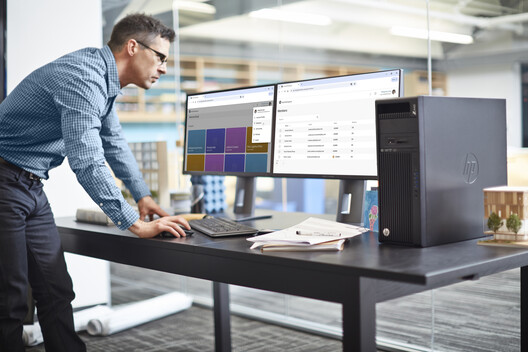
In many cases, the problems that generate delays, waste, or rework emerge precisely in the gaps between project stages. Information that has not been updated, a detail interpreted differently by separate teams, or a change that has not reached everyone involved can produce significant consequences once it reaches the construction site. Small digital disconnects can result in substantial physical impacts.
Over the course of several years, a single project can move through many disciplines and professional teams, generating a vast body of documentation along the way. Information circulates continuously between architects, engineers, consultants, manufacturers, contractors, and operators. To some extent, designing today also means coordinating complex information flows, and the quality of a building depends on the ability to transmit information clearly throughout the entire process.
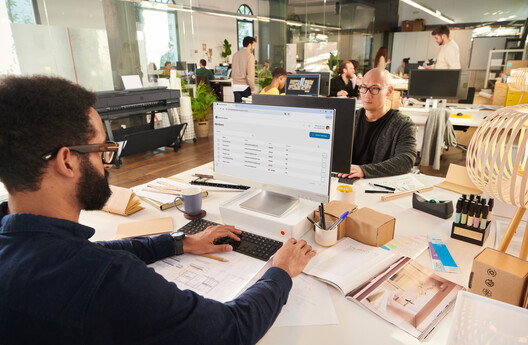
However, the fragmentation of digital workflows remains a recurring challenge. Architects constantly move between modeling platforms, collaborative environments, document management systems, visualization tools, and artificial intelligence-based applications. Although each of these technologies has been developed to solve specific problems, their coexistence creates a new responsibility: ensuring that information maintains its context and integrity as it moves across different systems.
Ultimately, the challenge lies not only in software integration but also in the ability to connect professionals working across different disciplines, companies, and contexts, often geographically distributed and using different tools. The more complex the project, the more important it becomes to keep teams aligned around a shared understanding of the project
The digital transformation of AEC depends on building ecosystems that preserve continuity between what is decided, who acts on it, and how it is communicated. When this continuity is preserved, workflows become better equipped to translate design decisions into coordinated documentation and technical execution.
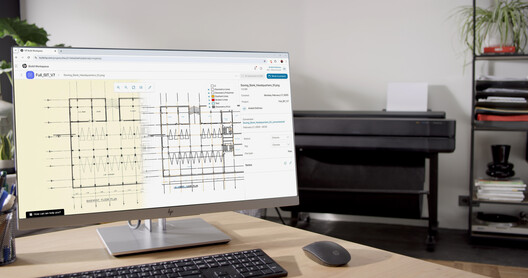
HP identified an opportunity to help unify workflows and reduce friction across these complex project ecosystems, a vision reflected in its AEC platform, "For work that becomes the world." HP's ecosystem of solutions for architecture, engineering, and construction is built around this principle. Rather than trying to solve everything in one place, its tools address specific points in the process where coordination, documentation, and execution often become disconnected.
HP Build Workspace is designed to help teams organize and review project information in a shared environment, bringing together markups, comments, tasks, and site reporting so that decisions remain visible as they move across teams. This continuity becomes especially important when digital work needs to turn into physical documentation, and when information from the field needs to return to the broader project environment.
When project information moves from coordination environments into documents used by teams in practice, HP DesignJet printers help produce large-format drawings more efficiently, strengthening the link between what is coordinated on screen and what is printed, reviewed, and used by project teams. HP SitePrint extends that logic one step further, helping transfer plan information directly onto the construction site through robotic layout.
Taken together, the portfolio reflects a broader attempt to reduce disconnects betweencomputation, coordination, documentation, and execution, so that design intent has a betterchance of remaining clear from early development through to what is ultimately built.
After all, when work becomes the world, ensuring the continuity of information and decision-making ceases to be merely a technological challenge and becomes a shared responsibility across the entire industry. This conversation will continue in "Becoming Interdependent: Closing the Distance Between an Idea and a Building," a breakout session by HP x Foster + Partners, moderated by ArchDaily, taking place on July 01, 2026, at 10:45am CEST. The session will explore the future of collaboration and how design intent can remain intact across the AEC workflow. To learn more about how HP is supporting more connected ways of working across architecture, engineering, and construction, visit HP® | Official Site — thepowertobuildasone.