As a fundamental human right, inclusion requires that all people—regardless of their backgrounds, abilities, or circumstances—are recognized and respected, with equal access to the same resources and opportunities. For many people with disabilities and their caregivers, accessible washrooms still fail to provide what is most essential: a safe, private, and dignified place for assisted changing. While many facilities comply with ADA and ICC accessibility standards, conventional washroom layouts often do not accommodate users who require additional space, time, and support from caregivers. This gap has contributed to the growing adoption of adult changing facilities, which extend accessibility beyond conventional washroom requirements and respond to needs that standard fixtures cannot address.
An estimated 1.3 billion people—16% of the global population—live with a significant disability, and as populations age and life expectancy increases, the demand for more inclusive public facilities continues to grow. Adult changing stations have emerged as an important component of inclusive building design, providing dedicated infrastructure for individuals who require assisted care in public environments.
People with disabilities represent a highly diverse group, and factors such as age, gender identity, religion, ethnicity, and socioeconomic status all influence their experiences and healthcare needs. According to the Global Disability Inclusion Report prepared for the 2025 Global Disability Summit, inclusive societies make better use of the strengths and contributions of their entire populations, improving resilience to economic, environmental, and social challenges while responding more effectively to technological change, climate change, and other global trends.
By contrast, exclusion carries significant economic consequences. For example, the underemployment of people with disabilities accounts for approximately 7% of gross domestic product (GDP) in low- and middle-income countries. These economic losses become even greater when considering factors such as the opportunity costs associated with unpaid caregiving and support work, which is carried out primarily by women and girls.
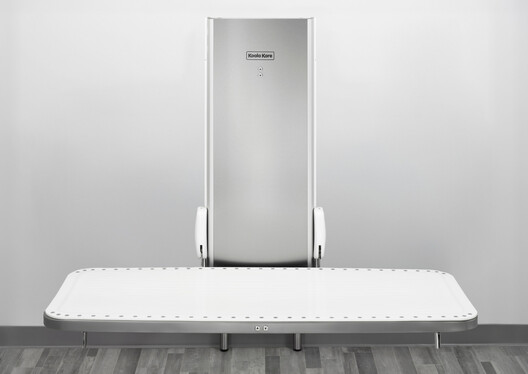
In architecture, the design of universal and accessible spaces creates opportunities for transformation by reducing existing gaps and advancing inclusion. In functional spaces such as bathrooms, architects must strive to achieve the highest possible level of comfort by considering appropriate dimensions, the proper placement of fixtures and drainage, and other details. In public buildings, a new design paradigm is emerging as governments adopt additional requirements and mandates related to inclusive washroom facilities. Adult changing stations such as the KB3000 by Koala Kare Products have become part of this transition, helping architects address dignity, safety, caregiver support, and code compliance within a single integrated solution.
Defining the Individual Inclusive Washroom
In the pursuit of independent living, many people with disabilities still lack access to safe, private, and dignified washroom facilities in public spaces. The inability to use standard restrooms or fixtures that comply with the Americans with Disabilities Act (ADA) and the lack of adequate changing areas negatively affects the quality of life for many individuals, often forcing them to remain at home or endure unsafe and unsanitary conditions in public environments.
An individual inclusive washroom is a single-user space designed for people with disabilities—from as young as two years old through adulthood—who require assistance from a caregiver. Unlike conventional washrooms, these spaces must accommodate longer occupancy times of 15 to 30 minutes and include specialized equipment, such as the KB3000 adult changing station, ensuring safe care during changing assistance.
Providing these changing stations represents a commitment to equity, dignity, and respect, reinforcing the idea that inclusion must exist everywhere—even in washrooms. When designing these spaces, several considerations are essential, including adequate turning radius for a wheelchair and lift clearances, integrated infrastructure to support up to a 500 lb (227 kg) load and motorized height adjustments, and additional helpful features. Incorporating a privacy screen, an adjustable-height sink, grab bars, a hand sanitizer dispenser, and a colostomy bag shelf can further enhance accessibility and improve the overall user experience.
Mitigating Risk and Meeting Mandates: The New Regulatory Landscape
Designing every aspect of the user experience with accessibility in mind is what true inclusion means—restoring dignity, encouraging participation, and reducing caregiver stress. Although much work remains to be done, architectural solutions, research initiatives, and advocacy efforts expand opportunities for people with disabilities to use facilities in public buildings. For example, in countries such as the United Kingdom, adult changing facilities are mandatory in shopping malls, hospitals, stadiums, and many other places.
Across the United States and Canada, a growing number of governmental and nongovernmental organizations have introduced—or are considering—requirements and recommendations related to the installation of adult changing stations and inclusive washrooms in public facilities.
Recently, a unified national approach to inclusive washrooms has been codified. Section 1110.4 of the 2024 International Building Code (IBC) by the International Code Council® (ICC) requires adult changing stations, while ICC A117.1 (2017 Supplement 1) includes provisions for assisted toileting and bathing (Section 611) alongside adult changing stations (Section 613). However, design professionals must stay informed about the latest requirements in accessible washroom design through training opportunities such as the AIA-accredited CEU for architects, interior designers, and building code/inspection professionals, earning professional credits.
Height Adjustability Is Non-Negotiable
Beyond meeting regulations and specific design requirements, it is important to consider additional equipment and accessories that maximize the functionality of these spaces, addressing the needs of both users and caregivers.
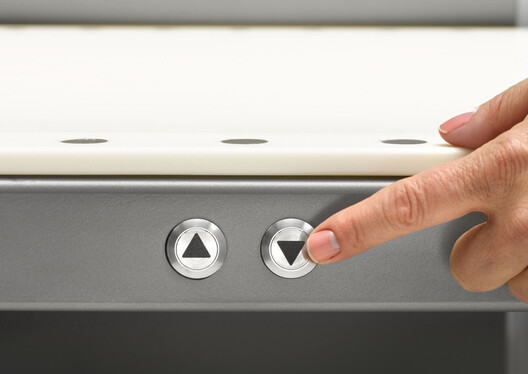
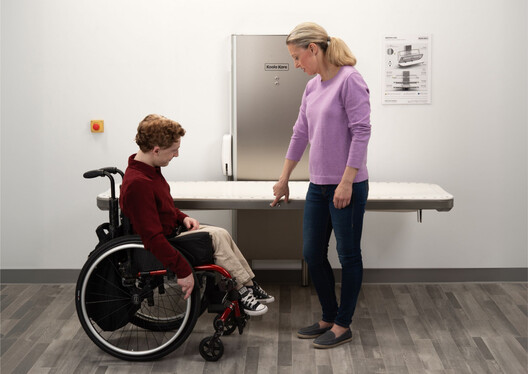
Stations with static or fixed-height changing surfaces can create significant liability risks and increase the likelihood of injury for both parties. The transfer point from a wheelchair to a changing station must be low enough to be safe for both the individual being changed and the caregiver assisting them. Adjustable height is essential to facilitate safe transfers and ease of movement, offering caregiver safety and user independence. By adjusting to hip height for the actual changing station, this helps prevent musculoskeletal strain while ensuring a balanced and secure changing environment.
Where Durability Meets Design
From stadiums and airports to museums, high-traffic public environments require durable, resilient designs to accommodate a wide range of users and maintenance demands. While cleanliness and hygiene remain important considerations in washroom design, vandal-resistant adult changing stations address a critical need that directly impacts the lives of those who depend on them.
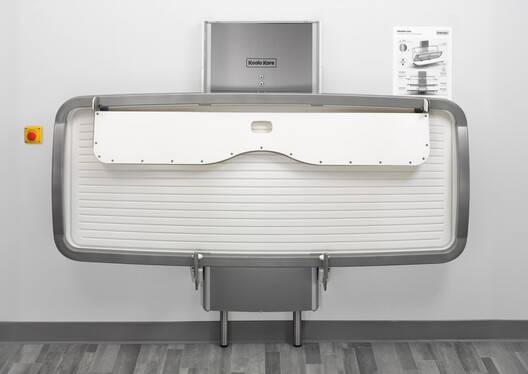
Koala Kare Products' KB3000 integrates features aimed at both durability and user safety, including a seamless polyethylene surface for easier cleaning, IK10 impact resistance, IPX4 water resistance, dual-chain height adjustment, backup battery operation, intuitive controls, ergonomic safety guard, and a 500 lb capacity.
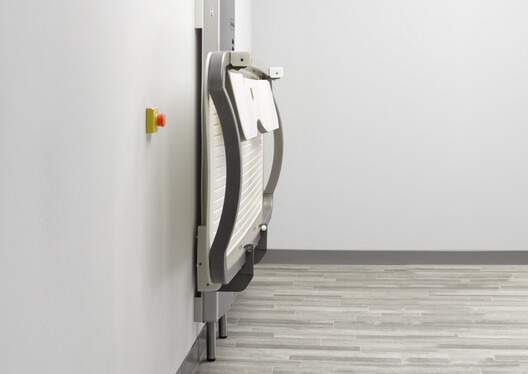
By understanding the many considerations involved in accessible washroom design, architects today must address everything from spatial planning to safety, hygiene, and cleanliness to improve the experience of people with disabilities. Through design strategies involving wall colors, signage, lighting, and the functionality of washroom fixtures, accessible design is helping create dignified and inclusive spaces that accommodate the full spectrum of human abilities. Just as Koala Kare's adult changing stations provide dignity, safety, and code compliance, more buildings and facilities must follow suit to consciously and thoughtfully meet the basic needs of countless people with disabilities who deserve full access to public spaces.


