1. ArchDaily
  2. Zollverein

Zollverein: The Latest Architecture and News

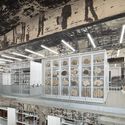
From Salt Factory to Art Museum: The Story Behind the Schaudepot in Essen, Germany

Subscriber Access | 

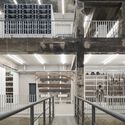
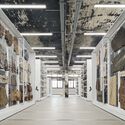
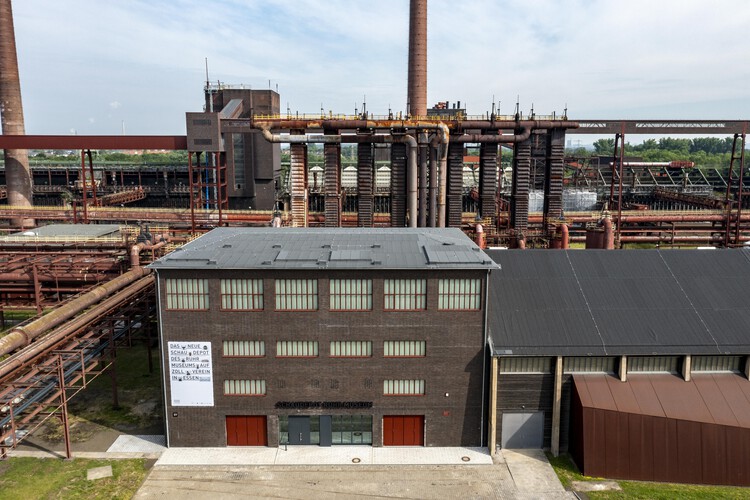
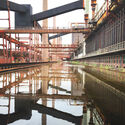
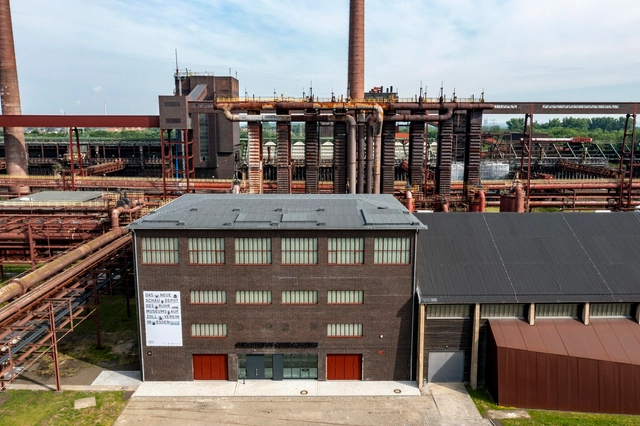
Once the largest coal mine in Europe, the Zollverein complex in Essen, Germany, has undergone a remarkable transformation over the past twenty-five years. What was once a landscape of abandoned industrial facilities is now a laboratory of contemporary architecture, featuring works by Rem Koolhaas, Norman Foster, and SANAA. Their interventions bridge the site’s industrial past with its imagined future. Spanning 100 hectares, the UNESCO World Heritage site has become a global model of adaptive reuse, redefining what it means to preserve industrial heritage. Within this context stands the Ruhr Museum and its enigmatic art repository, the Schaudepot. Located in the complex’s former salt factory, the museum impresses not only with its collection but also with its architecture, which transforms a 1960s industrial building into a vibrant cultural venue.

Because of its historical and architectural relevance, the project is featured in the 2025 edition of Open House Essen, under the theme “Future Heritage.” The initiative explores which spaces might shape our future architectural legacy and asks pressing questions: What should we preserve? What should we adapt? And how can we design a future that is both livable and fair?
From Salt Factory to Art Museum: The Story Behind the Schaudepot in Essen, Germany - Image 1 of 4From Salt Factory to Art Museum: The Story Behind the Schaudepot in Essen, Germany - Image 2 of 4From Salt Factory to Art Museum: The Story Behind the Schaudepot in Essen, Germany - Image 3 of 4From Salt Factory to Art Museum: The Story Behind the Schaudepot in Essen, Germany - Image 4 of 4From Salt Factory to Art Museum: The Story Behind the Schaudepot in Essen, Germany - More Images+ 14

Rethinking Sustainability Through Site-Specific Strategies

Subscriber Access | 

Sustainability in architecture is often framed as a universal challenge, leading to standardized solutions that prioritize efficiency over context. However, architecture is inherently tied to its environment — buildings interact with climate, topography, and cultural history in ways that demand specificity. Instead of relying on standardized sustainability checklists, how can architecture embrace site-specific solutions? This conversation is deeply connected to the concept of Genius Loci, or the spirit of a place, introduced by Christian Norberg-Schulz and embraced by architects advocating for designs that resonate with their surroundings. It suggests that architecture should not be imposed upon a site but rather emerge from it, informed by its materials, climate, and cultural significance. This philosophy challenges the widespread application of generic sustainable technologies, instead proposing that sustainability must be inherently tied to the location in which it operates.

Rethinking Sustainability Through Site-Specific Strategies - Image 1 of 4Rethinking Sustainability Through Site-Specific Strategies - Image 2 of 4Rethinking Sustainability Through Site-Specific Strategies - Image 3 of 4Rethinking Sustainability Through Site-Specific Strategies - Image 4 of 4Rethinking Sustainability Through Site-Specific Strategies - More Images+ 81

Adaptive Reuse as a Strategy for Sustainable Urban Development and Regeneration

“New ideas must use old buildings,” said Jane Jacobs in her seminal book The Death and Life of Great American Cities, championing the reuse of existing building stock as a means to catalyze positive change and foster diverse urban environments. Inserting new activities within an existing framework is increasingly becoming a defining aspect of contemporary architecture, as the need for sustainable alternatives to building anew turns more urgent. From an urban perspective, adaptive reuse is a valuable strategy for revitalizing post-industrial cities, creating density and mitigating urban sprawl, or helping shrinking cities redefine their urban fabric.

Adaptive Reuse as a Strategy for Sustainable Urban Development and Regeneration - Image 1 of 4Adaptive Reuse as a Strategy for Sustainable Urban Development and Regeneration - Image 2 of 4Adaptive Reuse as a Strategy for Sustainable Urban Development and Regeneration - Image 3 of 4Adaptive Reuse as a Strategy for Sustainable Urban Development and Regeneration - Image 4 of 4Adaptive Reuse as a Strategy for Sustainable Urban Development and Regeneration - More Images+ 3

SANAA's Zollverein School of Management and Design Photographed by Laurian Ghinitoiu

Subscriber Access | 

SANAA's Zollverein School of Management and Design in Essen, Germany, is a perfect 35 meter-cube. The building's dominant presence, which is particularly striking amid its suburban context, extends to the interior spaces. The architects felt "that exceptional ceiling heights were appropriate for the educational spaces, particularly for the studio level that occupies an entire slab of the structure." Indeed, this production floor is "an unusually lofty and fully flexible space," enclosed only by the external structural walls. Photographer Laurian Ghinitoiu has visited the building, which was completed in 2010, to capture a fresh view on this seminal project.

SANAA's Zollverein School of Management and Design Photographed by Laurian Ghinitoiu - Image 1 of 4SANAA's Zollverein School of Management and Design Photographed by Laurian Ghinitoiu - Image 2 of 4SANAA's Zollverein School of Management and Design Photographed by Laurian Ghinitoiu - Image 3 of 4SANAA's Zollverein School of Management and Design Photographed by Laurian Ghinitoiu - Image 4 of 4SANAA's Zollverein School of Management and Design Photographed by Laurian Ghinitoiu - More Images+ 58