Zaickz Moz

BROWSE ALL FROM THIS PHOTOGRAPHER HERE

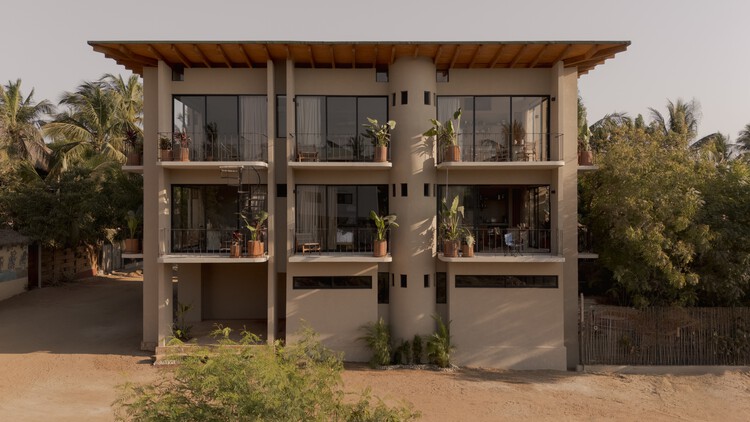
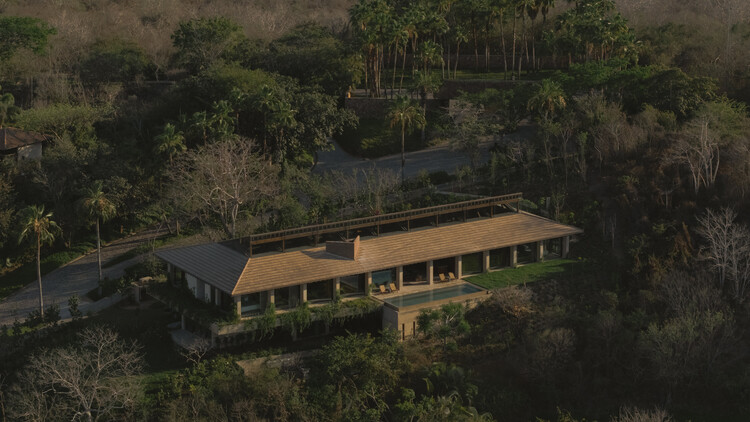
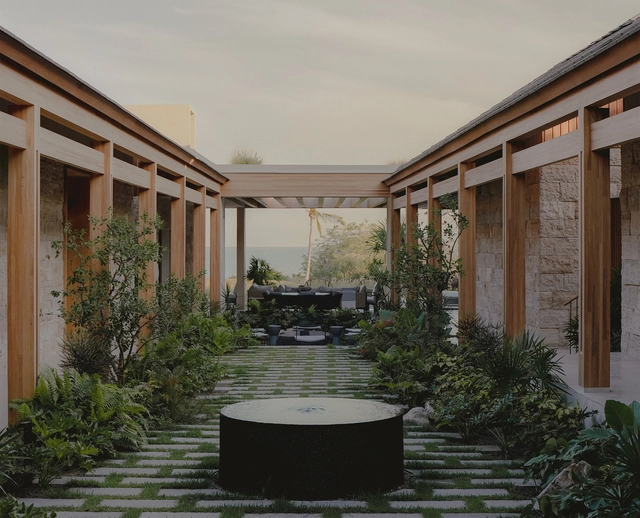
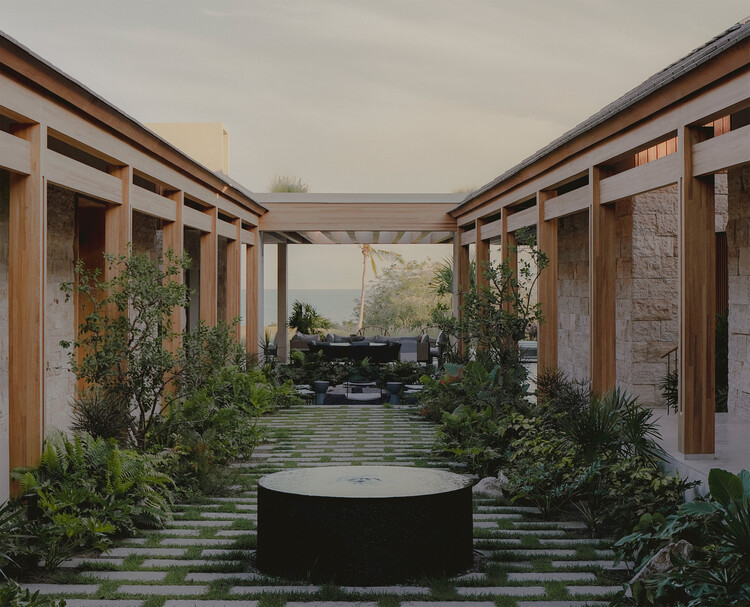
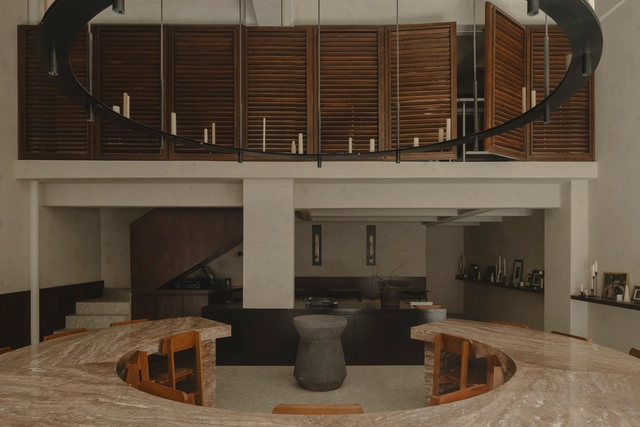
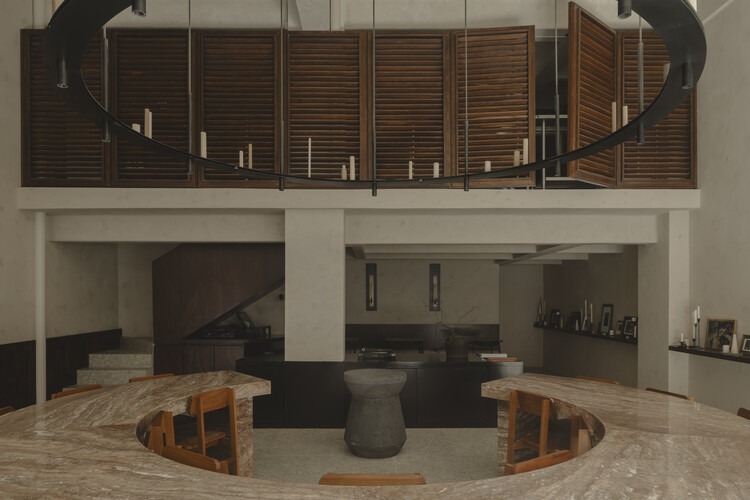
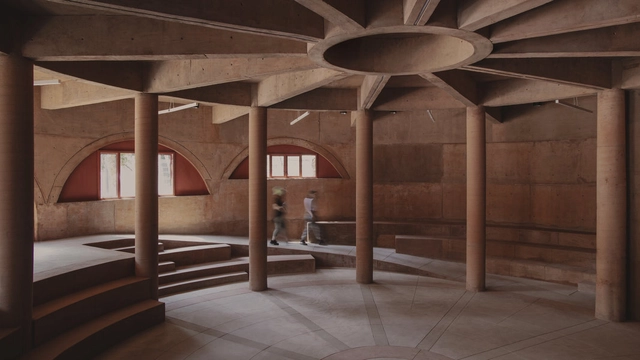
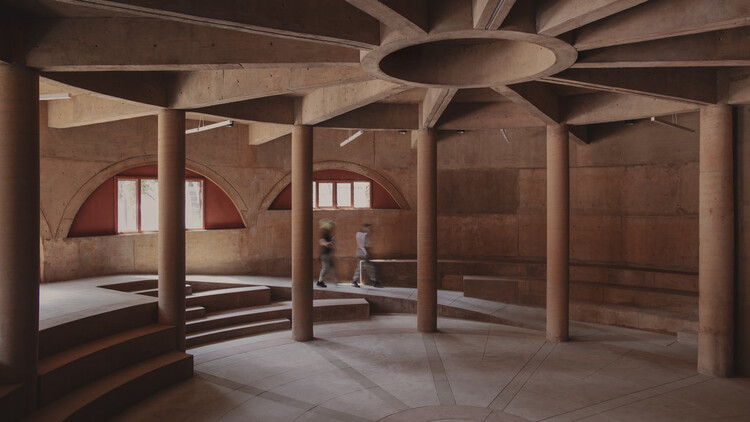
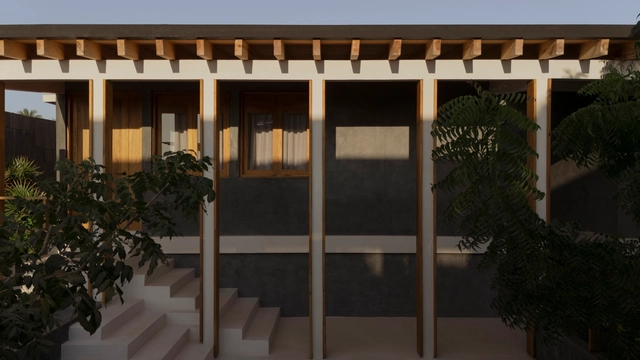
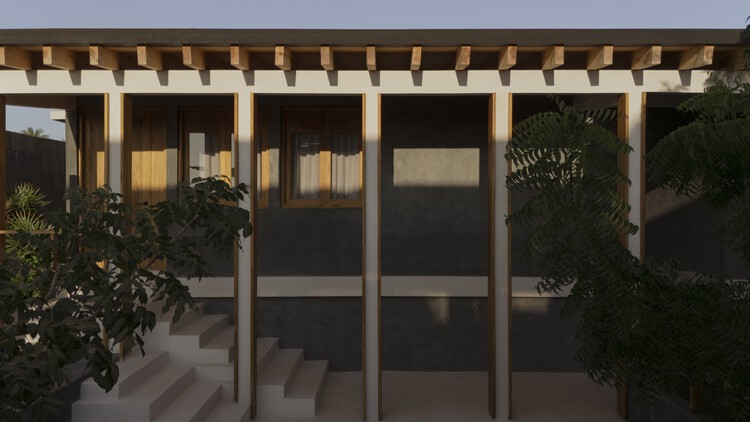
Shark House / TALC

Shark House / TALC - More Images+ 22

Tláhuac, Mexico
  • Architects: TALC
  • Area Area of this architecture project Area:  180
  • Year Completion year of this architecture project Year:  2025
  • Manufacturers Brands with products used in this architecture project
    Manufacturers:  Cemento Tolteca, Cemposa, Novaceramic

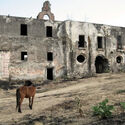
The Centauric Heritage: Equine Scale and Mexican Monumental Architecture

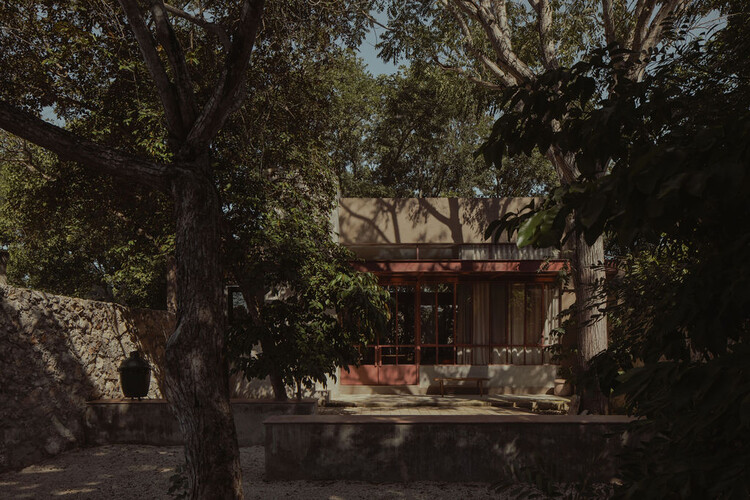
In the architectural history of the Mexican territory, the built environment has functioned not merely as a human stage, but as a biological infrastructure designed to organize proximity between species. The resulting spatial logic is not a solo performance, but a negotiated coexistence between human and animal bodies. To examine this heritage today is to shift the analytical focus away from stylistic authorship and toward a more fundamental phenomenon: the persistence of spatial practices that emerged to sustain shared forms of life.

Many of the architectural features now interpreted as cultural or aesthetic markers — oversized thresholds, expansive patios, and durable surfaces — can be understood instead as material traces of an interspecies contract. For centuries, horses, mules, and livestock were not external to architecture but essential inhabitants whose physical presence shaped scale, circulation, and material choices. Their bodies left measurable imprints in space, from the height of entrances that accommodated mounted riders to paving systems designed to withstand hooves, friction, and biological wear. Nowhere was this contract more visible than at the ground level of the colonial house.

The Centauric Heritage: Equine Scale and Mexican Monumental Architecture - More Images+ 9

Introducing the 75 Finalists of the 2026 ArchDaily Building of the Year Awards

Two weeks and over 85,000 nominations later, the finalists of this year's Building of the Year Awards are in. The selection is much like the ArchDaily audience that chose it: diverse in geography, generous in ideas, and precise in intent. With projects from 46 countries, in a variety of typologies and scales, they present a beautiful snapshot of the current architectural moment.

We invite you to sit back, browse, and vote for your ultimate favorites. Below, you will find all of the 75 finalists in their respective categories. Voting is open until February 18th at 18:00 EST. Thank you—your participation is key to making this the world's largest community-driven architecture award.

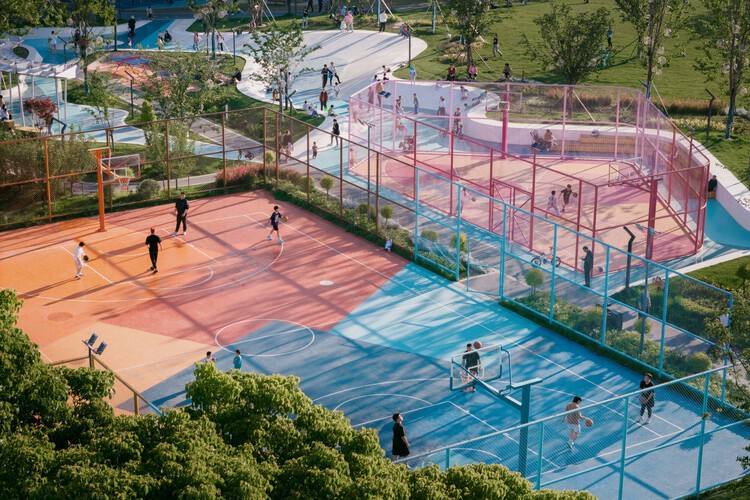
The Chromatic Canvas: 10 Vibrant Courts Activating Community Space

Unlike most popular sports, the origin of basketball has a precise year and creator: it was invented in 1891 in the United States by Canadian physical education instructor James Naismith as an indoor sport for athletes at Springfield College during the winter, after the end of the football season. The sport quickly expanded beyond U.S. borders, being included in the Olympic Games in 1936 and achieving international popularity after the Second World War. As basketball became more widespread, it also left the controlled environment of gymnasiums and began occupying a wide range of locations: playgrounds, public plazas, school courtyards, driveways, and backyard patios became informal courts for play and community life, reinforcing the role of physical activity as a catalyst for social interaction and neighborhood regeneration.

The Chromatic Canvas: 10 Vibrant Courts Activating Community Space - More Images+ 6

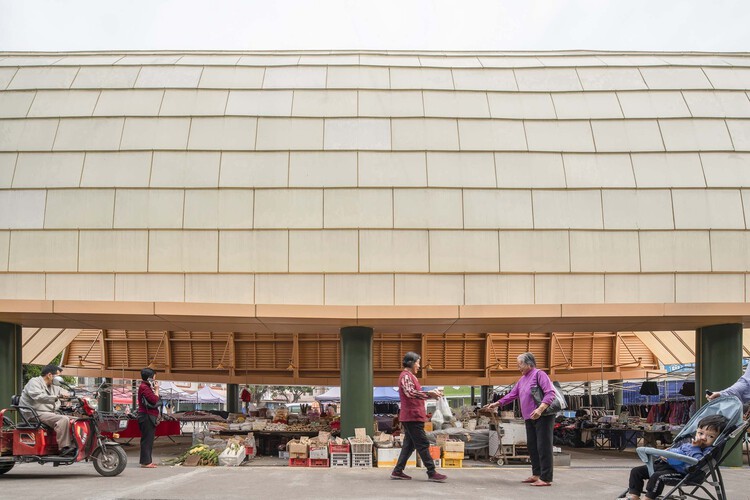
Designing the Public Market: Architecture for Gathering, Trading, and Belonging

The making of a place is not a difficult thing in principle; it is enough for people to come together in a regular set location for a purpose or activity, and a space becomes. This does not disregard the fact that a physical element needs to accompany this gathering for a space to become sheltering, accommodating, and alluring. This idea of the space that emerges from intent can most definitely be seen in one of the most ancient of functions, which is food or produce markets.

For a market to become, the architectural element can be as simple as a light roof, which would harbor merchants and offer a non-spoken boundary to the place, or it can be as resourceful as adaptively reusing an existing building or site to fit new needs. Finally, it can be a temporary and lightweight structure pitched for certain events or needs and then removed to be used elsewhere, or for other means.

Designing the Public Market: Architecture for Gathering, Trading, and Belonging - More Images+ 15

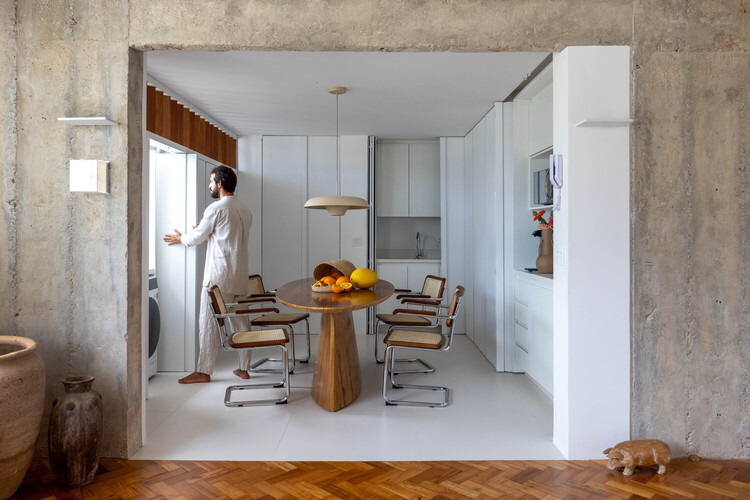
Renovation and Everyday Life: How Latin American Architecture Reinvents Existing Spaces

Subscriber Access | 

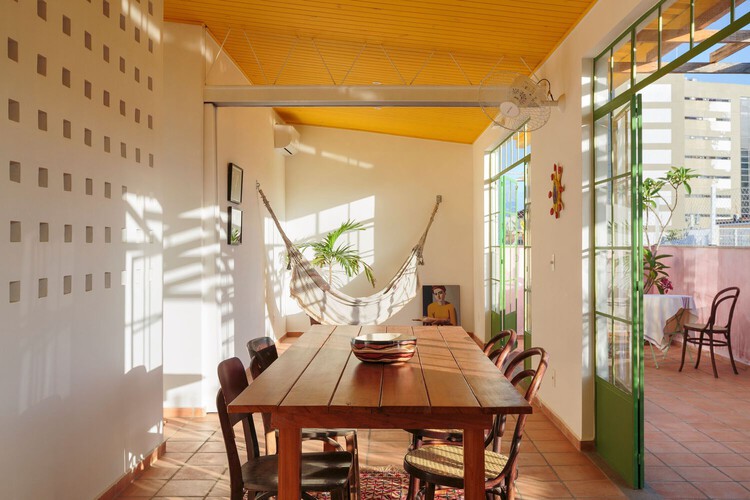
Across Latin America, renovation has become less about preservation alone and more about responding to changing ways of living. Rather than freezing buildings in time, many contemporary projects work with existing structures to adapt them to new domestic routines, social dynamics, and spatial needs. Through strategic changes in materials, composition, color, and light, these interventions reinterpret everyday spaces while maintaining a strong connection to their original context.

In this process, houses and apartments become sites of transformation where flow, continuity, and shared spaces are carefully reconsidered. Renovation operates as a precise architectural tool, one that prioritizes natural light, openness, and flexibility to support daily life as it evolves. Instead of imposing new forms, these projects repurpose what is already there, aligning spatial decisions with the habits and rituals of those who inhabit them.

Renovation and Everyday Life: How Latin American Architecture Reinvents Existing Spaces - More Images+ 22

ArchDaily's Best Architectural Projects of 2025

As the year culminates, it's once again time for the ArchDaily team of curators to reflect on the best-performing projects of 2025 and consider what readers were most interested in. Through this diverse overview, we assess the cross-continental similarities and differences in trends and construction development. This year brought us many grand cultural and public spaces by Lina Ghotmeh, BIG, Zaha Hadid Architects, DnA, and Serie Architects, who populated events like Expo Osaka and the Venice Biennale, as well as a surprising number of museums and public or landscape works in China and the rest of the Asian continent. However, while these were sought-after projects, the leading works remained, unsurprisingly, residential projects.

More specifically, the houses that were most viewed on the ArchDaily global site were concrete houses that bore considerable injections of greenery and landscape focus. They propose layouts highlighting voids and double heights, as well as inner courtyards or large openings to the exterior. While some references did suggest traditional or vernacular elements, modernist revivals were still predominant. Material trends are much more tame, with a recurrence of raw concrete use, as wood and stone were common accent elements. Still, the more interesting thing about the works this year is the efforts brought by architects in situating and setting the projects within their surroundings, bringing special attention to landscape and how projects merged with nature.

ArchDaily's Best Architectural Projects of 2025 - More Images+ 96

Bahía de Banderas House / o.d.e.

Bahía de Banderas House / o.d.e. - More Images+ 16

  • Architects: o.d.e.
  • Area Area of this architecture project Area:  2350
  • Year Completion year of this architecture project Year:  2025

UH Infonavit Santa Fe Community Park / AMASA Estudio

UH Infonavit Santa Fe Community Park / AMASA Estudio - More Images+ 25

Ciudad de México, Mexico

Suuel / CAAM Arquitectos

Suuel / CAAM Arquitectos - More Images+ 19

Puerto Escondido, Mexico
  • Architects: CAAM Arquitectos
  • Area Area of this architecture project Area:  679
  • Year Completion year of this architecture project Year:  2024
  • Manufacturers Brands with products used in this architecture project
    Manufacturers:  Carpinterías Félix, Cimera, Corporativo Empresarial La Asunción, César Duchen Baños, Distribuidora Ziga, +3

UH INFONAVIT Iztacalco Housing Unit and Public Space / AMASA Estudio

UH INFONAVIT Iztacalco Housing Unit and Public Space / AMASA Estudio - More Images+ 30

Sōko Restaurant / CAAM Arquitectos

Sōko Restaurant / CAAM Arquitectos - More Images+ 15

  • Architects: CAAM Arquitectos
  • Area Area of this architecture project Area:  5091 ft²
  • Year Completion year of this architecture project Year:  2024
  • Manufacturers Brands with products used in this architecture project
    Manufacturers:  Alcione Querétaro, Cemex México S.A. de C.V., Comex México, Corev México, Desarrollo y Diseño en Aluminio, S.A. de C.V., +1

The Overlooked Art of Door Design: An Introductory Guide to Interior Door Types

Doors are among the most frequently used architectural elements in any occupied building, serving as movable thresholds that negotiate between private and public spaces. They facilitate both connection and separation among co-inhabitants. Yet, despite their fundamental role, doors are often one of the most overlooked design elements, particularly by clients. In discussions with industry professionals on various interior projects, a common consensus emerges—clients typically pay little attention to door types and details as long as the opening direction aligns with their expectations. However, the world of door design is an intricate one, offering a wealth of possibilities in finishes, installation methods, and modes of operation—each of which can significantly shape the spatial experience beyond the simple matter of swing direction.

The choice of door type and detailing can define or redefine a space entirely. Some doors offer superior sound insulation, while others remain open to connect spaces, enhancing spatial fluidity seamlessly. Certain designs require meticulous installation and ongoing maintenance, while others are virtually hassle-free. Moreover, the type of door selected, particularly that of the hinge, influences not only wall construction but also flooring layers and transitions, adding further complexity to the design process.

The Overlooked Art of Door Design: An Introductory Guide to Interior Door Types - More Images+ 17

Daniela Riquelme Studio Workshop / AMASA Estudio

Daniela Riquelme Studio Workshop / AMASA Estudio - More Images+ 7

Mexico City, Mexico
  • Architects: AMASA Estudio
  • Area Area of this architecture project Area:  52
  • Year Completion year of this architecture project Year:  2024

Casa Zempoala / o.d.e.

Casa Zempoala / o.d.e. - More Images+ 13

Zempoala, Mexico
  • Architects: o.d.e.
  • Area Area of this architecture project Area:  189
  • Year Completion year of this architecture project Year:  2024

Architecture in Mexico: Projects Using Stone

Due to their aesthetic, sustainable, durable, and resistant qualities, stone materials have accompanied the disciplines of architecture and engineering since their origins. As is known, in Mexico, stone has been a fundamental element in pre-Hispanic constructions where experimentation was done with vaults, ashlars, masonry, etc.

However, the industrialization of this material, the perfection of techniques, and experimentation with its various applications have allowed buildings erected today to continue using it in different ways and various regions of the country, specifically in wooded areas. For this reason, we have compiled a selection of projects that include houses, haciendas, hotels, restaurants, and terraces to continue inspiring you.

Architecture in Mexico: Projects Using Stone - More Images+ 30

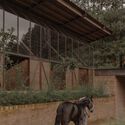
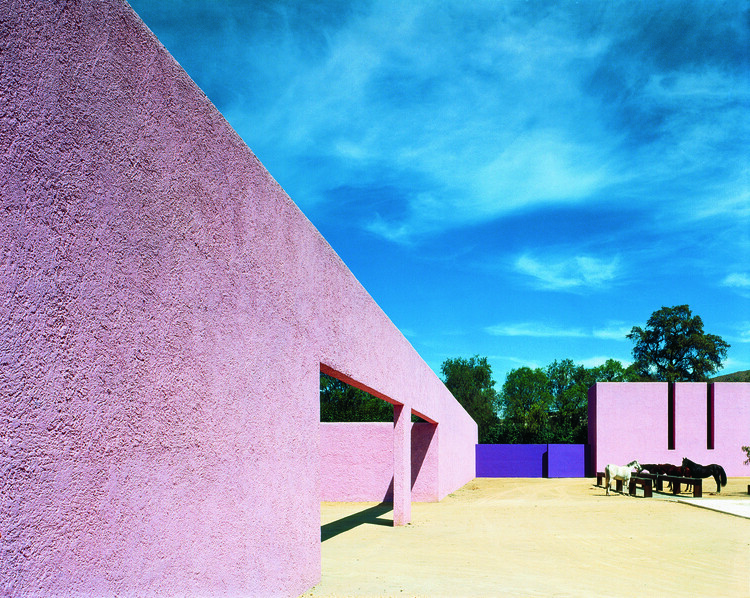
Equestrian San Ramón / Módica Ledezma

Equestrian San Ramón / Módica Ledezma - More Images+ 30

Valle de Bravo, Mexico
  • Architects: Módica Ledezma
  • Area Area of this architecture project Area:  1370
  • Year Completion year of this architecture project Year:  2023

CHINGU Restaurant / WORC

CHINGU Restaurant / WORC - More Images+ 6

Ciudad de México, Mexico
  • Architects: WORC
  • Area Area of this architecture project Area:  247
  • Year Completion year of this architecture project Year:  2023