1. ArchDaily
  2. Wind Energy

Wind Energy: The Latest Architecture and News

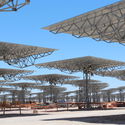
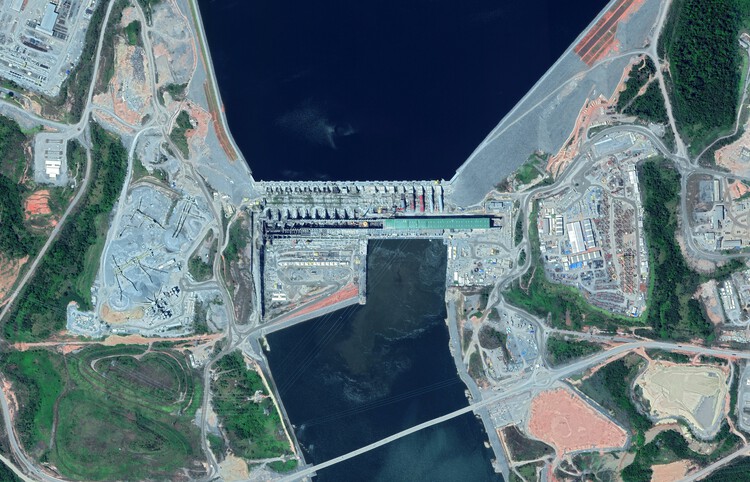
Energy Landscapes: How Infrastructure Reshapes Territory in South America

Some of the most significant transformations of South American landscapes have been produced not by cities, but by large infrastructures built to extract and distribute natural resources. Mining operations, energy systems, and transport networks have connected remote landscapes to broader economic structures while transforming rural territories and urban settlements throughout the continent. These infrastructures do not simply occupy space; they reorganize it. They have not only supported economic growth but also reconfigured territories in ways that continue to generate political, environmental, and social debate across the continent. From this perspective, territories can be understood not as fixed geographic areas but as socio-ecological systems shaped by cultural, environmental, and political relations, a point emphasized by anthropologist Arturo Escobar in his work on territorial thinking in Latin America.

Energy Landscapes: How Infrastructure Reshapes Territory in South America - Image 1 of 4Energy Landscapes: How Infrastructure Reshapes Territory in South America - Image 2 of 4Energy Landscapes: How Infrastructure Reshapes Territory in South America - Image 3 of 4Energy Landscapes: How Infrastructure Reshapes Territory in South America - Image 4 of 4Energy Landscapes: How Infrastructure Reshapes Territory in South America - More Images+ 7

On the International Day for Clean Energy: How Local Initiatives Respond to the Spatial Impacts of Energy Production

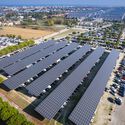
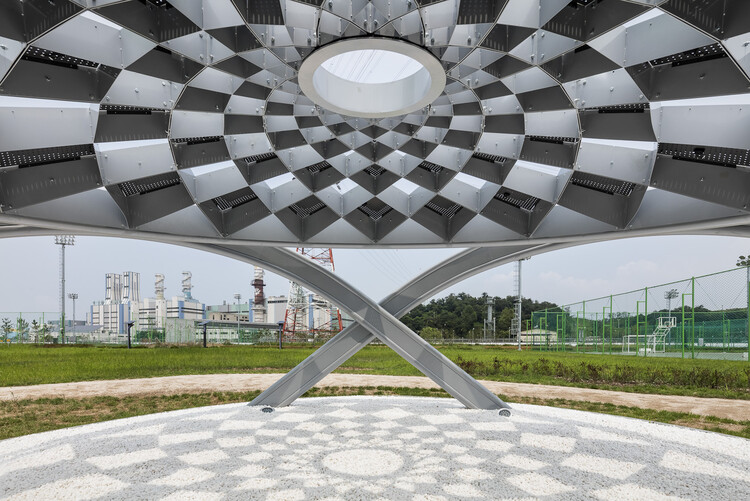
January 26 marks the International Day for Clean Energy, an initiative aimed at raising awareness and mobilizing action for an inclusive transition from fossil fuels, such as coal, oil, and natural gas, to power generation systems with lower greenhouse gas emissions and fewer pollutants. The term "clean" signals a fundamental shift away from extractive, finite, and exhaustible energy sources toward systems based on renewable resources or on capturing energy embedded in natural processes. In a world grappling with climate change, clean energy plays an important role in reducing emissions and expanding access to reliable power. However, being labeled "clean" does not exempt these systems from the impacts associated with their production, deployment, and commercialization. In this context, architectural knowledge related to space, materiality, and habitation becomes relevant for supporting a transition toward energy systems that are sustainable over time. As stated by the United Nations, the science is clear: to limit climate change, reliance on fossil fuels must end, and buildings must be heated, lit, and electrified through clean, accessible, affordable, sustainable, and reliable power sources.

On the International Day for Clean Energy: How Local Initiatives Respond to the Spatial Impacts of Energy Production - Image 1 of 4On the International Day for Clean Energy: How Local Initiatives Respond to the Spatial Impacts of Energy Production - Image 2 of 4On the International Day for Clean Energy: How Local Initiatives Respond to the Spatial Impacts of Energy Production - Image 3 of 4On the International Day for Clean Energy: How Local Initiatives Respond to the Spatial Impacts of Energy Production - Image 4 of 4On the International Day for Clean Energy: How Local Initiatives Respond to the Spatial Impacts of Energy Production - More Images+ 7

How Breathable Should Facades Be? Exploring Permeability and Impermeability in Building Envelopes

The main role of architecture is to create structures that protect us from the environment and create spaces that are safe and comfortable for all types of needs and activities. By providing shelter, architecture also shapes the way people interact with their surroundings. Building technologies of the past rarely managed, however, to create a complete separation between us and the outside world.

While impermeability was a desired outcome, the porous building materials available always allowed some water, wind, or outside particles to leak into the interior spaces. In contrast, modern technologies now allow for almost completely impermeable building envelopes, allowing for complete separation between indoors and outdoors, thus relying on engineered systems to regulate temperature, airflow, or humidity. This article explores the differences between these two contrasting approaches, exploring how building facades are equipped to regulate indoor comfort and its environmental impact.

How Breathable Should Facades Be? Exploring Permeability and Impermeability in Building Envelopes - Image 1 of 4How Breathable Should Facades Be? Exploring Permeability and Impermeability in Building Envelopes - Image 2 of 4How Breathable Should Facades Be? Exploring Permeability and Impermeability in Building Envelopes - Image 3 of 4How Breathable Should Facades Be? Exploring Permeability and Impermeability in Building Envelopes - Image 4 of 4How Breathable Should Facades Be? Exploring Permeability and Impermeability in Building Envelopes - More Images+ 5

New York State of Wind: Future Looks Breezy for Offshore Empire

This article was originally published on Common Edge.

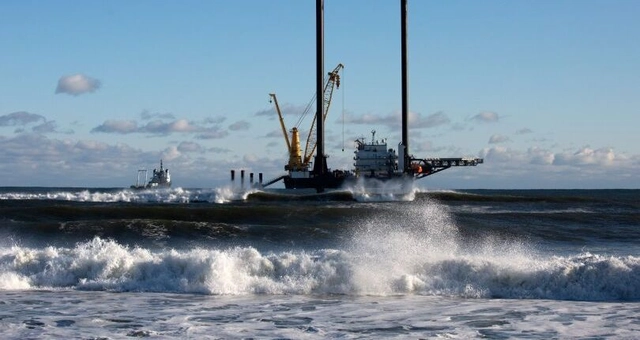
While approaching Wainscott Beach on Long Island’s South Fork in early December, one could see the most tangible aspect of offshore wind’s New York progress even before hearing the crash of waves: three pillars, each about as tall as the Statue of Liberty, jutting up from the ocean. They were the legs of the Jill, a liftboat from the Gulf of Mexico stationed about a third of a mile off the coast of Long Island’s South Fork.

ATES Wind Power Headquarters / d.a.architects

ATES Wind Power Headquarters / d.a.architects - Interior Photography, Office Buildings, FacadeATES Wind Power Headquarters / d.a.architects - Office BuildingsATES Wind Power Headquarters / d.a.architects - Interior Photography, Office Buildings, BeamATES Wind Power Headquarters / d.a.architects - Exterior Photography, Office Buildings, FacadeATES Wind Power Headquarters / d.a.architects - More Images+ 32

  • Architects: d.a.architects
  • Area Area of this architecture project Area:  2806
  • Year Completion year of this architecture project Year:  2019
  • Manufacturers Brands with products used in this architecture project
    Manufacturers:  AGT SOFT TOUCH, Spectral, U GLASS FACADE, VitrA

60 Storey Tower Maximizes Energy Capture with Photovoltaic Facade

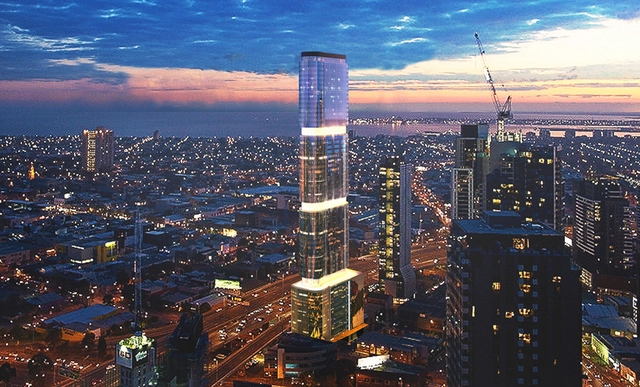
Peddle Thorp Architects have submitted their proposal for the Moray Street Residential Tower in Melbourne for approval. At 1173.5 square meters, Sol Invictus is wrapped entirely in solar panels, attaining 10 times more solar surface area than a traditional roof covering. The facade can achieve up to 5000 square meters of solar panel array and is connected to a battery storage system.

60 Storey Tower Maximizes Energy Capture with Photovoltaic Facade  - Image 1 of 460 Storey Tower Maximizes Energy Capture with Photovoltaic Facade  - Image 2 of 460 Storey Tower Maximizes Energy Capture with Photovoltaic Facade  - Image 3 of 460 Storey Tower Maximizes Energy Capture with Photovoltaic Facade  - Image 4 of 460 Storey Tower Maximizes Energy Capture with Photovoltaic Facade  - More Images+ 15

Strawscraper / Belatchew Arkitektur

Subscriber Access | 

Belatchew Arkitekter has presented a concept for transforming high-rise towers into power-generating factories. The Swedish firm's proposal involves covering a Stockholm skyscraper with "electricity-generating bristles". The tower in question is Henning Larsen's Söder Torn tower on Södermalm in Stockholm. Belatchew has designed a wind farm that will top the existing building with a 16-story extension, covering the facade with "hairy-looking plastic straws designed to move with the wind".

Join us after the break for more details and images of this proposal.

PowerWINDows: A Proposal for Skyscraper-Compatible Wind Turbines

Could a new revolution in wind-turbines be on its way? A team from Australia's University of Wollongong (UOW) have collaborated with leading marine engineering firm Birdon Pty Ltd, to develop PowerWINDows - a new type of wind-to-energy converter that could potentially be appearing on skyscrapers near you soon.

Read more about this new idea after the break...