


-
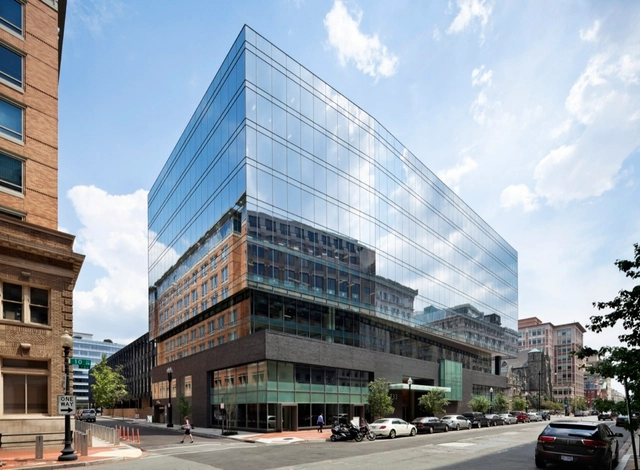
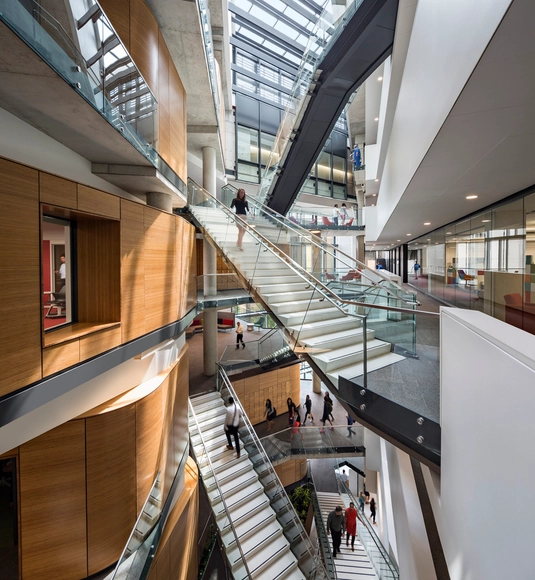
Architects: Cunningham | Quill Architects
- Area: 159000 ft²
- Year: 2012


.jpg?1440147285&format=webp&width=640&height=580)
Earlier this month, after viewing the contenders in the US World War I Centennial Commission’s competition to redesign the National World War I Memorial in Washington DC, organizations like The Cultural Landscape Foundation began to began to voice their opinion regarding the reach of the competition. With the cultural importance of the site in mind, such organizations had hoped that the redesign would maintain the existing Pershing Park, but were disappointed to discover that the majority of the competition’s design proposals seek to demolish the existing landscape.
Although left off of the competition’s shortlist, KAMJZ Architects’ proposal for the World War I memorial addresses these concerns by leaving Pershing Park almost completely intact. Leaving alone the park’s seating areas, agora, and landscaping, the design proposal unifies the park by adding an outer ring of trees “along the borders of the site [to] provide an acoustic barrier from the noisy adjacent streets.”

The American Institute of Architects (AIA)'s Committee on Architecture for Education (CAE) has announced the winners of its CAE Education Facility Design Awards, which honor educational facilities that “serve as an example of a superb place in which to learn, furthering the client’s mission, goals, and educational program, while demonstrating excellence in architectural design.”
A variety of project designs, such as public elementary and high schools, charter schools, and higher education facilities, were submitted to the Committee, many of which incorporated “informal and flexible spaces for collaboration and social interaction adjacent to teaching spaces,” as well as staircases with amphitheater or forum designs.
Find out which projects received awards, after the break.

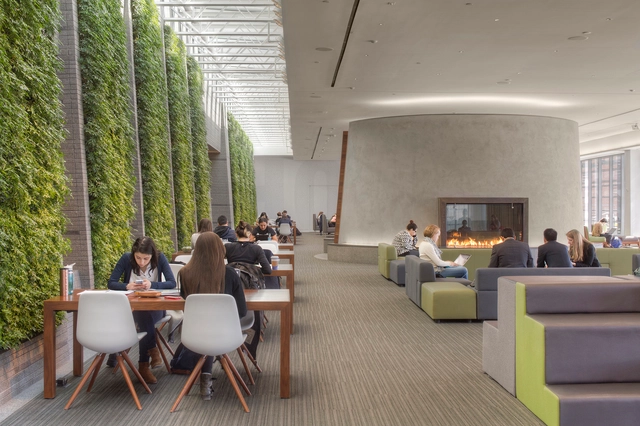
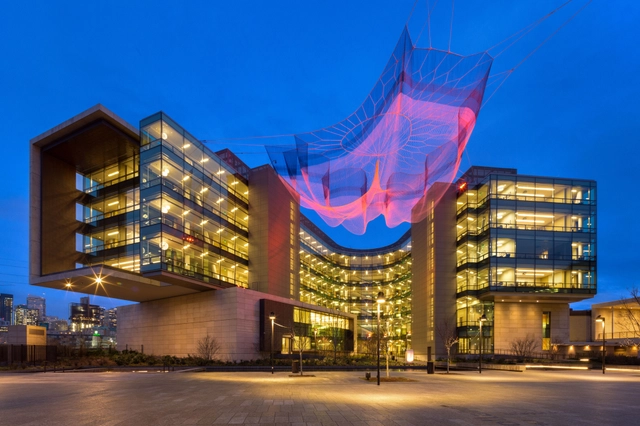
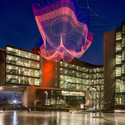
A new aerial sculpture by renowned artist Janet Echelman has been installed at the Bill & Melinda Gates Foundation campus in Seattle. Entitled "Impatient Optimist," the sculpture consists of a custom net structure suspended above the courtyard, resulting in an ethereal floating surface which seems to defy gravity. The award-winning artist's piece hovers above the city as a symbol of connectivity and stands as a testament to the impact an individual can have on a broader scale.

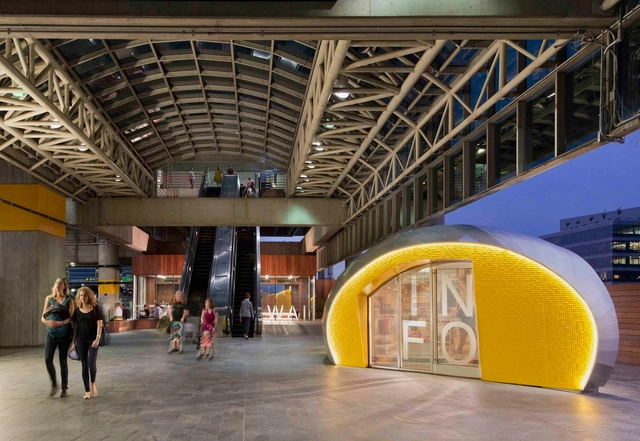

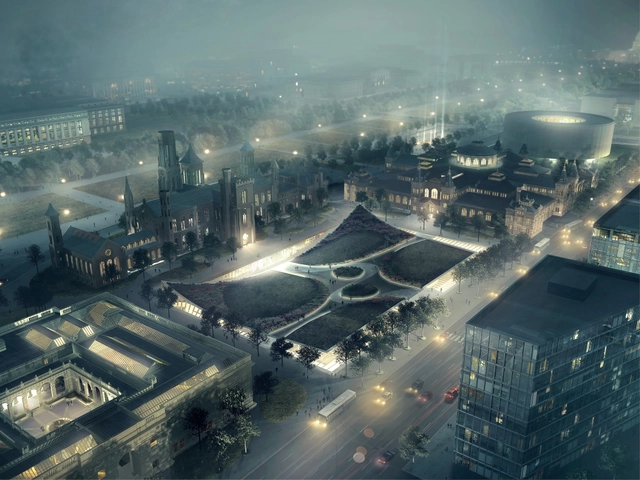
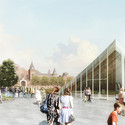
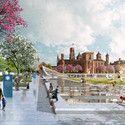
Nearly a year-and-a-half since the announcement of their selection, BIG has unveiled plans for a massive, 20-year-long overhaul for the Smithsonian’s southern campus in the center of Washington DC. With an overarching goal to unite the site by dissolving the notable impediments and discontinuous pathways that plague the area, BIG plans to also expand visitor, education and gallery spaces, while updating aging and inefficient building systems.
"Where today each museum is almost like a separate entity, in the future, it’s going to be a much more open, intuitive and inviting campus to meander around," Bjarke Ingels explained.
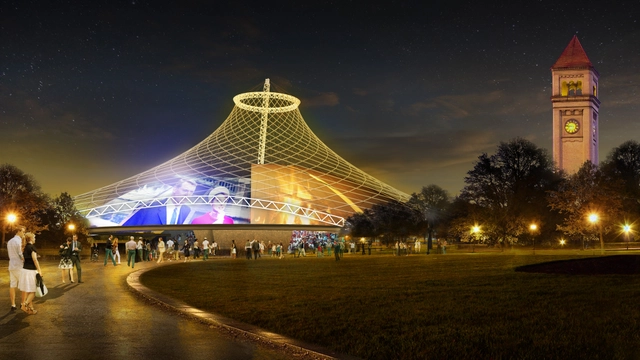
Forty years ago, the Expo '74 World's Fair opened in Spokane, Washington to great fanfare as the world's first environmentally themed Expo. Perhaps equally as momentous, the former Soviet Union participated for the first time since World War II, and 5.6 million people attended throughout the course of the six month long Fair. This year, Olson Kundig Architects, led by design principal Tom Kundig, partnered with the City of Spokane to reinvent the original park with new concept designs for its structures, program, and facilities.

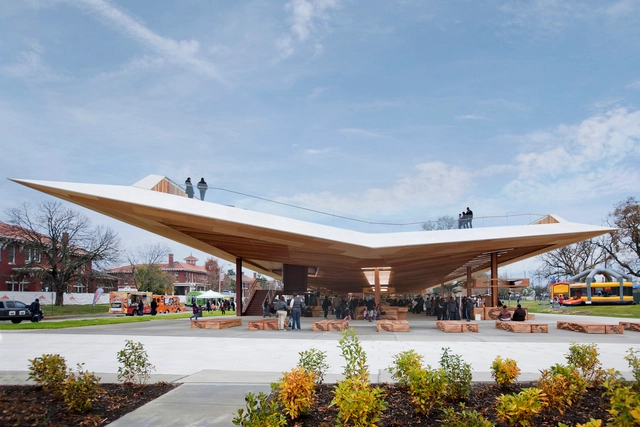

This year's Seattle Design Festival, hosted by Design in Public and AIA Seattle, will feature large scale installations, home tours, walking tours, films, lectures, exhibitions, competitions, activities, pop-up parklets, and more which is open to the general public. The city-wide event takes place September 13-22 with the hub of the festival at the ‘Design Block’ in Pioneer Square. This year's theme is ‘Design in Health’ exploring the connection between environmental design and health & well-being. Design can improve health by: promoting physical activity, increasing access to healthy food, reducing injuries, improving air and water quality, minimizing stress, and strengthening the social fabric of communities. More information after the break.

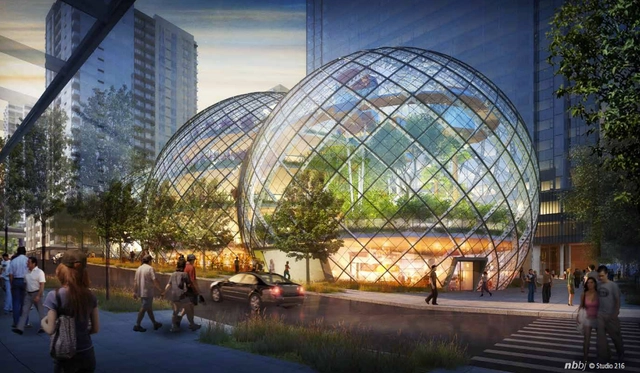
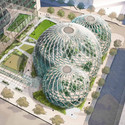
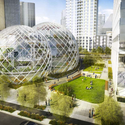
In an attempt to “create an alternative environment” in the center of Amazon’s recently approved, three-block headquarters planned for downtown Seattle, NBBJ has submitted a revision that would replace a six-story office building with a tri-sphere biodome that will host various forms of plant life and provide a more natural setting for employees to work and socialize. Perhaps this change is Amazon’s way of “keeping up with the Joneses”, as many leading corporations - Apple, Google, and Facebook - have been unveiling plans to construct one-of-the-kind office complexes centered around sustainability, innovation and collaboration.


The Bullitt Center, a six-story, 50,000 square foot office building in Seattle that aspires to be the world's greenest commercial building, opens its doors to the public today on Earth Day. This $30 million "living laboratory," designed by Miller Hull Partnership, distinguishes itself from other sustainable projects with its composting toilets, the exclusion of 350 common toxic chemicals - including PVC, lead, mercury, phthalates, BPA and formaldehyde - along with a strict energy and water budget that aims for self-sufficiency under the Living Building Challenge. The environmentally-conscious Bullitt Foundation hopes that the new center will demonstrate that carbon-neutral office space can be "commercially viable and aesthetically stunning," a series of systems that can be easily copied elsewhere without being overly demanding in upkeep.
Read more about the Bullitt Center after the break...

Seattle-based architect Jim Olson of Olson Kundig Architects has been selected by Washington State University to design a new Museum of Art. Over the years, Olson has complied a spectacular portfolio of stunning homes designed for art collectors worldwide. This experience has given Olson a “wealth of experience in not only crafting beautiful environments for works of art, but in working with artists to discover new opportunities for expressing their creativity,” according to Chris Bruce, director of the museum.
.jpg?1440147381 "Courtesy of KAMJZ Architects")
.jpg?1440147272 "Courtesy of KAMJZ Architects")
.jpg?1440147333 "Courtesy of KAMJZ Architects")
.jpg?1440147355 "Courtesy of KAMJZ Architects")
.jpg?1440147285)
















.jpg?1415911708 "Courtesy of BIG")