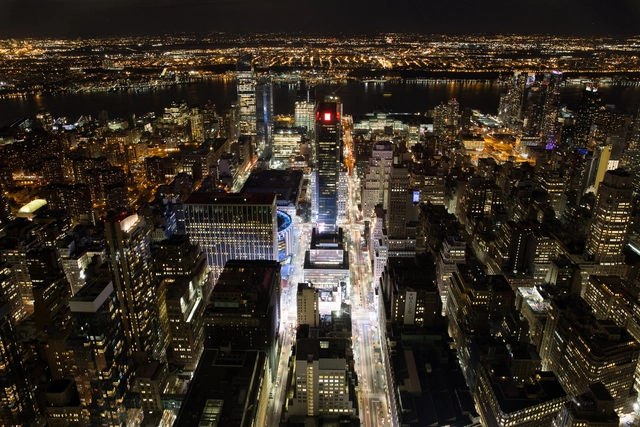
Frank Lloyd Wright once described cities as both ‘our glory and our menace’. With more than half of the world’s population now living in cities, architects are becoming increasingly interested in their origins. Many fields of historical, geographical, and spatial research are devoted to exploring the evolution of cities, revealing a set of similarities across the globe. In a recent video, Wendover Productions described a common set of characteristics linking some of our largest cities, six of which we have outlined below.
Taking the six factors below into account, where is the perfect ‘world city’? Watch the video after the break:
https://www.archdaily.com/866821/the-origin-of-cities-six-reasons-for-their-locationNiall Patrick Walsh
LOHA (Lorcan O’Herlihy Architects) has recently released Amplified Urbanism, a book about its design methodology, which is “rooted in creating fluid interaction between public and private spaces, emphasizing social and civic connections, and harnessing existing ecological and infrastructural patterns.”
Through this publication, LOHA aims to present projects it has developed based on these principles, as well as to provoke discussion about issues in Los Angeles and the wider architectural field.
In order to highlight the book “as a creative process that begins in the studio, and when implemented in the built environment, catalyzes positive connections,” LOHA has collaborated with filmmakers Spirit of Space on a short film.
“Who would’ve thought a parking garage could be so interesting?”
In this video aired by the Louisiana Channel, Kathrin Susanna Gimmel and Jan Yoshiyuki Tanaka, both co-founders of Copenhagen-based firm JAJA Architects, explain the ideology behind the “Park ‘n’ Play” parking garage. Bright red, atop the 24-meter high car park, sits a playground which, in combination with a rooftop garden, provides a unique public setting offering sought after views of the Copenhagen harbor. Watch the video for more insight into JAJA’s design methodology and how the playground helps redefine roles of public space and usage while integrating into a historical urban identity.
https://www.archdaily.com/804825/watch-how-jaja-co-founders-of-park-n-play-are-redefining-public-spaceOsman Bari
Located along banks of the Tagus in the Lisbon neighborhood of Belém, AL_A's recently completed Museum of Art, Architecture, and Technology (MAAT) has brightened up the Lisbon waterfront with its sleek form and glimmering materiality since its opening last October. These qualities have now been captured in a 4K timelapse video by photographer and filmmaker Alejandro Villanueva. The video shows how the building’s presence transforms throughout the day, as the sun reflects off of its unique ceramic facade.
"You see, the first goal in this place was to deliver something beautiful where such an ugliness was there before,” says Calatrava in the film. “To deliver something optimistic looking to the future where so much sadness and depression was there.”
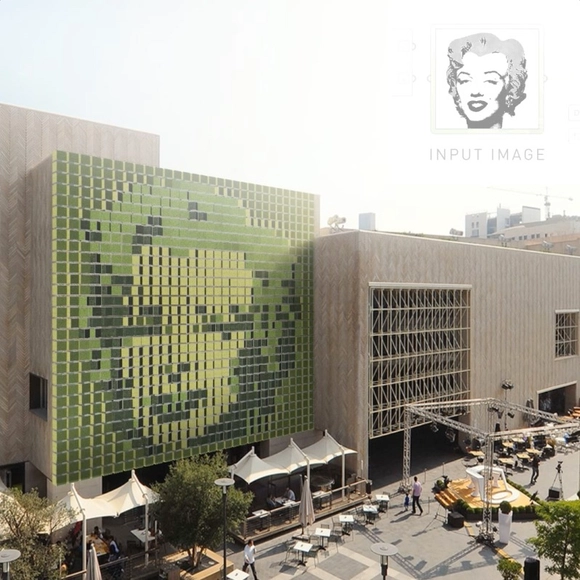
The Canvas consists of individual modules, each of which is a cube made from steel framework, back paneling, L-shaped jambs, secondary structure, waterproofing board, irrigation piping, Green Studios hydroponic skin, and plants. These layered components are assembled on four sides of the cube module, with a motor and water pipe attachment that circulates water throughout.
Entitled “Architecture for the Search for Knowledge,” the lecture is named for Ábalos’ mantra by the same words, which is an aphorism written by Friedrich Nietzsche.
Throughout the event, Ábalos delved into various mixed-use typologies, each of which is in some way related to the basic typology of the medieval monastery.
Drone Brasília has shared with us a brief video filmed by a drone that gives a bird’s eye view of a signature feature of Brasília -- the “tesourinhas,” the so-called cloverleaf interchange that the city’s highways form.
In just thirty seconds the video shows the scale of the space, marked by cars traveling through the wide avenues, which themselves are projected onto an expansive green plane.
The ruestungsschmie.de architectural collective has shared with us their latest video mapping project on the façade of the Karlsruhe Palace in Karlsruhe, Germany. Designed to celebrate the city’s 300-year anniversary, the projection illuminates all 300 meters of the building’s façade.
The Karlsruhe Palace is the architectural and urban center of the city, from which 32 streets stem out, structuring the urban design of Karlsruhe. This unique city design served as part of the inspiration behind the audiovisual work. The project was created in partnership with Sound Selektor, who composed the soundtrack using only noises recorded from inside the castle, including doors, switches, stairs and the sounds of specific exhibits.
Since we looked at this aerial footage of London in 2012, some major changes in the architecture of the city have occurred. Shot by the same photographer, Jason Hawkes, this new footage of London travels over greenbelts, Piccadilly Circus, the Thames River, The Shard, and Canary Wharf, among other impressive views. Take a look at London’s changed landscape by watching the video above.
“We as a profession have to encourage young architects to understand that the technology they’re using is merely a tool. They have to understand how to build the building that they’re creating, but also understand that this place is going to affect somebody. So what can we do to make it a place that—in a sense—I want to be a part of, that I want to attach to?”
Architect and designer Neri Oxman, head of the Mediated Matter research group at MIT and developer of the “Material Ecology” approach, has given a TED Talk on design as the intersection of technology and biology. Oxman begins her talk by introducing the juxtaposition of left- and right-brain thinking in the design world, noting that her work seeks to marry the two by making design less about assembly of parts, and more about growth. Learn more about Oxman’s distinct work and views by watching the video above.
The route is organized by the themes that have shaped CVDB’s design in recent years, such as public space, transitional space, visual continuity and materiality. In this way, Building Pictures uses the themes to connect the different spaces featured in the video.
“Something I always tell my students is that it’s important to fail on a continuous basis—and I’m not talking about the grade. I mean it’s in the spirit of risk, that you have to be willing to free yourself from a set of preconceptions in order to get to this new place. And if failing constitutes making mistakes in order to learn from these mistakes, then you have achieved an enormous amount. In fact, you’re only able to move forward because of this new-found knowledge.”
“I think one generational shift that’s going on has to do with the interest in architecture students to be involved in the community. Students see architecture not just as a profession, like medicine or law, they see it as a kind of service profession, on the order of social work or social science, where they understand that the work they do affects communities and real people, so they want to involve the communities from the beginning in their design process.”
The film, Pedro E. Guerrero: A Photographer’s Journey, explores Guerrero’s photography, showing his collaboration with Frank Lloyd Wright to “produce insightful portraits of important modernist architecture,” which launched him to become “one of the most sought-after photographers of the ‘Mad Men’ era.” While Guerrero was extremely popular at the time, his story today is still largely unknown.
“Students who enter schools of architecture today are entering it at a very young age, perhaps when their total world experience and awareness is relatively narrow, and they’re making the decision to become a practicing architect, and putting aside those studies—general ed., liberal arts studies—that might actually, in the end, make them more contributing architects. […] Fewer and fewer people are having that basic liberal arts, general ed. knowledge in the profession. And it’s a serious problem.”
On the northern bank of Portugal’s Tagus River lies Miguel Arruda Arquitectos Associados’ Vila Franca de Xira Municipal Library. Dubbed the “Factory of Words” because of its location on the site of a former rice mill, the white building is marked by a triangular slit that runs through its floors. This video, by Sara Nunes from Building Pictures, features different perspectives of the library juxtaposed with an interview with the architect, where he explains the building’s connection with the city and the river as well as how they sought to create a library program that incorporates a broader use of the public space.