The Architecture of Rewilding: Designing for Ecosystem Recovery

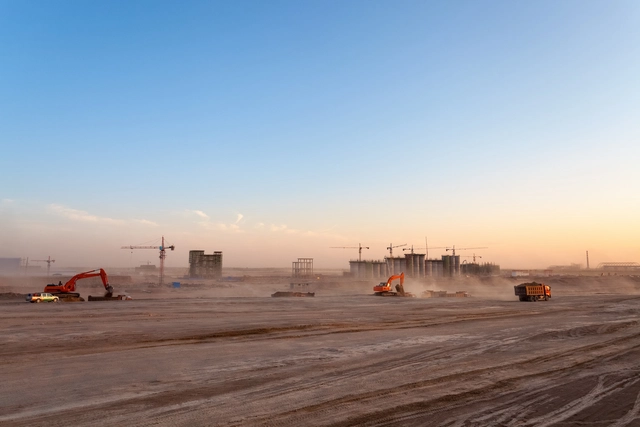
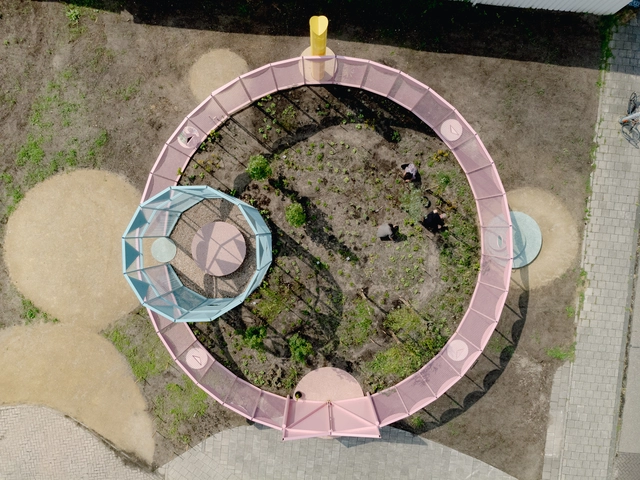
As climate instability reshapes design priorities, architecture is increasingly drawn into ecological debates not as a spectator but as a participant. Among the concepts gaining traction is rewilding, a practice rooted in the restoration of self-sustaining ecosystems through the reintroduction of biodiversity, the removal of barriers, and the rebalancing of human presence in the landscape. Though often associated with conservation biology, rewilding also opens up new spatial and architectural imaginaries — ones that challenge conventional notions of permanence, authorship, and use.

Venice Architecture City Guide: 15 Historical and Contemporary Attractions to Discover in Italy’s City of Canals

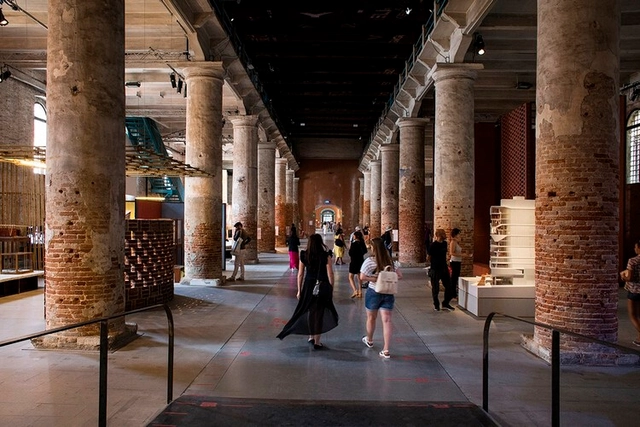
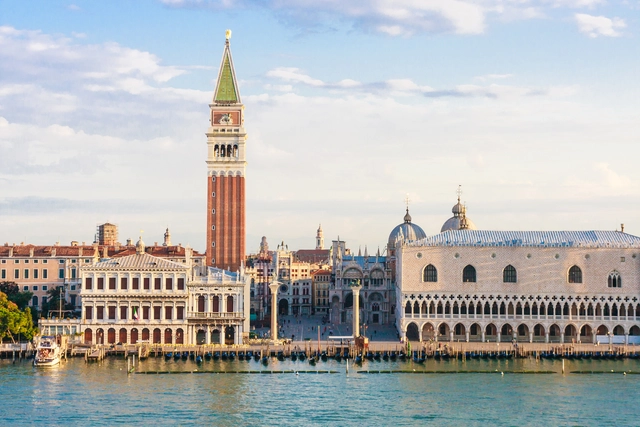
Built on a cluster of 118 small islands in the shallow Venetian Lagoon, the city of Venice, Italy, has captivated the imagination of architects and tourists alike. The area has been inhabited since ancient times, becoming a major financial and maritime power during the Middle Ages and Renaissance, as proven through the rich architecture that characterizes the city to this day. With influences from the Byzantine, Gothic, and Renaissance styles, the city represents a palimpsest of architectural narratives, overlapping and influencing each other. In recent years, Venice has become a major attraction for architects drawn to the La Biennale di Venezia, the most important Architectural Exhibition featuring national pavilions, exhibitions, and events to explore new concepts and architectural innovations.

BBC Names Lesley Lokko Among 100 Most Influential Women of 2024

Lesley Lokko, a Ghanaian-Scottish academic, writer, and curator, has been named one of the BBC's 100 most influential women of 2024. The prestigious list highlights women from around the globe who are recognized for their resilience and their contributions toward driving change in their respective fields. Lokko's inclusion reflects her groundbreaking work in architectural education, her commitment to diversity and inclusion, and her focus on addressing global challenges like decolonization and decarbonization.

In Conversation with Studio Muoto's Gilles Delalex on Their Architecture of Endless Possibilities

Subscriber Access | 

The architecture of Studio Muoto is one that encompasses endless definitions of what architecture should be, but most importantly, of what architecture can become. The scope of work of the Paris-based practice founded in 2003 by Gilles Delalex and Yves Moreau includes projects in the fields of architecture, exhibition design, urban planning, teaching, and research. All of this has led to an architecture of minimal structures that age gracefully, an architecture that evolves and adapts with time, and that is sustainable economically and environmentally.

What Is an Architectural Curator?

In his book "Curation: The Power of Selection in a World of Excess," Michael Bhaskar defines curation as "using acts of selection and arrangement (but also refining, reducing, displaying, simplifying, presenting, and explaining) to add value." Originating from the Latin word curare, meaning to take care of, the curator's role in dissecting our understanding of the world around us cannot be overlooked. Over time, as the definition morphs into different bodies, the practice of curation continues to evolve, filling the roles of caretakers of our built environment and thinkers of different forms for the overall bettering of society.

Learning from Global Architecture Exhibitions: Resource Efficiency, Vernacular Intelligence, and Social and Environmental Advocacy

Over the past year, architecture exhibitions have significantly addressed pressing global issues such as climate change, resource scarcity, and social advocacy. According to the Harvard Graduate School of Design, architecture exhibitions can foster dynamic engagement with contemporary issues, serving as platforms for experimentation and critique. These events, such as the Venice Architecture Biennale, Sharjah Architecture Triennial, Milan Design Week, and Concéntrico, serve as essential platforms for creatives to showcase and explore new ideas. Moreover, they have been instrumental in addressing the urgent challenges posed by the climate crisis by promoting sustainable practices.

"An Agent of Change": Lesley Lokko Recieves King’s Royal Gold Medal for Architecture

On behalf of His Majesty the King, Ghanian-Scottish architect Lesley Lokko has been officially awarded the 2024 Royal Gold Medal for Architecture. Held at RIBA London headquarters, the medal was presented by RIBA President Muyiwa Oki, acknowledging Lokko’s dedication to promoting diverse perspectives in architectural practice and education. As the curator of the 2023 Venice Architecture Biennale, she has been working to explore the overlaps between architecture and race, while shifting focus to Africa and its diaspora in the industry.

Creating Harmony with the Place: In Conversation with Kengo Kuma

The 3rd edition of Shaping the City, a forum on sustainable urban development, took place in Venice between November 24-25, following successful events in Chicago and New Orleans. Organized by the European Cultural Centre, this forum was running in parallel to the 2023 Venice Architecture Biennial exhibition, Time Space Existence. The event, hosted at Palazzo Michiel del Brusà in Cannaregio, brings together global urban planners, architects, academics, and politicians. Notably, Japanese architect Kengo Kuma was among the experts invited to explore the intersection of nature and the built environment in Japanese architecture.

Victoria and Albert Museum Investigates Tropical Modernism Movements in West Africa, Modern India, and Ghana

The Victoria & Albert Museum is set to present an expansive exhibition focused on Tropical Modernism, an architectural movement that emerged in the late 1940s. British architects Jane Drew and Maxwell Fry were instrumental in developing this approach, combining modernism’s functional goals with local climate adaptations in warm and humid weather. This movement, which embodies Britain's unique contribution to international modernism, evolved against a backdrop of anti-colonial resistance, blending colonial architectural principles with local needs.

Film Premiere: "A Voice for the 450 Plus" by Black Females in Architecture

Subscriber Access | 

Black Females in Architecture (BFA) is a social enterprise supporting a membership of more than 450 Black women in built environment professions worldwide. Founded by architects Neba Sere, Selasi Setufe, and Akua Danso, the group advocates for diversity, race and gender equity across all sectors of the built environment, including architecture, urbanism, landscape, engineering, design, and construction.

How the Black Females in Architecture Network is Changing Industry Standards

Subscriber Access | 

In early 2018, spatial practitioner and Bartlett lecturer Neba Sere hosted a panel discussion at London's Architecture Foundation, where she was one of six young trustees. The topic: beginnings. How to go about them, move ahead, and transform them into something that lasts. Six years later, she looks back on the event as a beginning in itself: that day marked the creation of a WhatsApp group that would turn into Black Females in Architecture (BFA). BFA is now a 500-strong global membership network co-directed by Sere and fellow architects Selasi Setufe and Akua Danso.

Top 2023 Pavillions and Installations Interrogating Architecture of the Global South

Architecture in the Global South often embodies a rich cultural heritage and craftsmanship, incorporating vibrant colors, intricate patterns, and symbolic elements. It also tackles the challenges faced by developing economies, such as limited resources, rapid urbanization, and social inequality, by promoting inclusive and community-driven design solutions. As installations and pavilions serve as radical templates for interrogating these architectural ideals and seeking innovative solutions, we present the top architectural installations as part of our year-in-review. They encompass curated exhibitions like the Venice Architecture Biennale, as well as permanent pavilion structures in specific contexts that delve into local materials, waste reuse, and the reinterpretation of historical narratives.

A Look Back at the 18th Venice Architecture Biennale, the First to be Focused on the Culture of Africa

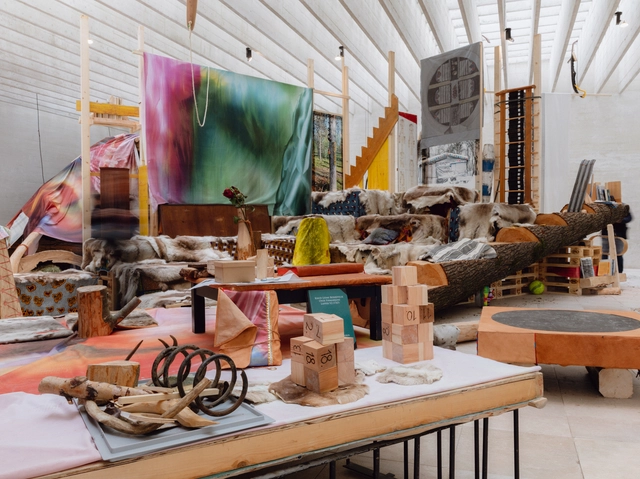
The 18th International Architecture Exhibition of La Biennale di Venezia closed on November 26th. A total of 285,000 people visited the exhibition, making it the second most highly attended Architecture Biennale in its history. Named "The Laboratory of the Future," this edition led by curator Lesley Lokko, has been the first to focus on Africa and its diaspora, exploring the “fluid and enmeshed culture of people of African descent that now straddles the globe,” in the words of the curator, with themes of decolonization and decarbonization.

On-Site in Venice: 12 Interviews with Curators Discussing the Impact of the 2023 Venice Architecture Biennale

Subscriber Access | 

While exploring the 18th International Architecture Exhibition, the ArchDaily team had a chance to engage in conversation with several curators of the national pavilions, along with Lesley Lokko, the curator of the entire exhibition. The discussions delved into the unique character of this year’s edition focused on an understanding of Africa as a “Laboratory of the Future.” Through this lens, the biennale became “a healing experience,” in the words of Lesley Lokko, reinterpreting and deconstructing the meaning behind ideas such as decolonization, decarbonization, resource management, or finding the hidden potential in vernacular forms of practice.

Utopian Practice, Political Power, and Community in Architecture: An Interview with Olalekan Jeyifous

Subscriber Access | 

After being awarded the prestigious Silver Lion for his contribution to this year's Venice Architecture Biennale, Brooklyn-based artist Olalekan Jeyifous shows no signs of slowing down. Currently in the midst of preparing his entry to the next Sharjah Architecture Triennial, he also recently celebrated the opening of Climate Futurism, a group exhibition that highlights the power and efficacy of artists’ methods and processes to imagine a more equitable future – and is working on a public monument to former United States Representative Shirley Chisholm as part of New York City's She Built NYC initiative, among other projects.

A Mindset of Revival: Exploring Reuse in Urban Biennales and Pavilions

In light of the looming climate crisis and the pursuit of sustainability, the concepts of revival and reuse have emerged as crucial strategies in the quest for decarbonization in the architecture industry. These principles preach that creating new structures may be sustainable but encourage architects to minimize their ecological footprint by reactivating and recycling existing resources. This year specifically, innovative projects in line with these themes were displayed as part of the 18th International Architecture Exhibition – La Biennale di Venezia. This world-renowned event’s core purpose is to serve as a platform for architects, designers, and thinkers to collectively reimagine sustainability, decarbonization, resource conservation, and the industry's future.

Women-Led Architecture Practices: Redefining Urban Housing Design at the Time Space Existence Exhibition in Venice

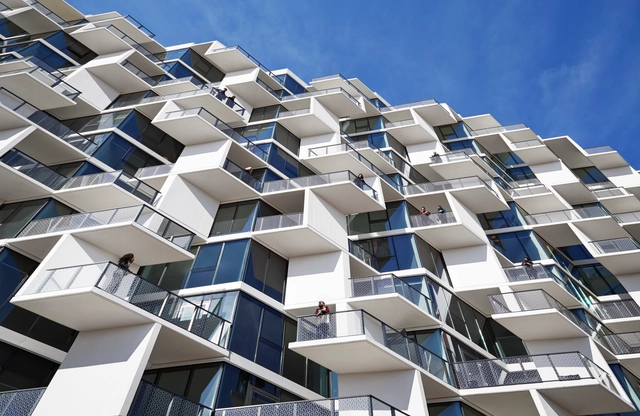
As part of the 6th edition of “Time Space Existence”, the European Cultural Center (ECC) presented the “Reconceptualizing Urban Housing” exhibition. Taking place from May 20 to November 26, 2023, it brings together a diverse array of women-led architecture practices from around the world, each offering a unique perspective on collective housing, particularly within urban settings. The showcased projects feature approaches from Europe, North America, and more developing countries like Uganda, Malaysia, and Mexico.

Is Wood the Sustainable Solution for the Middle East?

As we understand it today, the sustainable architecture movement began to take shape at the end of the 20th century. Essentially, it responds to growing concerns about environmental degradation, energy consumption, and resource scarcity. In this global discourse on sustainable architecture, wood has long been celebrated as a symbol of environmental consciousness and decarbonization. As one of the most widespread building materials, it has gained popularity with the rise of this movement. This is because trees absorb carbon dioxide during their growth, which stays in the wood during its construction use, keeping it out of the atmosphere.