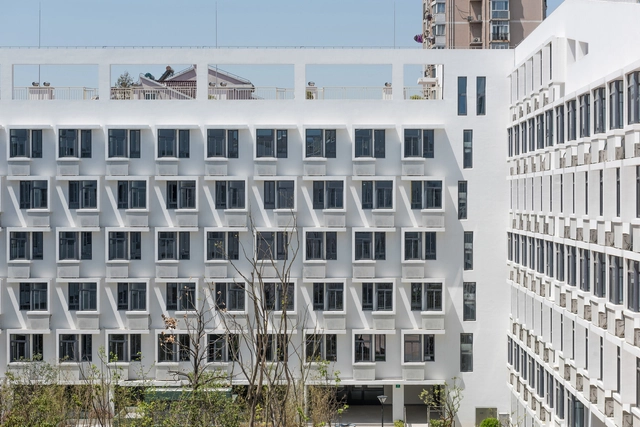
CityMakers, The Global Community of Architects Who Learn from Exemplary Cities and Their Makers, is working with Archdaily to publish a series of articles about Barcelona, Medellin, and Rotterdam. The authors are the architects, urban planners, and/or strategists behind the projects that have transformed these three cities and are studied in the "Schools of Cities" and "Documentary Courses" made by CityMakers. On this occasion, Jaume Barnada, coordinator of the award-winning Climate Shelters project in Barcelona schools and speaker at the "Schools of Cities", presents his article "Barcelona, the public place as a synonym for the adaptation of the built city."
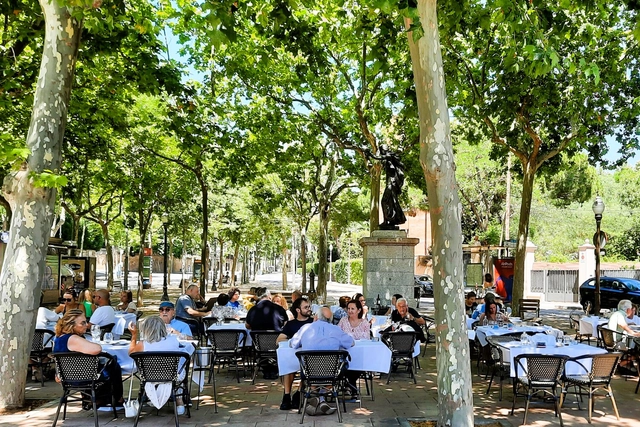
Cities are dense, built spaces in which pavements have been efficiently imposed on the natural soil. Cities like Barcelona have almost 75% of the land paved and waterproof. Without a doubt, it is an excess to reverse at a time of climate emergency, where we must reconnect with nature. Oriol Bohigas [1] told us that good urbanization had paved the squares of Mediterranean cities and that no one wanted to live in a mudhole. I'm sure he was right. Also, he taught us that the green and, consequently, the natural soil had to have dimension and especially an urban position. Squares are squares and parks are parks, and each space has a type of project. Today, concepts are too frequently confused when urbanizing public places and consequently, we find projects that blur the model.
In recent years, India has emerged as a focal point for architects and urban designers from around the world. From the rich legacy of masters and emerging firms to smart city initiates being established across the peninsula, the acts of decolonization in architecture design to the evolution of a modernized vernacular, India has been demonstrating the power of supporting good architecture and urban design. This year, ArchDaily launched ArchDaily Building for Billions, a column that discusses the effects of population rise, urbanization, and economic growth on India’s built environment. Building for Billions was fueled by the recognition of changes and innovative projects washing over the country.
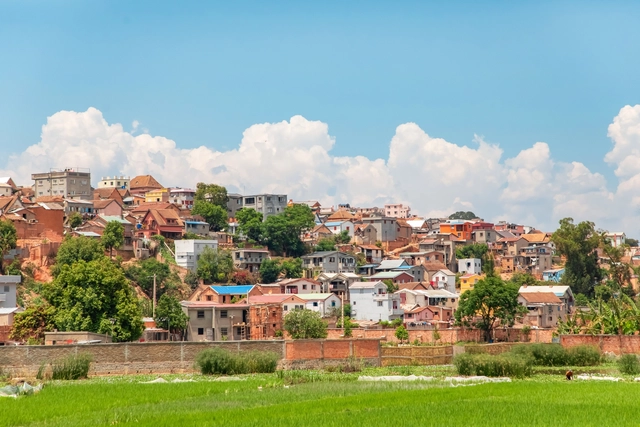
Madagascar is an island nation off the southeast coast of Africa that, despite its lush vegetation and unique flora and fauna, grapples with formidable environmental challenges, from rising sea levels to the excessive exploitation of natural resources. Joan Razafimaharo is an architect deeply involved in sustainability, climate change, and adaptation efforts in Madagascar and the broader Indian Ocean region. Razafimaharo is also one of only about sixty architects in the country, serving a population of 28 million.
Recently I spoke to her about environmental activism in the face of climate change, curbing the exploitation of natural resources, the role of architects in resource-scarce societies, and empowering women in isolated areas. The interview, originally conducted in French, has been translated and edited for length and clarity.
https://www.archdaily.com/1011140/how-madagascar-is-confronting-climate-changeMathias Agbo, Jr.
What about architecture in North America – its history, policies, but also building codes – makes it particularly vulnerable to the global housing crisis? And how can those inherent flaws be counteracted with purposeful residential design and a more inclusive approach to the architecture discipline?
The phrase “Demography is destiny” is repeated more than once in Smaller Cities in a Shrinking World (Island Press). This new book by noted urban researcher Alan Mallach tackles, in meticulous and fascinating detail, the “wicked problem” of shrinking cities in the U.S. and across the globe. But it’s not only our cities that are shrinking—the countries that contain them are, too. I spoke with Mallach about the imperative of planning for this new demographic reality.
India has witnessed a surge in urbanization and population growth. As a result of natural population growth and migration, the megacities of India have experienced a continual increase in their residents. Standing as the most populous country in the world, India is at a critical junction, grappling with opportunities and challenges in molding its built environment. Population boom, however, is not a recent predicament but a persistent one that has spanned over a century. How have Indian cities dealt with population growth and the complexities it brings?
In this fourth feature, we met with co-chairs ofdesign for Health architectArif Hasan, former Visiting Professor NED University Karachi and member of UNs Advisory Group on Forced Evictions, and architectChristian Benimana, Senior Principal and Co-Executive Director atMASS Design Group
Land reclamation from the sea has become a popular phenomenon in coastal development. It is the most preferred solution to the need for land in coastal areas and has been implemented for various use cases, including flood control and agriculture. Nowadays, it has become a famous urban response to the rapid increase in coastal urbanization, economic activity, and global population. Countries like China and the Netherlands lead the chart on the amount of land area reclaimed. However, most reclamation projects today take place within urban centers in the global south. Cities in West Africa, East Asia, and the Middle East produce these new lands as economic forerunners for their commercial industry and as platforms to house luxury residences.
But the relationship between the design and production of reclaimed lands and the response of water in ocean environments is complex. It requires a symbiotic relationship with water bodies for stability but can provoke natural forces when negligently imposed on the sea. Ocean water behaviors, including tidal accumulation, sea level rise, connection to wetlands, and aquatic biodiversity, can question the success or failure of land reclamation projects in different contexts.
In April 2023, India achieved a significant milestone that will shape the trajectory of its urbanization going forward. According to data from the United Nations, the South Asian subcontinent is now home to over 1.4286 billion people, overtaking the former leader China’s count of 1.4257 billion. With a population boom that is estimated to grow at a 0.7% rate annually, India faces several challenges and opportunities in its path to becoming a global power.How will India’s rising demography influence its built environment?
The National Pavilion of Serbia, curated by Iva Njunjić and Tihomir Dičić, has just announced its exhibition at the 2023 Venice Biennale, which explores architecture's futures, presents, and pasts through the lens of an international Trade Fair in Lagos, Nigeria, in 1977. The trade fair was a product of non-aligned cooperation between Yugoslavia and Nigeria.
Cities are inseparable from fast-paced lifestyles. Rising rents and “not-that-small” apartments characterize urban environments, perpetuating the chase for “bigger, faster, and more”. As economies develop and human needs grow, buildings are erected at alarming rates to rush toward progress. The risks of urban living are gradually being exposed, raising questions about more intentionally-driven actions. One way to return to slower lifestyles is by returning to slow architecture.
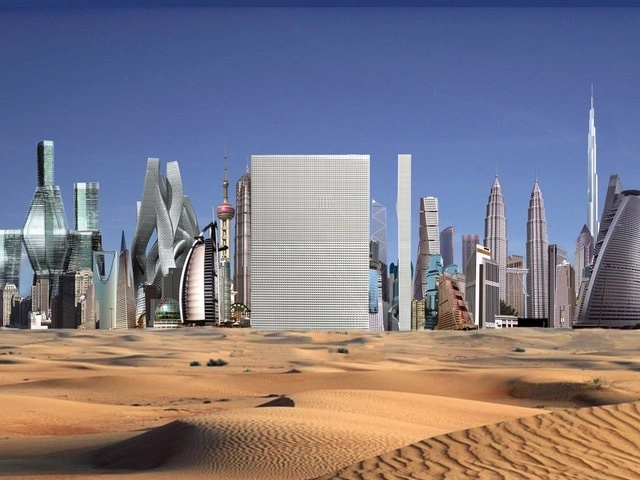
Rem Koolhaas, co-founder of Office for Metropolitan Architecture (OMA), receiver of the Pritzker Prize Award in 2000, and leading urban theorist, was one of the first to question the high-rise phenomenon and its influence on city transformation. Particularly intrigued by the Gulf region and the urban ambitions of this area, in 2009, during the 9th edition of the Sharjah Biennial, he delivered a lecture on the potential of re-inventing urbanization in the Emirates.
On the occasion of the golden jubilee of UAE, marking 50 years since the Emirates were founded in 1971, 50U, published by Archis explores the different developments in the Gulf, this region that “witnessed the transformation of a partly nomadic, partly town-based community into a globally active metropolitan society”. After Al Manakh, in 2007, followed in 2010 by Al Manakh Cont’d, 50U tells the story of the UAE through 50 portraits of people, plants, and places. The book also shares an excerpt of Koolhaas’ 2009 talk that reflects on contemporary conditions, focusing specifically on his reading of Dubai, his architectural involvement as well as his future urban predictions.
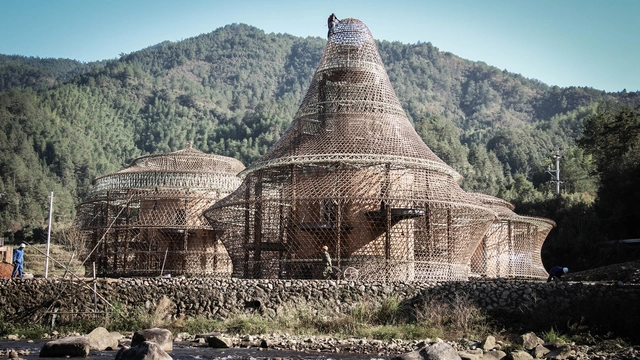
The Filipinos believe that man and woman first emerged from the nodes of a bamboo stalk. The Chinese view the caneas a symbol of their culture and values, reciting “there is no place to live without bamboo”. The plant is a symbol of prosperity in Japan and friendship in India. Along with myths and stories, strong structures made of bamboo flourished in pre-modernAsia. Built forms varied across the changing landscapes of Eastern countries, all sharing one aspect in common - a respect for natural ecosystems.
An ancient Indian folktale narrates the story of a demigod, Hiranyakashipu, who was granted a boon of indestructibility. He wished for his death to never be brought about by any weapon, human or animal, not at day or night, and neither inside nor outside his residence. To cease his wrathful ways, Lord Vishnu took the form of a half-human-half-animal to slay the demigod at twilight at the threshold of his house.
Threshold architectural spaces have always held deep cultural meaning to the people of India. In-between spaces are found in the midst of daily activities as courtyards, stairways, and verandas. The entrance to the house is revered by Indians of all social backgrounds. Throughout the country’s varied landscape, transitional entry spaces are flanked by distinctive front verandas that merge the street with the house.
A new kind of architecture distinguished by unique regional characteristics emerged in the mid-1990s when in China, architects started practicing independently from government-run design institutes. The leading Chinese architects of this time succeeded collectively in producing a unique architectural body of work when so many buildings built around the world were no longer rooted in their place and culture.
In China Dialogues, Vladimir Belogolovsky charts a panorama of Chinese architecture through the words of its main participants, lifting the veil on a prolific new generation of designers, each sharing a highly intellectualized and conceptual understanding of architecture. Following the course of 21 interviews accompanied by over 120 photographs and drawings of beautifully executed projects uprooted throughout the country since the early 2000s, China Dialogues opens up the thinking process of the country's top architects, providing an insight into their ideas, intentions, and visions in unusually revealing and candid ways.
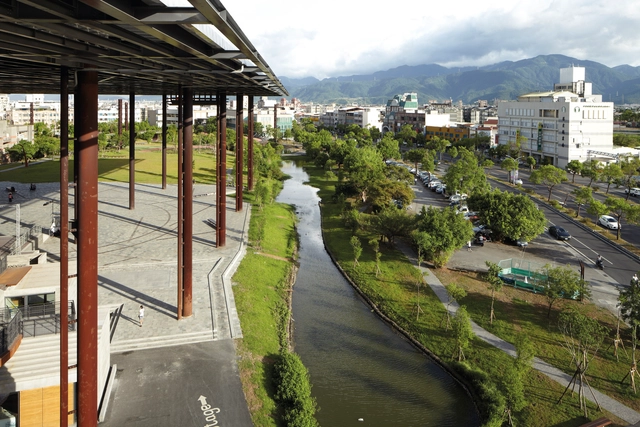
Taiwan proposes that architecture can transform a place, and to represent this idea, the work of Sheng-Yuan Huang and his practice, Fieldoffice, were chosen for the Taiwan Exhibition at La Biennale di Venezia in 2018, entitled Living with Sky, Water, and Mountain: Making Places in Yilan. Sheng-Yuan and Fieldoffice demonstrated that the notion of making places is more than building a physical space, but is equally about establishing a linkage between people, as well as people and their environment.
Alessandro Martinelli explores Sheng-Yuan and his colleagues at Fieldoffice as the avant-garde of a new architectural movement in his book, The City Beyond Architecture, which seeks to produce a new form of collective living through the lens of design and culture, touching on what the design culture of the majority of future urbanization could become. In the following, we will discuss Shen-Yuang's impact on Taiwanese architecture as he spearheaded the call to integrate and imagine public spaces that inhabited the capacity to structure a particular landscape to provide both social spaces and a sense of identity to its occupants.
Longnan Garden Social Housing Estate / Atelier GOM. Image Courtesy of Atelier GOM
Saskia Sassen, the Robert S. Lynd Professor of Sociology at Columbia University, predicts in her co-authored book “The Quito Papers and the New Urban Agenda” that, in the future cities will become our crucial battlefield as we continue to fight against gentrification and growing degree of isolation in our communities. Sassen argues that, “Cities should be an inclusive space for both the affluent and the poor. Nevertheless, in reality our cities never achieved equality for all, because our cities were never designed that way. Still cities ought not to be a place that tolerates inequality or injustice”.







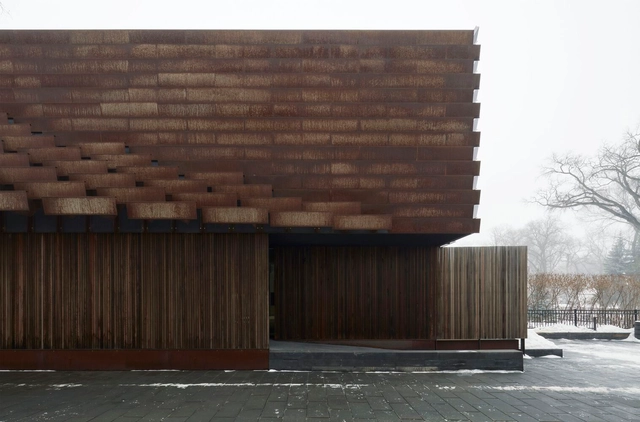




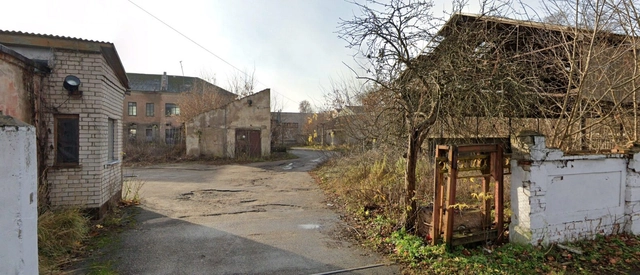
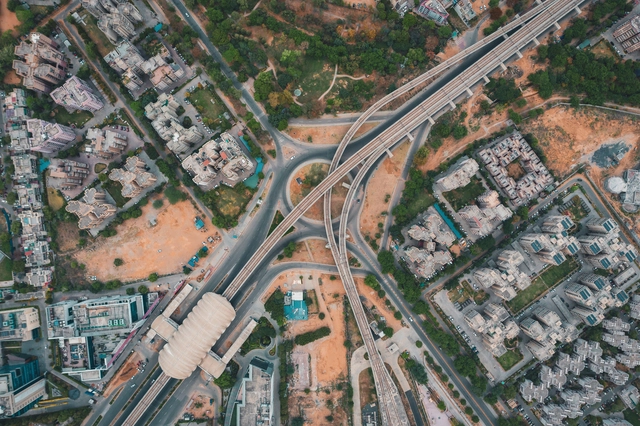















.jpg?1650549341&format=webp&width=640&height=580)
Adam_Mork.jpg?1650549635 "MAD Architects, Harbin Opera House, Harbin, China, 2015. Image © Adam Mørk")


_schranimage.jpg?1650549533 "Studio Zhu Pei, Jingdezhen Imperial Kiln Museum, Jingdezhen, Jiangxi Province, China, 2020. Image © schranimage")
.jpg?1650549341)