1. ArchDaily
  2. Urbanism

Urbanism: The Latest Architecture and News

New Short Film Explores The Urban Landscapes of Ukraine’s Socialist Era

Subscriber Access | 

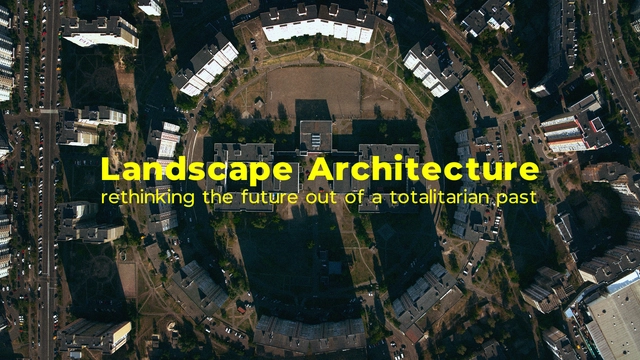
The built manifestation of an ideology, the urban landscape left behind by the socialist regimes around Europe are removed from the aspirations of contemporary urban living, thus trigger a unique process of re-appropriation of the post-soviet landscapes. The short film Landscape Architecture: Rethinking The Future out of a Totalitarian Past created by Minimal Movie invites a conversation around urban planning, cultural identity, and community building relating to the urbanism and architecture of Ukraine's Socialist Era.

New Short Film Explores The Urban Landscapes of Ukraine’s Socialist Era - Films & ArchitectureNew Short Film Explores The Urban Landscapes of Ukraine’s Socialist Era - Films & ArchitectureNew Short Film Explores The Urban Landscapes of Ukraine’s Socialist Era - Films & ArchitectureNew Short Film Explores The Urban Landscapes of Ukraine’s Socialist Era - Films & ArchitectureNew Short Film Explores The Urban Landscapes of Ukraine’s Socialist Era - More Images+ 3

The Early Days and the Enduring Legacy of Coop Himmelb(l)au

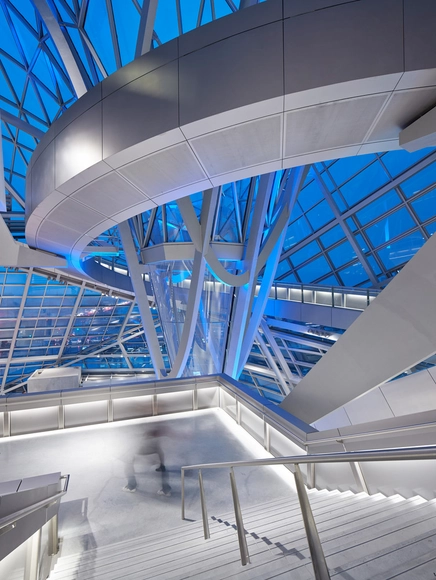
Europe in the 1960s was an incubator for emerging provocative architecture radicals who defied traditional architecture dogma in favor of counterculture that transcended time and space. Coop Himmelb(l)au, a Vienna-based faction of this movement, questioned the clean lines, rigidity, and literal nature of modernist architects of the time. While the firm is known for their rebellious spirit and aggressive forms that are generated through state-of-the-art 3D software and technologies, it’s important to acknowledge the work that the firm did shortly after their inception in 1968, and how their early oeuvre still relentlessly breaks the status quo of modern-day practice and academic discourse.

The Value of an Address: How Cities Around the World Utilize Street Names and Building Numbers

Subscriber Access | 

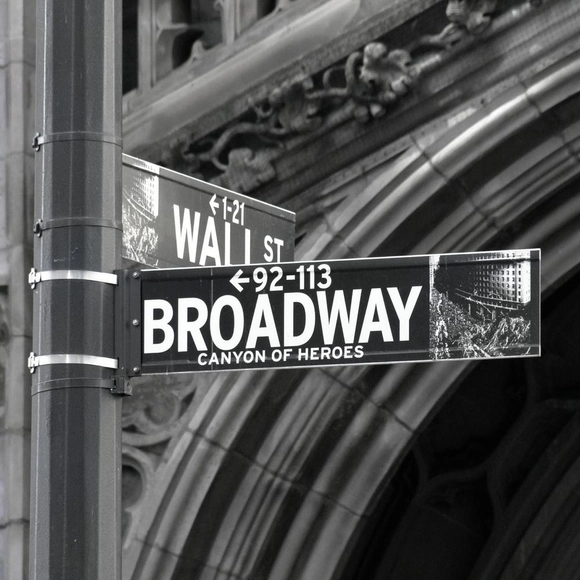
In cities across the United States, an address is more than just a street name or a building number- but a brand that translates directly into a symbol of wealth and prestige. Take the tallest residential tower in the country, 432 Park Avenue in New York City, which doesn't actually sit quite on park avenue. Instead, it’s neighboring lot to the east sits on Park Avenue, and this mega structure actually faces 56th avenue- a significantly less iconic street. However, this inflated valuation doesn’t happen everywhere. Cities in other countries don't place the same weight on an address and refer to buildings or locations as landmarks or by their appearances, which doesn't force a high monetary value based on an address or a marketing scheme alone. How do places in the world differ in how they brand buildings and streets in cities, and what does that tell us about their urban culture?

Public Protests and the Urban Legacies of Colonialism and Military Dictatorship in Nigeria

Subscriber Access | 

This article was originally published on Common Edge.

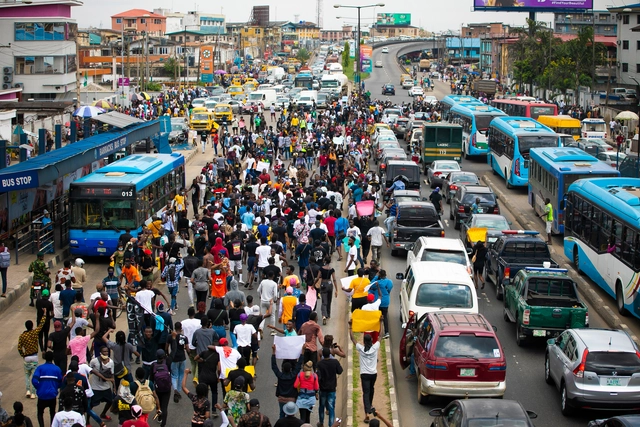
For the past two weeks, cities across Nigeria were hit by protests against the notorious Special Anti-Robbery Squad (SARS), a police unit setup in 1992 to fight armed robberies. The anti-SARS protesters are calling for the unit’s disbandment, due to its high-handedness, extra-judicial killings, extortion, and numerous human rights abuses.

Tragically, the protests came to a brutal climax on October 20, with the shooting of protesters at the Lekki Tollgate by gunmen believed to be agents of the Nigerian state. This led to casualties, which are currently a subject of controversy: the Lagos State government concedes that two persons lost their lives; groups like Amnesty International insist the figures are much higher.

Henning Larsen Designs New Masterplan for Wolfsburg, Germany, Home City of Volkswagen

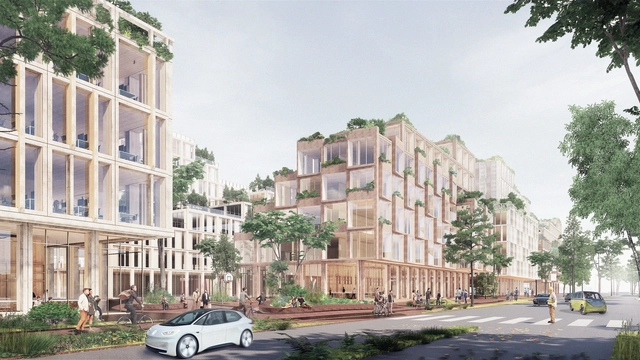
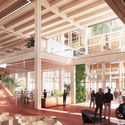
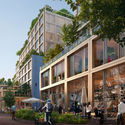
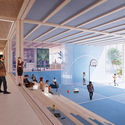
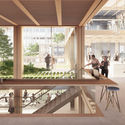
Creating new standards for a more connected and livable city, Henning Larsen has designed a New Masterplan for Wolfsburg, Germany. The new prototype for urbanism across the European continent diffuses new energy in the city center. Selected to design the project in a competition in 2019 that included competitors UNStudio and Bjarke Ingels Group, Henning Larsen’s proposal for phase 1 is expected to reach completion by 2023.

Henning Larsen Designs New Masterplan for Wolfsburg, Germany, Home City of Volkswagen - Image 1 of 4Henning Larsen Designs New Masterplan for Wolfsburg, Germany, Home City of Volkswagen - Image 2 of 4Henning Larsen Designs New Masterplan for Wolfsburg, Germany, Home City of Volkswagen - Image 3 of 4Henning Larsen Designs New Masterplan for Wolfsburg, Germany, Home City of Volkswagen - Image 4 of 4Henning Larsen Designs New Masterplan for Wolfsburg, Germany, Home City of Volkswagen - More Images+ 1

How to Achieve a Resilient City? First, Let it Shape Itself

Resilience seems to be the topic of much discussion within circles of urbanism today. Though, there is a slight problem. We can’t quite agree on what the term means.

Two definitions seem to be floating about. The first rooted in material science. The second, in ecology. 

Monsters, Spirits, and... Zoom Calls? Halloween-at-Home 2020

Subscriber Access | 

Halloween is a holiday that centers on space and ritual. Most likely originating from Celtic harvest festivals, Halloween is tied to processions like trick-or-treating, as well as history and spatial stories. The holiday celebrates imagined settings, characters, and events. In similar celebrations like Mexico's Día de Muertos, people gather in unlikely places; cemeteries and graveyards become the backdrops to picnics and celebrations. There, families offer flowers and food to deceased relatives as they celebrate history and the lives of loved ones.

Monsters, Spirits, and... Zoom Calls? Halloween-at-Home 2020 - Image 1 of 4Monsters, Spirits, and... Zoom Calls? Halloween-at-Home 2020 - Image 2 of 4Monsters, Spirits, and... Zoom Calls? Halloween-at-Home 2020 - Image 3 of 4Monsters, Spirits, and... Zoom Calls? Halloween-at-Home 2020 - Image 4 of 4Monsters, Spirits, and... Zoom Calls? Halloween-at-Home 2020 - More Images+ 3

Orthogonal Grids and Their Variations in 17 Cities Viewed from Above

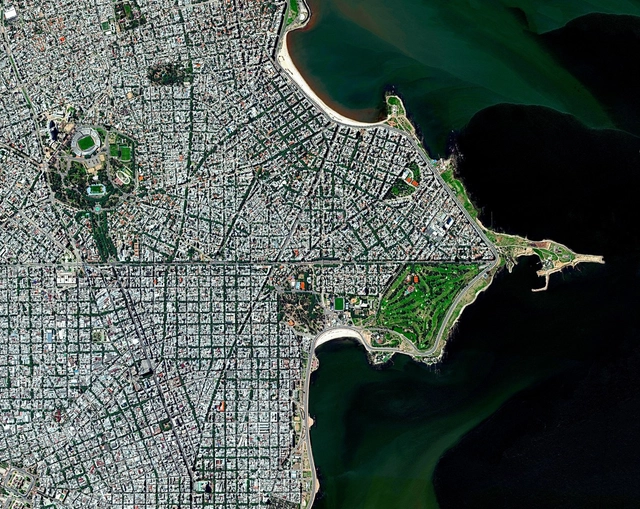
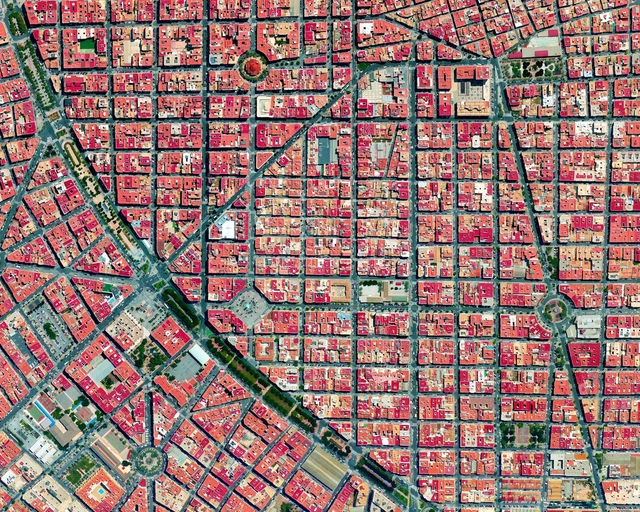
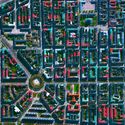
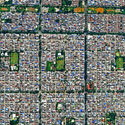
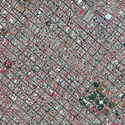
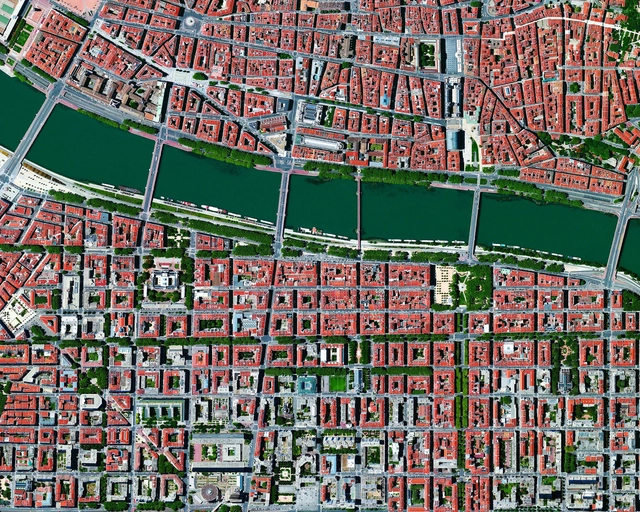
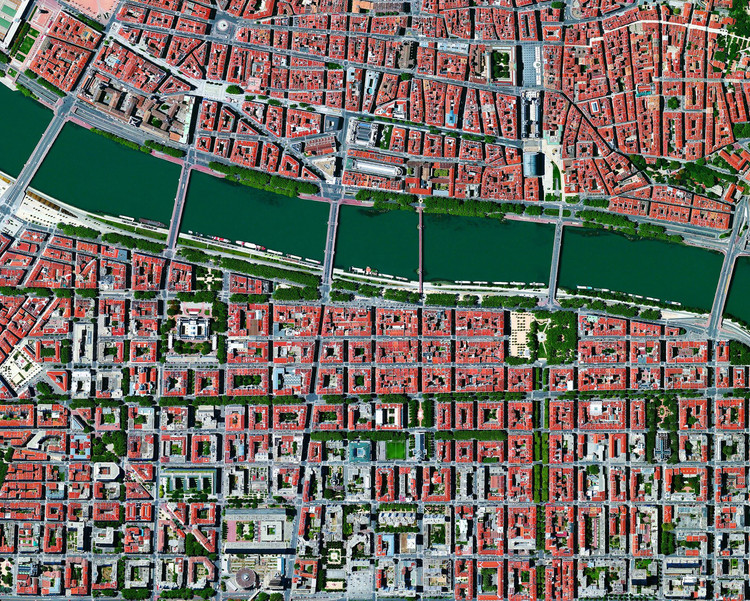
There is evidence that the orthogonal grid plan, which is one of the most common types of urban planning today, dates back to antiquity. Streets intersect at right angles to each other, resulting in a grid composed of streets, avenues, blocks, squares, parks, among other urban spaces.

Orthogonal Grids and Their Variations in 17 Cities Viewed from Above - Image 2 of 4Orthogonal Grids and Their Variations in 17 Cities Viewed from Above - Image 10 of 4Orthogonal Grids and Their Variations in 17 Cities Viewed from Above - Image 12 of 4Orthogonal Grids and Their Variations in 17 Cities Viewed from Above - Image 16 of 4Orthogonal Grids and Their Variations in 17 Cities Viewed from Above - More Images+ 12

A New Urban Model for a New Project of Society: An Interview with Tainá de Paula

A New Urban Model for a New Project of Society: An Interview with Tainá de Paula - Featured Image
Tainá de Paula. Image: Publicity Photo

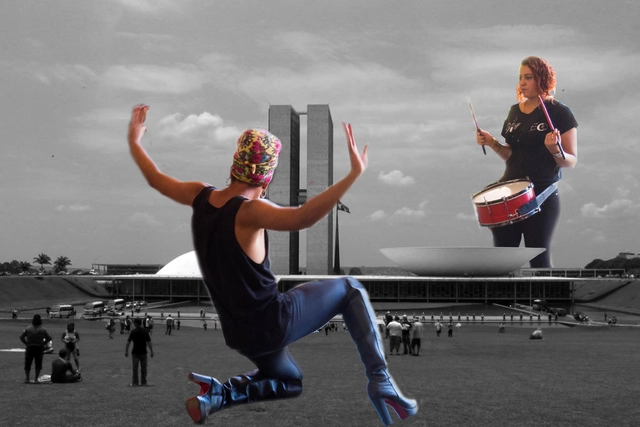
Approaching the context of widening political divides and growing economic inequalities. A new spatial contract. Learning how will we live together. These thoughts brought by Hashim Sarkis, curator of the 17th International Architecture Exhibition of Venice Biennale 2021, may raise important questions about how architecture crosses and materializes social and political conflicts. To understand a more decentralized point of view, which indicates possibilities other than those dictated by normative mindsets, we interviewed Tainá de Paula, a Brazilian architect and community mobilizer in poor suburban areas.

No More Room for the Living or the Dead: Exploring the Future for Burials in Asia

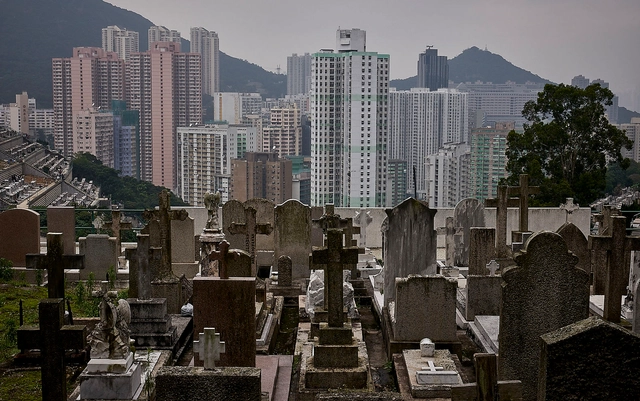
In some of the most dense cities around the world, it’s becoming an increasing challenge to find a comfortable space to live- and similar for when you die, too. It’s estimated that 55 million people pass away each year, and for every one living person today, there are 15 times the number of deceased. Yet urban planners and architectural developers are more interested in dealing with the living than dabbling in the business of death. As a result, it’s created tension in the two parallel worlds- and as time goes on, more questions are being raised about how we address public space that can be designed so that both the living and the dead can coexist.

Revitalized Public Spaces: Fostering Human Connections in Cities

Revitalized Public Spaces: Fostering Human Connections in Cities  - Image 1 of 4Revitalized Public Spaces: Fostering Human Connections in Cities  - Image 2 of 4Revitalized Public Spaces: Fostering Human Connections in Cities  - Image 3 of 4Revitalized Public Spaces: Fostering Human Connections in Cities  - Image 4 of 4Revitalized Public Spaces: Fostering Human Connections in Cities  - More Images+ 25

Public space has always been a top priority in every city’s urban planning agenda and given today’s world context, these urban spaces have emerged as fundamental elements of cities and neighborhoods. Plazas, squares, and parks, undeniable necessities in the urban fabric, have become, today, more vital than ever.

The Evolution of Shared Space: Privacy vs. Openness in an Increasingly Dense Architecture

Density has long been an essential consideration for architects and urban planners, yet its importance has only increased as the world’s urban population skyrockets and cities become denser and denser. For much of the history of urban planning, this term has been plagued with negative associations: overcrowding, poverty, lack of safety, and so-called ‘slums.’ The garden city movement, initiated by Ebenezer Howard in 1898, sought to remedy these ills by advocating for greenbelts and anti-density planning. Le Corbusier’s Radiant City is one of the most well-known urban plans building from these ideals. Yet in the 1960’s, sociologist Jane Jacobs famously overturned these long influential urban planning concepts: she pointed out that density of buildings was not identical to overcrowding of people; suggested that some highly dense urban areas, like her neighborhood in Greenwich Village, were safer and more attractive than nearby garden city projects; and highlighted how America’s conception of ‘slums’ were often rooted in anti-immigrant and anti-Black ideologies. Density is not inherently bad, she suggested, but it has to be done well. Today, we continue to grapple with the question of how to design for our increasingly dense cities – how do we keep them open, but simultaneously private? Free, but controlled when necessary? In particular, how do we keep them safe – both from crime and, in the age of COVID-19, disease?

Carlos García Vázquez: "The Modern Urbanism Has Rediscovered Traditional Cities"

Three years ago, in the wake of the release of his book Theories and History of the Modern City ("Teorías e Historia de la Ciudad Contemporánea", 2016, Editorial Gustavo Gili), we sat down with the author, Carlos García Vázquez, to discuss this complex and "uncertain creature' that is the modern city, focusing on the three categories that define cities today: Metropolis, Megalopolis, and Metapolis.

Based on an analysis of those "who have traditionally led the way in the planning of spaces" (sociologists, historians, and architects), the book illustrates the social, economic, and political forces that, in service to their own agendas, drive the planning, transformation, exploitation, and development of cities. In 120 years, urban centers have transformed from places where "people died from the city" to bastions of personal development and economic prosperity; however, the question remains —have cities really triumphed?

"Yes", says García Vásquez, "but we have paid dearly for it."

Carlos García Vázquez: "The Modern Urbanism Has Rediscovered Traditional Cities" - Image 1 of 4Carlos García Vázquez: "The Modern Urbanism Has Rediscovered Traditional Cities" - Image 2 of 4Carlos García Vázquez: "The Modern Urbanism Has Rediscovered Traditional Cities" - Image 3 of 4Carlos García Vázquez: "The Modern Urbanism Has Rediscovered Traditional Cities" - Image 4 of 4Carlos García Vázquez: The Modern Urbanism Has Rediscovered Traditional Cities - More Images+ 6

Recycled Cities: How Circular Design Shapes Urban Life

Recycling has long been an entry point into sustainable design. It's personal, achieved at a micro scale where individuals can reduce waste and preserve energy. But between resource shortages, environmental habitat loss and the global climate crisis, there has been a shift in daily practices towards more circular thinking. Increasingly, the need to sustain life is part of a continuous process of production, resorption, and recycling where waste becomes the input for production.

Recycled Cities: How Circular Design Shapes Urban Life - Image 1 of 4Recycled Cities: How Circular Design Shapes Urban Life - Image 2 of 4Recycled Cities: How Circular Design Shapes Urban Life - Image 3 of 4Recycled Cities: How Circular Design Shapes Urban Life - Image 4 of 4Recycled Cities: How Circular Design Shapes Urban Life - More Images+ 4

After All, Who Do We Build Architecture and Urbanism for?

What would all the built environments be without its users? This question may make it easier to understand that not only do architecture and urbanism sustain themselves as physical spaces, but they also gain meaning mainly through the human and non-human movements and bonds, that - together with the architectural or spontaneous traces that make up the urban landscape - provoke the sensations that each individual feels in a unique way.

Bryan C. Lee on Design Justice and Architecture’s Role in Systemic Racism

This article was originally published on Common Edge.

In the rage, furor, and sorrow that followed the murder of George Floyd, one voice in the architecture community managed to put the nation’s centuries-overdue reckoning with race into the larger context of the built environment. Earlier this month, CityLab published architect Bryan C. Lee Jr.’s essay “America’s Cities Were Designed to Oppress,” an impassioned polemic on design and race that also had the great virtue of offering up specific solutions.

Lee is the founder and design principal of Colloqate, a New Orleans–based design and public advocacy firm that was named an Emerging Voice in 2019 by the Architectural League of New York. Colloqate led the Paper Monuments project in 2017, a public art and public history campaign that was launched in conjunction with the successful fight to remove the Confederate statues in New Orleans. In addition to its advocacy work, the firm is currently working on architectural projects in Portland, Toronto, and New Orleans. Last week I talked with Lee about his essay, the charged moment that we’re in, and where the nation goes from here.

Paul Goldberger on Architecture, Cities, and New York’s Long Road Back

This article was originally published on Common Edge.

In recent weeks, we’ve seen an explosion of internet speculation about the “future of cities.” Apparently, they are either doomed—or destined to prevail. The office is dead (obviously), the office tower (especially tall ones) clearly a building type in need of a proper funeral. All kinds of chatter have subsequently ensued (we have time on our hands) about the dire outlook for public space, the impending collapse of public transportation, the inevitable return to the suburbs, even the (gasp!) demise of the luxury cruise ship. We’ll see; we’re still wandering around in the dark here and might be for some time. With that somber thought in mind, I reached out to Paul Goldberger, Pulitzer Prize-winning architecture critic and urbanist, for what I felt certain would be a nuanced and measured take on our presently fraught moment. (A note: we spoke prior to the protests, which have erupted in American cities in response to the murder of George Floyd.) For the most part, we resisted the urge to make sweeping and almost certainly premature predictions about our urban future.

Gardens, Parks, and Boulevards: Mapping Green Spaces Via Satellite

There are a plethora of benefits associated with urban green spaces, namely pollution control, temperature regulation, and biodiversity--all of which ultimately add to the quality of life of city dwellers. Like other urban common areas used for sports and recreational activities, green spaces have a direct impact on the health and well being of the residents who use them.

Gardens, Parks, and Boulevards: Mapping Green Spaces Via Satellite - Image 4 of 4Gardens, Parks, and Boulevards: Mapping Green Spaces Via Satellite - Image 8 of 4Gardens, Parks, and Boulevards: Mapping Green Spaces Via Satellite - Image 12 of 4Gardens, Parks, and Boulevards: Mapping Green Spaces Via Satellite - Image 13 of 4Gardens, Parks, and Boulevards: Mapping Green Spaces Via Satellite - More Images+ 11