1. ArchDaily
  2. Urban Design

Urban Design: The Latest Architecture and News

Interview with Vicente Guallart, Chief Architect of Barcelona

Subscriber Access | 

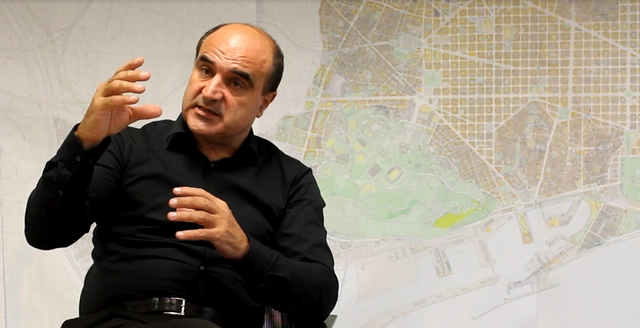
In the following article, originally published in Polish in theDecember 2013 issue of A&B, Ewa Szymczyk interviews Vicente Guallart, the Chief Architect of Barcelona since 2011 as well as the founder of Guallart Architects and IAAC (Institute of Advanced Architecture in Catalunya). Szymczyk questions Guallart about his experience in urban design, asking: how can you measure a city's success?

Ewa Szymczyk: When measuring the contemporary city’s success we typically use economic measures. In this sense Barcelona ranks very high, being a top tourist destination and managing its budget in times of global crisis. But there are many other ways to measure its success. What in your opinion makes a city a good city? Isn’t it much more than economic prosperity?

Vincente Guallart: A good city is a place where the citizens live well. So the best measure for a good city is how the citizens live. The truth is that the city is a physical representation of a social agreement. If you think for instance about Phoenix in Arizona, maybe people live there the way they want and the way they like to live. Obviously there are also questions related to cost. I mean, questions related to environmental and economic costs. Therefore the cost of a city like Phoenix is very different from the cost of a city like Hong Kong, which is the densest city and probably the most efficient urban structure in the world. So the question is the economic efficiency and also the quality of life of the citizens. And the best way to know is to ask citizens how happy they are to live in a place like this. The truth is that if you are a citizen of Barcelona you are quite happy. We have been evaluating this over the past few years and the average rating is seven out of ten. So that is in general very good! The people are proud to live in a place like this.
Light Matters: 7 Ways Daylight Can Make Design More Sustainable

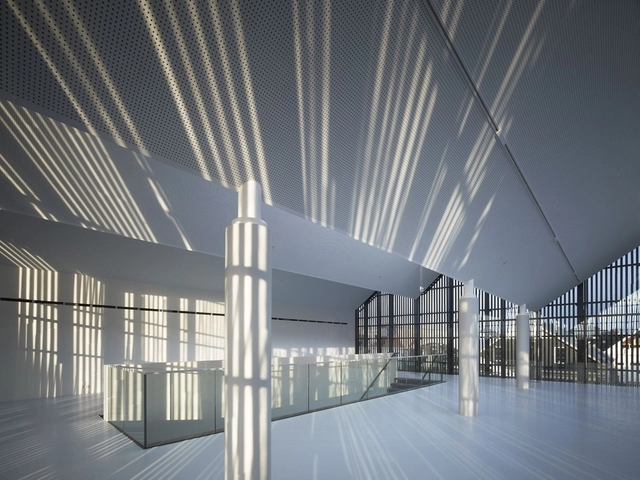
Daylight is a highly cost-effective means of reducing the energy for electrical lighting and cooling. But architectural education often reduces the aspect of daylight to eye-catching effects on facades and scarcely discusses its potential effects - not just on cost, but on health, well-being and energy.

This Light Matters will explore the often unexplored aspects of daylight and introduce key strategies for you to better incorporate daylight into design: from optimizing building orientations to choosing interior surface qualities that achieve the right reflectance. These steps can significantly reduce your investment as well as operating costs. And while these strategies will certainly catch the interest of economically orientated clients, you will soon discover that daylight can do so much more.

More Light Matters with daylight, after the break…

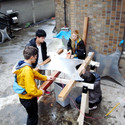
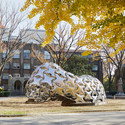
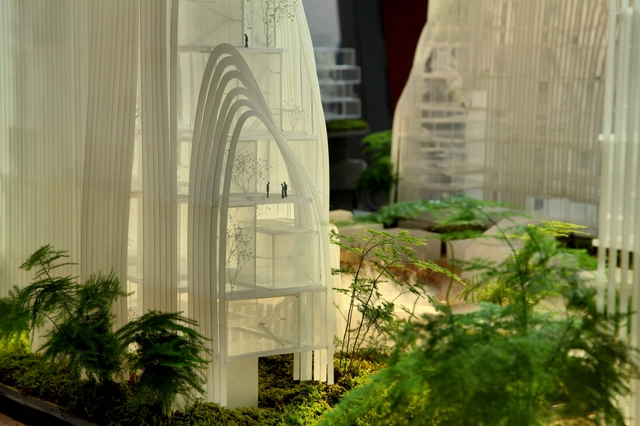
Ninety Nine Failures / The University of Tokyo Digital Fabrication Lab

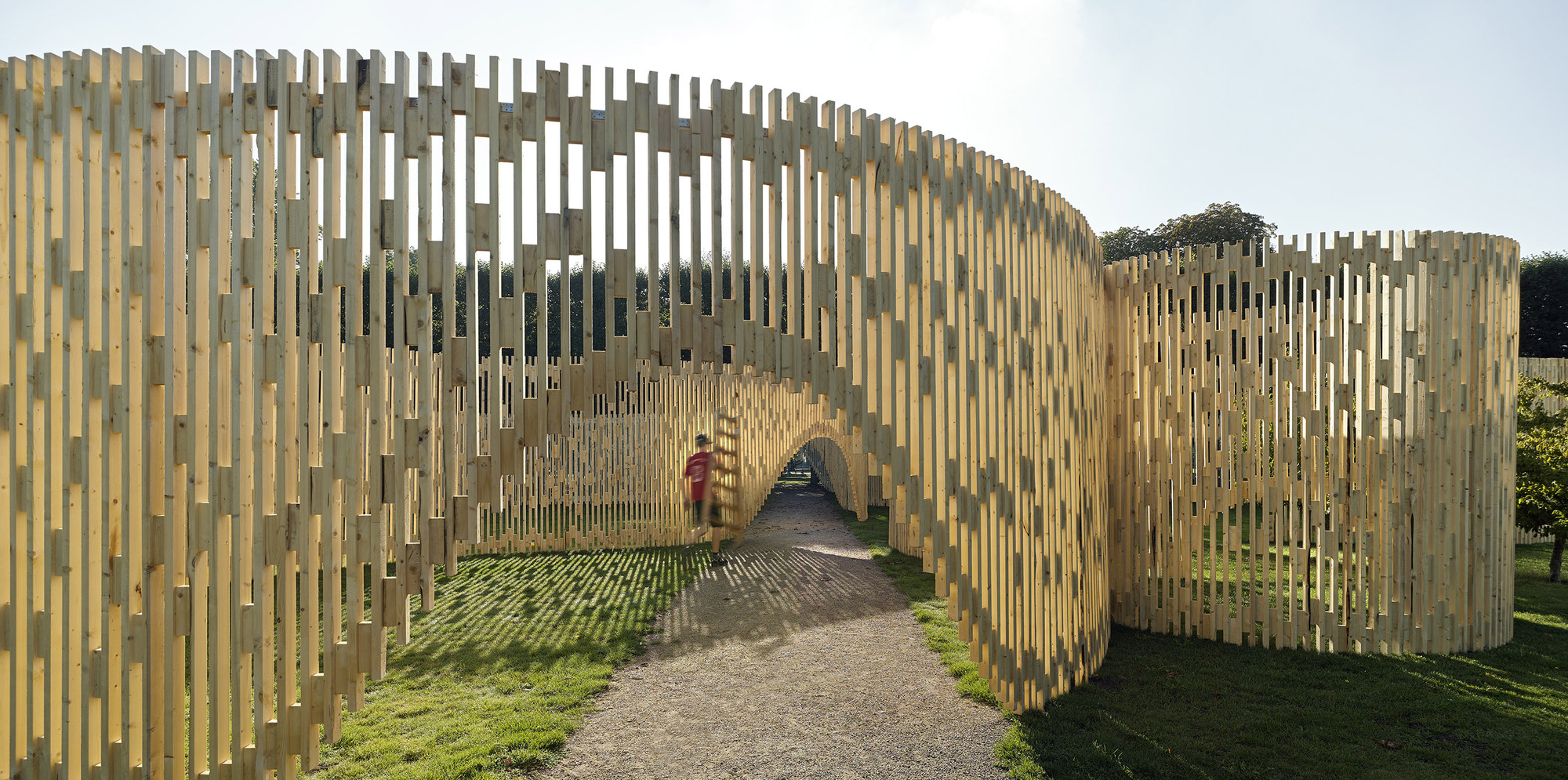
Ninety Nine Failures / The University of Tokyo Digital Fabrication Lab - Pavilion, FacadeNinety Nine Failures / The University of Tokyo Digital Fabrication Lab - PavilionNinety Nine Failures / The University of Tokyo Digital Fabrication Lab - Pavilion, FacadeNinety Nine Failures / The University of Tokyo Digital Fabrication Lab - Pavilion, ArchNinety Nine Failures / The University of Tokyo Digital Fabrication Lab - More Images+ 27

Hamburg's Plan to Eliminate Cars in 20 Years

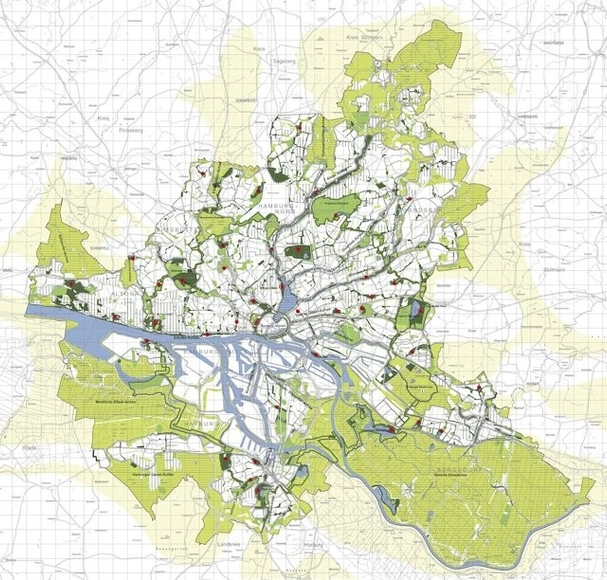
About 40% of the area of Hamburg, the second largest city in Germany, is made up of green areas, cemeteries, sports facilities, gardens, parks and squares. For the first time ever, the city has decided to unite them together via pedestrian and cycle routes. It's all part of the "Green Network Plan," which aims to eliminate the need for vehicles in Hamburg over the next 20 years.

According to city spokeswoman Angelika Fritsch, the project will help to turn the city into a one-of-a-kind, integrated system: "Other cities, including London, have green rings, but the green network will be unique in covering an area from the outskirts to the city centre. In 15 to 20 years you'll be able to explore the city exclusively on bike and foot."

More details, after the break.

MAD Envisions More 'Natural' Chinese Cities in the Future

Ma Yansong of MAD recently presented a 600,000 square meter urban design proposal for the city of Nanjing titled, "Shanshui Experiment Complex," at the 2013 Bi-City Biennale of Urbanism / Architecture in Shenzhen, China. The concept takes into account the culture, nature and history of Nanjing while reconsidering the methodology in which Chinese cities are built.

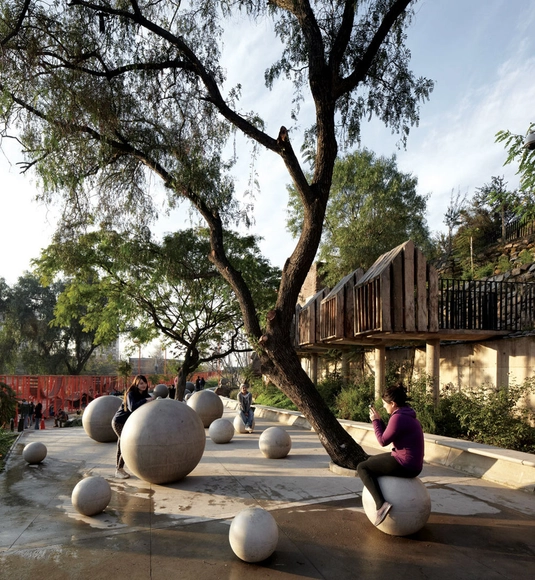
Children's Bicentennial Park / ELEMENTAL

Children's Bicentennial Park / ELEMENTAL - ParkChildren's Bicentennial Park / ELEMENTAL - ParkChildren's Bicentennial Park / ELEMENTAL - ParkChildren's Bicentennial Park / ELEMENTAL - ParkChildren's Bicentennial Park / ELEMENTAL - More Images+ 15

Urban Living Award Winners Announced

The winners of 2013 Urban Living Awards, a joint effort between the Senate Department of Urban Development and the Deutsche Wohnen AG, have been announced.

The competition aims to inspire architects to improve the quality of urban life through design, while also stimulating urban cooperation. Though it was only founded in 2010, it has already become one of the most respected competitions in the world. Indeed, the 240 contributions in 2013 hailed from over 20 European countries - a huge expansion from previous years.

Read more for the winners...

CREA-PB Headquarters / MAPA

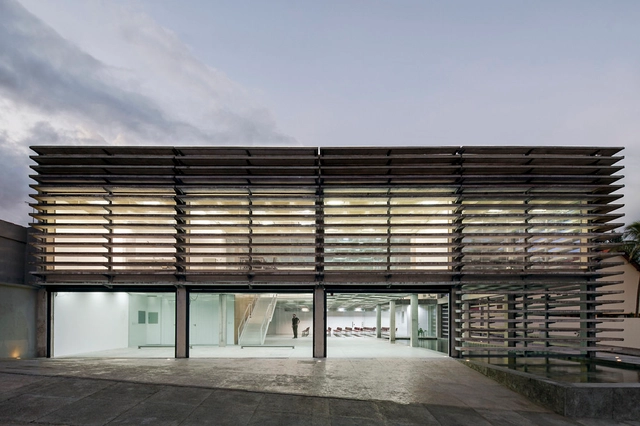
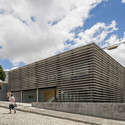
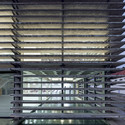
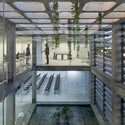
CREA-PB Headquarters / MAPA - Community , Stairs, Facade, HandrailCREA-PB Headquarters / MAPA - Community , FacadeCREA-PB Headquarters / MAPA - Community , Facade, HandrailCREA-PB Headquarters / MAPA - Community , Facade, Handrail, BeamCREA-PB Headquarters / MAPA - More Images+ 11

Campina Grande, Brazil

Diller Scofidio + Renfro's Winning Proposal for Zaryadye Park: "Wild Urbanism"

UPDATE: The video detailing Diller Scofidio + Renfro's winning proposal for Moscow's Zaryadye Park has just been released. In it the three partners discuss the central idea behind the proposal - "Wild Urbanism" - in which plants and people are of equal importance and "nature and architecture are merged into a seamless whole." They explain how each of Russia's varied landscapes - its tundra, steppe, forest, and wetland - will be imported to the park and overlapped into "enfolded nodes" that will house sustainable, artificial micro-climates that will allow for year-round use of the park.

The Strelka Institute has announced the winner of the two-stage international competition to design Zaryadye park, Moscow's first park in over 50 years: Diller Scofidio + Renfro.

The consortium led by the New York-based firm, beat out an impressive shortlist. Russian-led TPO “Reserve” came second and MVRDV third.

Zaryadye Park, 13 acres of land just a minute’s walk from the Kremlin and the Red Square, is hoped to “project a new image of Moscow and Russia to the world.” See the renderings from Diller Scofidio + Renfro's winning proposal for Moscow's new and most important public space, after the break...

Diller Scofidio + Renfro's Winning Proposal for Zaryadye Park: "Wild Urbanism" - Image 1 of 4Diller Scofidio + Renfro's Winning Proposal for Zaryadye Park: "Wild Urbanism" - Image 2 of 4Diller Scofidio + Renfro's Winning Proposal for Zaryadye Park: "Wild Urbanism" - Image 3 of 4Diller Scofidio + Renfro's Winning Proposal for Zaryadye Park: "Wild Urbanism" - Image 4 of 4Diller Scofidio + Renfro's Winning Proposal for Zaryadye Park: Wild Urbanism - More Images+ 1

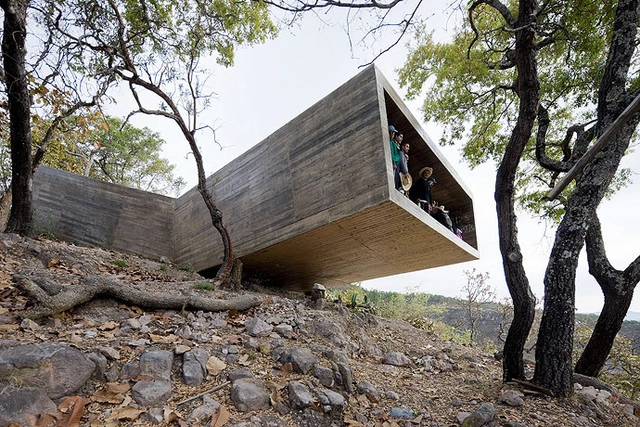
Las Cruces Lookout Point / ELEMENTAL

Las Cruces Lookout Point / ELEMENTAL - Public SpaceLas Cruces Lookout Point / ELEMENTAL - Public Space, ForestLas Cruces Lookout Point / ELEMENTAL - Public Space, ForestLas Cruces Lookout Point / ELEMENTAL - Public SpaceLas Cruces Lookout Point / ELEMENTAL - More Images+ 5

Las Cruces, Mexico
  • Architects: ELEMENTAL
  • Area Area of this architecture project Area:  148
  • Year Completion year of this architecture project Year:  2010

Trylletromler / Fabric Architecture

Trylletromler / Fabric Architecture - Public Space, Garden, Arch, Fence, FacadeTrylletromler / Fabric Architecture - Public Space, Garden, Fence, FacadeTrylletromler / Fabric Architecture - Public Space, Garden, Fence, FacadeTrylletromler / Fabric Architecture - Public Space, GardenTrylletromler / Fabric Architecture - More Images+ 19

Reclaiming Rivers: The Latest Trend in Urban Design

For years, rivers were a source of transport and power, upon whose banks our cities were born.  But as cities industrialized, many of them clogged with filth and disease – making them not only ugly, but dangerous.  Unless they were useful, rivers were often diverted, covered, pushed underground, and forgotten.

Not anymore. Reclaiming rivers seems to be the newest trend in urban design, and cities across the world are hopping on the bandwagon. In the UK, the Environment Council is working to restore 9,500 miles of river; in Los Angeles, the eponymous river is about to undergo a complete transformation.

Cities are for People: Turning Underused Spaces into Public Places

Subscriber Access | 

It begins with a fundamental premise: Buildings occupy only a fraction of land in cities. Just as important as physical structures, are the public spaces in between.

In many cities these spaces have long been disregarded. Today, however, we are witnessing bold experimentation and innovation coming forth from cities across the globe: cities re-using and re-imagining previously underused spaces in order to uplift communities and transform lives. 

Light Matters: Europe's Leading Light Festivals

In mid autumn, when the nights get longer in the northern hemisphere, we encounter numerous light festivals. And indeed, within the last ten years, more and more light festivals have globally emerged. The reason for the success of light festivals is simple, as the German curator Bettina Pelz concludes: “It’s actually fairly easy, because whenever you do something with light in cities in the night, then people do come. If you do it good, they come twice.” 

As Pelz points out, light is an apt medium for evening events, since it easily attracts people. Communities have discovered the potential of lighting for city marketing, and the closer they plan their date to Christmas, the more they merge their illumination with the festive blinking lights of commercial Christmas markets.

Join us on a tour through some of the leading light festivals in Europe. Read more about their different backgrounds, artistic concepts and future trends after the break...

Light Matters: Europe's Leading Light Festivals - Featured ImageLight Matters: Europe's Leading Light Festivals - Image 1 of 4Light Matters: Europe's Leading Light Festivals - Image 2 of 4Light Matters: Europe's Leading Light Festivals - Image 3 of 4Light Matters: Europe's Leading Light Festivals - More Images+ 25

AD Architecture School Guide: Jamia Millia Islama

Subscriber Access | 

With its current total population over 1.2 billion people, India is the second most populous nation in the world. What’s more, current demographics show that, rather than being concentrated, India’s population is spread throughout its states. In demographic and statistical terms, then, India is ideally situated to provide architecture students with new insights into Ekistics, or the science of human settlements.

Founded in 2001 in response to the ongoing shifts in the urban landscape, the Faculty of Architecture and Ekistics at Jamia Millia Islamia, a Central University, grounds students in the ways that nature interacts with human needs/ethics in order to produce professionals instrumental in advancing a better built environment.

Domplatz / hohensinn architektur

Domplatz / hohensinn architektur - Public Space, Facade, Arch
© Paul Ott photografiert

Domplatz / hohensinn architektur - Public Space, FacadeDomplatz / hohensinn architektur - Public Space, Table, Lighting, ChairDomplatz / hohensinn architektur - Public Space, Bedroom, Door, Lighting, Bed, Table, ChairDomplatz / hohensinn architektur - Public Space, Facade, BalconyDomplatz / hohensinn architektur - More Images+ 14

PLAYscapes Competition Results Announced

"People tend to forget that play is serious." - David Hockney

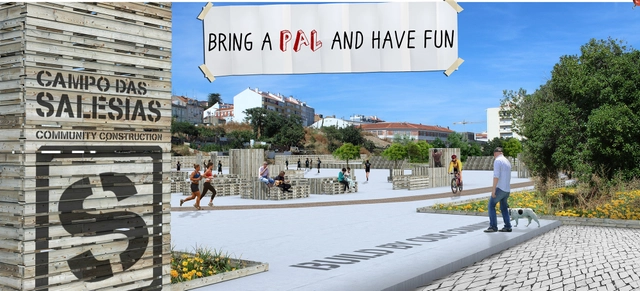
PLAYscapes, an international design competition launched earlier this year asking people to "submit a plan or proposal to turn a neglected forgotten part of your city into a playscape," has announced their winning entries. Set up by Building Trust International, the competition called for "professional and student architects and designers from cities around the world to propose ideas which encouraged public interaction and turned redundant city spaces into fun creative places."

Find out more about the winning professional entry from the City of Cape Town, entitled Cape Town Gardens Skatepark, along with the winning student entry from the Lusiada University of Lisbon, entitled Bring a Pal and Have Fun, after the break...

Could Mobile Technology Help Us Define "Good" Architecture?

Could Mobile Technology Help Us Define "Good" Architecture? - Featured Image
Courtesy of gizmodo.com

Architecture researchers in Edinburgh have completed a breakthrough study on brain activity recorded in situ by using mobile electroencephalography (EEG) technology, which records live neural impressions of subjects moving through a city. Excitingly, this technology could help us define how different urban environments affect us, a discovery that could have provocative implications for architecture. Read the full story on Salon. Also, check out this article from Fast Company about how a similar mobile technology could show us the effects of urban design - not on our brains, but on our bodies.