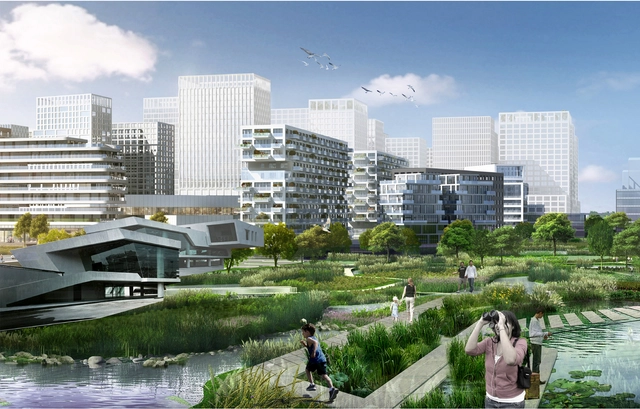
As Gothenburg, Sweden's urban fabric begins to change, Utopia Arkitekter have swooped in with a proposed urban plan for the development of Hovås II, located in the south of the city. Their firm's proposal has won the jury's acclaim over Snøhetta and Gehl Architects and they are now moving toward the project's next phase.
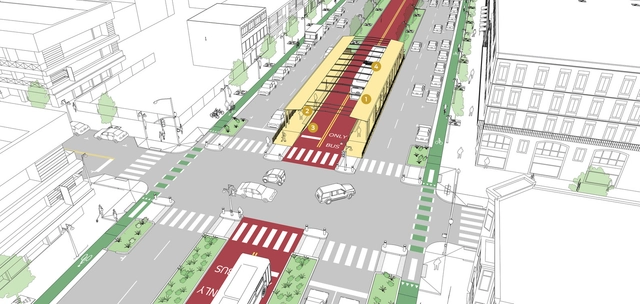
The latest publication of the National Association of City Transportation Officials, NACTO, is the "Transit Street Design Guide" in which tips and proposals are presented on how to improve streets through urban design.
The ideas are centered on prioritizing sustainable mobility so that both the member cities of the organization and those that have access to this document can improve their practices in relation to public spaces, mobility, and transportation.
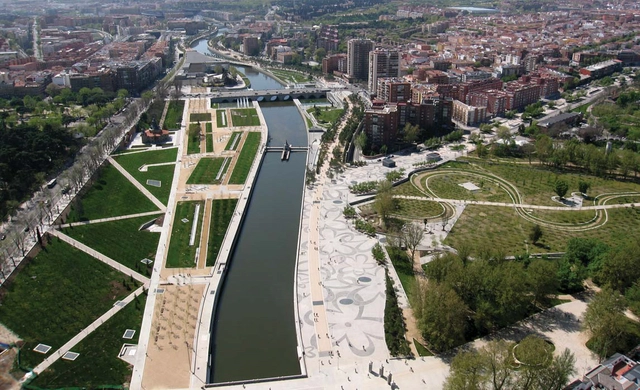
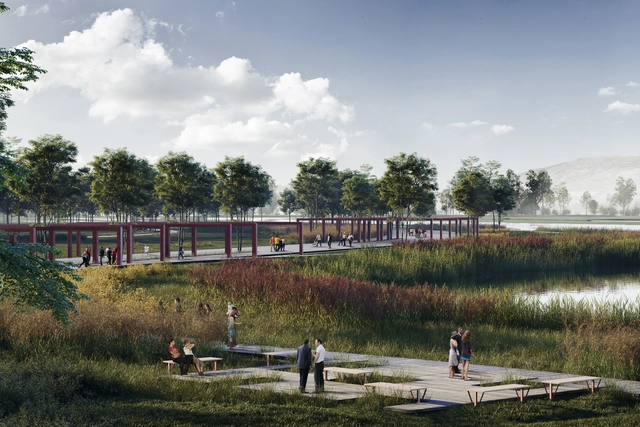
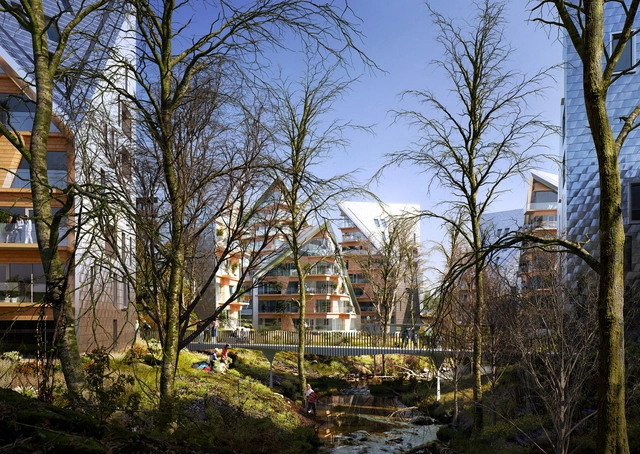
Ziya Imren Architects has released its plans for Re-Naturing the Kizilirmak in Turkey, a new eight-kilometer-long urban design project around the Kizilirmak River. As the longest inland river in Turkey, the Kizilirmak, also known as the Red River, “has been regarded as a hard edge to the city due to access and safety concerns.” After recent municipal advancements, many areas around the river have been opened to a design competition with the goal of integrating the riverfront into the existing city fabric.
MAD Arkitekter and Asplan Viak have collaborated to create a feasibility study for Visjon Dokken, an idea for a 25-hectare urban development dock that could become a new center for “residential, business park, commute, and energy sufficient systems.”
Located in Bergen Harbor in Norway, the project would be the second largest development in the country and could house 3,500 dwellings and 8,000 workspaces, 37,000 square meters of public parks, as well as a connected walkway system and bicycle paths.
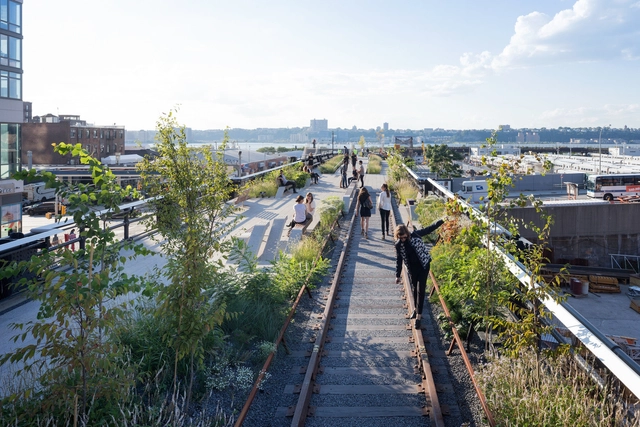
Building a highway in a city is often thought of as a solution to traffic congestion. However, the induced demand theory has shown that when drivers have more routes, they choose to continue using this medium instead of using public transport or a bicycle, and as a result, congestion doesn’t decrease.
As a result, some cities have chosen to remove spaces designated for cars and turn what was once a highway into urban parks and less congested streets.
Here we have six examples, some have already been completed, while a few are still under construction. To the surprise of some, most of the projects are in the US, which reflects that American designers are looking into further studying European transport policies.
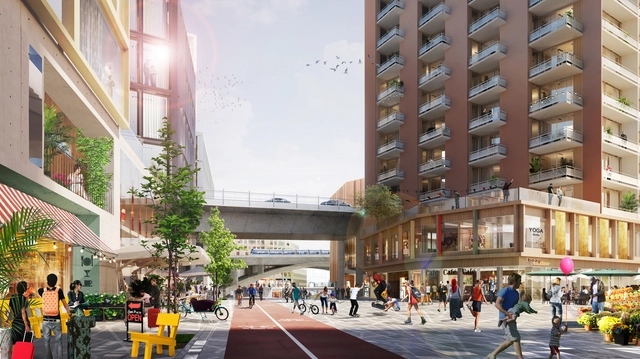
White Arkitekter has teamed up with the City of Stockholm to redevelop Södra Skanstull, a neighborhood characterized by obstructive overland infrastructure bridging the south of Stockholm to the island of Södermalm.
In order to reclaim these underused areas of the city, the revitalization project will create pedestrian and cyclist boulevards, as well as 65,000 square meters of space for culture, sports, and offices, 22,000 square meters for commerce, and 750 new apartments. The project will additionally identify, map, and upgrade existing facilities.
Tabiat Pedestrian Bridge in Tehran, Iran. A winning project for the Aga Khan Award for Architecture-Lecture on October 24 for the Dallas Architecture Forum.
The Dallas Architecture Forum will launch its Twentieth Anniversary Season on October 24 with a lecture about the prestigious Aga Khan Award for Architecture. The winners of this triennial competition (grand prize of $1,000,000 USD) were recently announced and include projects by internationally known firms such as Zaha Hadid Architects and BIG Architects, as well as those by rising talent from countries around the world. Winning projects are located in China, Bangladesh, Iran, Lebanon and Denmark.
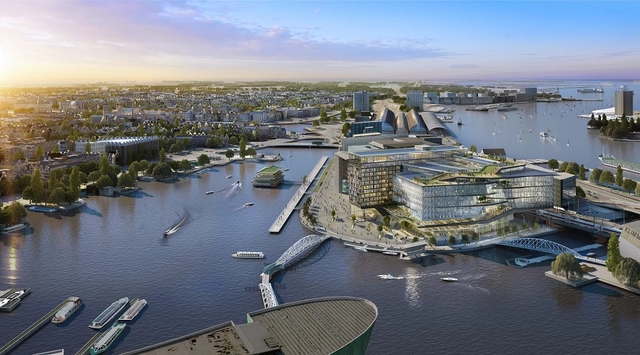
UNStudio has designed the final portion of a 225,000 square meter (2,420,000 square foot) urban plan for the district of Oosterdokseiland in the city center of Amsterdam. Located at the tip of the island, the last sub-plan will consist of a lively social hub and 72,500 square meters (780,000 square feet) of public facilities, apartments and office space for Amsterdam-based company Booking.com.
“The design for this fully integrated new urban campus is envisioned as a highly multifunctional living and working environment, enriched with special amenity and public programmes,” said UNStudio Founder Ben van Berkel. “The urban gesture of the building weaves together with the existing streets, while the east side of the building will become a recognisable emblem for Oosterdok.”
Cars have reshaped cities across the world, largely at the cost of everyone outside of a private vehicle. In recent years the "grid city" of Barcelona has been suffering from clogged roads and choked air quality, with urban traffic contributing to the 3500 premature deaths caused by air pollution each year. Beginning in the district of Eixample, proposals laid out in the 2014 Urban Mobility Plan aims to diffuse traffic congestion and reduce air pollution in the city. In a recent film Vox have picked up on one of a number of potential schemes: the Superblock concept (known as superilles in Catalan). According to Salvador Rueda, the Director of the Urban Ecology Agency of Barcelona who developed the plan, these are "grid[s] of nine blocks [in which] the main mobility happens on the roads around the outside, [...] and the roads within are for local transit only."
https://www.archdaily.com/796252/how-barcelonas-superblocks-pedestrian-plan-hopes-to-return-the-streets-to-the-peopleAD Editorial Team
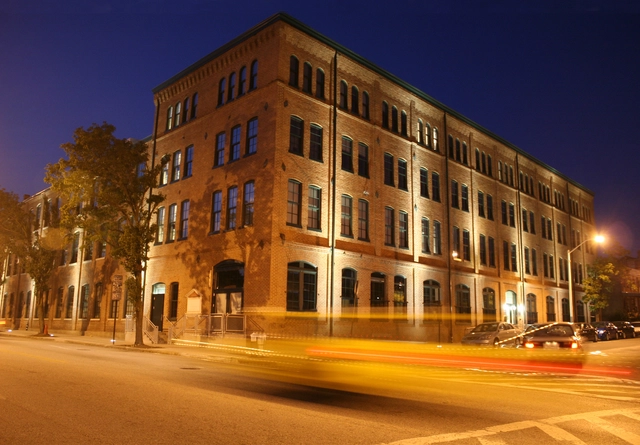
2015 Rudy Bruner Award for Urban Excellence Gold Medalist - Miller's Court - Baltimore, MD
The Rudy Bruner Award for Urban Excellence (RBA) celebrates transformative urban places distinguished by their economic and social contributions to our nation’s cities. Winners offer creative placemaking solutions that transcend the boundaries between architecture, urban design and planning and showcase innovative thinking about American cities.
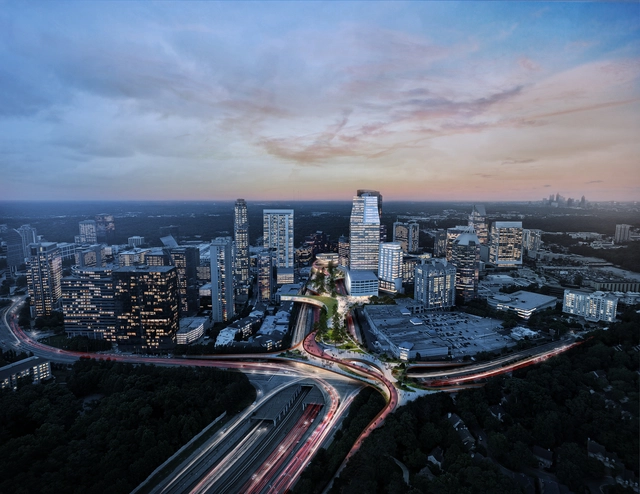
Aerial view looking south at dusk. Image Courtesy of Roger Partners / Nelson Byrd Woltz
Rogers Partners Architects+Urban Designers and Nelson Byrd Woltz Landscape Architects have released preliminary designs for a new park floating above a divisive highway and commuter rail line in the Buckhead neighborhood of Atlanta, Georgia. A 2,400-foot-long elevated traverse, Buckhead Park Over GA400 aims to bring the community together with safe, convenient access to the amenities and cultural attractions in Buckhead.
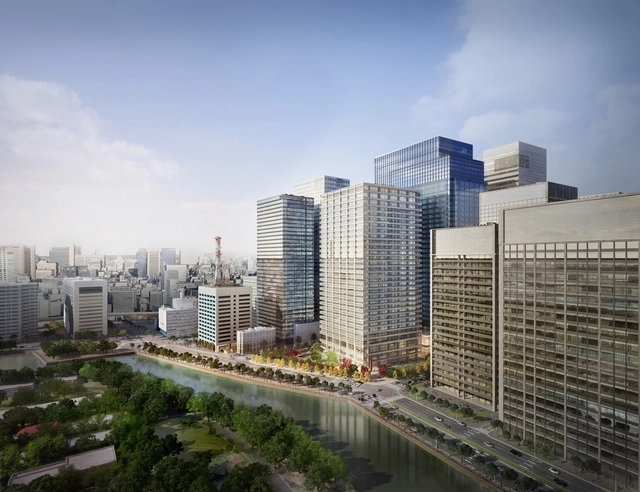
Construction is now underway on Skidmore, Owings & Merrill’s (SOM) OH-1 redevelopment project in the Ohtemachi District of Tokyo, Japan. Covering a 20,000 square meter (215,000 square foot) site, the project constitutes one of the largest revitalization projects in Tokyo’s history. The complex includes two high-rise, mixed-use buildings containing a luxury hotel, commercial office space, retail and cultural facilities, and is centered around a park and public area that will visually connect the development to the adjacent Imperial Palace East Gardens.
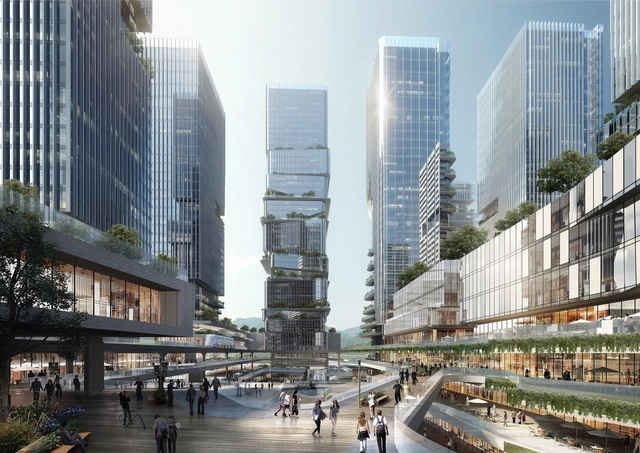
10 DESIGN has won a competition to design China Resources Land’s (CR Land) "Hengqin Wanxiang World," a 2.3 million square meter (25 million square foot) mixed used development to be located in Zhuhai, China. The complex will include destination retail locales centered around an “Experience Central Square,” which will serve as a venue for a variety of cultural and performance programs. Construction on the massive development is set to begin this month.
Courtesy of As.Architecture-Studio and VHA Architects
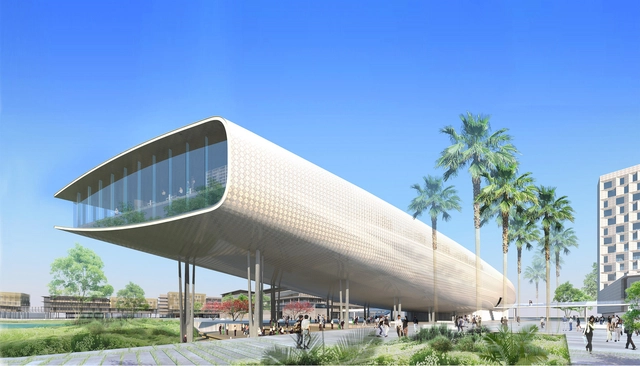
As.Architecture-Studio and VHA Architects have unveiled their plans for the urban design and architecture of a new campus at the University of Science and Technology of Hanoi (USTH) in Vietnam. Located 30 kilometers east of Hanoi City, the new campus is designed to be a “New Model University,” and will feature facilities for administration, teaching, research, housing, student activities, services, and infrastructure.
Through its position around and across existing lakes, the project aims to offer researchers and students a living area structured by landscape. “The presence of water, along with the tropical architecture of the buildings and their specific technologies, will embody the unique character of the USTH being a Vietnamese University leading in sustainability and renewable energy.”
A recent article published in Nature makes a bold claim: we're analyzing our cities completely wrong. Professors David Wachsmuth, Aldana Cohen, and Hillary Angelo argue that, for too long, we have defined sustainability too narrowly, only looking at environmental impact on a neighborhood or city scale rather than a regional or global scale. As a result, we have measured our cities in ways that are inherently biased towards wealthy cities, and completely ignored the negative impacts our so-called "sustainable," post-industrial cities have on the rest of the world.Metropolis editor Vanessa Quirk spoke with Professor Wachsmuth to learn more about the unintended knock-on effects of going "green," the importance of consumption-based carbon counting, and why policy-makers should be more attentive to the effects of "environmental gentrification."
The Best Of Design Awards is a unique project-based awards program that showcases great buildings and building elements. Entrants are invited to submit completed works in 26 categories.
Foreign leading firm MLA+ and local leading firm the China Academy of Urban Planning and Design, in collaboration with Felixx Landscape Architects & Planners and the Shenzhen Municipal Design & Research Institute, have won first prize in the urban design competition for the regeneration of an area along the G107 highway in the Bao’an district of Shenzhen, China.
Located on both aspects of the G107, the one- to two-kilometer piece of land forms a 53-square-kilometer area for the new plan, which will redevelop a fragmented industrial landscape created by the highway and Shenzhen’s identity as a former “Factory of the World” city.
A combination of geographical features has seen the city of Sivas remain one of the greatest focal points of settlement and transit in the Greater Anatolia Region of Turkey. The region is divided in two by the Kızılırmak River, the longest river entirely within Turkey, and it has long been regarded as a barrier to unification. Due to access and safety concerns, Kızılırmak River has been separated from Sivas, perceived as something outside of the city perimeter. Now, advancements in flood mitigation have opened up the possibilities for the river to be re-integrated into the city fabric.
To investigate the possible role of the river in holistically reuniting the two halves of the area, the Sivas Municipality opened a competition to design a six million square meters of land adjacent to the waterfront. A scheme from a team comprised of ONZ Architects and Mdesign took an approach which equally considered the site in terms of its biological and cultural possibilities. Their design establishes the Kızılırmak River Corridor as an "ecological and recreational spine," managing the floodplain and integrating vital public program throughout.





.jpg?1480654086&format=webp&width=640&height=580)
.jpg?1480654159 "Courtesy of Ziya Imren Architects")
.jpg?1480654024 "Courtesy of Ziya Imren Architects")
.jpg?1480654143 "Courtesy of Ziya Imren Architects")
.jpg?1480654189 "Courtesy of Ziya Imren Architects")
.jpg?1480654086)
_web.jpg?1480391508&format=webp&width=640&height=580)
_web.jpg?1480391485 "Courtesy of Mad Arkitekter and Asplan Viak")


_web.jpg?1480391497 "Courtesy of Mad Arkitekter and Asplan Viak")
_web.jpg?1480391508)