Was there ever a time when architects felt properly valued? Probably not. Certainly not since the profession became dependent on the business of America, which is business. With economic growth as the country’s prime directive through the 20th century, architects—as members of the construction industry—played their part. How? By designing buildings of all kinds that were lighter, cheaper, and quicker to erect. Architects’ values might have been social, artistic, even cosmic, but their value to society has been primarily economic.
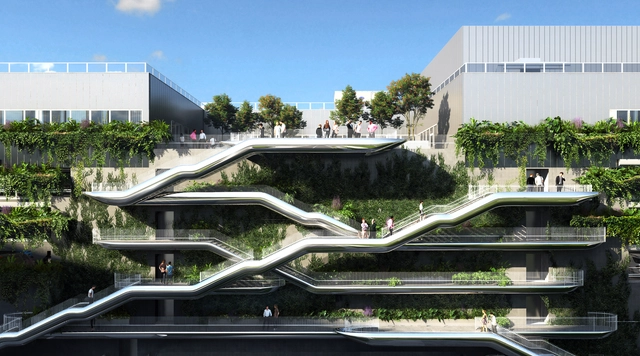
MAD Architects led by Ma Yansong, unveiled renderings of the MoLo, short for Mobility and Logistic hub, a new gateway situated along the western boundary of the Milano Innovation District (MIND). In collaboration with Architect Andrea Nonni, Open Project, and Progeca, the 28.5 meters high complex brings together several facilities across 68,700sqm of surfaces. Designed as an integration of nature and architecture, the MoLo “performs as a welcoming entrance and education space for issues related to mobility in which visitors can drop off their cars to explore the district on foot and see innovative transportation technology in person”.
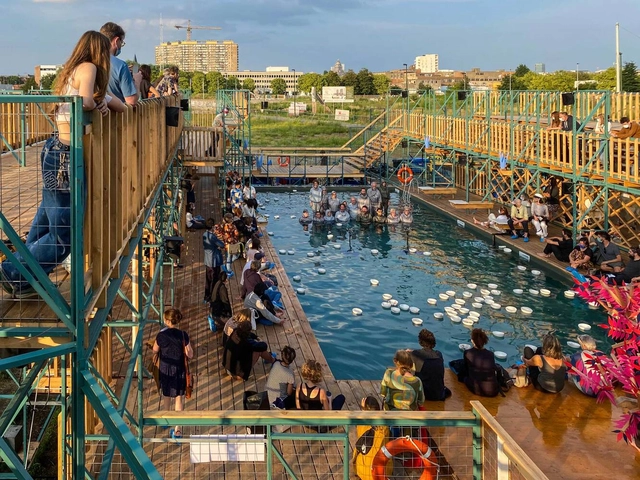
FLOW, 2021 / POOL IS COOL, Decoratelier Jozef Wouters. Image Cortesía de CCCB
The European Prize for Urban Public Space is a biennial, honorary competition organised by the Centre of Contemporary Culture of Barcelona (CCCB), which, following its exhibition "The Reconquest of Europe" in 1999, decided to create a permanent observatory of European cities. The prize has been awarded since 2000, recognising the best interventions for the creation, transformation and recovery of public spaces in Europe.
As cities are increasingly vertical, buildings have been finding ways to take advantage of what roofs can bring to urban life. Through halls for parties, restaurants, swimming pools, and other programs, contemporary architecture has gained access to sunlight, natural ventilation and also to the horizon due to the occupation of the rooftops, making them attractive for both residential and commercial projects. However, the interest in appreciating the city from this point of view is not the result of verticalization alone, nor is it a merely technical alternative.
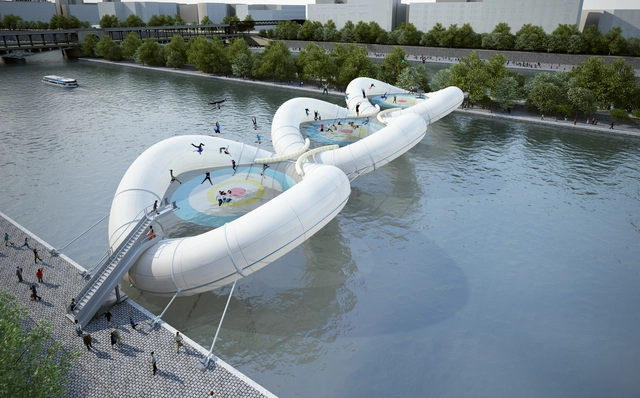
Trampoline Bridge / AZC Architects. Image Courtesy of AZC Architects
Humane cities center around the relationships between people and places. Communities thrive on shared resources, public spaces, and a collective vision for their locality. To nurture happy and healthy cities, designers and the public apply methods of placemaking to the urban setting. Placemaking—the creation of meaningful places—strongly relies on community-based participation to effectively produce magnetic public spaces.
As one of the first steps in the elaboration of an architectural project, the study of the current legislation on the ground is of paramount importance for the success of the proposal. Through calculations and restrictions, zoning laws present limits to be considered in projects that, consequently, instigate architects to think of intelligent solutions, dealing with such limitations in a practical and creative way.
These parameters are dictated by the government and aim to stop, maintain or accelerate urban growth in certain portions of cities. These are norms that establish guidelines for land occupation, delimiting the percentage of built-up area, setbacks, distances, permeability, among others.
In the 1960s and 1970s, a series of critiques of the modern city appeared. Jane Jacobs’s attack on those intent on redeveloping New York City was the most immediately impactful, loosening the grip of Robert Moses and his followers, but others had a broader influence on practicing architects and planners. As an observer of San Francisco Bay Region’s cities, I wondered if their books from this period would shed light on current issues of adding density in urban contexts.
https://www.archdaily.com/985024/how-do-the-critics-of-yesteryear-think-about-urban-densityJohn J. Parman
At the end of the 19th century, skateboarding emerged in the United States. Officially patented in 1936, the sport has already faced several prejudices, but like the social and urban dynamics of which it is a part, it has lasted to demonstrate that its experience goes far beyond conservative views and brought a new way of experiencing the city by trying movements of our own bodies in light of the urban or architectural design.
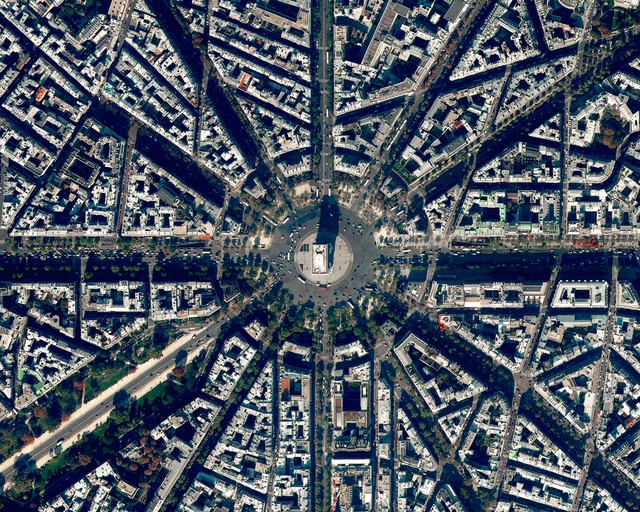
Arch of Triumph. Created by @benjaminrgrant, source imagery: @digitalglobe
In theory, urban planning is a process of elaborating solutions that aim both to improve or requalify an existing urban area, as well as to create a new urbanization in a given region. As a discipline and as a method of action, urban planning deals with the processes of production, structuring and appropriation of urban space. In this sense, its main objective is to point out what measures should be taken to improve the quality of life of the inhabitants, including matters such as transport, security, access opportunities and even interaction with the natural environment.
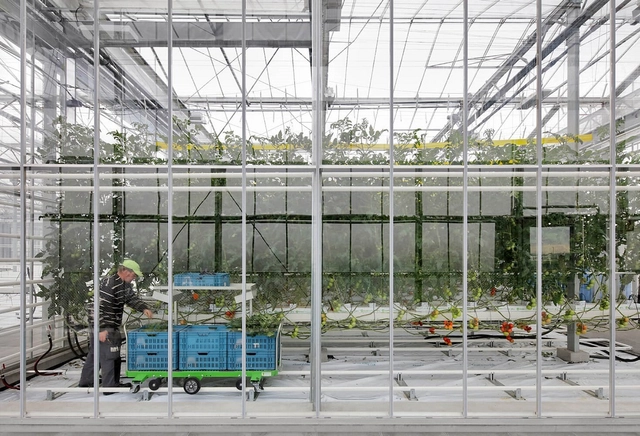
Do you know what urban farms are? Have you ever thought about growing your own food at home in your garden or in specialized freezers? Transporting food for consumption in cities is one of the major environmental (and financial) pollution problems in the world today.
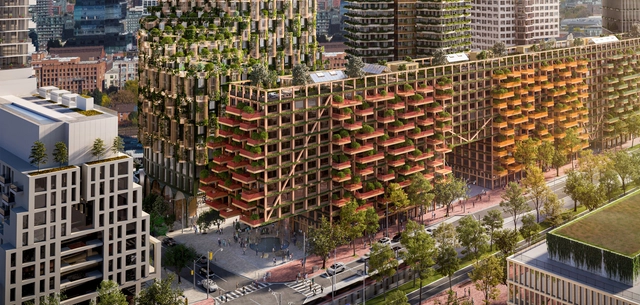
Alison Brooks Architects, Adjaye Associates, Henning Larsen and SLA to Develop Toronto's Waterfront. Image Courtesy of Waterfront Toronto
As more smart cities make their way across the globe, whether it being in countries of the Far East, Latin America, or the Middle East, Toronto is stepping back from the smart city bandwagon, and reassessing its substantial contribution to the community. The Canadian city, which ranked 15th on Global Finance's ranking of the world's best cities to live in for the year 2022, plans on "killing the smart city forever", especially after Quayside's controversial cancellation reasons, questioning its lack of privacy, necessity on an urban scale, and whether people truly want to live in a tech-driven environment.
El proceso de HerCity usando la herramienta MethodKit en GoDown, Nairobi, Kenia. Image Cortesía de ONU-Habitat
Many of us agree that design is still not considered for everyone. That is why we must ask ourselves what is truly democratic in the matters of design - in order to define our vision toward a more just society. From the perspective of architecture and urbanism, we can look at this democratization from different angles, including citizens in participatory processes, in order to find answers to our constant search to improve habitability and accessibility.
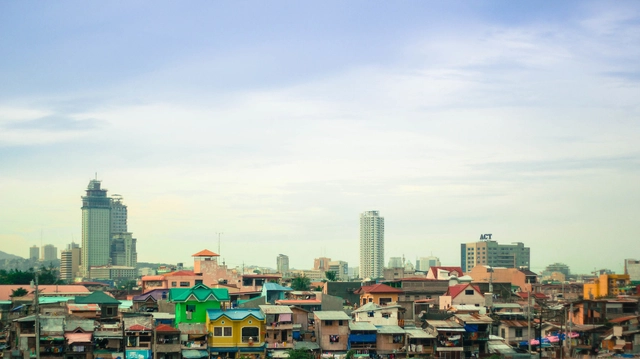
The history and culture of the Philippines are reflected in its architectural heritage, with numerous influences from other nations paving the way for the contemporary designs we see today, a mixité of cultural influences amongst Western-style buildings. Philippine architecture has grown along with the progress of the nation and its people, but memories of a glorious past are still embedded within the nation’s history.
Social responsibility and the desire to improve society has long been influenced by the built environment. Looking at city centers, architecture has contributed to the improvement of the urban fabric, whether it being through planning and zoning strategies, integration of public spaces, or small interventions. In some cases however, these interventions are in fact used as tools to keep the homeless off the streets, disguised as art or conceptual designs. Several public urban policies have all implicitly prohibited the homeless and other marginalized social groups from city centers, claiming that their presence and “irregular” use of public space could compromise the reputation, security, and desirability of the city.
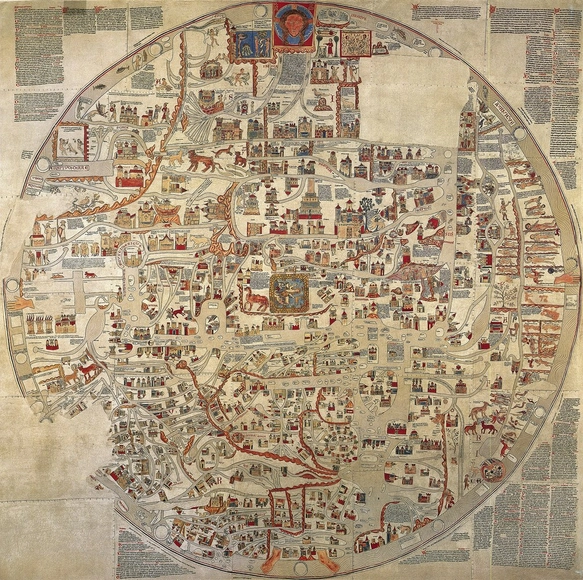
World map of 1300. Image via Wikicommons, under domain
Cartography consists of the flat, simplified and conventional geometric representation of the earth's surface, presented in the form of maps, charts or blueprints. Because it is a two-dimensional representation of something that is three-dimensional, all representations undergo some kind of deformation, so that the choice of a method takes into account not only technical aspects, but also political ones.
To wholly document a survey on the state of French forests, the wood industry, and forestry R&D, François Leclercq and Paul Laigle, from the architecture and urban planning practice Leclercq Associés, are in collaboration with architecture editor Michèle Leloup and photographer Cyrille Weiner.
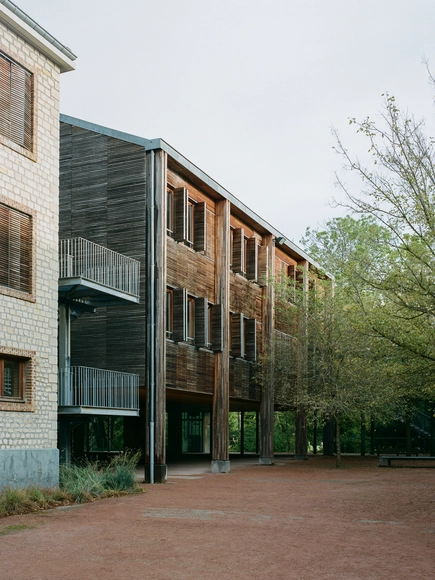
The Wood That Makes Our Cities explores the environmental, economic, industrial, and technical challenges involved in the use of wood for large structures and urban architecture and assesses the future of wood construction. The book retraces the practice’s twenty years of experience with wood construction through five of its projects, featuring contributions by historians, researchers, manufacturers, timber producers, and forestry specialists.
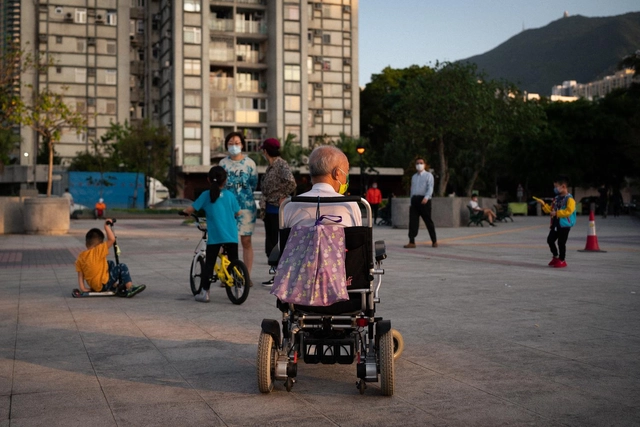
Cities with disabilities are those that present spaces and environments that impede or make it difficult for citizens to access, participate and interact, regardless of any loss or abnormality related to their psychological, physiological or anatomical structure or function. I invite readers to, with me, change the focus of the approach on disabilities, transferring to cities and built environments the inability to meet in a dignified and effective way the diversity of abilities and capacities inherent to human beings.
"Growing up queer means experiencing the destabilizing absence of a broad and accessible queer history, most notably, in our case, in relation to spatial design". This account is what intrigued artist Adam Nathaniel Furman and architectural historian Joshua Mardell to bring together a community of contributors who bring new perspectives to the field of architecture and share stories of spaces that challenge cis-heteronormative morals, sheltering lives that seek to live their own truths. The result of this quest is a book titled Queer Spaces: An Atlas of LGBTQIA+ Places and Stories, which explores stories about distinct social, political, and geographical contexts within the community.



















.jpg?1655403902&format=webp&width=640&height=580)