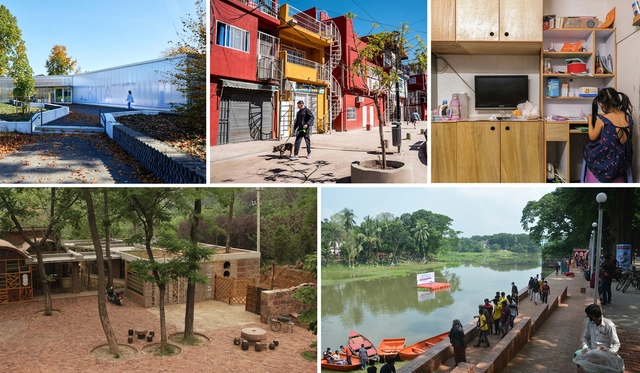
The first edition of the UIA 2030 Award celebrated projects that contribute to the delivery of the UN 2030 Agenda for Sustainable Development. Located in Germany, Hong Kong, Argentina, Bangladesh, and China, the winning interventions were announced during the eleventh session of the World Urban Forum in Katowice, Poland. Organized by the International Union of Architects (UIA), together with the UN-HABITAT, the award program gathered 125 submissions in 40 countries.
ArchDaily had the chance to talk to the winners behind the acclaimed architecture, to discuss furthermore the interventions and certain specificities of each and every project. In addition, the winning teams shared their upcoming and ongoing architectural endeavors as well as their point of view on the importance of architects engaging with the Sustainable Development Goals.
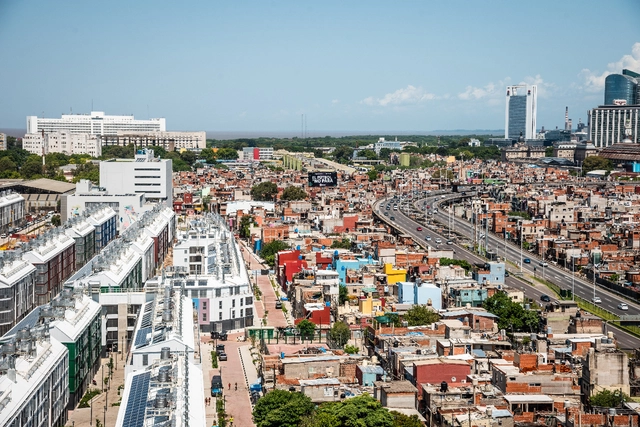
Housing Upcycle Program, Barrio Mugica of Buenos Aires. Image Courtesy of Special Project Unit Barrio Padre Carlos Mugica, Buenos Aires City Government
Organized under six categories: Open Category, Improving Energy Efficiency, Adequate, Safe & Affordable Housing, Participatory, Land-Use Efficient & Inclusive Planning, Access to Green & Public Space, and Utilizing Local Materials, the jurors picked a winner per section, yet were unable to identify an overall winner in the open category and chose instead to recognize six projects as Highly Commended, honoring in total 5 laureates and 15 commendations.
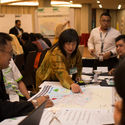
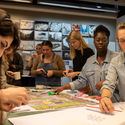
El proceso de HerCity usando la herramienta MethodKit en GoDown, Nairobi, Kenia. Image Cortesía de ONU-Habitat
Many of us agree that design is still not considered for everyone. That is why we must ask ourselves what is truly democratic in the matters of design - in order to define our vision toward a more just society. From the perspective of architecture and urbanism, we can look at this democratization from different angles, including citizens in participatory processes, in order to find answers to our constant search to improve habitability and accessibility.
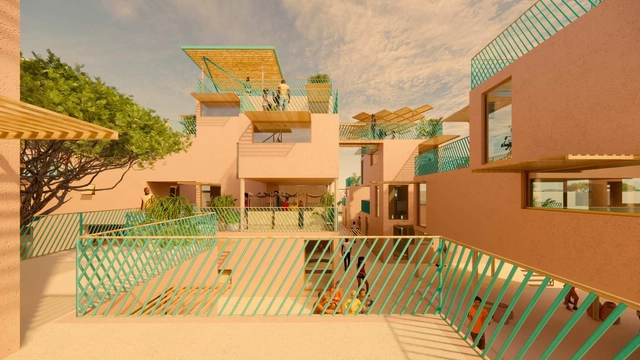
Render of affordable homes created out of plastic waste. Image Courtesy of Othalo
A lot of people around the world would agree that we are currently in a climate emergency. The IPCC report, released last year, makes for difficult reading. Practitioners in the built environment have taken to direct climate action, with organizations such as ACAN and Architects Declare fostering carbon literacy and calling for designers to re-evaluate how they practice.
UN-Habitat and blue tech firm OCEANIX unveiled the design of the world’s first prototype for a sustainable floating city, to be hosted by Busan. The project is intended to provide a scalable framework of development for coastal cities facing land shortages and rising sea levels. With a population of 3.4 million people, Busan is the second-largest city in the Republic of Korea and, at the same time, one of the most important maritime cities, making it a suitable environment for deploying the floating city prototype.
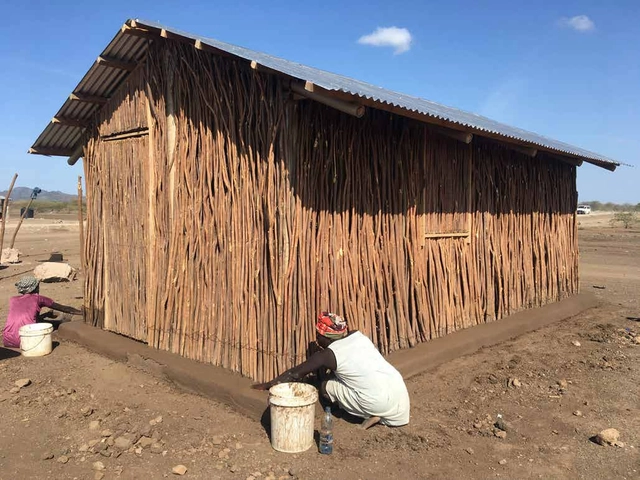
Since 2017, UN-Habitat, together with Shigeru Ban Architects, Philippe Monteil and the NGO Voluntary Architects' Network, developed several shelter typologies for a pilot neighborhood in Kalobeyei Settlement in Kenya. The Turkana Houses are meant to house South Sudanese and other refugees living in Northern Kenya who could not return to their original villages due to endless civil wars and conflicts. Unlike typical refugee shelters, these structures were meant to provide a home for long periods of displacement and the four typologies developed are informed by the extensive experience of Shigeru Ban Architects with disaster relief projects and the local building techniques of local people.
As cities grow in scale, dimensions, and amplitude, taking in 60% of the world population, the United Nations has designated the 31st of October as “World Cities Day”, an opportunity to talk furthermore about global urbanization, addressing challenges, encouraging opportunities across borders and highlighting responses. Focusing this edition on the theme of “Adapting Cities for Climate Resilience”, this day, part of Urban October, seeks to raise awareness about the climate crisis and its repercussions on the built environment.
Cities, at the center of the global challenges, are hubs for institutions, society, economy, commerce, and transportation. Understanding the importance of “Thinking the City”, we have compiled in this roundup, articles published by ArchDaily’s editors that offer planning tools and guidelines, tackle the different components of the urban realm and highlight worldwide as well as contextual questions and responses.
COP26, The United Nations Climate Change Conference, is scheduled to be held in Scotland soon, in the last week of October 2021. Against the backdrop of this conference is a heightened global awareness of climate change, as discussions take place on how a sustainable, more equal future can be achieved. The present and future state of architecture is a key component of this conversation, as criticism is levelled at architecture firms that “greenwash” and questions are raised on if the term “sustainability” is increasingly merely being used as today’s buzzword.
Cities we live in today have been built on principles designed decades ago, with prospects of ensuring that they are habitable by everyone. Throughout history, cities have been catalysts of economic growth, serving as focal points for businesses and migration. However, in the last decade, particularly during the last couple of years, the world has witnessed drastic reconfigurations in the way societies work, live, and commute.
Today’s urban fabric highlights two demographic patterns: rapid urbanization and large youth populations. Cities, although growing in scale, have in fact become younger, with nearly four billion of the world’s population under the age of 30 living in urban areas, and by 2030, UN-Habitat expects 60% of urban populations to be under the age of 18. So when it comes to urban planning and the future of cities, it is evident that the youth should be part of the conversation.
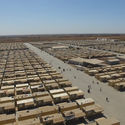
SANLIURFA, TURKEY - February 19, 2014: Aerial view of Akcakale Refugee Camp. Approximately 28.000 Syrian people reside in Akcakale Tent Camp in Urfa.. Image via Shutterstock/ By answer5
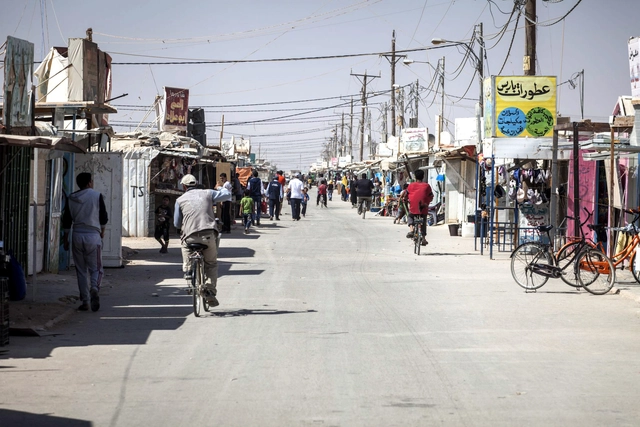
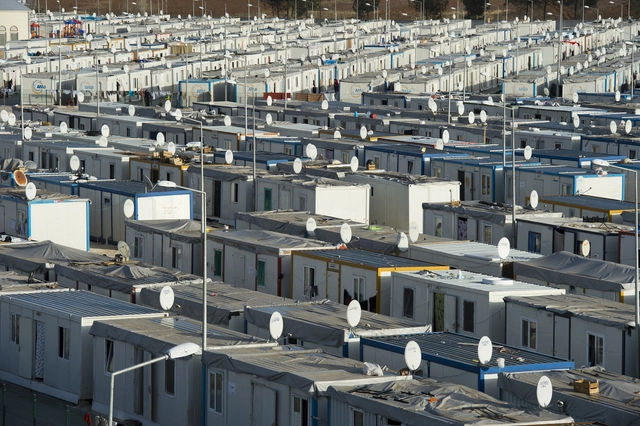
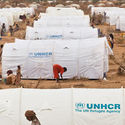
With more than 70 million forcibly displaced people worldwide, according to the UNHCR, and nearly 25.9 million refugees, the time has come to reconsider the traditional emergency camp approach. Although the concept is temporary by definition, in real life the lifespan of these refugee camps exceeds the planned and the expected.
Ranging from seven to seventeen years, most of these settlements surpass their expiry dates. Actually, on average, according to the United Nations High Commissioner for Refugees (UNHCR) in Kenya, "many displaced persons spend more than 16 years living as refugees in temporary shelter."
Kosovo - Implementation during Covid-19. Image Courtesy of UN-Habitat, Global Public Space Programme
The Un-Habitat or the United Nations agency for human settlements and sustainable urban development, whose primary focus is to deal with the challenges of rapid urbanization, has been developing innovative approaches in the urban design field, centered on the active participation of the community. ArchDaily has teamed up with UN-Habitat to bring you weekly news, article, and interviews that highlight this work, with content straight from the source, developed by our editors.
As the fight against coronavirus keeps on bringing many cities around the world to a standstill, the need to support urban entities and local governments is greater than ever. Although the pandemic has drastically changed our relationship with the public realm, due to all the imposed but necessary restrictions, from physical distancing to limiting access, the demand for public space has not decreased. People still need to go outside, commute, work, study, play, socialize, and maintain a healthy mental state. Discover in this article UN-Habitat’s key areas of focus for an effective urban response for COVID-19 that local and national governments should focus on to prevent the spread of the virus and to develop resilience to and preparedness for events of a similar nature.
While in a lot of countries around the world, the construction, architecture, engineering, and urban planning sectors, are still reserved for men, initiatives that empower women in these fields are surfacing everywhere around the globe. Playing a huge role in the integration of female power into these disciplines, these movements take on many forms such as organizations, websites, platforms, etc. working with professionals, artisans, and workers.
From providing skills, connecting outstanding females, ensuring exposure, and promoting the works of pioneers, these initiatives have the common purpose of encouraging women to have an impact on their built environment.
HerCity is a platform that involves women in urban development, in order to make better cities for everyone. Turning the tables and putting girls in the expert position, the digital toolbox aims to create more inclusive, equal, and sustainable cities and communities. The initiative makes methods and tools available to urban actors globally, in order to support cities in integrating girls’ participation in their long-term strategies.
Launched on Women’s day 2021, the guide for urban planning and design is a collaborative effort between UN-Habitat and Global Utmaning, the Swedish independent think tank. ArchDaily had the chance to talk with the team behind this digital toolbox, discussing the narratives, the process, and inclusive planning on a worldwide level.
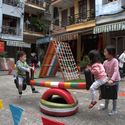
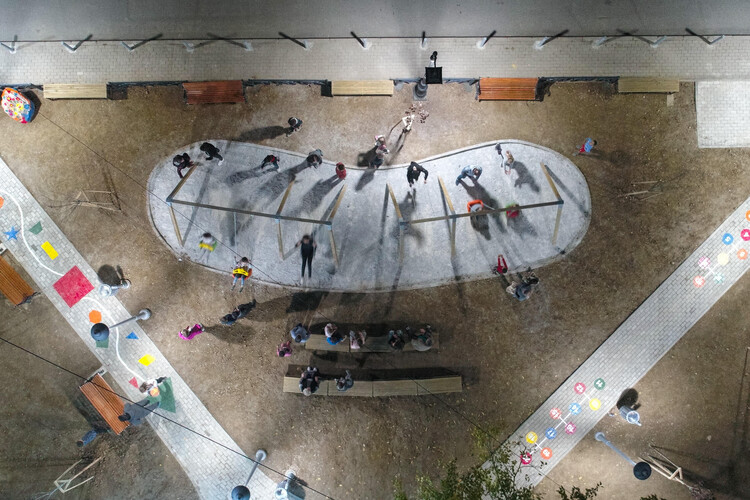
Mobile playground in Vietnam. Image Courtesy of UN-Habitat, Global Public Space Programme
The Un-Habitat or the United Nations agency for human settlements and sustainable urban development, whose primary focus is to deal with the challenges of rapid urbanization, has been developing innovative approaches in the urban design field, centered on the active participation of the community. ArchDaily has teamed up with UN-Habitat to bring you weekly news, article, and interviews that highlight this work, with content straight from the source, developed by our editors.
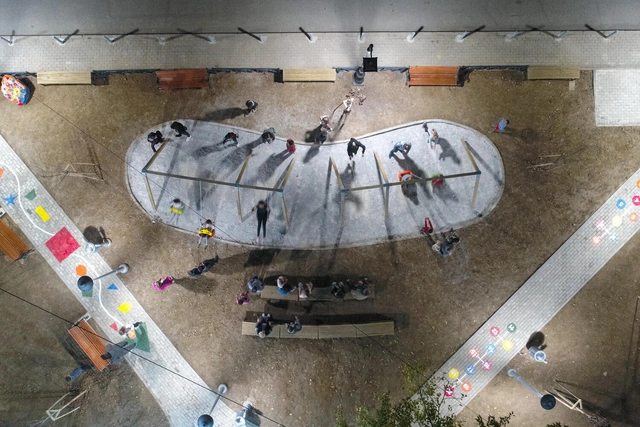
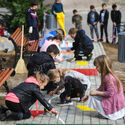
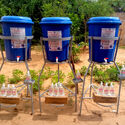
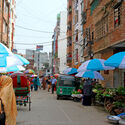
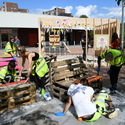
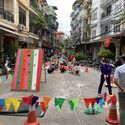
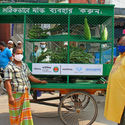
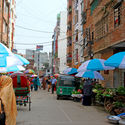
“During this pandemic, public spaces have played a vital role in the health and sustainability of urban communities around the world” states James Delaney, Block by Block chair. In fact, people need to go outside, now more than ever. In order to equip these public spaces to face the challenges of Covid-19, UN-Habitat with the Block by Block Foundation has been supporting ten cities, throughout this past year. With the help of local governments and the community, the initiatives helped covid-proof open urban entities, especially in poor neighborhoods, where there are few shared and green spaces. From creating mobile pop-up playgrounds for children in Hanoi, Vietnam, improving livelihood for street vendors in Dhaka and Khulna, Bangladesh to Covid Proofing of Public Spaces in Bhopalinformal settlements, India, these responses have provided help to those who need it the most.
The Un-Habitat or the United Nations agency for human settlements and sustainable urban development, whose primary focus is to deal with the challenges of rapid urbanization, has been developing innovative approaches in the urban design field, centered on the active participation of the community. ArchDaily has teamed up with UN-Habitat to bring you weekly news, article, and interviews that highlight this work, with content straight from the source, developed by our editors.
Around 440 fast-growing cities in emerging economies will contribute by 2025, to nearly half of global economic growth. If given the right planning and management tools, this urbanization “can be transformative, creating jobs, reducing poverty, and improving citizens’ quality of life”. As a matter of fact, the Global Future Cities Programme (GFCP) aims to deliver this required support. Based on urban planning, transport, and resilience principles, the program provides “technical assistance for a set of targeted interventions to encourage sustainable development and increase prosperity while alleviating high levels of urban poverty”.
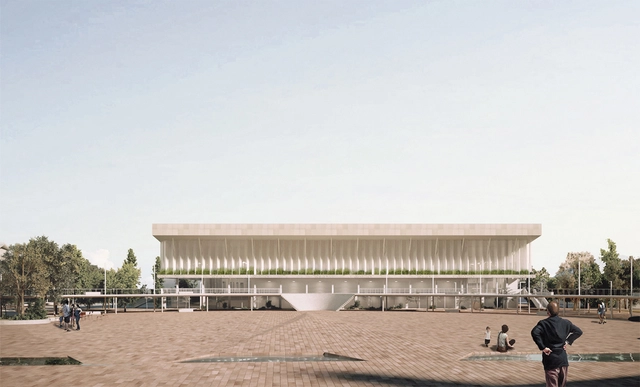
Design collective Mutual Atelier has won the competition to create a new Central Square in Rahovec, Kosovo. One of numerous proposals that explored new solutions to the square, the design was selected for its elegant formal solution and careful consideration of Rahevec’s city center. The scheme's circular form was made to provide a memorable identity for Rohevec’s city center and encourage public life to thrive.
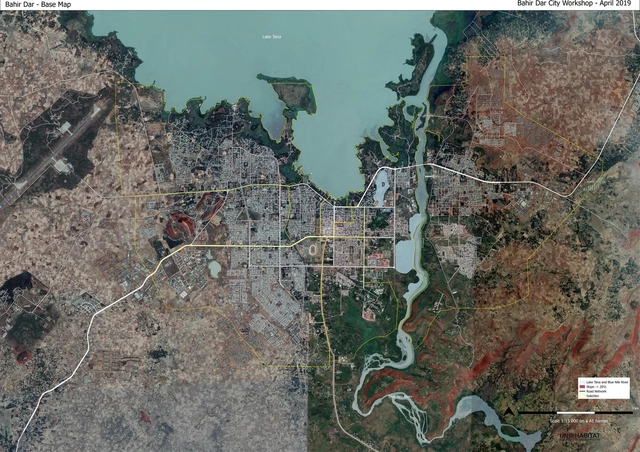
Satellite image of Bahir Dar (Ethiopia) Support of the Sustainable Structure Plan of Bahir Dar. Image Courtesy of UN-Habitat
The Un-Habitat or the United Nations agency for human settlements and sustainable urban development, whose primary focus is to deal with the challenges of rapid urbanization, has been developing innovative approaches in the urban design field, centered on the active participation of the community. ArchDaily has teamed up with UN-Habitat to bring you weekly news, article, and interviews that highlight this work, with content straight from the source, developed by our editors.
In order to support local governments in developing countries to implement the New Urban Agenda and the Sustainable Development Goals, UN-Habitat has created the Participatory Incremental Urban Planning Toolbox, “a step-by-step methodology to assess, design, operationalize and implement urban planning processes”. The guideline proposes a timeline of phases, blocks, and activities, helping city leaders, stakeholders, and the community to have a comprehensive and strategic overview of the whole strategy.


_Domat.jpg?1656485110 "Home modification for low-income Families. Image Courtesy of Domat Architects")
.jpg?1656485127 "Co-creation of Urban Spaces by the Nobogonga River. Image Courtesy of Co.Creation.Architects, Jhenaidah Citywide People's Network, Platform of Community Action and Architecture (POCAA), Community Architects Network (CAN)")


.jpg?1656364895 "Co-creation of Urban Spaces by the Nobogonga River. Image Courtesy of Co.Creation.Architects, Jhenaidah Citywide People's Network, Platform of Community Action and Architecture (POCAA), Community Architects Network (CAN)")


.jpg?1655403902&format=webp&width=640&height=580)




.jpg?1645781972 "Green field Factory of Karupannya Rangpur Ltd., by Nakshabid Architects. Image")
.jpg?1645781751 "Red Deer College Polytechnic Student Residence, by Reimagine Architects Ltd. . Image © Cooper & O'Hara")
.jpg?1645782629 "Huaira, by Diana Salvador - Javier Mera. Image © jagstudio")









(1).jpg?1614161719&format=webp&width=640&height=580)
.jpg?1614161736 "Mobile playground in Vietnam. Image Courtesy of UN-Habitat, Global Public Space Programme")
(1).jpg?1614161719)