1. ArchDaily
  2. Transport

Transport: The Latest Architecture and News

Cities are Experimenting with Free Public Transit to Promote Sustainable Mobility

Cities are Experimenting with Free Public Transit to Promote Sustainable Mobility - Featured Image
Photo by Uno Raamat on Unsplash. ImageTallinn

Various cities have been experimenting with wavering fees for public transport in an effort to promote sustainable mobility, alleviate traffic congestion and decrease social inequality. This past February, Salt Lake City has paused fare collection for a month to reduce carbon emissions in the region. At the end of March, the Italian city of Genoa extended free access to some of its public transport networks, following a successful experiment which began at the end of 2021 and in an ambitious plan to become the first Italian city with free transportation. Meanwhile, the small duchy of Luxembourg became the world’s first country with free public transit in 2020.

Cities are Experimenting with Free Public Transit to Promote Sustainable Mobility - Image 1 of 4Cities are Experimenting with Free Public Transit to Promote Sustainable Mobility - Image 2 of 4Cities are Experimenting with Free Public Transit to Promote Sustainable Mobility - Image 3 of 4Cities are Experimenting with Free Public Transit to Promote Sustainable Mobility - Image 4 of 4Cities are Experimenting with Free Public Transit to Promote Sustainable Mobility - More Images

Did a Highway Kill the City of Hartford?

This article was originally published on Common Edge.

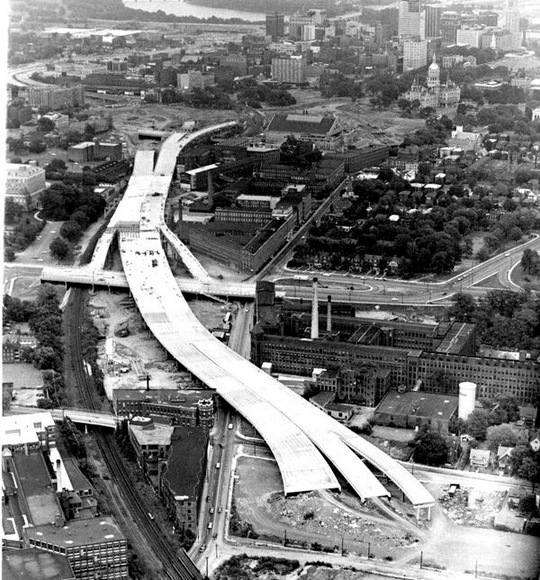
Can a piece of infrastructure literally kill a city? This is the question that writer Jim Krueger poses in his recent podcast, The Road That Killed a City. The place in question is Krueger’s current hometown—Hartford, Connecticut—which he grew up next to in the leafy suburb of West Hartford. Kruerger has lived in both towns, and that helps to balance the amazing story he uncovers about how Connecticut’s capital was impaled by a roadway (actually, two: east/west I-84 and north/south I-91 converge in Hartford in a sort of arterial highway ground zero). I spoke with Krueger about what prompted the podcast, some of what he uncovered about the history of this ill-fated urban “improvement,” and the legacy of a highway that continues to thwart Hartford’s rebirth—an inheritance shared by many cities across North America.

Why Walking Can Be Faster Than Driving

Subscriber Access | 

In 1854, the American writer Henry David Thoreau wrote the classic work “Walden”, recounting his experience of life in the woods and extolling the advantages of simple and self-sufficient life. Right at the beginning of the book, the author comments that, if someone wants to travel 48 km to visit the countryside, it would be faster to walk than to opt for a locomotive.

What’s the Matter with American Cities?

This article was originally published on Common Edge.

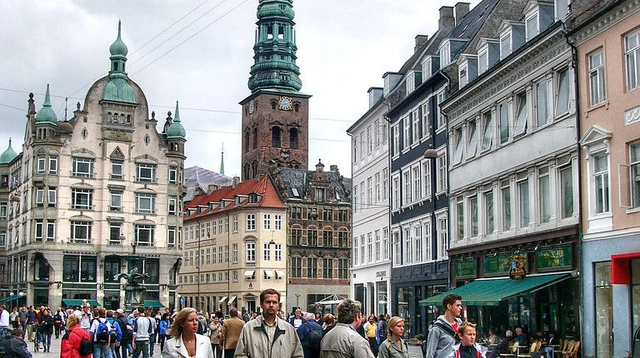
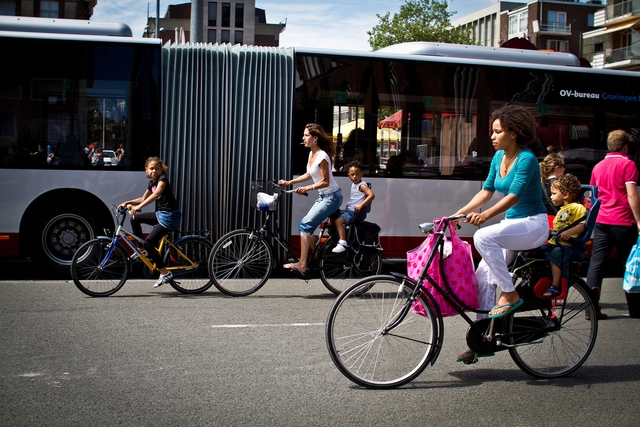
For frequent travelers to Europe, it is frustrating to see the increasingly different urban conditions on the other side of the Atlantic. In Europe, cities are largely appreciated and embraced, and have turned into high-quality environments for inclusive and sustainable living. Copenhagen’s bike lanes—and, not too far away, Oslo’s car-free downtown—elicit admiring blog posts and articles on this side of the pond at a steady clip. Holland’s pedestrian- and bike-friendly urban designs attract their own share of starry-eyed fans. Berlin is holding a referendum to exclude cars from its inner city, an area larger than Manhattan. In Madrid, the mayor who restricted cars from accessing the city center did lose reelection, but her successor was forced to halt his efforts to rescind those policies by a groundswell of popular fury.

What’s the Matter with American Cities? - Image 1 of 4What’s the Matter with American Cities? - Image 2 of 4What’s the Matter with American Cities? - Image 3 of 4What’s the Matter with American Cities? - Image 4 of 4What’s the Matter with American Cities? - More Images+ 5

Twelve Architecture Firms Shortlisted to Redesign Budapest's Nyugati Railway Station

Twelve Architecture Firms Shortlisted to Redesign Budapest's Nyugati Railway Station - Featured Image
Courtesy of BFK

The city of Budapest, though Budapest Development Agency (BFK), launched an international design competition this autumn for the comprehensive renewal of the Budapest Nyugati Railway Station and its surroundings. The initiative seeks to expand the train station's capacity in order to reach Budapest's railway transport goals of doubling the number of trains on the suburban and metropolitan network. After an initial phase that attracted 36 participants, 12 practices were shortlisted for the second round of the competition, among which are Benthem Crouwel Architects, Grimshaw Architects, Zaha Hadid Architects, Foster + Partners, Kengo Kuma & Associates and Sweco.

Gensler Will Design the New $9.5 Billion Mega-Terminal at JFK International Airport

Gensler Will Design the New $9.5 Billion Mega-Terminal at JFK International Airport - Featured Image
Courtesy of Courtesy Port Authority of New York and New Jersey

New York Governor Kathy Hochul announced last week that the current and former sites of Terminals 1, 2, and 3 on the south side of John F. Kennedy International Airport in Queens will be redeveloped to make way for a $9.5 billion international terminal that will be built out in phases beginning next year. With the first of its 23 gates anticipated to go live in 2026, the 2.4-million-square-foot new Terminal One will rank as the largest at JFK and, per a news release from the Governor’s Office, “aspires to be among the top-rated airport terminals in the world.”

Gensler Will Design the New $9.5 Billion Mega-Terminal at JFK International Airport - Image 1 of 4Gensler Will Design the New $9.5 Billion Mega-Terminal at JFK International Airport - Image 2 of 4Gensler Will Design the New $9.5 Billion Mega-Terminal at JFK International Airport - Image 3 of 4Gensler Will Design the New $9.5 Billion Mega-Terminal at JFK International Airport - Image 4 of 4Gensler Will Design the New $9.5 Billion Mega-Terminal at JFK International Airport - More Images+ 2

Deck Parks are Increasingly in Vogue, But Are They Always a Good Fit?

"Deck parks are increasingly in vogue in the Southwest’s downtown cores but aren’t a good fit for El Paso," writes Sito Negron. Recently a lot of cities around the world have been rethinking urban spaces dedicated to transportation, introducing public areas over highways while expanding the vehicular realm. In this week's reprint from the Architect's Newspaper, the author explores the limits of this trend and questions its implementation in some cases.

BIG's Västerås Travel Centre Creates a New Transport Hub Under One Roofscape

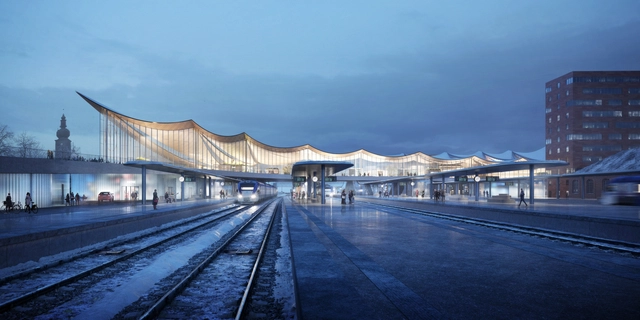
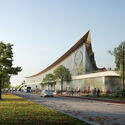
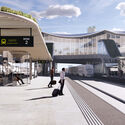
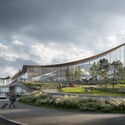
Bjarke Ingels Group has unveiled the final design for Västerås Travel Center, a transport infrastructure hub bringing together multiple travel modes within one cohesive architectural object. The project's defining feature is a light, undulating roofscape unfolding across the various complex elements of the program that make up the urban node, creating a new landmark for one of Sweden's largest cities.

BIG's Västerås Travel Centre Creates a New Transport Hub Under One Roofscape - Image 1 of 4BIG's Västerås Travel Centre Creates a New Transport Hub Under One Roofscape - Image 2 of 4BIG's Västerås Travel Centre Creates a New Transport Hub Under One Roofscape - Image 3 of 4BIG's Västerås Travel Centre Creates a New Transport Hub Under One Roofscape - Image 4 of 4BIG's Västerås Travel Centre Creates a New Transport Hub Under One Roofscape - More Images+ 16

In Transit: Large-Scale Road Infrastructures Seen from Above

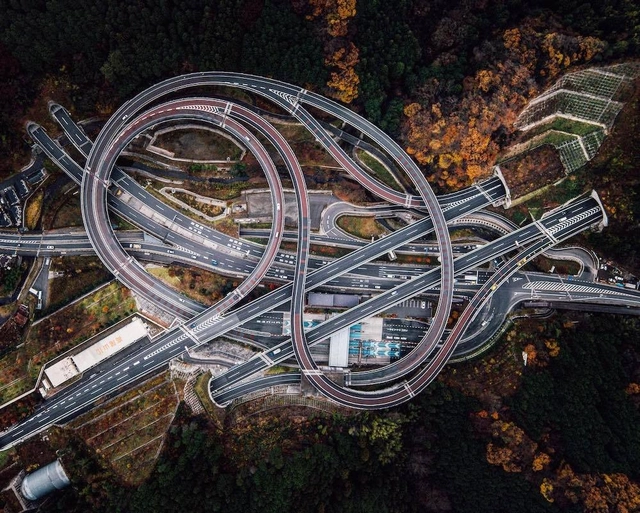
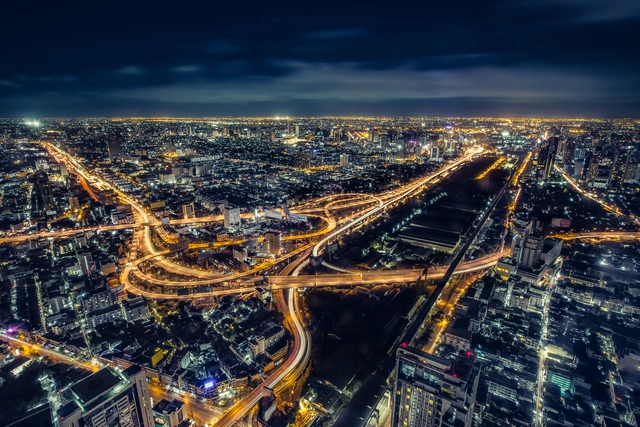
We live in a tangled web of flows – of capital, information, technology, images, structures, in constant momentum dominating all aspects of our lives. The large-scale road infrastructures shown here are products of this powerful desire for movement, which for many years was also synonymous with development, as portrayed by the famous Goethean character Faust in his endless quest for a (false) sense of progress.

From these tangles of concrete and steel, at multiple levels and in different directions, emerges a geometrically organized chaos that tears the urban fabrics in a relentless effort to prioritize the flows with the fewest obstacles and the highest capacity possible.

In Transit: Large-Scale Road Infrastructures Seen from Above - Image 5 of 4In Transit: Large-Scale Road Infrastructures Seen from Above - Image 2 of 4In Transit: Large-Scale Road Infrastructures Seen from Above - Image 4 of 4In Transit: Large-Scale Road Infrastructures Seen from Above - Image 11 of 4In Transit: Large-Scale Road Infrastructures Seen from Above - More Images+ 7

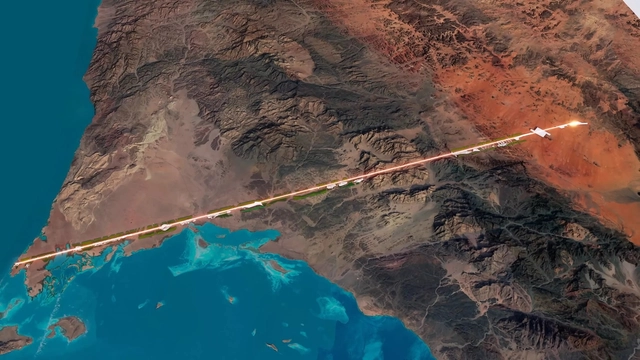
Saudi Arabia Unveils Plans for Hundred-Mile-Long Linear City

Mohammed bin Salman, Crown Prince of Saudi Arabia, has unveiled plans for a 100-mile long linear city called The Line. Announcing the project in a new video, the city would include a series of walkable communities for a million people with no cars or streets. The project locates essential facilities within a five-minute walk of housing, connected "modules" linking the Red Sea coast with north-west Saudi Arabia as part of the NEOM city-state.

How to Future-Proof Our Cities? 4 Key Initiatives to Increase Resilience

Our cities, vulnerable by nature and design, have generated the biggest challenge that humankind has to face. With the vast majority of the population expected to settle in urban agglomerations, rapid urbanization is going to raise the issue of adaptability with future social, environmental, technological and economic transformations.

In fact, the main problematic of the decade questions how our cities will cope with fast-changing factors. It also looks into the main aspects to consider in order to ensure long-term growth. In this article, we highlight major points that help future-proof our cities and create a livable, inclusive and competitive fabric that adapts to any unexpected future transformation.

The Role of Urban Mobility in Providing Accessibility

Being able to move around cities is a basic requirement for the development of most human activities. Yet daily trips between home and work, study, leisure, and other daily commitments are not always done under the most comfortable conditions, whether it be because of crowded public transportation or unexpected traffic jams. Urban mobility is a hotly debated topic, from informal conversation circles to technical and scientific seminars. It's hard to find someone who doesn't have an opinion on the subject or some miraculous solution to the problems in their city or region. In fact, we have already posted several articles addressing this issue on this site, from utopian proposals to questions related to the daily lives of most of the population.

Bike Parking Design Guidelines

Studies show that public investment in integrated and safe cycling networks promotes urban transformation, providing more humanity, health and quality of life in urban spaces. While cities in the Netherlands and the Nordic countries have already incorporated bicycles into daily life, with a significant portion of the population using the means of transport for daily commutes, much of the world is still seeking a model to reduce congestion and increase its use. According to the Institute for Transportation and Development Policy (ITDP), investing in non-motorized transport allows congestion reduction, improves air quality, physical and mental health of residents, and local trade and brand visibility, once that cyclists tend to pay more attention to local commerce and take up less space than cars.

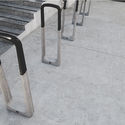
But along the cycle lanes and cycle paths it is essential to provide suitable places so that bicycles can be parked at the end of the trails. While bike stands are enclosed spaces, usually with some kind of surveillance and additional infrastructure, paracycles are the structures that allow to securely support and lock the bike. They can integrate in the urban furniture of a city, next to benches, plates, lamps and informative totems.

Bike Parking Design Guidelines  - SustainabilityBike Parking Design Guidelines  - SustainabilityBike Parking Design Guidelines  - SustainabilityBike Parking Design Guidelines  - SustainabilityBike Parking Design Guidelines  - More Images+ 19

The Trends that Will Influence Architecture in 2019

It is, once again, the time of year where we look towards the future to define the goals and approaches that we will take for our careers throughout the upcoming year. To help the millions of architects who visit ArchDaily every day from all over the world, we compiled a list of the most popular ideas of 2018, which will continue to be developed and consolidated throughout 2019.

Over 130 million users discovered new references, materials, and tools in 2018 alone, infusing their practice of architecture with the means to improve the quality of life for our cities and built spaces. As users demonstrated certain affinities and/or demonstrated greater interest in particular topics, these emerged as trends. 

These GIFs Compare Cities' Metro Maps to Their Real Life Geography

Metro and subway maps can tell us a lot about cities. For example, by comparing metro maps from different cities, you might be able to understand those cities' relative size or level of development. Or, by comparing a metro map to an earlier version from the same city, you can learn about the pace of development being experienced in that city. What these "maps" rarely tell you with any reliability, though, is the actual geography of the city itself.

In a fascinating series of posts over at /r/dataisbeautiful earlier this year, Reddit users created GIFs comparing the official metro maps of cities around the world with the real geography those maps correspond to. The results show the incredible changes that cities are subjected to in the name of visual clarity: in cities such as London, Tokyo, and Berlin, transit maps expand the urban core, masking the density at these regions' centers; in other cities such as Washington DC, shortened lines hide the extent of the city's suburbs; while in some cities, entire neighborhoods are moved to the other side of the city to make the map layout more attractive (we're looking at you, Prague). Read on to see 11 of the best creations by Reddit users.

Self-Driving Bus in Las Vegas Crashes Just 2 Hours After Launch

The drive to introduce autonomous vehicles to the roads took a blow yesterday, when a self-driving shuttle bus in Las Vegas was involved in a minor collision with a truck—just 2 hours into the vehicle's first day of operations. The bus, a 12-seat Navya Arma, was on the first day a 12-month trial covering a 0.6-mile (1-kilometer) loop in Las Vegas' Fremont East “Innovation District” when it was grazed by a reversing truck.

In a blog post by the city of Las Vegas, the blame was placed on the driver of the truck, who was cited by city officials for illegal backing. However, according to The Guardian, passengers at the time said the crash could have been avoided if the shuttle had simply backed out of the truck's way.

Aerial Futures: Leading Edge Symposium

Aerial Futures: Leading Edge is lively, provocative and interdisciplinary symposium examining the architecture, technologies and cultures of the contemporary airport. Curated by PLANE—SITE and free to attend, this two-day event understands the airport as a choreographed topography of hypermobility, information and cultures, defining how we travel, trade and connect with each other. It marks the threshold between land and sky, as well as sovereign territories. The airport — what the philosopher Giorgio Agamben describes as a ‘zone of exception’ where the ordinary rules no longer apply — is where the definitive issues of the 21st century play out.

Margot Krasojević Designs Bridge That Sails Like a Ship

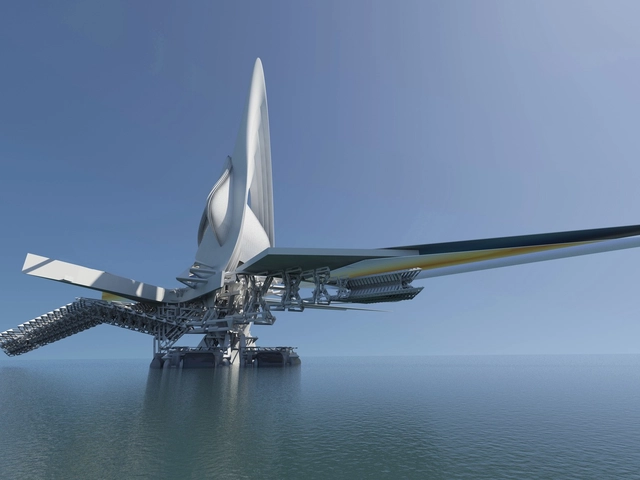
Dr. Margot Krasojević, known for creating impossibly futuristic architecture has unveiled her latest project: a bridge that can sail across the water. Dubbed the “Revolving Sail Bridge” - the experimental project was commissioned by the Ordos government in the Kanbashi District of Inner Mongolia (China) to be built across the Wulamulum River. Featuring a main floating section topped with a carbon-fibre triple sail, the flexible structure is capable of sailing anywhere across the river to relocate itself.

Margot Krasojević Designs Bridge That Sails Like a Ship - Deck, CityscapeMargot Krasojević Designs Bridge That Sails Like a Ship - CityscapeMargot Krasojević Designs Bridge That Sails Like a Ship - Image 3 of 4Margot Krasojević Designs Bridge That Sails Like a Ship - Image 4 of 4Margot Krasojević Designs Bridge That Sails Like a Ship - More Images+ 15