Copenhagen-based architect Bjarke Ingels is not one to shy away from big ideas. Founder of the aptly named BIG (Bjarke Ingels Group), he eschews cohesive style in favor of flexible urban environments — something he believes is vital in a constantly changing world. In a new video produced for the Time Space Existence video series by PLANE -- SITE, Ingels unpacks his approach to design, incorporating humor, surprise and sustainability.
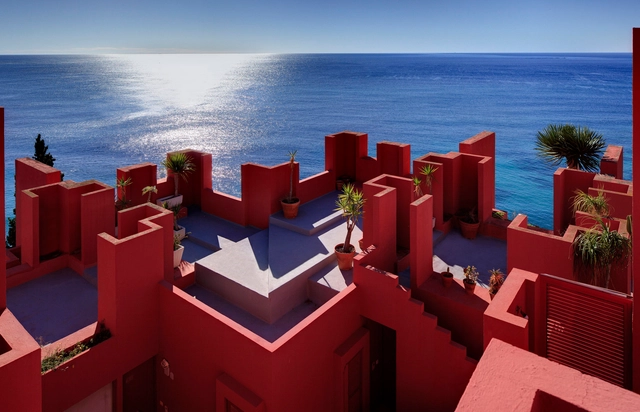
In their recent interview for the Time Space Existence video series, Plane-Site, through the support from the European Cultural Centre, interviewed Spanish architect Ricardo Bofill. The series will be exhibited in the biennial exhibition in Venice, opening May 21-22, 2020.
The challenges associated with the provision of adequate and affordable housing around the world demand that architects respond with original solutions that challenge traditional building forms, typologies and methods of delivery.
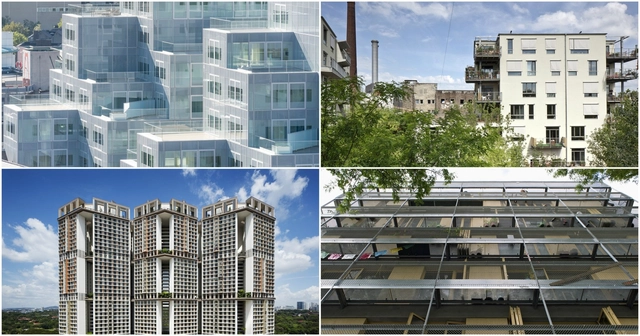
PLANE–SITE brought together the architects of four inventive housing projects. These projects represent a diversity of approaches to similar housing challenges across radically different global contexts. From the redensification of European urban centers to the rapid urbanization of the tropical Asian megacity, these radical housing models challenged existing paradigms in order to advance resident well-being as their principle design concern. In contrast to Schumacher’s divisive speech, the panel illustrated projects that were deliberately designed to promote community life and social interaction between residents – and in some cases also with other citizens in spaces that blur the line between public and private.
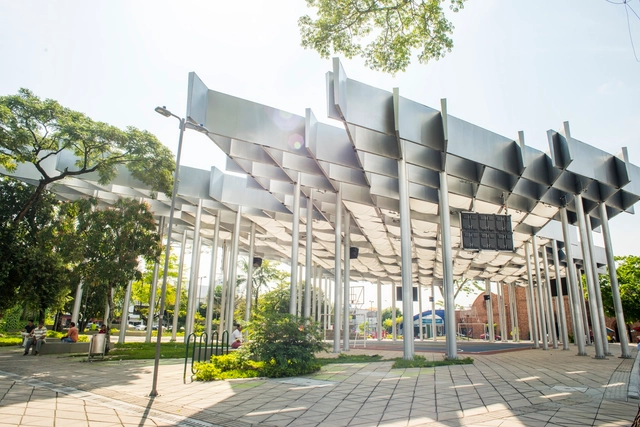
PLANE—SITE has released a new film showcasing the work and ideas of Bogotá-based architect Giancarlo Mazzanti, founder of El Equipo de Mazzanti. In this video interview, Mazzanti elaborates on his experimental approach to design research and explores several of his spaces for learning. His firm is behind numerous schools and educational centers, designed to encourage playful and exploratory movement and social relations. As the video explore, Mazzanti creates scenarios for play in daily life.
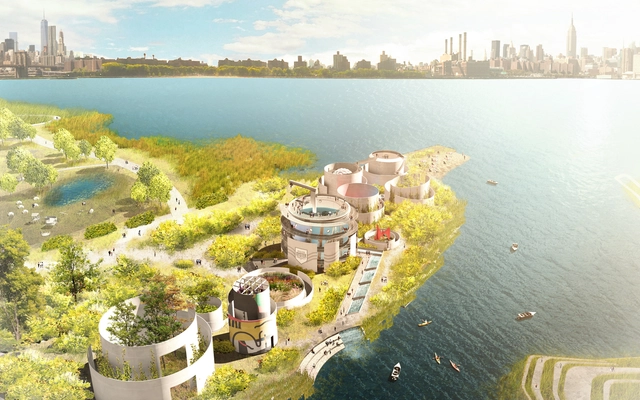
In New York, activists and professionals have been working for many years to try to save 10 decommissioned tanks, from demolition by putting forward alternative usage of these structures. Partnering with STUDIO V, an architectural firm and landscape architects Ken Smith Workshop, they came up with an inventive proposal that reimagines these industrial relics as a 21st-century park, a novelty in the traditional definition and configuration of public spaces.
Advances in technology have changed the way people work and move around congested cities. Since free space in these urban areas has become scarce, people have shifted their perspective upwards and are now looking to the sky for new means of mobility, transporting their goods via cargo drones and flying ‘taxis’.
Before social media took over, buildings were published on magazines, edited and refined according to their architects’ preferences. Nowadays, magazines are left on the sidelines for a much more influential platform, one that is not totally controlled by the architects. Digital communication has changed the way people view and interact with architecture, providing architects with new insights on how to design their structures.
PLANE—SITE, a global production agency involved in the world of urban, cultural, and social spaces, have put together a short video that examines the impact of social media on architecture firms. Building Images provides insights from OMA/AMO and UNStudio, two firms with different approaches to social media, who explain how social platforms have helped them see their projects in unprecedented ways.
Videos
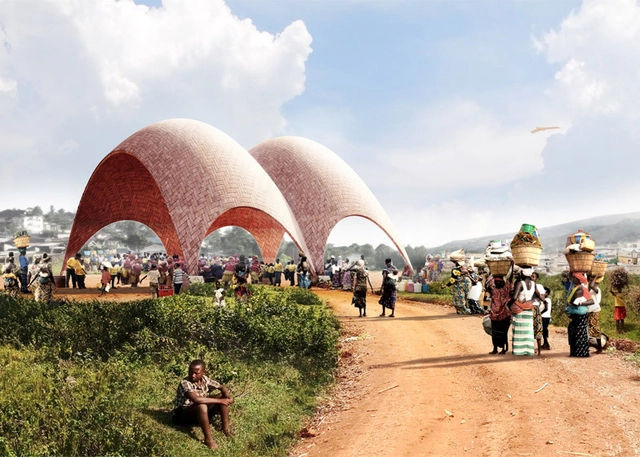
Droneports. Image Courtesy of Jonathan Ledgard and Norman Foster
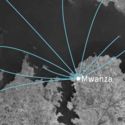
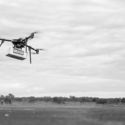
A new video by AERIAL FUTURES explores the potential of droneports in East Africa and the Global South. The Norman Foster Foundation was one of the first groups to propose the creation of a droneport network to deliver medical supplies and other necessities to areas of Africa that are difficult to access due to a lack of roads or other infrastructure. The project aspires to have droneports across small towns in Africa and in other emerging economies by 2030.
Take a peek into Japanese architect and theorist Arata Isozaki’s studio in the first of PLANE—SITE’s new video series, Time-Space-Existence. In this inaugural film, Isozaki discusses the Japanese concept of the space and time that exists in-between things, called "ma." Especially inspiring is Isozaki’s refusal to be stuck in one architectural style, as he describes how each of his designs is a specific solution born out of the project’s context.
Videos
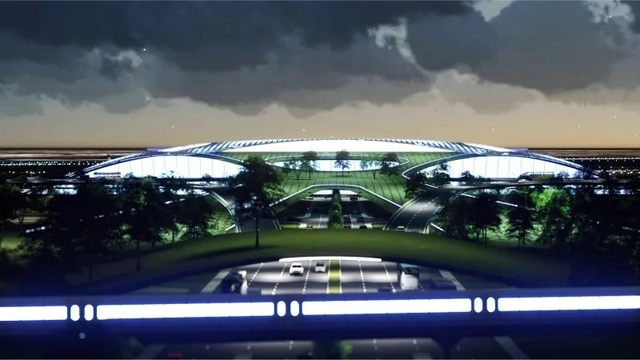
Houston Spaceport. Image Courtesy of Houston Airport System
A new video by AERIAL FUTURES explores commercial space flight through the Houston Spaceport. The video was produced as part of a broader research initiative bringing together leading thinkers, practitioners and operators to imagine the potential opened up by spaceports. The video explores the spaceport as a new kind of architectural typology, and asks what kind of impact a spaceport is likely to have on the city and its population.
In the European Cultural Center’s biennial exhibition, students from North Carolina State University’s College of Design worked alongside Curtis Fentress, Ana-Maria Drughi, and Joshua Stephens of Fentress Architects to propose innovative concepts for reshaping air travel. PLANE—SITE’s latest film from their series of short videos of the Time-Space-Existence exhibition showcases this design collaboration.
The European Culture Center’s Time Space Exhibition during the Venice Biennale 2018 features a new short film depicting the spatial qualities of light in architectural design, both as a material and metaphor.
This collaboration between architect and professor Jorge L. Hernández and photographer Carlos Domenech explores their endeavors in providing a lighting-based design solution for the Williamsburg, Virginia courthouse. Battling the issues of security and privacy of the court with the need for natural daylight, Hernández recreated the cupola, a vernacular roof turret intended for ventilation for illumination instead. Light, entering the courtroom from above, transforms the previously dull space and becomes, “an allegory for justice.”
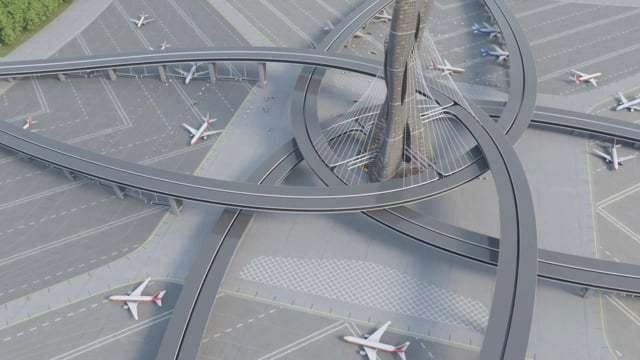
A new short film by the non-profit organization AERIAL FUTURES explores the complex relationships between cities and their airports. In conjunction with New York's AERIAL FUTURES: Urban Constellations think tank, this video asks how cities can be imagined collectively to improve both urban life and future travel capabilities. The film features several experts who discuss the challenges and opportunities for the future of New York City’s airports and supporting infrastructure, drawing on the think tank’s focus of urban design and digital interfaces.
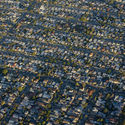
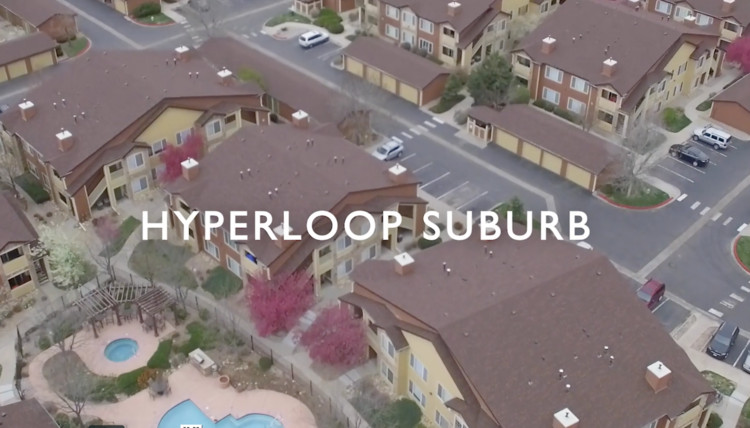
How do we want to live? Should we lean towards a turbulent metropolitan life with an all-inclusive advantage, or should we favor the composed suburban life with sufficient services? What if architects and urbanists were able to implement some of these all-inclusive services into disregarded areas of the suburbs? In the latest installment of PLANE—SITE’s short video series of the Time-Space-Existence exhibition, Louise Braverman Architect, a New York-based firm, explores the utopic and dynamic vision of the future of suburbs, and how Hyperloop technology could breathe a new life into these often overlooked places.
In the latest installment of PLANE—SITE’s short video series Time-Space-Existence, French architect Odile Decq gives this advice to young designers: be bold. “If you want to build and create the new century, you have to have people who have people who have specific personalities. I love when people express themselves strongly and very clearly.”
Continuing their Time-Space-Existence series of monthly videos leading up to this year’s Venice Biennale, PLANE—SITE have released a new conversation with architect and former Harvard GSD chair of architecture Toshiko Mori. Each video highlights the ideas that drive the work of well-known designers, with this episode focusing on Mori’s philosophy of visual communication, dialogue with history and considering the future in her work.
In their latest video from the Time-Space-Existence series, PLANE—SITE features acclaimed conceptual artist Lawrence Weiner and his ideas regarding the relationship between people and material objects, language as a gesture, and making art accessible to the public. Lawrence Weiner is known for his typographical art applied onto elements of the built environment, and he describes how architecture itself can become an alternative space to present art.
In PLANE-SITE's latest video from their Time-Space-Existence series, Daniel Libeskind describes his work in relation to Shakespeare's quote that "time is out of joint." Weaving in his philosophy regarding time, memory and architecture, Libeskind discusses his seminal works such as the Jewish Museum Berlin and the Ground Zero master plan. These ideas will be transferred to his new project named Facing Gaia, an architectural sculpture to be located in Giardini Marinaressa, which explores the connections between climate, time, space and existence.







_PLANE—SITE.jpg?1556780071&format=webp&width=640&height=580)


_Houston_Airport_System.jpg?1547840428 "Houston Spaceport. Image Courtesy of Houston Airport System")
_Houston_Airport_System.jpg?1547840382 "Houston Spaceport. Image Courtesy of Houston Airport System")
_AERIAL_FUTURES.jpg?1547840248 "The Next Frontier. Image Courtesy of AERIAL FUTURES")






_Doublespace.jpg?1523414942 "National Holocaust Monument. Image© Doublespace")
.jpg?1523415119 "Facing Gaia Sketch. Image© Studio Libeskind")
_Georges_de_Kinder.jpg?1523414986 "Mons International Cogress Xperience. Image© Georges de Kinder")
_Studio_Libeskind.jpg?1523414813 "Modern Art Museum Vilnius. Image© Studio Libeskind")
_Doublespace.jpg?1523414942)