



-
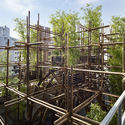
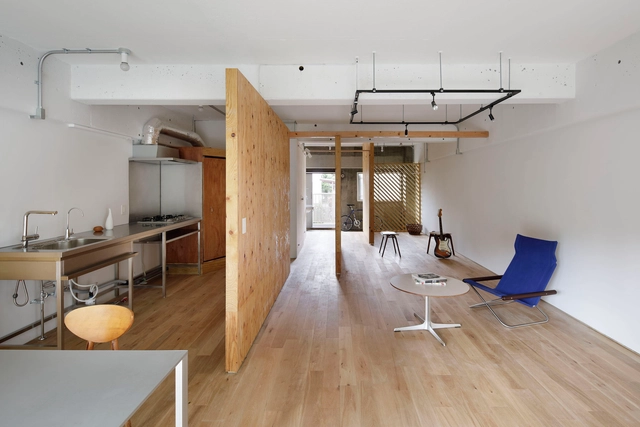
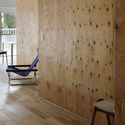
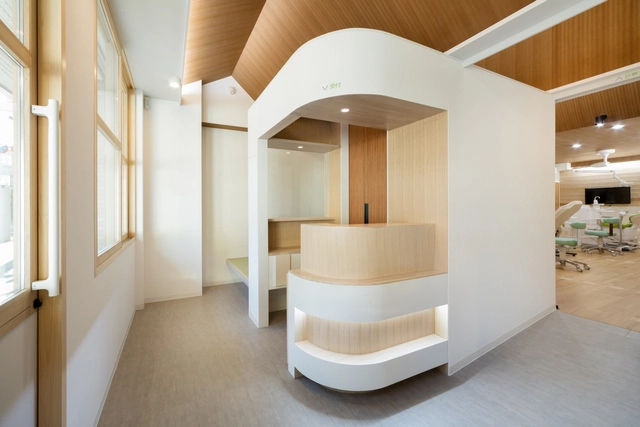
Architects: G architects studio
- Area: 60 m²
- Year: 2017
-
Manufacturers: Grohe, Catalano, Jimbo


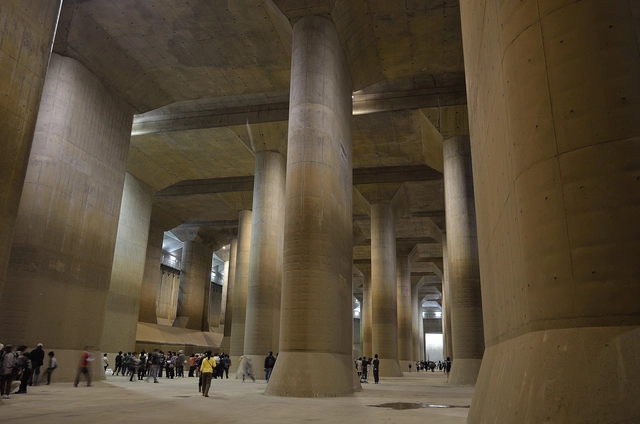
Rising sea levels, and the potential of extreme conditions globally, are threatening coastal cities around the world. While the Netherlands are often considered to be leading the engineering battle against the tides, Japan—with a renewed sense of urgency—are investing heavily in high-end systems and infrastructure to protect their largest metropoli.
In his latest video, filmmaker Vincent Hecht takes us inside Toyo Ito's Tama Art University Library. The project is notable for its effortless geometry, with the entire building comprising a series of simple concrete arches which, when combined, create a complex "emergent grid" which allowed for great flexibility in the building's plan. Hecht's video shows how this geometry works in practice, as the elements of the library snake through the building's light, open interior.

Theme: “The Reconstruction of Commons Today”
Humanity always cherishes great works of art that stand the test of time. This June, for example, marks the 50th anniversary of The Beatles’ psychedelic Sgt. Pepper's Lonely Hearts Club Band, and the 20th anniversary of Radiohead’s dystopian Ok Computer. These psychologically satisfying birthdays have generated serious appreciation and nostalgia. Similarly, we also love to praise the longevity of innovative architecture. The AIA bestows an annual “Twenty-five Year Award” to acknowledge projects that have "stood the test of time” and “exemplify design of enduring significance.” But one project a year seems stingy. Below are 15 modern classics which, though not always given the easiest start in life, we’ve come to adore:
.jpg?1494811811&format=webp&width=640&height=580)
Located in Tokyo's Sumida Ward, in which Sumida Hokusai (Katsushika Hokusai) was born and spent the majority of his life, this museum—completed in November 2016 to designs by Kazuyo Sejima—is a temple to the Japanese artist's work, including the likes of The Great Wave off Kanagawa and Red Fuji. Sejima, who was awarded the Pritzker Prize in 2010, is commonly known as one-half of SANAA (alongside Ryue Nishizawa). This project, while seeking to celebrate Hokusai's work, has also been designed as a cultural beacon. In this photoset, photographer Laurian Ghinitoiu has turned his lens to the new cultural landmark.
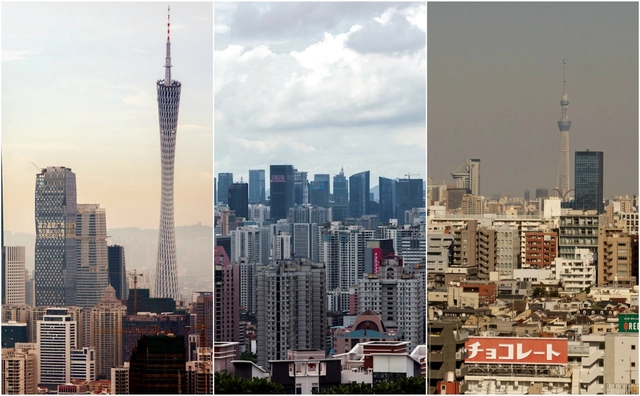
There’s a lot that the presence of skyscrapers can say about a city. They can be indicators of anything from wealth to modernization to density, or a combination of all three, depending on where you look. This potential to observe trends in a city through the height of its buildings makes data on those buildings valuable to a multitude of industries, so companies like Emporis conduct and distribute research on topics like the newest, tallest, and most expensive buildings in the world. Keep reading to find out about the ten tall cities that are home to the largest number of skyscrapers—as defined by Emporis' definition of a building that is 100 meters or more.
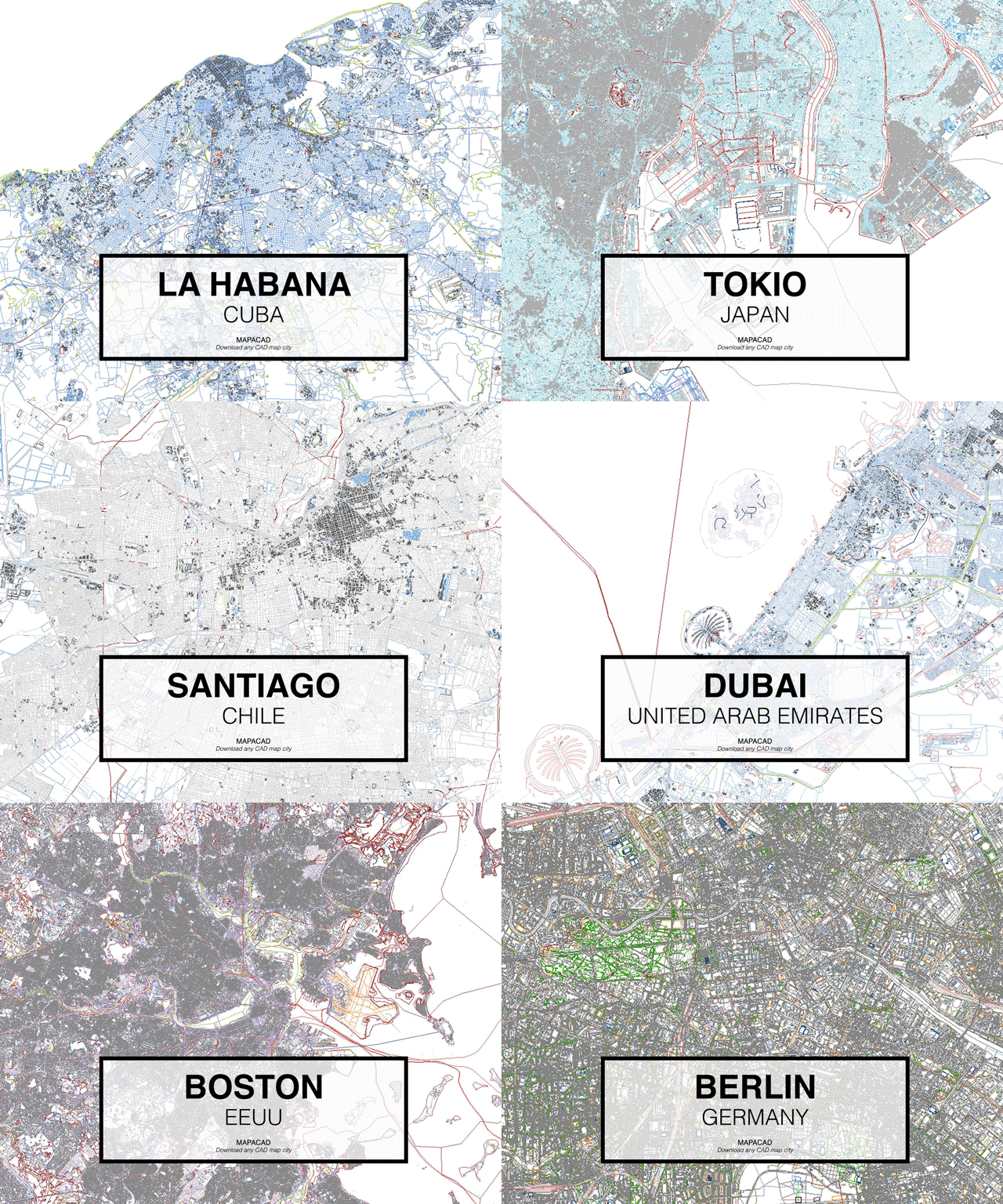
Mapacad is a website that offers downloads of .dwgs of dozens of cities. With 200 metropolises in their database, the founders have shared a set of their most-downloaded cities.
The files contain closed polyline layers for buildings, streets, highways, city limits, and geographical data--all ready for use in CAD programs like Autocad, Rhino, BricsCad and SketchUp.
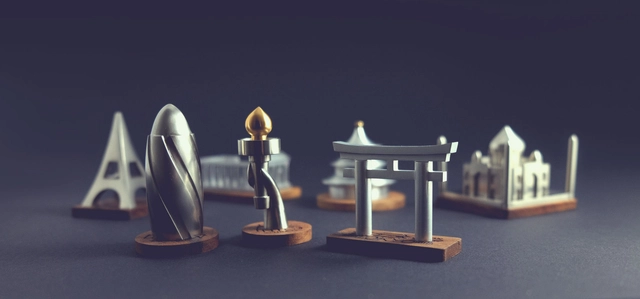
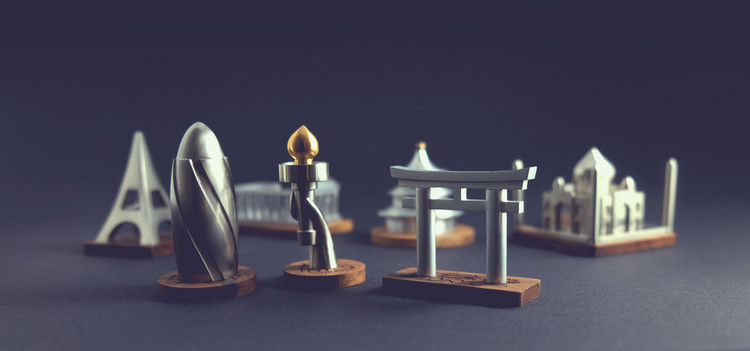
Russian designer Konstantin Kolesov has created a collection of finely-crafted souvenirs celebrating iconic architectural landmarks from around the globe. The Jsouv Collection consists of 15 pieces, depicting landmarks from New York, London, Tokyo, Dubai and more. Crafted from solid aluminum, the souvenirs are accompanied by a natural walnut base engraved with a 2D emblem of the city in question. With the souvenirs currently being crowdfunded on Indiegogo, Jsouv is also offering a t-shirt collection with unique prints of each city and landmark.
.jpg?1487014574)
A renowned symbol of the modern world, Tokyo is a city commonly associated with bright lights, innovative technology and sleek buildings. So when Polish artist Mateusz Urbanowicz first moved to Tokyo, he was taken aback by the number of old, architecturally eclectic storefronts that continued to flourish within the city.
“When I moved to Tokyo, more than 3 years ago I was really surprised that upon my walks I encountered so many shops still in business in really old buildings,” Urbanowicz explains. “Differently to Kobe, where the earthquake wiped out a lot of these old downtown houses and shops, in Tokyo they still survive.”
Inspired by the buildings’ resilience and their unique architectural features, Urbanowicz set out to document the storefronts in a series of watercolor illustrations, capturing the process through making-of videos.
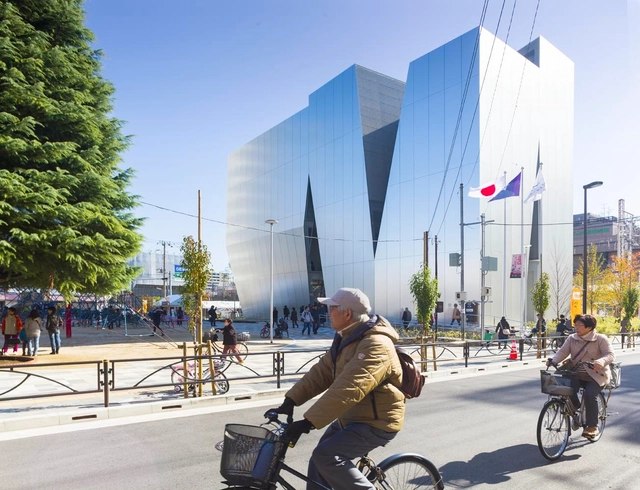
In this photoset, Vincent Hecht takes his lens into the recently completed Sumida Hokusai Museum, designed by pritzker prize winner Kazuyo Sejima, one half of the acclaimed international firm SANAA. Located in the Tokyo neighborhood of Sumida, the 4-story, angular structure will house a collection of over 1800 works by world-renowned ukiyo-e woodblock painter Katsushika Hokusai, who lived in Sumida over 200 years ago.
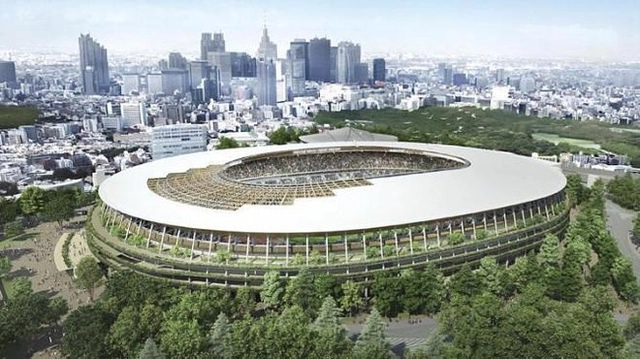
Kengo Kuma & Associates have been selected to replace Zaha Hadid Architects to design the new Tokyo National Stadium, the central venue for the 2020 Tokyo Olympics. Kuma's design was revealed alongside one other, a design by Toyo Ito, last week, after the original design by Zaha Hadid Architects was scrapped earlier this year. As reported by The Japan Times, Kuma's design narrowly won out against Ito's based on nine selection criteria by the Japan Sport Council, being awarded 610 total points compared to Ito's 602. Responding to concerns about the size and cost of Hadid's design, the new design will be under 50 meters tall and cost an estimated ¥153 billion, compared with the 70 meters and ¥252 billion of Hadid's controversial plans.
In the mid-1980s, after literature had long been held hostage by postmodernist irony and cynicism, a new wave of authors called for an end to negativity, promoting a "new sincerity" for fiction. Gaining momentum into the 1990s, the movement reached a pinnacle in 1993 when, in his essay E Unibus Pluram: Television and U.S. Fiction, pop-culture seer David Foster Wallace, a proponent of this "new sincerity," made the following call to action: “The next real literary ‘rebels’ in this country might well emerge as some weird bunch of anti-rebels, born oglers who dare somehow to back away from ironic watching, who have the childish gall actually to endorse and instantiate single-entendre principles... These anti-rebels would be outdated, of course, before they even started. Dead on the page. Too sincere. Clearly repressed. Backward, quaint, naive, anachronistic. Maybe that’ll be the point. Maybe that’s why they’ll be the next real rebels. Real rebels, as far as I can see, risk disapproval. The old postmodern insurgents risked the gasp and squeal: shock, disgust, outrage, censorship, accusations of socialism, anarchism, nihilism. Today’s risks are different. The new rebels might be artists willing to risk the yawn, the rolled eyes, the cool smile, the nudged ribs, the parody of gifted ironists, the ‘Oh how banal.'"
Architecture, ever in debt to the styles and ideas of other art forms, could learn a thing or two now from the resuscitation of American fiction at the turn of the millennium. It too is enduring an identity crisis, mired by pessimism and uncertainty - a reality made painfully clear this past January when a New York Times Op-Ed by Steven Bingler and Martin C. Pedersen, How to Rebuild Architecture, divided camps and made the design world fume. In the editorial, the authors spoke vehemently of an architectural profession that has become mired by egos and been disconnected from public needs. Things quickly got ugly, critics wrestled with critics and subsequently the public got involved. What no one seemed to take into account is that this type of hounding is at the core of the problem. In its current landscape the discipline has struggled with its past, been deferential to its present, and wrestled with the uncertainty of its future. In a moment when we have become addicted to despondency, can anyone win?

"When you put many children in a quiet box, some of them get really nervous," says Japanese architect Takaharu Tezuka, founder of Tezuka Architects. "In this kindergarten, there is no reason for them to get nervous. There is no boundary." Speaking at TEDxKyoto on his design for an open-air kindergarten in Tokyo, Tezuka discusses his playful and unorthodox approach to the creation of the eccentric building. The unconventional space blurs interior with exterior while accommodating a varied program of athletic, educational and relaxed space. According to Tezuka, the concept was based on a progressive philosophy employed by the school administration: "The principal says: if the boy doesn't want to stay in the room, let him go. He will come back eventually." On children, Tezuka's own philosophy is one of empowerment: "Don't control them. Don't protect them too much. They need to tumble sometimes. They need to get injured. That makes them learn how live in this world."



.jpg?1494811608 "© Laurian Ghinitoiu")
.jpg?1494811764 "© Laurian Ghinitoiu")
.jpg?1494811990 "© Laurian Ghinitoiu")
.jpg?1494811979 "© Laurian Ghinitoiu")
.jpg?1494811811)