


-
Architects: Schemata Architects
- Area: 24 m²
- Year: 2019
-
Professionals: TANK


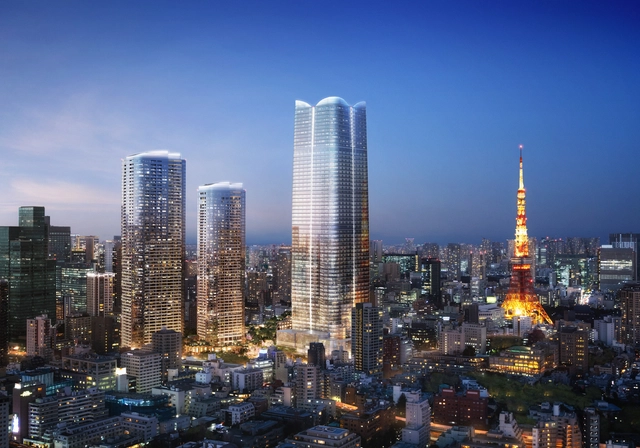
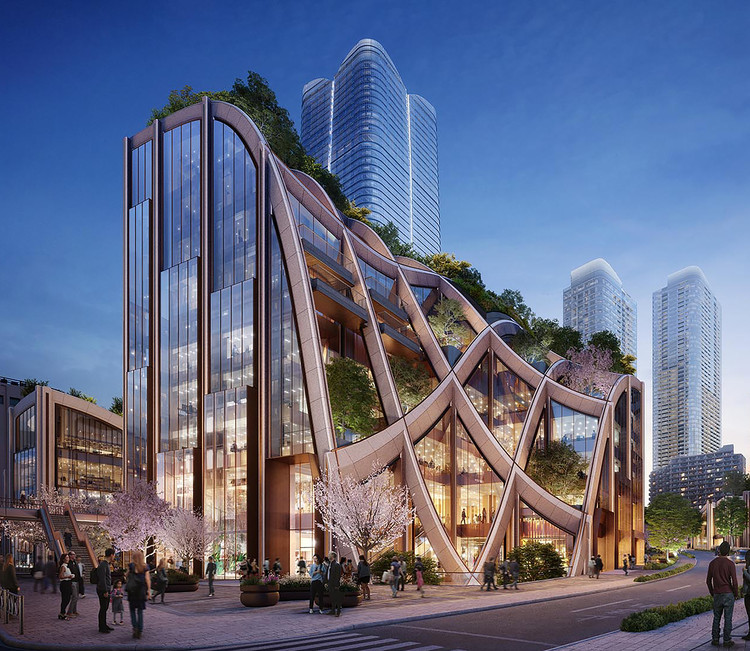
Pelli Clarke Pelli Architects generate for the first time in Japan, a high rise complex that holds the tallest building in the country, at the height of 330 meters. The U.S firm designed 3 towers for the district of Toranomon-Azabudai in Tokyo, part of a whole urban regeneration scheme for the central area of the capital.
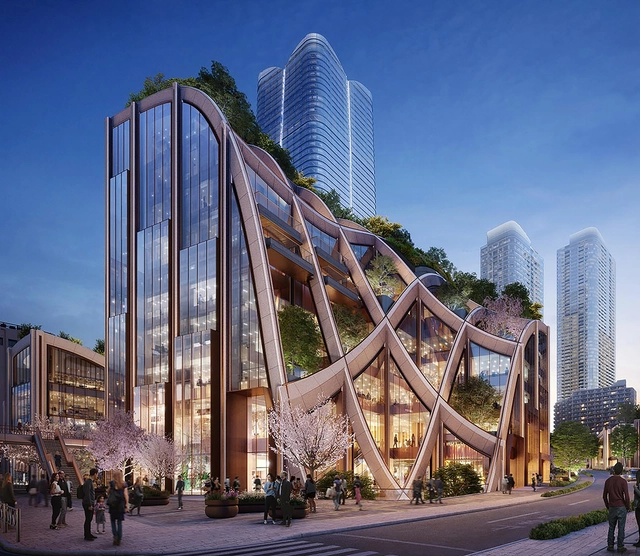
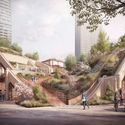
Heatherwick Studio’s first built venture in Japan is a huge planted pergola, put in place to create a new hub for the district of Toranomon-Azabudai in Tokyo, Japan. The project is due for completion in March 2023.
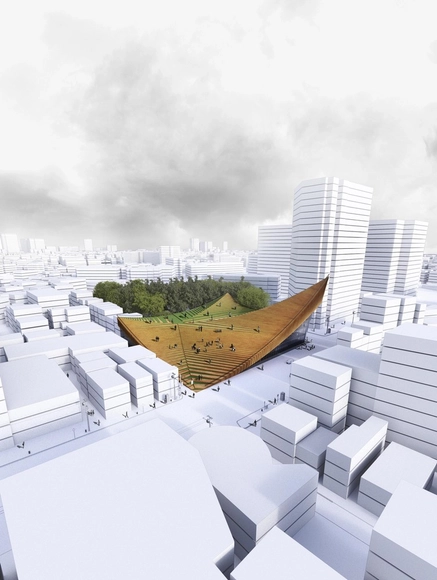
Although music halls generally appeal to groups of people with a specific interest, Persian architecture firm Hajizadeh & Associates developed a music hall that caters to all citizens of the city, and not just music lovers.
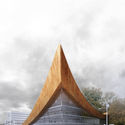
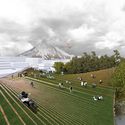
The "Tokyo Music Hall" is an award-winning design that transforms the music hall's roof into a space of contemplation and leisure, inspired by traditional Japanese architecture.
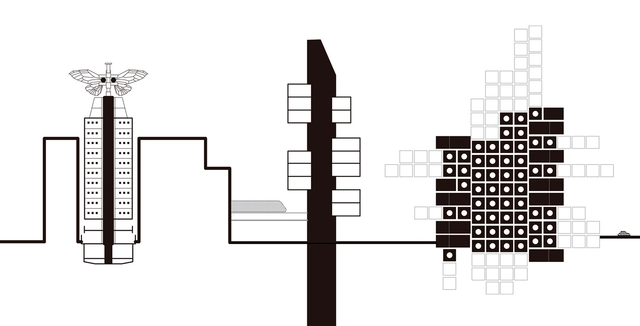
Traveling around Japan can be an impressive experience for a Western tourist - especially if they have some connection with architecture. In addition to the huge cultural differences, the country is known for its rich architectural production - eight of the 42 Pritzker Prize laureates are Japanese - which has maintained its consistency since the 1960s.

BRIEF
If skylines around the world are looking too much the same, is this because the new and important buildings are done by the big names (designers) from far away and not by the locals or the opposite is true? Not only skyscrapers but, museums, civic center, concert halls, bridges, libraries, opera houses all give cities part of their identity.
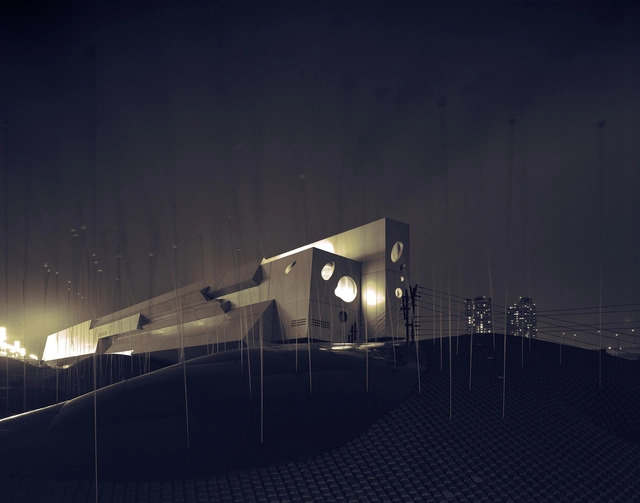
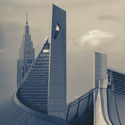
British architectural photographer Peter M. Cook has documented the city of Tokyo and its evolution for more than twenty years. Following the development of the city and its buildings with a large-format camera, Cook's first book of photographs have been published by Hatje Cantz Verlag with 100 shots. The monochromatic, large-format photographs reveal a story of one of the world's most iconic cities.

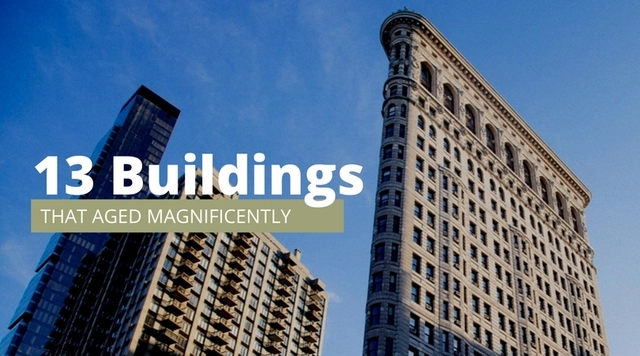
Humanity always cherishes great works of art that stand the test of time. This June, for example, marks the 50th anniversary of The Beatles’ psychedelic Sgt. Pepper's Lonely Hearts Club Band, and the 20th anniversary of Radiohead’s dystopian Ok Computer. These psychologically satisfying birthdays have generated serious appreciation and nostalgia. Similarly, we also love to praise the longevity of innovative architecture. The AIA bestows an annual “Twenty-five Year Award” to acknowledge projects that have "stood the test of time” and “exemplify design of enduring significance.” But one project a year seems stingy. Below are 15 modern classics which, though not always given the easiest start in life, we’ve come to adore:
.jpg?1494811811&format=webp&width=640&height=580)
Located in Tokyo's Sumida Ward, in which Sumida Hokusai (Katsushika Hokusai) was born and spent the majority of his life, this museum—completed in November 2016 to designs by Kazuyo Sejima—is a temple to the Japanese artist's work, including the likes of The Great Wave off Kanagawa and Red Fuji. Sejima, who was awarded the Pritzker Prize in 2010, is commonly known as one-half of SANAA (alongside Ryue Nishizawa). This project, while seeking to celebrate Hokusai's work, has also been designed as a cultural beacon. In this photoset, photographer Laurian Ghinitoiu has turned his lens to the new cultural landmark.
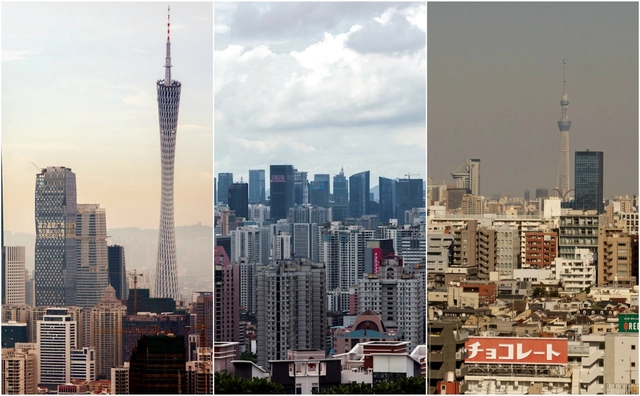
There’s a lot that the presence of skyscrapers can say about a city. They can be indicators of anything from wealth to modernization to density, or a combination of all three, depending on where you look. This potential to observe trends in a city through the height of its buildings makes data on those buildings valuable to a multitude of industries, so companies like Emporis conduct and distribute research on topics like the newest, tallest, and most expensive buildings in the world. Keep reading to find out about the ten tall cities that are home to the largest number of skyscrapers—as defined by Emporis' definition of a building that is 100 meters or more.
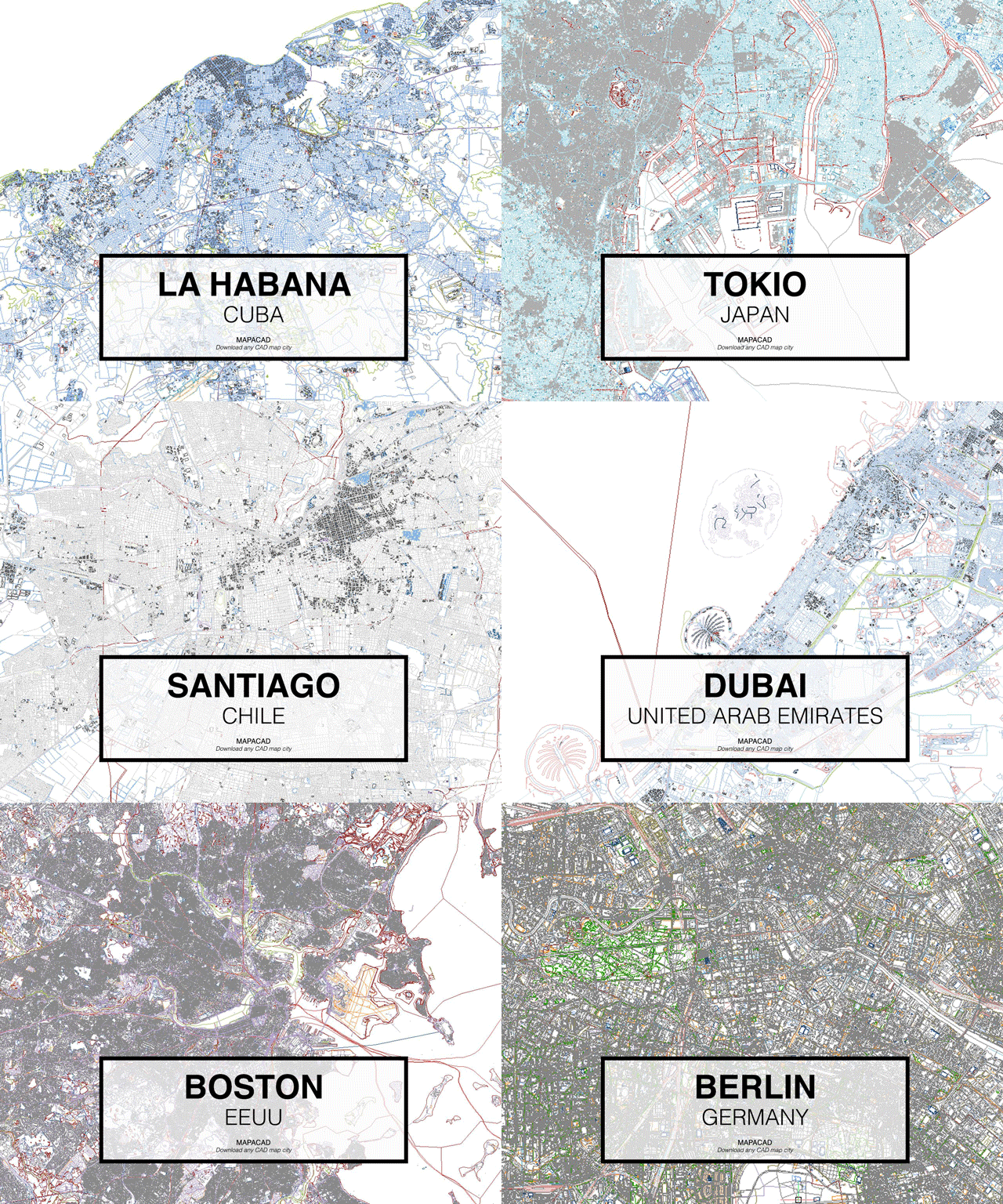
Mapacad is a website that offers downloads of .dwgs of dozens of cities. With 200 metropolises in their database, the founders have shared a set of their most-downloaded cities.
The files contain closed polyline layers for buildings, streets, highways, city limits, and geographical data--all ready for use in CAD programs like Autocad, Rhino, BricsCad and SketchUp.
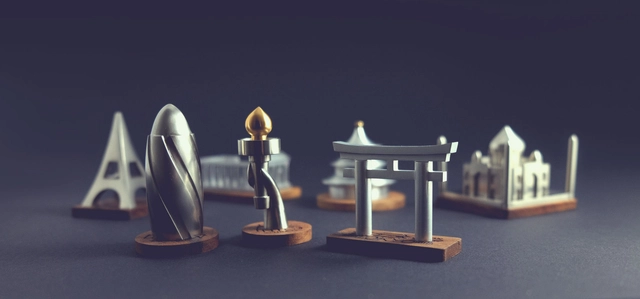
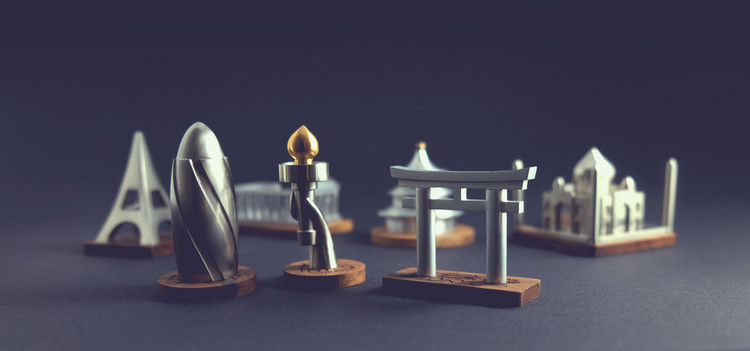
Russian designer Konstantin Kolesov has created a collection of finely-crafted souvenirs celebrating iconic architectural landmarks from around the globe. The Jsouv Collection consists of 15 pieces, depicting landmarks from New York, London, Tokyo, Dubai and more. Crafted from solid aluminum, the souvenirs are accompanied by a natural walnut base engraved with a 2D emblem of the city in question. With the souvenirs currently being crowdfunded on Indiegogo, Jsouv is also offering a t-shirt collection with unique prints of each city and landmark.
.jpg?1487014574)
A renowned symbol of the modern world, Tokyo is a city commonly associated with bright lights, innovative technology and sleek buildings. So when Polish artist Mateusz Urbanowicz first moved to Tokyo, he was taken aback by the number of old, architecturally eclectic storefronts that continued to flourish within the city.
“When I moved to Tokyo, more than 3 years ago I was really surprised that upon my walks I encountered so many shops still in business in really old buildings,” Urbanowicz explains. “Differently to Kobe, where the earthquake wiped out a lot of these old downtown houses and shops, in Tokyo they still survive.”
Inspired by the buildings’ resilience and their unique architectural features, Urbanowicz set out to document the storefronts in a series of watercolor illustrations, capturing the process through making-of videos.
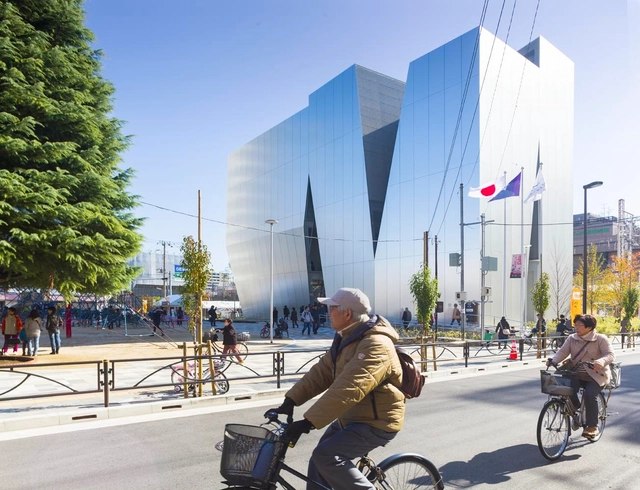
In this photoset, Vincent Hecht takes his lens into the recently completed Sumida Hokusai Museum, designed by pritzker prize winner Kazuyo Sejima, one half of the acclaimed international firm SANAA. Located in the Tokyo neighborhood of Sumida, the 4-story, angular structure will house a collection of over 1800 works by world-renowned ukiyo-e woodblock painter Katsushika Hokusai, who lived in Sumida over 200 years ago.

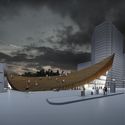
The competition for the ‘Ito Jakuchu Inspire’ pavilion is focused on the great celebration throughout the world of Ito Jakuchu’s work, a milestone in Japanese art history. Taking on a symbolic meaning, the competition effectively corresponds to a cultural phase of our existence. Designed by architects Đordje Alfirević and Sanja Simonović, this second prize winning proposal creates a dematerialization of boundaries between Ito Jakuchu’s perception of the reality in which he lived and the appearance of our modern world. More images and architects’ description after the break.













.jpg?1494811608 "© Laurian Ghinitoiu")
.jpg?1494811764 "© Laurian Ghinitoiu")
.jpg?1494811990 "© Laurian Ghinitoiu")
.jpg?1494811979 "© Laurian Ghinitoiu")
.jpg?1494811811)