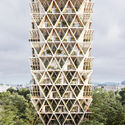
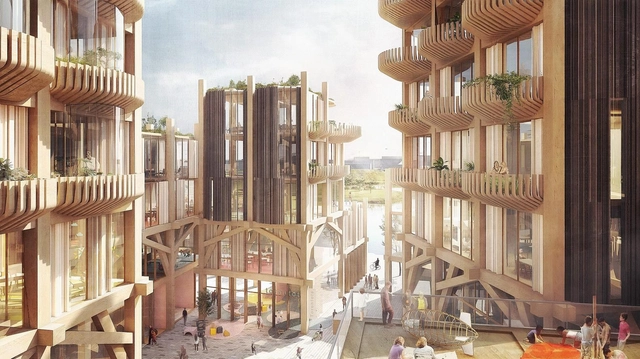
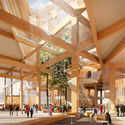
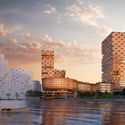
Glued Laminated Wood (Glulam) is a structural material manufactured through the union of individual wood segments. When glued with industrial adhesives (usually Melamine or Polyurethane resin adhesives), this type of wood is highly durable and moisture resistant, capable of generating large pieces and unique shapes.
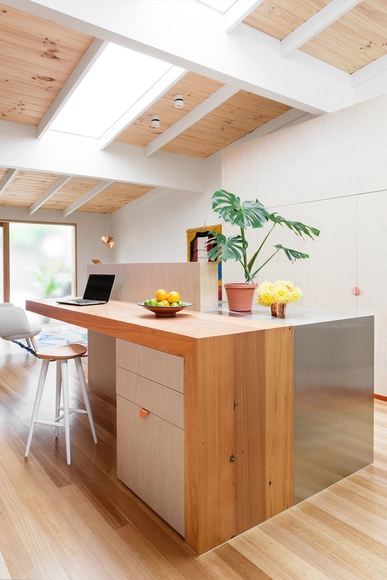
One of the most practical and functional spaces of any residential project is the kitchen. Its artificial surfaces – be it countertops, kitchen benches, or coverings – contain most of the space's equipment. Thus, it’s essential to build kitchens with the most resistant and hygienic materials. Aside from these requirements, it's also important to pay attention to aesthetics and profitability, while adapting the space to the dynamics of each family.
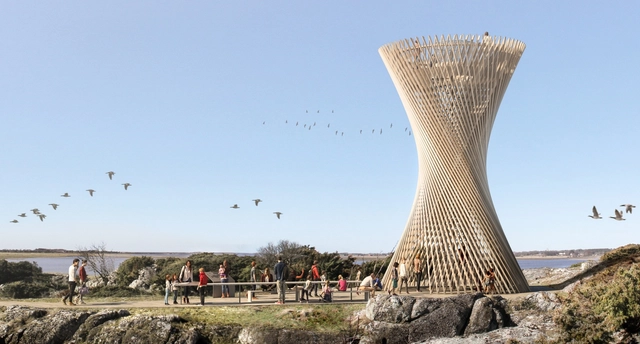
Scandinavian firm White Arkitekter has won an architectural competition for a landmark 12-meter-tall observation tower, hosted by the municipality of Varberg, Sweden. The winning proposal will form part of the development of the region’s new ecological recreation area at the Getterön nature reserve.
https://www.archdaily.com/919091/white-arkitekter-create-lattice-observation-tower-in-swedenNiall Patrick Walsh
The need to substantially reduce our impact on the planet must be translated into a significant change to our lifestyle and habits. One of these is to consume responsibly and consider that waste does not exist, but that all material can be transformed into something useful again following a circular ecological system.
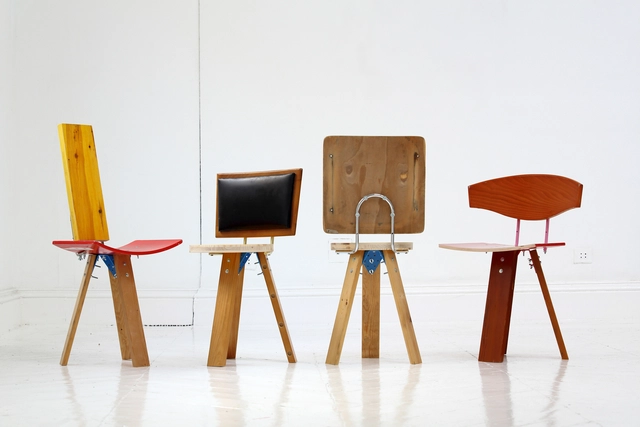
In his book Upcycling Wood, Reutilización creativa de la madera, the architect and artist Bruno Sève writes and edits a non-exhaustive guide of the uses and possibilities of recovered wood, as a framework for responsible reuse; from small scale, such as furniture or artists' canvases, to medium scale, with its use in interiors and facades. This book seeks to raise awareness among professionals and citizens in general through analysis of the life cycle, examples of uses and finishing processes, leading to an ecological and responsible framework. The book is illustrated by numerous design and architecture teams who follow the guidelines of ecological design with reclaimed wood.
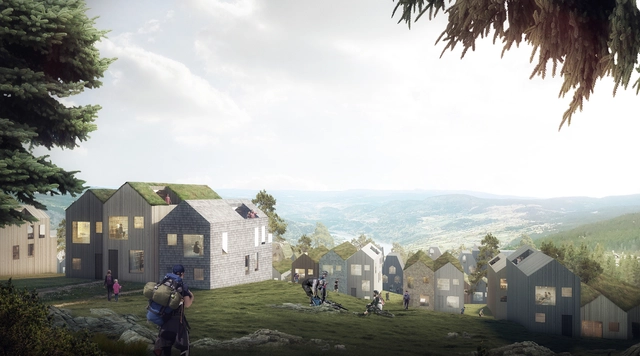
Reiulf Ramstad Arkitekter has unveiled details of their housing scheme in Hafjelltoppen, Norway. Designed to accommodate about 1000 people, Mosetertoppen is rooted in both tradition and innovation, with inspiration drawn from the cultural landscape and building art, and a rethinking in relation to sustainable architecture, and how to build in the Norwegian mountain landscape in the future.
https://www.archdaily.com/917129/reiulf-ramstad-arkitekter-designs-vernacular-norwegian-mountain-villageNiall Patrick Walsh
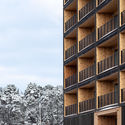
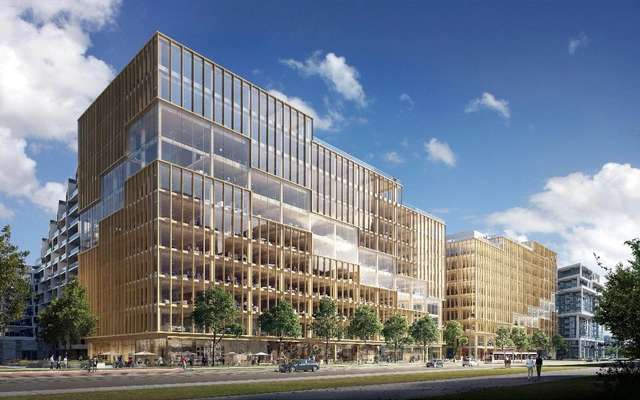
3XN has released details of its plans for T3 Bayside, the first office building in Toronto’s emerging Bayside community, and the tallest timber office building in North America. Located on the shores of Lake Ontario, the structure stands at 42 meters in height and serves as part of the 2,000-acre revitalization initiative to transform Toronto’s waterfront.
The scheme is designed to reflect and emphasize the emerging neighborhood in which it sits, intertwining principals of life, work, and play. A continuously-activated ground level is abundant with retail opportunities, bleeding into a central plaza, exhibition spaces, flexible office spaces, and coworking facilities.
https://www.archdaily.com/913650/3xn-designs-the-tallest-timber-office-building-in-north-americaNiall Patrick Walsh
The Odunpazari Modern Museum (OMM) by Kengo Kuma and Associates will open in June 2019, situated in Eskişehir, a university town in the northwest of Turkey. The OMM will feature an internationally significant collection of modern and contemporary art, showcased within a scheme designed by the architect behind the recently-completed V&A Dundee.
The 4,500-square-meter scheme is defined by a distinctive stacked timber design, drawing inspiration from Odunpazari’s traditional Ottoman wooden cantilevered houses that are synonymous with the district, and pays homage to the town’s history as a thriving wood market. Along with several other city museums in the surrounding area, OMM will create a museum square and public meeting place in the town.
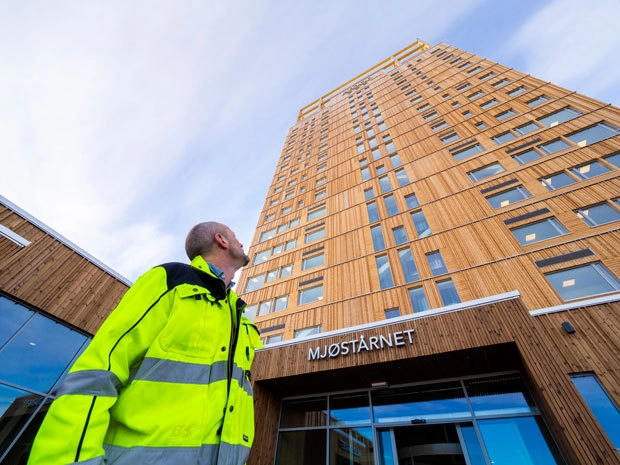
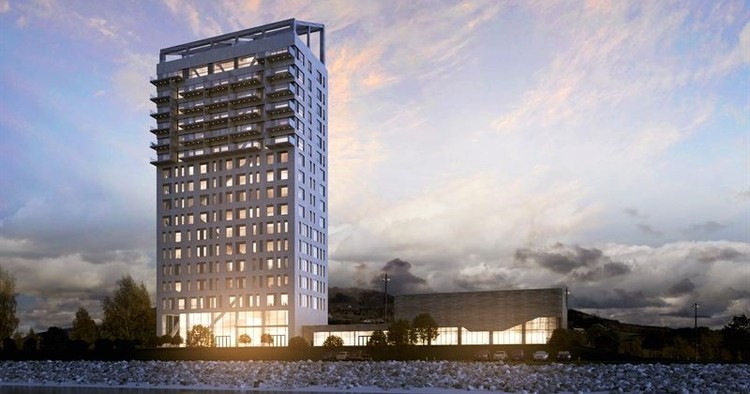
The Council for Tall Buildings and Urban Habitat has announced that Norway's Mjøstårnet tower is, at 85.4 meters, officially the world's tallest timber building. Beyond the unique distinction, the tower is also Norway's tallest mixed-use structure and third tallest building.
https://www.archdaily.com/913258/ctbuh-names-norways-mjostarnet-the-tallest-timber-building-in-the-worldKatherine Allen
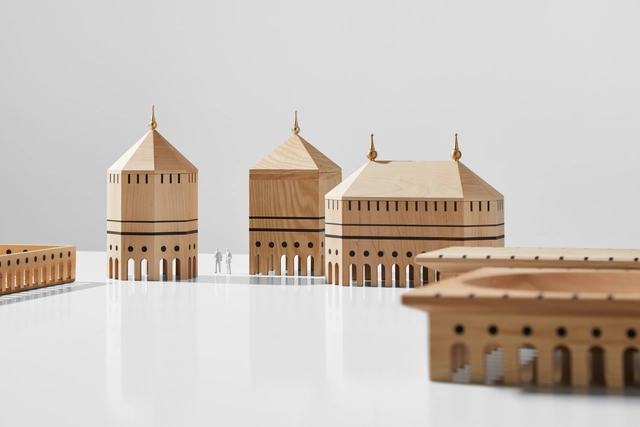
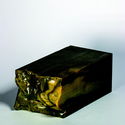
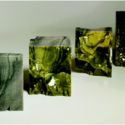
Antonio Serrano and Madrid-based Mad Lab have designed a collection of everyday objects inspired by Renaissance concepts of “Utopia.” The set of trays, boxes, and centerpieces are made from inlay maple and cedar wood, each telling “stories of entrepreneurship, design, craft, and technology.”
The collection, which manifests as a form of “scaled-down city,” considers Utopia as an imagined reflection on reality, rather than a yearning for an ideal city. The objects are full of “nods, winks, and gestures that leave us trapped in an illusion of a dream” conveyed through Renaissance architectural elements such as arches and spires.
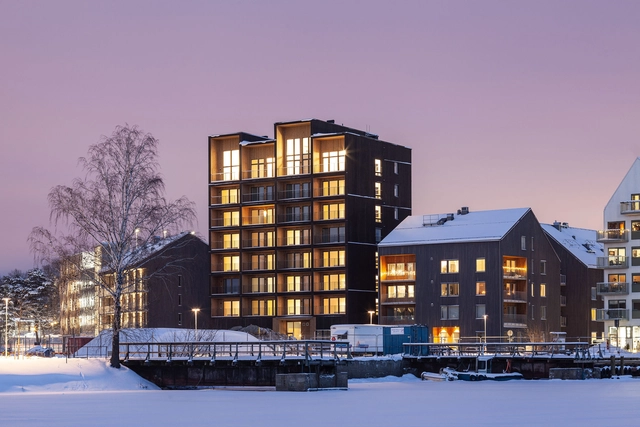
C.F. Møller Architects have completed Sweden’s tallest timber building, which is now accepting its first tenants. Situated in Västerås, one hour from Stockholm, the building is constructed from solid timber in order to radically reduce CO2 emissions, positively affect the indoor climate, and enhance the interior quality of life.
The 8.5-story-high tower features an elevated ground floor and double-height top floor, with all walls, beams, balconies, lifts, and stairwells made from cross-laminated timber. The use of CNC-milled solid timber and glulam allows for an airtight, energy-efficient structure without the need for additional cladding.
https://www.archdaily.com/912415/cf-moller-architects-completes-swedens-tallest-timber-buildingNiall Patrick Walsh
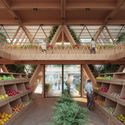
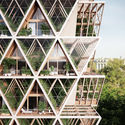
Precht has designed a timberskyscraper concept that combines modular housing with vertical farming. The concept was created by Penda co-founder Chris Precht and his wife Fei to reconnect people in cities with agriculture. In their proposal, the modular housing units would be built so that residents can produce their own food. Dubbed the Farmhouse, the concept aims to create more sustainable ways of living as city dwellers are increasingly losing touch with food production.
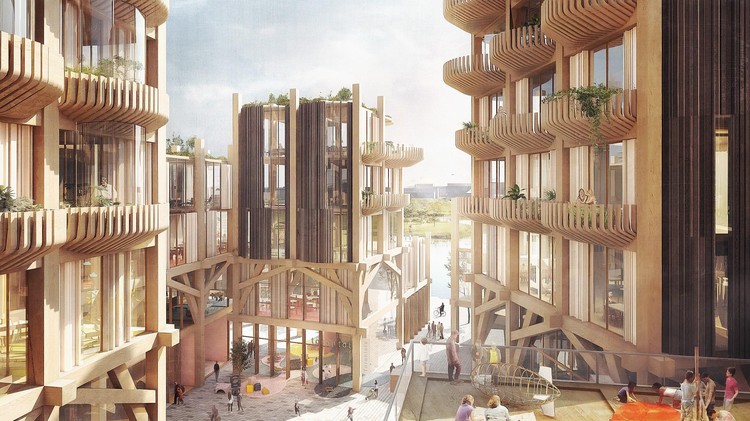
Sidewalk Labs has released new renderings from Snøhetta and Heatherwick Studio of the Quayside neighborhood development in Toronto. After announcing plans to create a model smart city, Sidewalk Labs has been working to pioneer a new approach to future urban developments. Plans for Quayside were first revealed last summer, designed to be interconnected smart neighborhood for the city. The latest renderings were released with further documents outlining how the company plans to pay for the ground-up development.
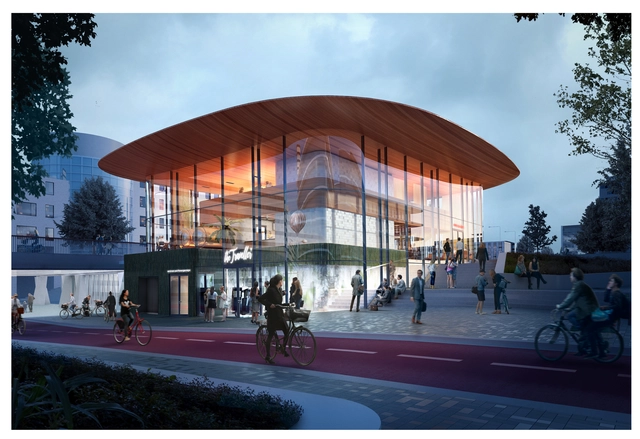
Construction has begun on the Powerhouse Company-designed pavilion for the ING campus in Amsterdam. Located in the up-and-coming district of Amsterdam Southeast, the 900-square-meter pavilion seeks to “make a bold statement while integrating with its surroundings."
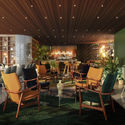
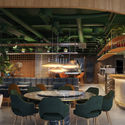
The clean, minimalist pavilion will sit at the heart of the ING campus, serving as both a dining area and a multifunctional space for the community. Emphasizing the natural landscape, the pavilion offers a synergy between the built and natural environment through a friendly circular form, a timber interior, and green Tichelaar tiles on the north and east facades.
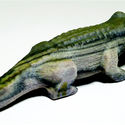
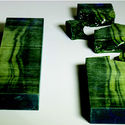
Researchers at New York’s Columbia University have unveiled a method of vibrantly replicating the external and internal structure of materials such as wood using a 3D printer and specialist scanning techniques. While conveying the external profile and patterns of natural objects is tried and tested, a major challenge in the 3D printing industry has been replicating an object’s internal texture.
In their recent study “Digital Wood: 3D Internal Color Texture Mapping” the research team describes how a system of “color and voxel mapping “led to the production of a 3D printed closely resembling the texture of olive wood, including a cut-through section.
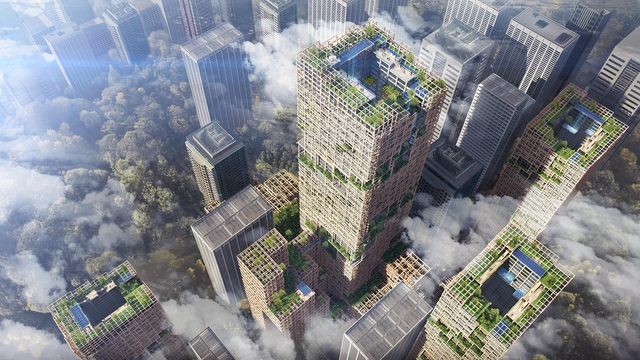
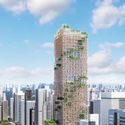
Timber tower construction is the current obsession of architects, with new projects claiming to be the world’s next tallest popping up all over the globe. But this latest proposal from Japanese company Sumitomo Forestry Co. and architects Nikken Sekkei would blow everything else out of the water, as they have announced plans for the world’s first supertall wood structured skyscraper in Tokyo.
Over the last few months, we have seen a surge in large timber structures being constructed across the globe claiming to be the biggest, the tallest, or the first of their kind—for example, plans for the Dutch Mountains, the world’s largest wooden building, have recently been revealed. Contractors Moelven Limtre are one of the key drivers of this change as the perception of timber as a load-bearing material becomes more common. Their director Rune Abrahamsen is responsible for one of the current claimants of the world record for the tallest timber building, “Treet” in Bergen, at 51 meters tall. However, the contractor’s latest project Mjøstårnet is set to reach an even taller height of 81 meters.
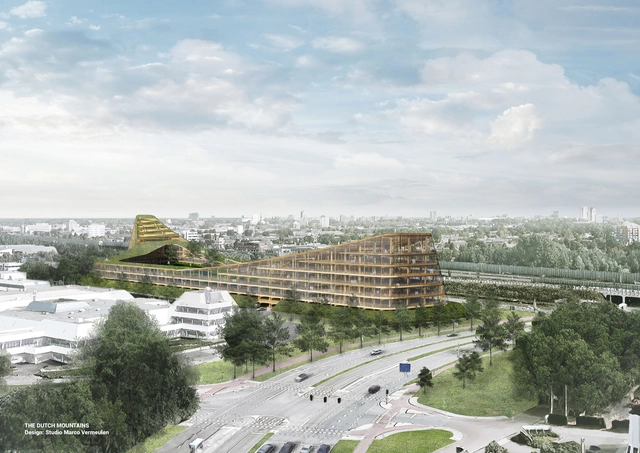
Plans have been revealed for the “largest wooden building in the world” to be located just outside Eindhoven in the town of Veldhoven, The Netherlands. Known as the Dutch Mountains, the complex was conceived via a multi-disciplinary partnership made up of tech companies, service providers, architects and developers, and would contain a hi-tech, mixed-use program for residents and visitors.


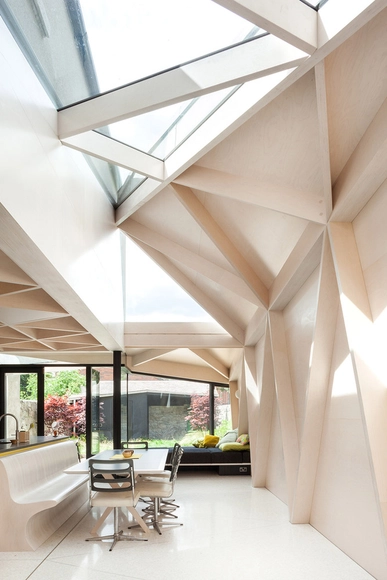
.jpg?1573485211 "The Roof House / MILODAMALO. Image © Ilya Ivanov")











_(1).jpg?1553001016&format=webp&width=640&height=580)
_(2).jpg?1553001038 "© Kengo Kuma and Associates")
_(4).jpg?1553001120 "© Kengo Kuma and Associates")
_(3).jpg?1553001082 "© Kengo Kuma and Associates")
_(6).jpg?1553001198 "© Kengo Kuma and Associates")
_(1).jpg?1553001016)