1. ArchDaily
  2. tile

tile: The Latest Architecture and News

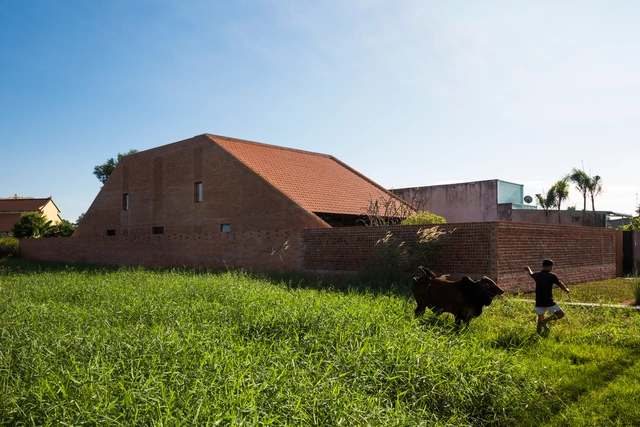
Tradition in Clay: Vietnam's Architectural Exploration with Traditional Tiles

Subscriber Access | 

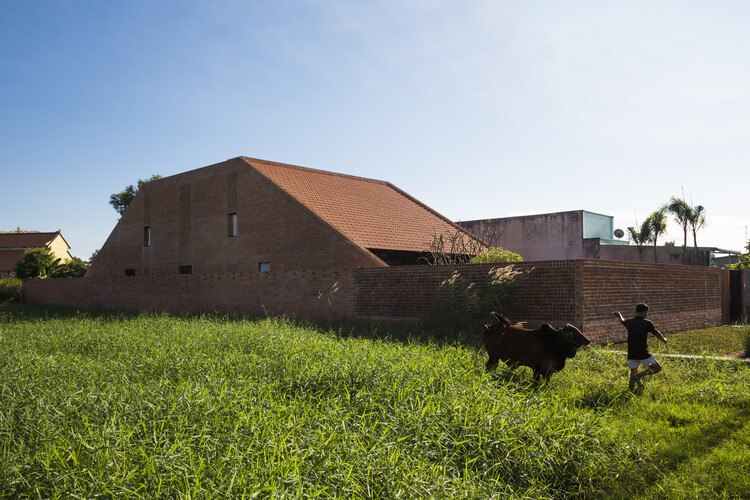
Red clay roof tiles appear in many architectural traditions around the world, despite the cultures being geographically or historically distant. However, this isn't necessarily surprising. Clay is an abundant and accessible building material worldwide, with some studies and other sources suggesting it comprises approximately 10-13% of the Earth's soils. Red tiles, in particular, are often a product of the local soil's mineral content and the firing process. Their widespread use across unrelated regions is less about shared cultural influence and more about material logic: clay is cheap, durable, and easy to work with using simple tools and techniques. In Vietnam, for example, there is a unique and visible tradition of clay tile use that dates back centuries. Regions like Vinh Long, nicknamed the "kingdom of red ceramics", have an abundance of this material, supporting a long history of tile-making. In some parts of Vietnam, these tiles are known as Yin-Yang tiles, due to the concave and convex shape in which they are formed during production.

Tradition in Clay: Vietnam's Architectural Exploration with Traditional Tiles - Image 1 of 4Tradition in Clay: Vietnam's Architectural Exploration with Traditional Tiles - Image 2 of 4Tradition in Clay: Vietnam's Architectural Exploration with Traditional Tiles - Image 3 of 4Tradition in Clay: Vietnam's Architectural Exploration with Traditional Tiles - Image 4 of 4Tradition in Clay: Vietnam's Architectural Exploration with Traditional Tiles - More Images+ 2

Pasadena Heritage Craftsman Weekend

In its 27th year, Pasadena Heritage will present the Annual Craftsman Weekend on November 9-11, 2018. The weekend will feature house tours of notable Craftsman properties, along with bus and walking tours of the surrounding neighborhoods. Other events scheduled include a 'Show and Sale' with exhibitors of antique and contemporary furniture and decorative arts, a silent auction, workshops, and presentations. In addition, Pasadena Heritage will be offering exclusive receptions at historic locations throughout the weekend.

Download the information related to this event here.

This Optical Illusion Floor Serves a Practical Purpose at Britain's Casa Ceramica

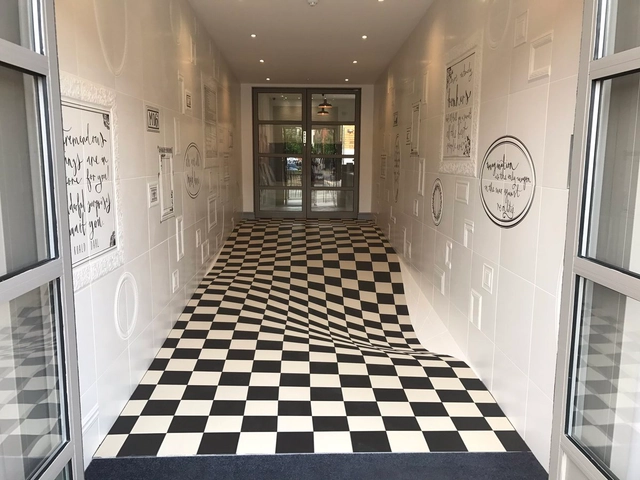
An optical illusion has been given a practical purpose in this mind-boggling floor at the headquarters of British tile company Casa Ceramica.

In addition to serving as an example of the company’s products, the floor is specifically designed to slow down people as they walk into the Casa Ceramica showroom. Thankfully, the forced perspective only works in one direction, so finding your way out is a much less stressful endeavor.

Walk Through and Experience the Rich History of Ceramics With 'Gateways'

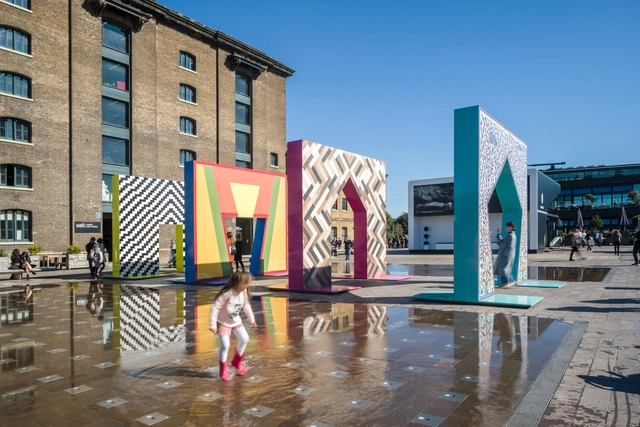
You’re going to wish you saw this Instagram worthy art installation. Gateways (@Landofceramics) at the central fountain in Granary Square, King’s Cross closed this week. It was designed to celebrate the DesignJunction event (September 21-24) an interior design show by and for the industry, set in challenging industrial sites as part of the greater London Design Festival.

2017 TILE AWARD International Competition (Under 38)

For the fourth time, the Tile Award newcomer competition by AGROB BUCHTAL in collaboration with AIT-Dialog calls upon architects and interior designers under the age of 38 to design new, unconventional and sensational interiors with ceramic tiles. The competition looks for creative and advanced ideas, which illustrate the varied design possibilities the material has to offer.

The Simplicity of Iranian Architecture's Complex Geometry

Subscriber Access | 

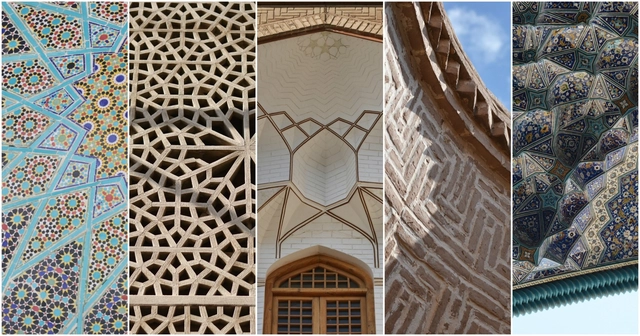
Iran’s geography consists largely of a central desert plateau, surrounded by mountain ranges. Due to the country being mostly covered by earth, sand, and rock, Iranian architecture makes fantastic use of brick or adobe elements. Most of the buildings seen in larger cities such as Tehran and Isfahan are constructed using similar brick-laying methods as can been seen in other parts of the world, but certain constructions, usually ones that date further back, contain incredible geometrical treasures. And it doesn’t stop there - old Iranian architecture often contains a layer of tiles over the brick constructions that can create just as mesmerizing geometrical wonders. The art of creating complexity by using many incredibly simple elements is one that has been mastered in Iran. In an architectural world where construction has become hidden by layers of plaster and plywood, we could learn a lot from the beauty of Iran’s structural geometry, where skin and structure are (almost always) one and the same.

The Simplicity of Iranian Architecture's Complex Geometry - Image 1 of 4The Simplicity of Iranian Architecture's Complex Geometry - Image 2 of 4The Simplicity of Iranian Architecture's Complex Geometry - Image 3 of 4The Simplicity of Iranian Architecture's Complex Geometry - Image 4 of 4The Simplicity of Iranian Architecture's Complex Geometry - More Images+ 32

2017 Coverings Installation and Design Awards (CID) Competition

The Coverings Installation and Design (CID) Awards celebrate outstanding achievements in the design and installation of tile and stone in both residential and commercial projects. Architects, designers, installers, and contractors are invited to submit residential or commercial projects completed within the past two years (January 2015 – December 2016).

Call for Entries: 2016 Ceramics of Italy Tile Competition

Confindustria Ceramica (the Italian Association of Ceramics) and the Italian Trade Commission are proud to announce the 2016 Ceramics of Italy Tile Competition Call for Entries. Now in its 23rd year, the contest is open to North American architects and designers who use Italian ceramic tiles in their institutional, residential and commercial/hospitality spaces. From corporate headquarters with ventilated porcelain facades and hospitals utilizing antibacterial ceramic floors to summer homes using decorative ceramics, Ceramics of Italy is looking for all types of inspiring projects featuring Italian ceramics.

Tile of Spain Presents: Ceramic Solutions - Innovations Pushing Boundaries of Design

Join Tile of Spain for a panel discussion on the state of the art of ceramics.
Presenters include:
Dr. Martin Bechthold, Professor, Harvard GSD
Ryan Fasan, Tile of Spain Consultant

Geometric Paradise: Explore the Realms of Wild Tiling

A photo posted by Fireclay Tile (@fireclaytile) on

What do mathematics and your kitchen backsplash have in common? More than you might think: according to recent findings published in The Guardian, mathematicians have had a breakthrough in the world of pentagons, resulting in a new class of mathematically tiling shape. This newly discovered iteration is capable of continuously tiling a surface without gaps, unlike the majority of its similarly five-sided cousins. Known in mathematics as the most elusive tile shape due to its seemingly endless angular possibilities, the pentagon has been the focus of serious scrutiny for over a century.

With the discovery of the fifteenth type of pentagon last month at the University of Washington Bothell, we've decided to compile a list of the most eccentric and intriguing tiles currently available. Dive into the world of wild backsplashes and unorthodox ceramics after the break.

Building Elements Come Alive with this Pinecone-Inspired Material that Reacts to Moisture

Reactive materials hold huge potential for architects and engineers in the near future, offering forms of interactive and customizable construction that could, if used properly, seriously alter the way in which people interact with their built environment. The massive expansion in the capabilities of touch screens and other glass based technologies have opened up user interfaces to levels where interactive cityscapes are becoming reachable - but creating materials which are themselves reactive is a much less-explored solution. Water Reaction, a project by Royal College of Art student Chao Chen, is an attempt at exactly that: creating a material that reacts to external conditions with no human input required.

Building Elements Come Alive with this Pinecone-Inspired Material that Reacts to Moisture - Image 1 of 4Building Elements Come Alive with this Pinecone-Inspired Material that Reacts to Moisture - Featured ImageBuilding Elements Come Alive with this Pinecone-Inspired Material that Reacts to Moisture - Image 5 of 4Building Elements Come Alive with this Pinecone-Inspired Material that Reacts to Moisture - Image 2 of 4Building Elements Come Alive with this Pinecone-Inspired Material that Reacts to Moisture - More Images+ 14

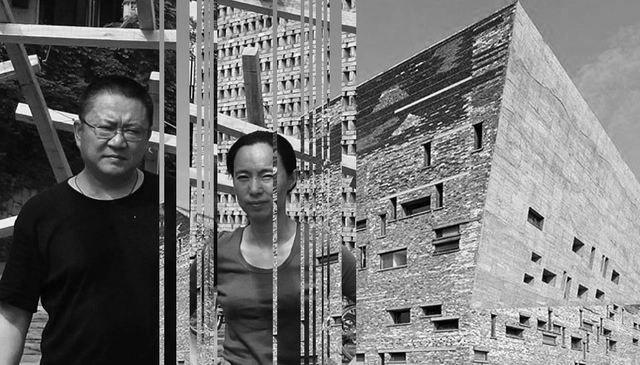
Material Masters: The Traditional Tiles of Wang Shu & Lu Wenyu

Wang Shu and Lu Wenyu of Amateur Architecture Studio are known for their distinctly contextual attitudes towards design which prize tradition and timelessness above anything else. In many cases, their use of materials is governed by local availability of salvaged building elements. Tiles, in particular, represent a material used repeatedly by Amateur Architecture studio and for Wang Shu, who won the 2012 Pritzker Prize, they offer a political as well as an architectural message.

Material Masters: The Traditional Tiles of Wang Shu & Lu Wenyu - Image 4 of 4