1. ArchDaily
  2. Thermal Transmittance

Thermal Transmittance: The Latest Architecture and News

Understanding U-Value: The Foundation of Energy-Efficient Envelopes

Subscriber Access | 
Understanding U-Value: The Foundation of Energy-Efficient Envelopes - Image 1 of 4
© ArchDaily

Much more than merely as a protective skin, the building envelope functions as a thermal regulator that influences operational energy demand, indoor comfort, and long-term efficiency. And before renewable systems or mechanical strategies are introduced, performance begins in section. The way walls, roofs, windows and floors are layered determines how much heat is lost in winter, gained in summer, and ultimately how much energy a building consumes. At the center of this evaluation lies a fundamental metric: the thermal transmittance, or U-value. Understanding how to calculate it is essential for assessing whether an envelope conserves energy or allows it to escape.

Conceptually, thermal transmittance relates heat flow to both surface area and temperature difference. It expresses how much energy crosses one square meter of envelope for each degree of thermal gradient between its two faces.

If we divide 1 m2 of our envelope by the temperature difference between its faces, we will obtain a value that corresponds to the thermal transmittance, also called U-Value. This value tells us a building's level of thermal insulation in relation to the percentage of energy that passes through it; if the resulting number is low we will have a well-isolated surface and, on the contrary, a high number alerts us of a thermally deficient surface.
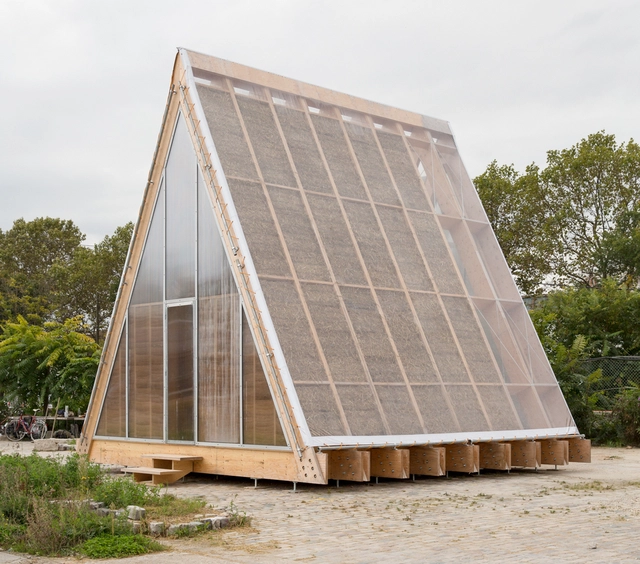
Sustainable Heating: Explore 4 Projects Featuring Trombe Walls that Enhance Thermal Efficiency

A Trombe wall is a passive solar building feature that enhances thermal efficiency. Positioned on the sun-facing side of a structure, it consists of a wall made from materials like brick, stone, or concrete, and a glass panel or polycarbonate sheet placed a few centimeters in front of it. Solar radiation penetrates the glass during daylight hours and heats the masonry wall. This wall then slowly releases the stored heat into the building during the cooler nighttime hours, maintaining a more consistent indoor temperature without the need for active heating systems.

Sustainable Heating: Explore 4 Projects Featuring Trombe Walls that Enhance Thermal Efficiency - Featured ImageSustainable Heating: Explore 4 Projects Featuring Trombe Walls that Enhance Thermal Efficiency - Image 2 of 4Sustainable Heating: Explore 4 Projects Featuring Trombe Walls that Enhance Thermal Efficiency - Image 3 of 4Sustainable Heating: Explore 4 Projects Featuring Trombe Walls that Enhance Thermal Efficiency - Image 4 of 4Sustainable Heating: Explore 4 Projects Featuring Trombe Walls that Enhance Thermal Efficiency - More Images+ 5

How to Improve Internal and External Environments with Glass Ceilings

As a highly transparent material that stands up to all but the most extreme of weather conditions, is easily formed into any size or shape, and, once formed, will last for thousands of years, glass is still one of the most innovative and crucial materials used in architecture. Although contemporary building practices allow us to form huge, glittering skyscrapers of glass that rise hundreds of meters into the air, the ancient material’s original purpose – to welcome light into weathertight and secure interiors – remains its most important more than a thousand years on.

As important as glass is to almost every typology of architecture in the form of windows, when it comes to the roof of a building, the use of glass is not so simple. We’ve understood the power and danger of combining light and glass ever since we saw a magnifying glass used to concentrate the heat of sunlight into incredibly high temperatures in children’s cartoons. Under a glass roof, the solar gain can make for uncomfortable internal environments without the correct protective precautions.

How to Improve Internal and External Environments with Glass Ceilings - Image 1 of 4How to Improve Internal and External Environments with Glass Ceilings - Image 2 of 4How to Improve Internal and External Environments with Glass Ceilings - Image 3 of 4How to Improve Internal and External Environments with Glass Ceilings - Image 4 of 4How to Improve Internal and External Environments with Glass Ceilings - More Images+ 10