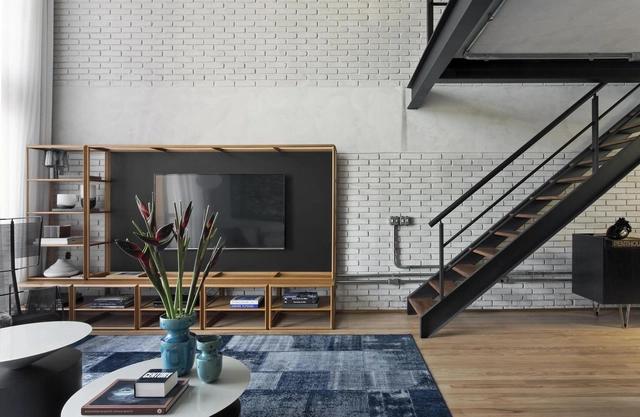
There are a series of multiple factors to take into account when deciding where to place a TV, including —but not limited to— the dimensions of both the furniture and the TV, image resolution, height, design, and so on.
In this article, we share some recommendations to achieve the comfort and well-being of the users avoiding possible problems of visual fatigue or unfortunate body postures.
We are about to start living in a completely wireless world, but in the meantime, many people are looking for alternatives to hide wires creating a more organized and clean space. Therefore, we have provided some tips for those who want to disguise TV cables and cords from other devices to make the environment more comfortable.
[TRANS-] media is looking to the architecture and related fields for research and creative work that addresses the concept of media. Print media, radio, film, television, and the internet have conditioned our perception of physical and social space. Media specific to architecture has also influenced the convergence of material, space, and content, charting new directions in culture, society, and architectural discourse. In the fourth issue of [TRANS-] journal, we seek to understand the effects of media on the creation and interpretation of design and creative work by asking how media produces knowledge and theoretical discourse about architecture design and the related fields. Through [TRANS-] media we aim to explore the transposition of materials and messages in physical and social space. This exchange of material and immaterial factors extends to the way we communicate our ideas, verbally and visually, the physical matter we choose to do this through, and the ultimate way they are perceived. In short, media is the connection between idea and reality, creator and audience, past and present.
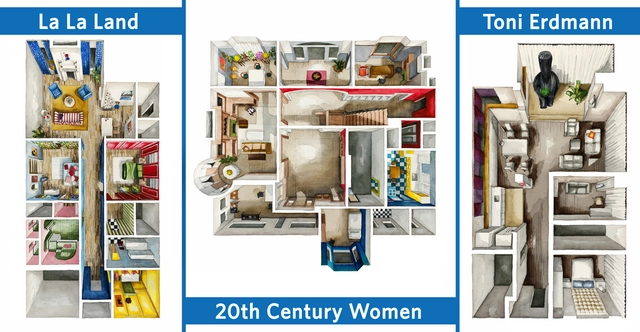
You’ve seen the floor plans from Hit TV Shows brought to you by Iñaki Aliste Lizarralde, Homes.com, and Drawbotics. Now, with the Academy Awards just around the corner, we're bringing you a series of floor plans from Oscar-nominated films, all painted in watercolor by Boryana Ilieva (who previously brought us the floor plans of Stranger Things). With movies such as La La Land, Fences, Elle, 20th Century Women and Toni Erdmann depicted in meticulous details, Ilieva’s watercolors not only provide us with a new perspective of the familiar spaces, but also highlight the important architectural features that help construct these captivating storylines.
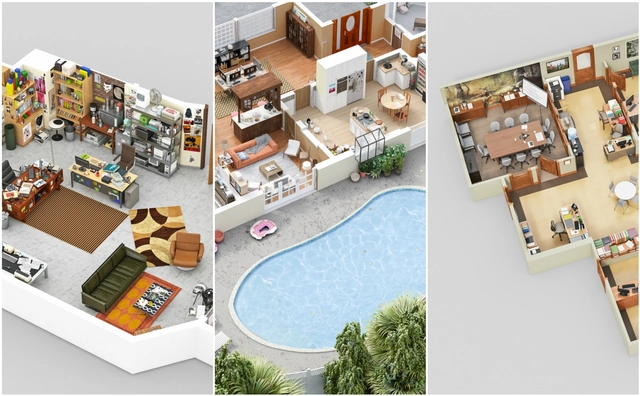
You've seen the floor plans offamous TV homes, but this fun new endeavor from Drawbotics is something a little different. With detailed 3D models of offices from Parks and Recreation, Suits, Brooklyn Nine-Nine, Mad Men, The IT Crowd,Silicon Valley, and, yes, The Office, the marketing agency provides a new level of familiarity with the sets of these cult workplace TV shows. Take a break from your own office and check out each model after the break.
If you’re a true Simpsons fan, you know there is a Golden Age in which every single episode does not only parody our society, but is filled with film tributes and sexual innuendos that we remember to this day.
From a faith-versus-science conflict (Lisa the Skeptic, 09x08) to the impact of online fake news (The Computer Wore Menace Shoes, 12x06); from Populism in Urban Policy (Marge vs the Monorail, 04x12) to its well-known predictions like the rise of Donald Trump to the presidency of the United States (Bart to the Future, 11x17), the show has a knack for providing the social commentary we didn't know we needed.
We had yet to notice, however, just how beautiful some of the visual compositions delivered by the show’s best episodes truly are: Springfield’s ever-changing skyline; the axonometric views that reflect the loneliness experienced by the characters; or the point-perfect generic recreational facilities that every city has.
How did we discover this? Through an Instagram account, Scenic Simpsons, which is dedicated to “showcasing the most beautiful scenes, colors, sets and abstract compositions from Springfield.” We've pulled some of our favorite images to check out below. Can you recognize which episode these scenes are from?
https://www.archdaily.com/804263/the-most-beautiful-visual-compositions-from-the-simpsonsArchDaily Team
On February 10 2017, Netflix will launch a new documentary series—Abstract: The Art of Design—which will present "the most creative designers" from various fields in the design word, with the aim of demonstrating how design influences all aspects of our lives. One of the eight protagonists in the spotlight will be Danish architect Bjarke Ingels, of BIG, who will present his vision of architecture alongside professionals in interior design, graphic design, automotive design, illustration, and set design.
Check out the series feature designers after the break:
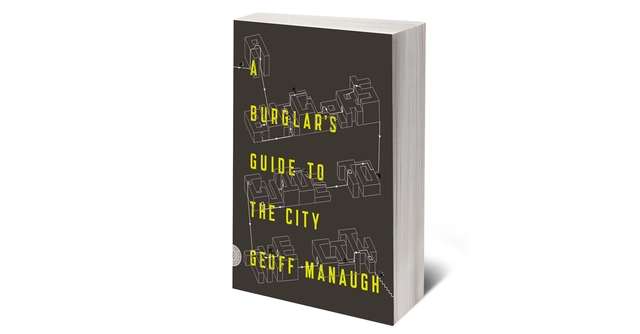
CBS has announced they will produce a television adaptation of the 2016 book, “A Burglar’s Guide to the City,” with a storyline that centers on modern-day Robin Hoods led by a talented architect. Written by futurist Geoff Manaugh of BLDG BLOG, the book serves a blueprint to the urban fabric’s various potentials for crime. Manaugh uses architecture to study structures and their weak points that could allow for a possible break-in (i.e. elevator shafts, walls of high-rise apartments, gaps in museum surveillance).
Floor plans of favourite television shows tell an interesting story, offering the viewer an extra dimension of a world they are already familiar with. A new series of poster-ready plans from Homes.com continues this with some of the most followed television shows both old and new—featuring Gilmore Girls, Buffy the Vampire Slayer, Arrested Development, Breaking Bad, Mr Robot, It's Always Sunny in Philadelphia, Sherlock and Stranger Things, there's something in this set for TV viewers of all tastes.


![Call For Submissions: [TRANS-] media - Featured Image](https://snoopy.archdaily.com/images/archdaily/media/images/5ab2/9cae/f197/cc7d/4900/030f/slideshow/open-uri20180321-25824-s48ry3.jpg?1521654949&format=webp&width=640&height=580)