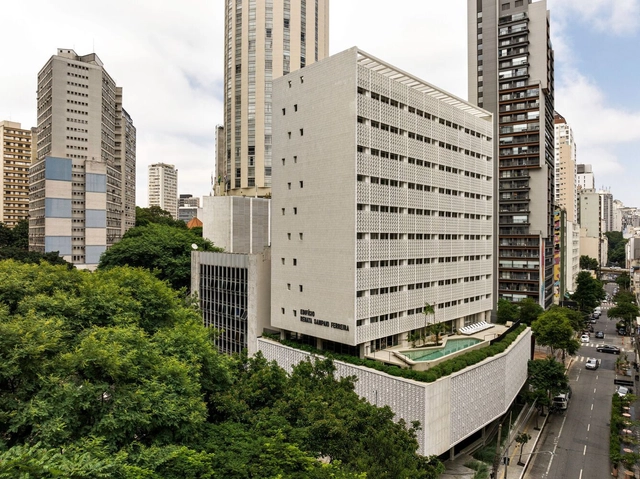
Retrofit has become a key practice in contemporary architecture, standing out for its ability to revitalize existing buildings without the need for demolition while offering significant economic and social benefits. This approach is gaining ground in the architectural field, driven by iconic projects and public and private initiatives.

Architecture involves mobilizing several aspects of the environment where the building is located: the socio-cultural, political and economic context, aesthetics, legislation, and functionality. Functionality includes use efficiency, occupancy, and comfort. Laurent Troost's work has shown the articulation between these various factors, with particular attention to comfort, especially thermal comfort. His projects prioritize natural ventilation over artificial air conditioning, which has become almost mandatory in current city models.
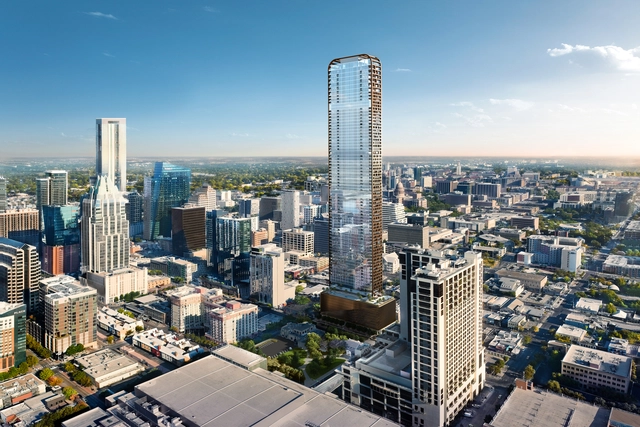
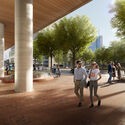
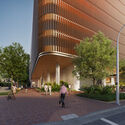
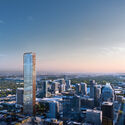
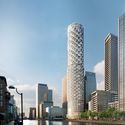
Austin-based office HKS announced the design of the Wilson Tower, a high-rise of 315 meters in Texas' capital featuring 80 floors, 450 units, outdoor terraces, and gardens. The tower will be delivered in collaboration with Britt Design Group and Wilson Capital, and is expected to break ground in the summer of 2023. After completion will become the tallest residential tower in the USA outside of New York.
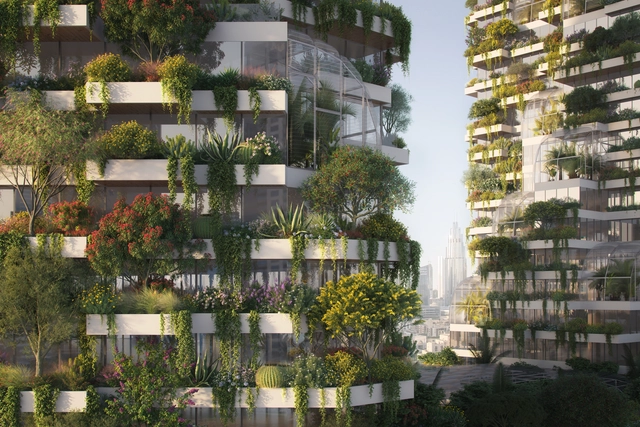
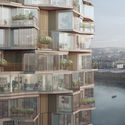
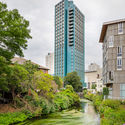
Stefano Boeri Architetti presented a new design for the Vertical Forest towers during COP27 in Sharm El-Sheikh, Egypt. The prototype would be in Dubai, the most populous city in the United Arab Emirates (UAE), and the next host of COP28 in 2023. The ambitious project would represent the first Vertical Forest prototype for the MENA (Middle East and North Africa), and it is the latest in an extended list of greenery-covered buildings by Boeri Architetti, including the Bosco Verticale in Milan, the Easyhome Huanggang in China, and a prototype of the First Dutch Vertical Forest.
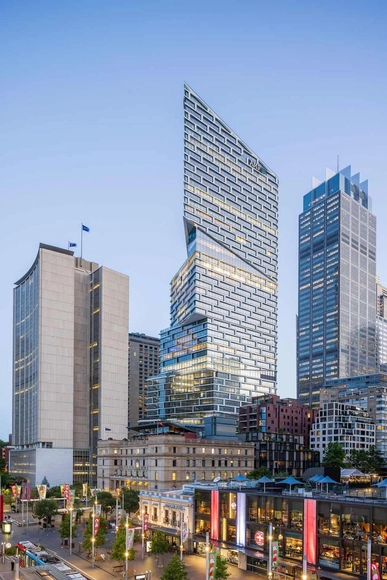
The Danish architectural practice 3XN won the 10th International High-Rise Award for the office tower Quay Quarter Tower in Sydney, Australia, the world's most innovative high-rise in 2022/23. From over 1000 high-rises completed in the last two years, the Quay Quarter Tower was selected because it implemented innovative solutions in a time of increased ecological challenges by integrating a large proportion of the existing 1970s high-rise structure into the new building.
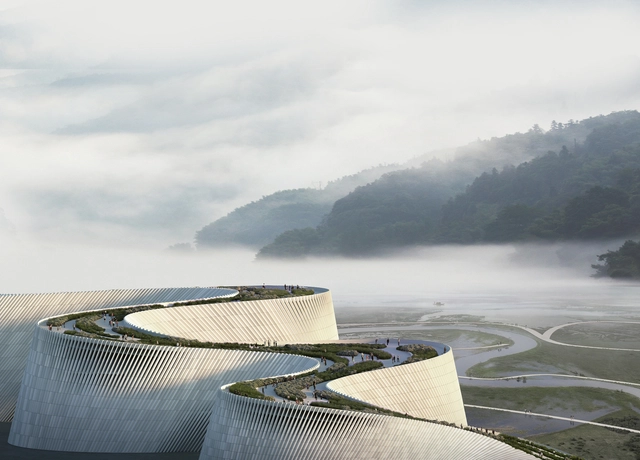
Shenzhen Natural History Museum. Image Courtesy of 3XN
The latest news and reports on China’s construction sector redefine the country’s future architectural landscape. A Cultural Infrastructure Index reflecting the data from 2020 places China and, more specifically, Shenzen as the world leader in investments regarding cultural facilities. Last year saw the announcement of 10 new cultural projects, all designed by world-renowned architects. At the same time, the Chinese authorities announced last month that buildings taller than 500 metres would no longer be approved, marking the end of an era that made the country home to 10 of the tallest 20 buildings in the world.
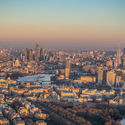
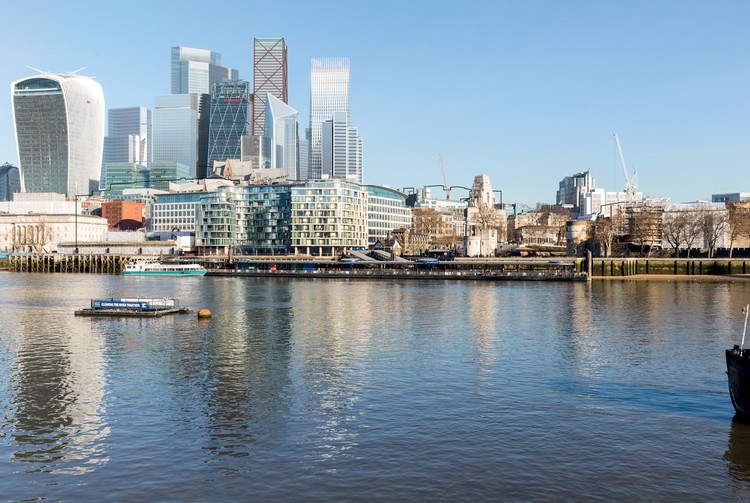
New London Architecture (NLA) published the results of the 2021 edition of its annual Tall Building Survey, showing both the impact of the pandemic on the construction industry of the UK's capital and the prospects of future development. Since launching in 2014, the report has provided a comprehensive review of London's skyline.
In the modern era of design where advancements in technology and construction have enabled architects to build better, faster, and taller, the sky’s the limit. Every few months, another headline boasts the tallest residential tower or the newly constructed office building that breaks yet another record for its impressive height. But as time goes on and new projects are completed, trends show that the United States is falling out of the spotlight in terms of being able to claim the title of world’s tallest building, and the drawing boards show that no American city will be reclaiming this title any time soon.
The annual Council on Tall Buildings and Urban Habitat's (CTBUH) Tall + Urban Innovation Conference explores and celebrates the very best in innovative tall buildings, urban spaces, building technologies, and construction practices from around the world. Incorporating what was previously known as the CTBUH Annual Awards event, this conference sees the owner/developers, design, and engineer teams for 50+ Awarded projects present in front of an international audience and live juries for winning distinctions across several award categories. Hot topics in the building industry will also be explored through presentations in project rooms.
New London Architecture has published the results of their annual Tall Building Survey. Now in its sixth year, the report declares 2019 as “The Year of the Tall Building” with a record number of 76 tall buildings set to be completed in the UK capital in 2019.
Among the key findings from the report, it was revealed that the completion of tall buildings is set to be three times higher than in 2018. There are currently 541 tall buildings in the pipeline for the capital, with 22 out of London’s 33 boroughs containing tall buildings under construction. These tall buildings will offer more than 110,000 new homes for a city with chronic housing shortages.
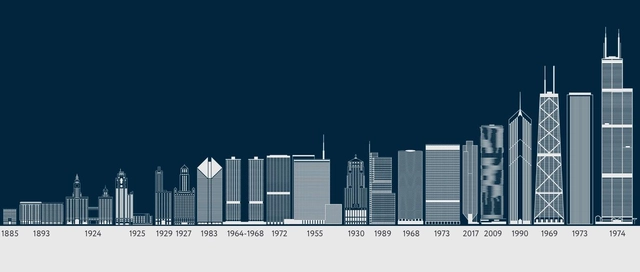
Mud City, the Windy City, the City of the Big Shoulders... If there is one thing we are certain of, it is that Chicago is the birthplace of exceptionally tall buildings.
To celebrate the city's ongoing innovations in soaring skyscrapers, Orbitz has illustrated 20 of Chicago’s most iconic sky-high architecture.
View the republished content from Orbitz' list complete with an interactive timeline of Chicago's tallest buildings.
Wood is the ultimate material - it's renewable, sequesters carbon and more importantly, it's buildable. Nevertheless wood is rarely used in tall, vertical construction. Now reThink wood has come out with their Tall Wood Survey (available in full on their website), which surveyed over 50 wood experts to explore three main areas in which wood is usually questioned: financing, insurance and performance. But beyond discussing the pros and cons of wood, the survey also highlights 10 projects that show how wood products are being used in ways you never thought existed. See all ten innovative projects, after the break.