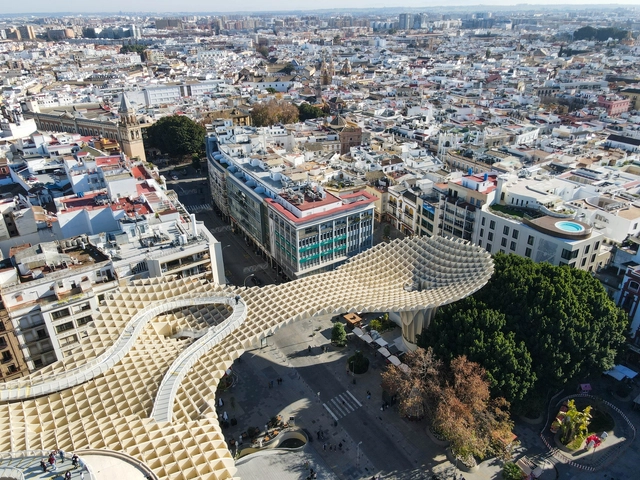
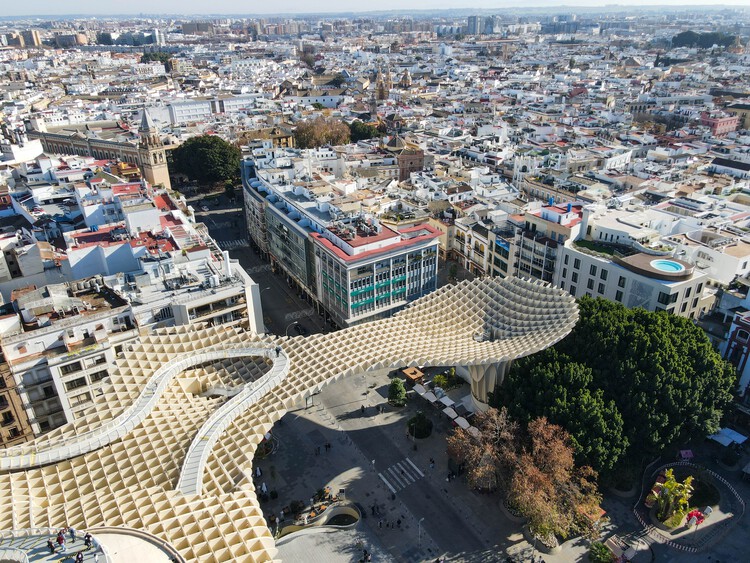
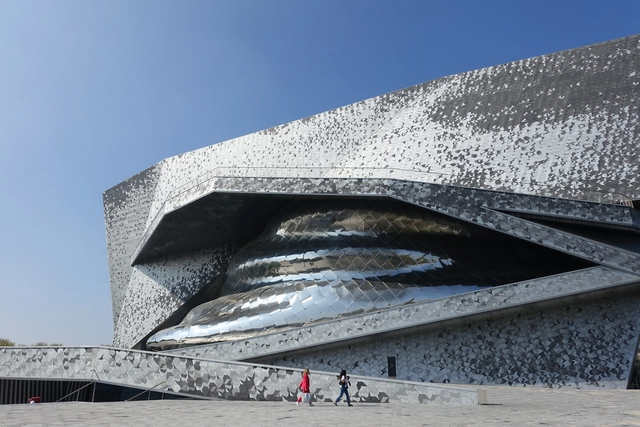
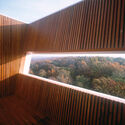
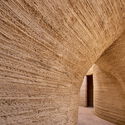
Located in southern Spain, Seville unfolds as a layered city shaped by centuries of cultural intersections. As the former capital of Al-Andalus and a central port during the Spanish Empire's expansion, its built environment reflects a deep historical complexity. From Roman foundations to Islamic geometries, from Renaissance palaces to contemporary interventions, Seville presents a unique spatial narrative in which architecture directly reflects its political, religious, and social transformations.
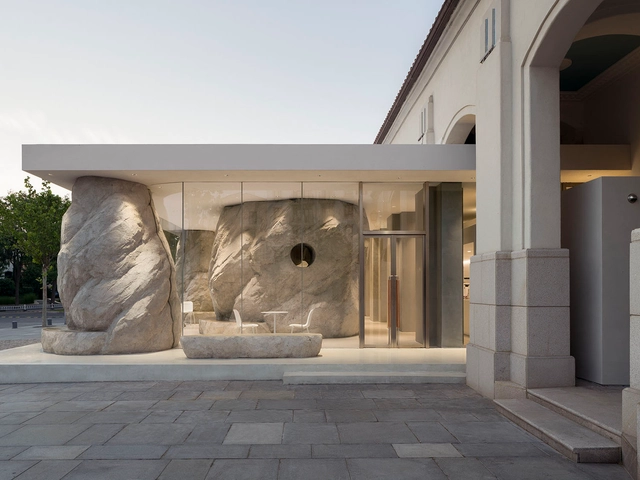
The city's architectural heritage is inseparable from its climate and geography. Narrow shaded streets, inner courtyards, and water as spatial elements reveal a deep knowledge of environmental adaptation that still informs how public and private spaces are articulated today. While monumental landmarks such as the Alcázar, the Giralda, or the Cathedral preserve and reinterpret historic legacies, modern projects have begun introducing new materials, programs, and spatial typologies, challenging conventional forms and proposing alternative ways to inhabit the city.
Adaptive reuse has become a buzzword in the architecture industry. Framed as a sustainable and economical solution to urban decay, the practice has been adopted by cities facing pressures of climate change, real estate constraints, and cultural preservation. Architects are increasingly being hired to rehabilitate the old rather than build anew. Within this discourse is a growing sentiment towards who gets to reuse and how.
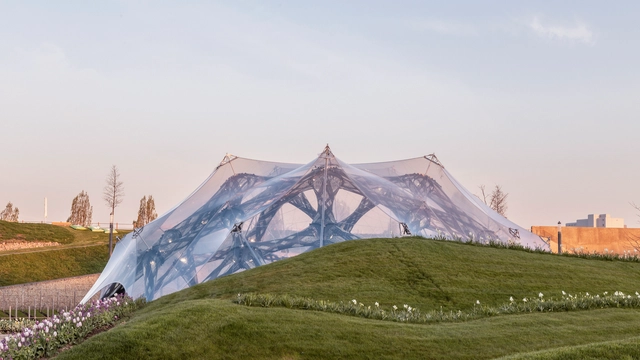
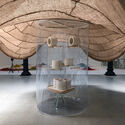
In recent years, architecture has increasingly embraced adaptability, flexibility, and responsiveness as core design principles. This evolution reflects a shift from traditional notions of static, permanent structures to dynamic environments that can adjust to changing needs and conditions. Central to this transformation is the concept of "soft architecture", which leverages pliable materials and innovative systems to create spaces that are functional, sustainable, and user-centric. Soft architecture takes shape through membranes that breathe, façades that move, structures that inflate or fold, and surfaces that bend rather than break. It involves designing for transformation — not only in how a building performs environmentally, but also in how it can accommodate shifting functions, user interactions, or temporary occupations. This approach to building challenges traditional notions of durability and control, proposing instead a more responsive and open-ended architecture. It reflects a growing awareness that buildings, like the societies they serve, must be able to evolve.
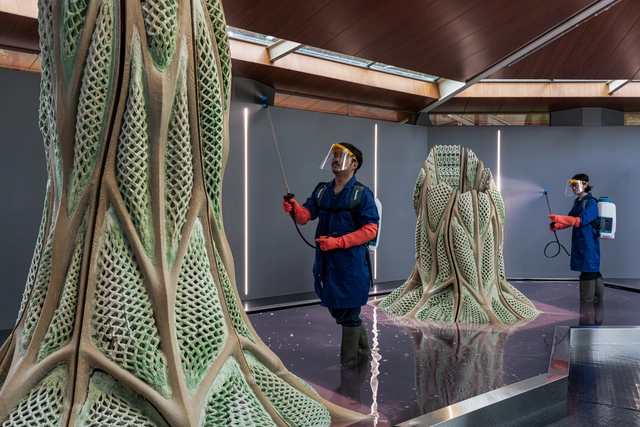
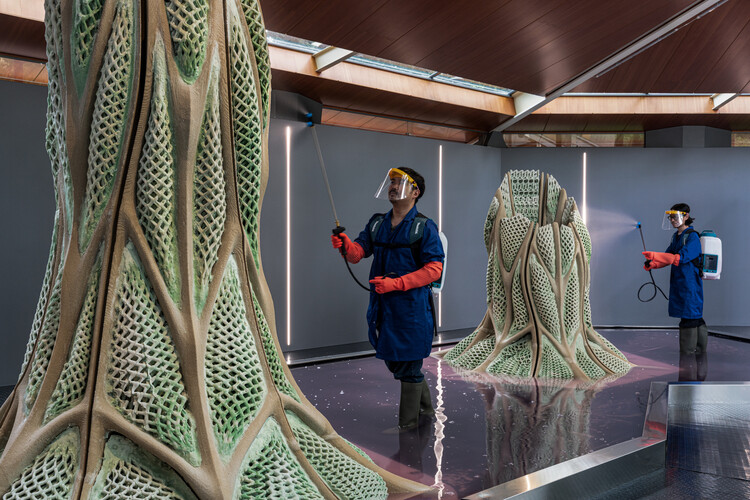
The Canada Pavilion at the 19th International Architecture Exhibition – La Biennale di Venezia, hosted Picoplanktonics. A research that emerged as a radical rethinking of how architecture can become a platform that blends biology, computation, and fabrication to propose an alternative future, one where buildings don't just minimize harm, but actively participate in planetary repair. At its core lies a humble organism: marine cyanobacteria, capable of both capturing carbon and contributing to the material growth of the structure it inhabits. The project has been developed over 5 years by a group of researchers at ETH Zurich, led by Andrea Shin Ling and a group of interdisciplinary contributors and collaborators. Together, they formed the Living Room Collective, founded a year ago to build upon this work and showcase it at the Venice Biennale. The Core team members include Nicholas Hoban, Vincent Hui, and Clayton Lee. This conversation with the team behind the project shares the philosophy, technical challenges, and speculative horizons that animated their work from printing living sand lattices to maintaining microbial life in a public exhibition. Their aim is to inspire people to reconsider architecture not as a static object, but as a living, evolving process. One that requires care, patience, and a radical shift in mindset.
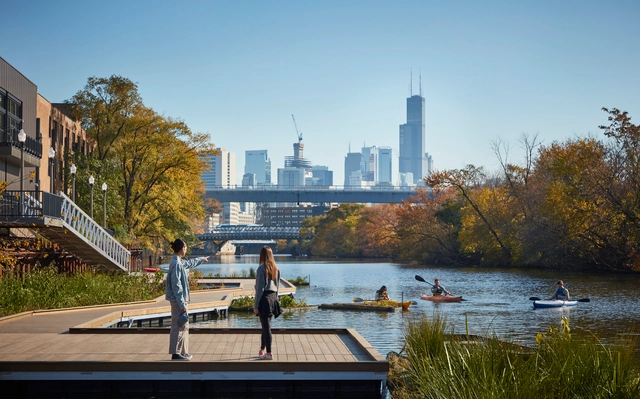
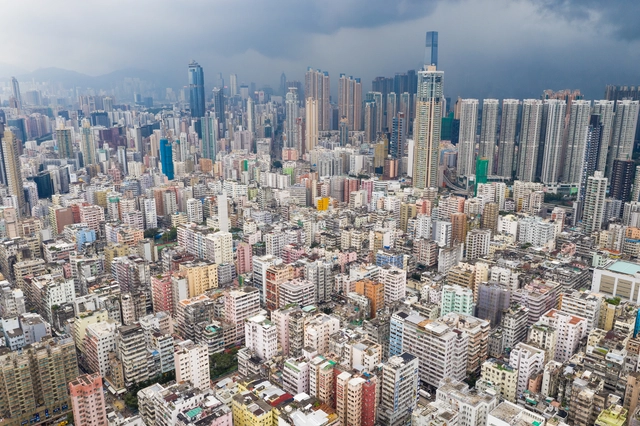
In the United States, nearly 1 in 10 children are affected with asthma, a condition with rates significantly higher in urban areas of the country. However, in a community just outside Atlanta with a population of more than 300 children, not a single case of the condition has been reported. This is by design. Most cities and neighborhoods across the country are not designed with human biology in mind, an oversight that contributes to the growing prevalence of cardiovascular disease and mental health challenges. Are we treating chronic conditions as purely medical, when they may actually be symptoms of poor design?
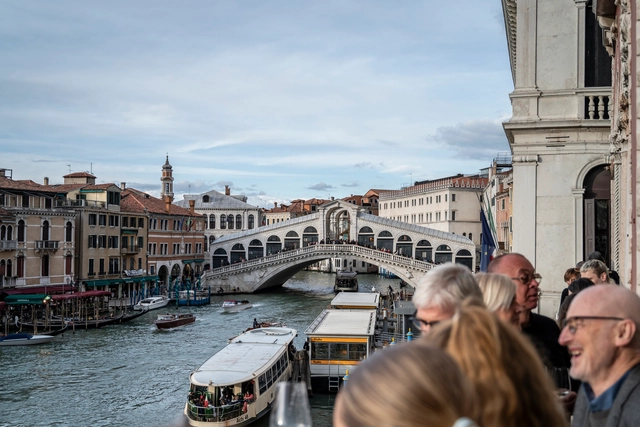
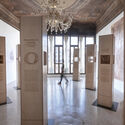
In partnership with the European Cultural Center (ECC), ArchDaily has launched its inaugural exhibition as part of the seventh iteration of Time Space Existence, an architectural showcase occurring concurrently with the 19th VeniceArchitecture Biennale. Open from May 10 to November 23, 2025, in various locations throughout Venice, this edition centers on the theme of "Repair, Regenerate, and Reuse," promoting innovative and sustainable approaches in architecture. ArchDaily's contribution is located at Palazzo Mora, complementing other venues like Palazzo Bembo, Marinaressa Gardens, and Palazzo Michiel.
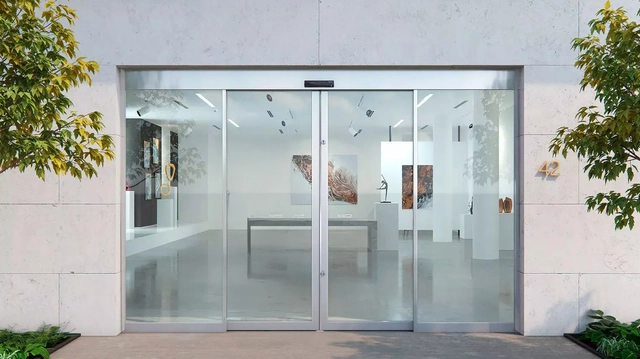
SL500 Sliding Door System. Image Courtesy of ASSA ABLOY
Throughout history, doors—and later automatic doors—have served a far greater purpose than merely marking an entrance or exit. They define thresholds, guide the flow of movement, and subtly shape the way people interact within a space. We can trace their evolution back to the 1st century, when Heron of Alexandria devised a steam-powered door—an early example of technology merging with architecture. Since then, contactless automatic door systems have incorporated technological advancements that enhance operation and redefine their role within buildings. Today, they are integrated across a range of building types and scales, acting as transitional elements that enhance comfort, energy efficiency, and the overall quality of indoor spaces.
https://www.archdaily.com/1029498/the-greener-future-of-automatic-door-systems-a-shift-in-design-and-performanceEnrique Tovar
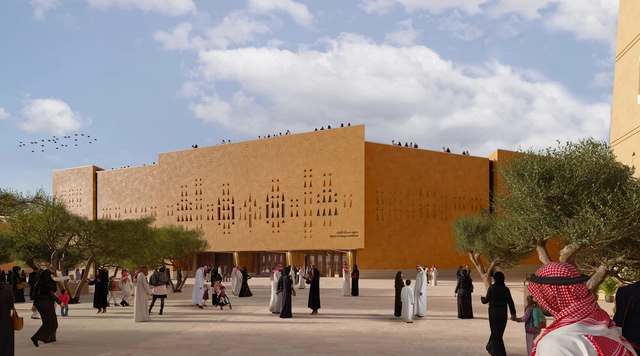
Asaan Museum, Render by Specto-Digital. Image Courtesy of ZHA
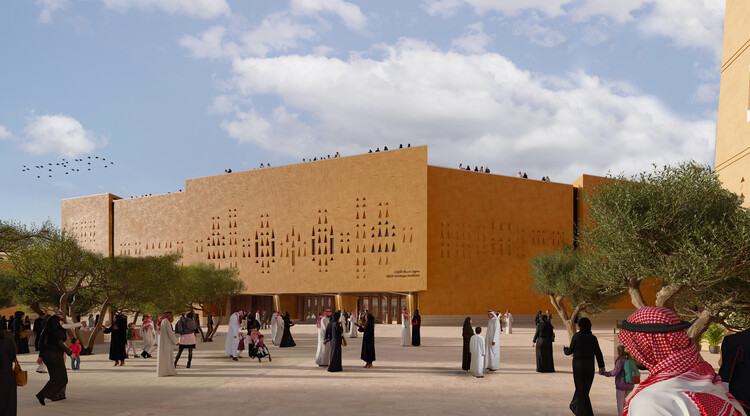
Designed by Zaha Hadid Architects, construction works for the Asaan Museum have recently begun. Located in the historic At-Turaif district of Diriyah, Saudi Arabia, the Asaan Museum aims to be a new cultural institution designed to preserve and celebrate the nation's heritage. Deriving its name from the Arabic word meaning "inheritance passed down through generations," Asaan underscores its role in connecting past and present. Situated within a site renowned for its mud-brick architecture and centuries-old urban fabric, the museum draws inspiration from traditional Najdi building techniques. Planned to be constructed using locally sourced clay mud-bricks, Asaan Museum will mark Zaha Hadid Architects' first project to employ adobe construction.
During the Time Space Existence exhibition, organized by the European Cultural Centre in Venice, Pritzker Prize-winning architect Alejandro Aravena and his firm ELEMENTAL unveiled a full-scale prototype for a new approach in incremental housing solutions. Titled the USB Core, standing for Basic Services Unit housing prototype, this proposal aims to demonstrate how efficient construction can provide all the essential housing components in a minimal space. The prototype is also the result of a collaboration between the architecture office and concrete manufacturer and researcher Holcim, and is built out of a newly developed type of net-zero concrete mix. It also incorporates fully recycled aggregates, in alignment with circular economy principles. The collaboration aims to demonstrate a more environmentally conscious yet cost-effective way of providing essential services to at-risk communities without harming the planet.
While on site in Venice, ArchDaily's managing editor Maria-Cristina Florian had the chance to sit down with Alejandro Aravena and discuss the implications of this collaboration, the urgent need for housing, and the role of the architect as the coordinator of a process involving many actors.
As architecture navigates a rapidly changing world shaped by ecological urgency, social transformation, and technological acceleration, the notion of intelligence is shifting. No longer confined to individual cognition or artificial computation, intelligence can emerge from cultural memory, collective practices, and adaptive systems. In this broader sense, architecture becomes a field of convergence, where natural, artificial, and social intelligences intersect to offer new ways of designing and building.
Vernacular traditions embed generations of environmental knowledge, often transmitted through materials, construction techniques, and spatial logics finely tuned to local conditions; participatory platforms expand decision-making to wider communities to take part in shaping their environments, redistributing agency in the design process; and computational processes simulate and respond to complex data in real time bringing the capacity to analyse, simulate, and respond to complex variables — whether environmental, social, or behavioural — offering new forms of adaptability.
Material intelligence refers to how materials perform, adapt, and interact with ecological and cultural systems. It considers how stone, steel, or timber respond to intertangled forces, how those materials are sourced and assembled, and how they persist after demolition. Designers are centering material intelligence in constructing our cities in a generation of environmental uncertainty and strained supply chains.
The Mies Crown Hall Americas Prize (MCHAP) has just announced the winners of the fifth MCHAP Americas Prize award: Thaden School, designed by EskewDumezRipple, Marlon Blackwell Architects, and Andropogon Associates. Located in Bentonville, Arkansas, on a 30-acre site, the campus explores the relationship between architecture, landscape, and community within the educational context. The announcement was made after a daylong celebration at S.R. Crown Hall on the Illinois Institute of Technology (IIT) campus. The event featured Masterclass presentations by students from IIT and regional universities, along with a roundtable discussion with the finalists and jury during the MCHAP Symposium.
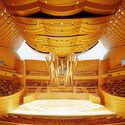
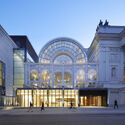
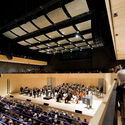
Theaters, concert halls, and opera houses are more than just venues — they are meticulously orchestrated environments where architecture, technology, and human emotion converge. Unlike conventional buildings, these spaces must accommodate a dynamic interplay between acoustics, sightlines, stage mechanics, and audience engagement, all while maintaining an architectural identity that resonates with performers and spectators alike. Whether it is the immersive embrace of a vineyard-style concert hall or the grandeur of a proscenium theater, every design decision shapes how performances are experienced and remembered.
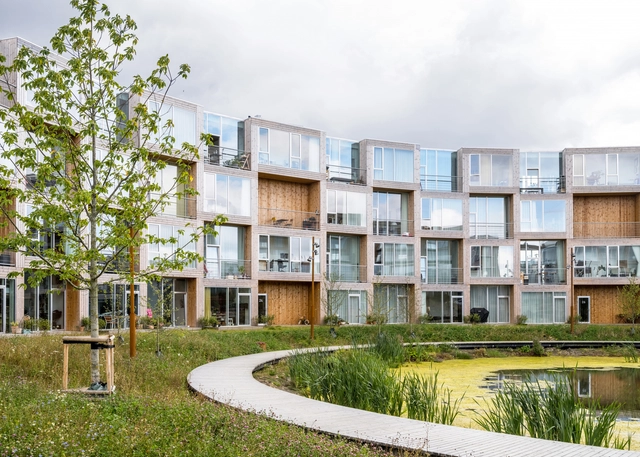
At the dawn of Modernism, in the fervent search for innovative, efficient, and cost-effective building systems, the idea of modular construction offered the promise of exactly that: an industrialized system comprised of ready-to-assemble elements, easily configured, cost-effective, and quality-controlled. While the idea did not gain as much traction as was initially expected, it has remained an attractive premise for architects and designers. Now, new developments in the field have led to a renewed interest in the matter, as modular housing emerges as an effective measure in various fields, from affordable housing to emergency shelters, or even as platforms for interdisciplinary collaboration, participation, and co-design. The following article explores this promise of accessibility, creativity, and affordability that has become an integral part of the debate around modular architecture.
The 2025 iteration of the Time Space Existence exhibition is set to attract audiences from May 10 to November 23. Organized by the European Cultural Centre (ECC) in Venice's renowned venues—Palazzo Bembo, Palazzo Mora, and Marinaressa Gardens—this seventh edition brings together a diverse cohort of 207 architects, designers, artists, and researchers from over 52 countries. All contributions are curated under the theme of "Repair, Regenerate, and Reuse" as an exploration of architecture's capacity to engage with critical environmental, social, and cultural challenges. Highlights of the Special Projects section include ArchDaily's inaugural exhibition, presenting six architecture offices previously recognized as Best New Practices as emerging voices in the field of architectural innovations.
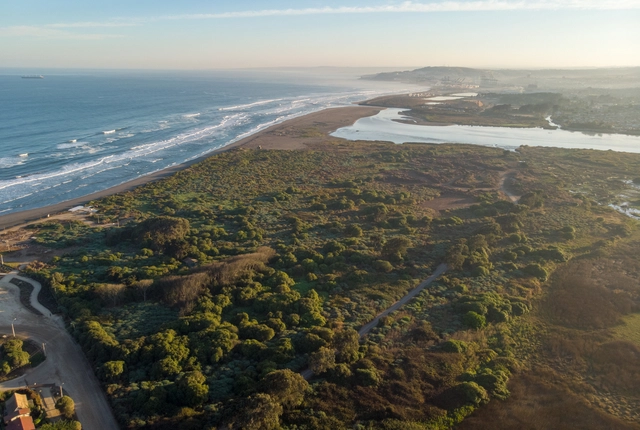
Santuario de la Naturaleza Humedal Río Maipo.. Image Courtesy of Fundación Cosmos
On Earth Day 2025, observed annually on April 22, we are once again reminded of the urgent environmental and sustainability challenges that face our planet—challenges that continue to evolve alongside global economic, political, and cultural shifts. The building and construction industry remains one of the most critical sectors in the effort to manage and reduce global carbon emissions. This year, these issues are being addressed through increasingly diverse lenses, calling for more holistic and integrated approaches. It's vital that we view sustainability not as a one-size-fits-all solution, but as a multi-scalar effort—one that spans from large-scale urban development and strategic planning, to the advancement of sustainable materials, and even to temporary, thought-provoking interventions like exhibitions and installations. In doing so, we reaffirm our commitment to reducing our collective carbon footprint, while shaping a built environment that promotes human well-being and planetary health.
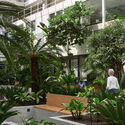
The term "biophilia" understandably conjures images of buildings engulfed by vegetation and integrated into natural landscapes. In modern architectural discourse, the concept has come to be associated with the incorporation of greenery into built environments, yet such applications represent only a sliver of biophilic design's true scope. Inarguably, nature plays a central role in biophilic design. However, its influence stretches to often-overlooked strategies that involve spatial configuration and environmental patterning. "Invisible" biophilia frequently leads to positive health outcomes for occupants, working impactfully beneath the surface.