1. ArchDaily
  2. SUMMARY

SUMMARY: The Latest Architecture and News

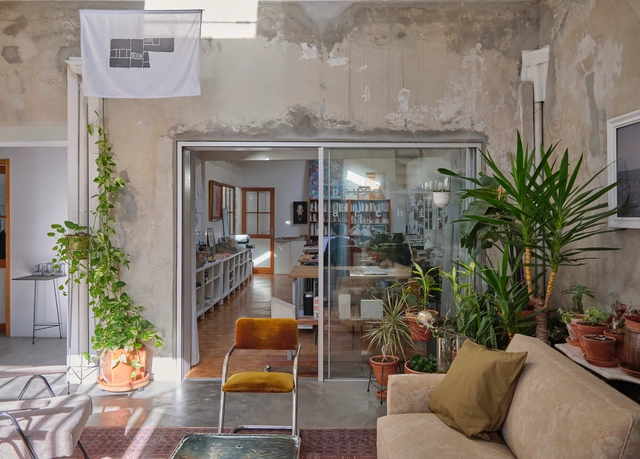
Architecture Offices in Porto Through the Lens of Marc Goodwin

Subscriber Access | 

Porto's architectural legacy has long been shaped by the weight of history and the clarity of form. From the work of Álvaro Siza to the dense network of studios emerging from the city's schools, Porto offers a unique blend of continuity and reinvention. Here, architecture is not only a matter of design but often one of endurance — of working within constraints, of drawing with precision, and of navigating a built environment marked by permanence and resistance to spectacle.

Yet within this persistent context, a new generation of architects has been reshaping the field with quiet determination. Often formed in shared spaces, these practices balance autonomy with collaboration and meticulous detailing with broader urban concerns. Their studios tend to reflect this ethos: modest in scale, defined by adaptive reuse, and rooted in the material reality of the city. In these workspaces, architecture unfolds as a process — sometimes speculative, sometimes grounded — but always reflective of a practice that is deeply local and increasingly global.
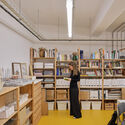
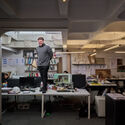
Architecture Offices in Porto Through the Lens of Marc Goodwin - Image 1 of 4Architecture Offices in Porto Through the Lens of Marc Goodwin - Image 2 of 4Architecture Offices in Porto Through the Lens of Marc Goodwin - Image 3 of 4Architecture Offices in Porto Through the Lens of Marc Goodwin - Image 4 of 4Architecture Offices in Porto Through the Lens of Marc Goodwin - More Images+ 29

"Traditional Construction Is Doomed To Disappear:" Interview With the Portuguese Office Summary

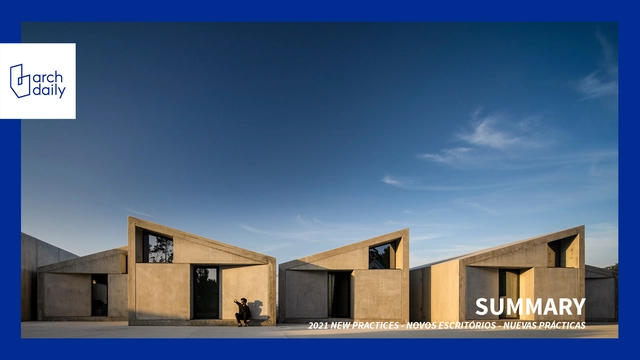
Contemporary challenges and developments in technology inevitably trigger changes in the way we design and build our cities. SUMMARY, one of ArchDaily's Best New Practices of 2021, is a Portuguese architecture studio focused on the development of prefabricated and modular building systems. Striking a balance between pragmatism and experimentalism, the firm develops prefabricated solutions in order to respond to a driving challenge of contemporary architecture—to speed up and simplify the construction process. Founded in 2015 by the architect Samuel Gonçalves, a graduate of the School of Architecture of the University of Porto, the studio has presented at prominent events such as the 2016 Venice Biennale. We talked with Samuel about the firm's practical experience in prefabrication and modulation, as well as their experiments and forays into research.

"Traditional Construction Is Doomed To Disappear:" Interview With the Portuguese Office Summary - Image 1 of 4"Traditional Construction Is Doomed To Disappear:" Interview With the Portuguese Office Summary - Image 2 of 4"Traditional Construction Is Doomed To Disappear:" Interview With the Portuguese Office Summary - Image 3 of 4"Traditional Construction Is Doomed To Disappear:" Interview With the Portuguese Office Summary - Image 4 of 4Traditional Construction Is Doomed To Disappear: Interview With the Portuguese Office Summary - More Images+ 19

ArchDaily Selects the Best New Practices of 2021

As our world evolves at an unprecedented pace, the challenges that come with it are becoming more and more complex. The questions faced by the cities and networks of our global world, the physical and virtual environments where our evolution takes place, are making architecture more relevant than ever. 

The issues of the built environment are no longer exclusive to the incumbents who build and design it and have become transversal questions in our society. From the citizens who question the quality of their public spaces to the self-trained builder erecting a tiny house in the woods, to the homeowners using an app to codesign their interiors during lockdown, we want to have a saying and we want to take action. Why does architecture have to be so uncertain, so distant? 

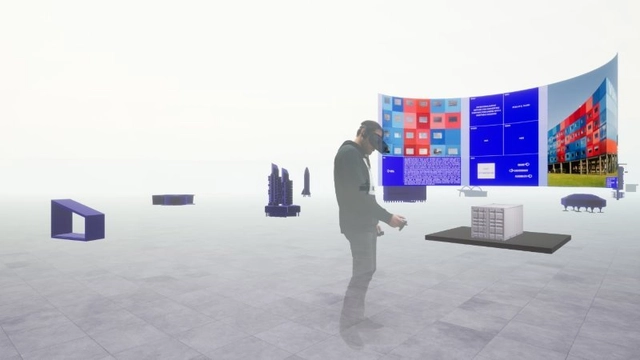
The Reasons Offsite - a Virtual Exhibition on Prefab and Modular Architecture

The project presents a collection of buildings and building systems significant in the historical evolution of modular and prefabricated architecture. The contents are shown in a virtual reality environment, through VR headset kits, which transport the audience to a 20x20m virtual space filled with panels and architectural models.

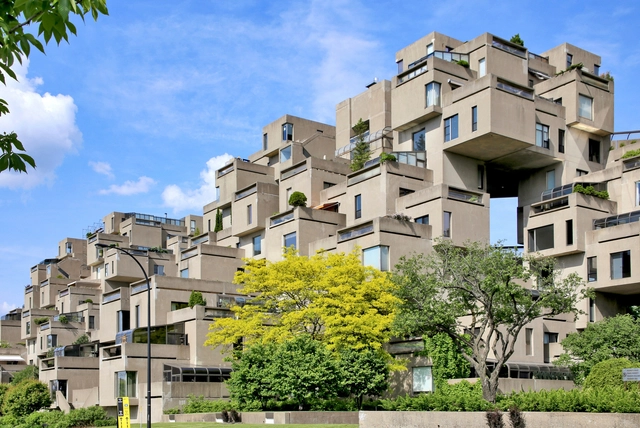
A History of Concrete Molds, From Thomas Edison's Failed Cement Company to "Habitat 67"

Subscriber Access | 

The use of concrete in construction is probably one of the main trademarks of 20th century architecture. Concrete is composed of a combination of materials which when mixed with water solidify into the shape of the container where it is poured in. In this sense, it is the container or the ‘moulds’ who rule the outcome. The reuse of molds for casting concrete is a technique used to replicate and control the production of concrete elements or buildings. Architects and designers have used/created diverse types of molds and casting techniques to explore the limits of the material.

SUMMARY Presents a Concrete Installation at the 2016 Venice Biennale

Text description from the architects. At the 15th edition of the Venice Biennale, Alejandro Aravena invited us to look at new fields of action, projects that intend to improve life quality and stories of success that are worth getting to know. Thus, Samuel Gonçalves, founder of the SUMMARY studio, the youngest studio invited, was selected to present his work “infrastructure-structure-architecture” with the purpose of showing the concept behind his project Gomos System.

How To Build a 1,000-Square-Meter Building in Just a Few Months

After the Gomos#1 prototype and the exhibition at the Venice Biennale, SUMMARY studio unveils a new project using its modular building system.