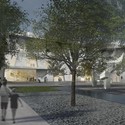
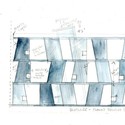
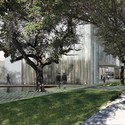
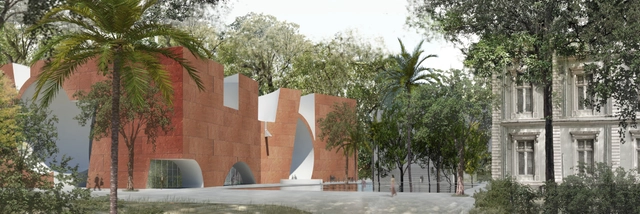
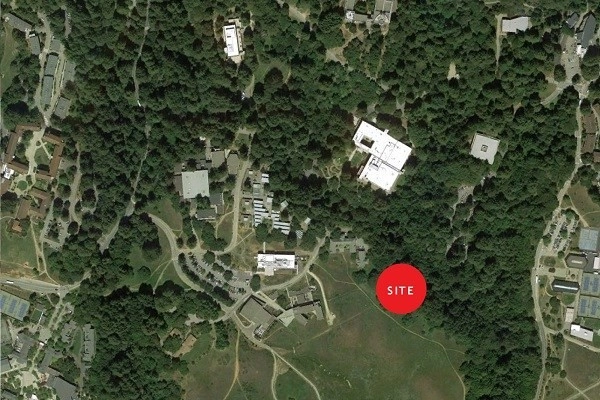
The Fayez S. Sarofim Campus. Image Courtesy of Steven Holl Architects
The Museum of Fine Arts, Houston (MFAH) has released plans for an ambitious $450 million expansion that will transform it into one of the largest art campuses in the US. The 14-acre masterplan will include three new buildings - one by Texas-based Lake|Flato Architects and two others by museum aficionado Steven Holl Architects - connected by a pedestrianized landscape of reflecting pools and gardens.
The first scheduled to break ground (this year) is the Steven Holl-designed, 80,000-square-foot new home for the Glassell School of Art. The L-shaped, pre-cast concrete structure will, as MFAH describes, pride itself as an extension of the campus landscape, featuring a stepped amphitheater that leads up to a walkable, trellised roof garden.
“People often ask me what Cool Spaces is all about. And I never can answer without giving a bit of background,” says host Stephen Chung. “You see, it really begins over seven years ago, during the recession, which decimated the architecture profession. In a four-year span, approximately 30% of all architecture jobs in the U.S. were lost — including my own. This time away from practice allowed me to reflect on the profession and its problems and to think about what role I might play in bringing about some positive change."
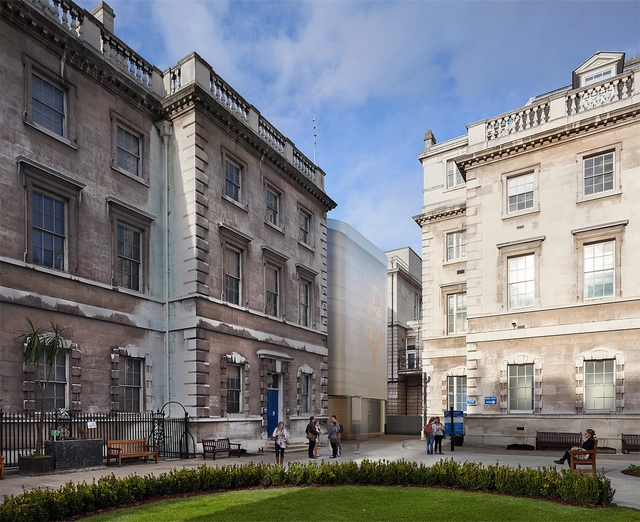
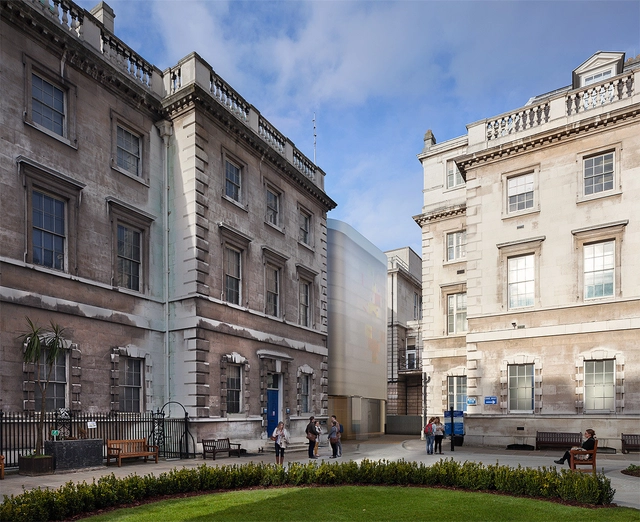
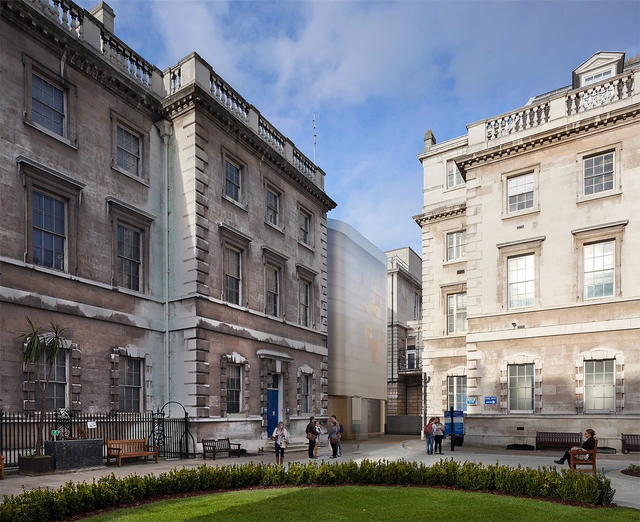
A legal challenge against Steven Holl's design for the new Maggie's Centre at St Bart's Hospital in London has been dropped, after Holl and Maggie's agreed to change the design. The challenge was brought by the Friends of the Great Hall, a group that has been campaigning against Holl's design and arguing that it would have a detrimental effect on the adjacent Great Hall designed by James Gibb in the 18th century.
Steven Holl Architects has been selected to design a new extension to one of India’s oldest museums, the Mumbai City Museum, also known as the Dr. Bhau Daji Lad Museum. Selected over OMA, Studio Mumbai Architecture, Zaha Hadid and four others, Holl is now the first architect ever to be chosen through an international competition to design a public building in Mumbai.
Continue reading to learn more about Holl’s winning design.
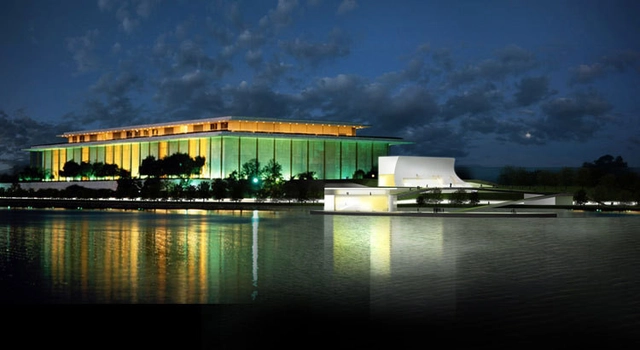
Almost 50 years to the day after President Lyndon B Johnson broke ground on Edward Durell Stone's design for the John F Kennedy Center for the Performing Arts in Washington DC, today Vice President Joe Biden will do the same for Steven Holl Architects' design of the Kennedy Center Expansion, a largely below-ground addition that will add an extra 60,000 square feet to the Center.
The first film takes the viewers on a "poetic climb" up and through the building's social circuit, which "purposefully encourages inter-disciplinary activity, with the hope to inspire positive energy for the future of art." The second film unpacks the design of the Reid Building in a conversation with design architects Steven Holl and Chris McVoy.
Steven Holl's designs for a Maggie's Centre at St Bart's Hospital in London have finally been approved, after a tense debate among the City of London Planning Committee which culminated in a vote of 11 to 10 in favour of the design. The approval puts an end to a year of controversy, after Holl's first attempt failed to gain planning (the first time a Maggie's Centre has ever been declined permission) and a protest group commissioned a rival scheme by Hopkins Architects which gained planning permission in April.
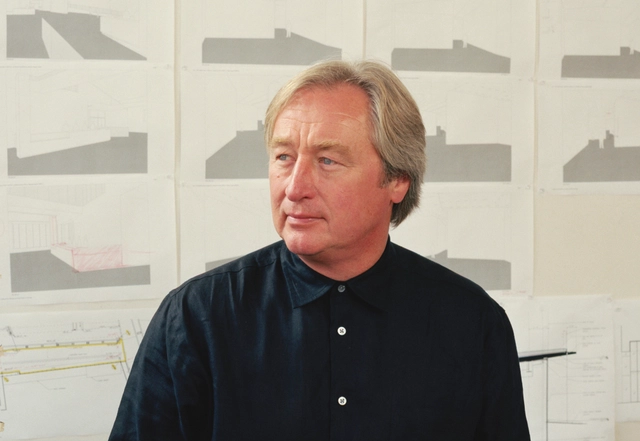
The Japan Art Association (JAA) has named American architect Steven Holl as the 2014 Praemium Imperiale Laureate for Architecture. Holl will be honored at a ceremony in Tokyo on October 15th. The jury's citation states that Holl's "works are internationally highly regarded, primarily as a result of his philosophy regarding the unification of the “experience” of space, as depicted by color and light, with the history and culture of each site of construction."
To determine the finalists, the five jury members - Francisco Liernur, Sarah Whiting, Wiel Arets, Dominique Perrault, and Kenneth Frampton - spent the last twelve days visiting projects, speaking with the architects, users and owners of the spaces, and entering into intense debate among each other.
As jury member Dominique Perrault noted, “There’s a lot of means by which to evaluate projects - models, drawings, images - but we took all opportunities to test the quality of the architecture. In the end, only by visiting can you sense the ‘touch of god’ - the presence of the building itself in the context.”
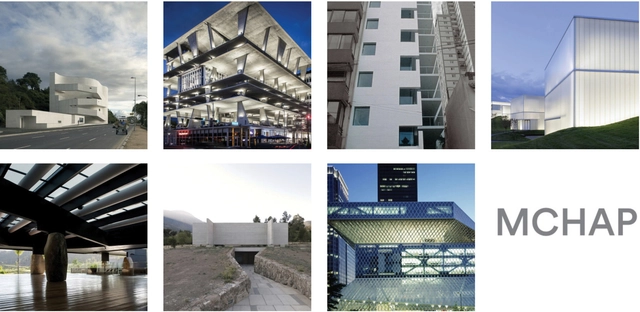
The resulting finalists show tremendous variety - in terms of scale, place, typology, program, materials, etc. - making the task of choosing a winner all the more challenging. See all seven finalists, as well as a video of Kenneth Frampton discussing the selection process, after the break.
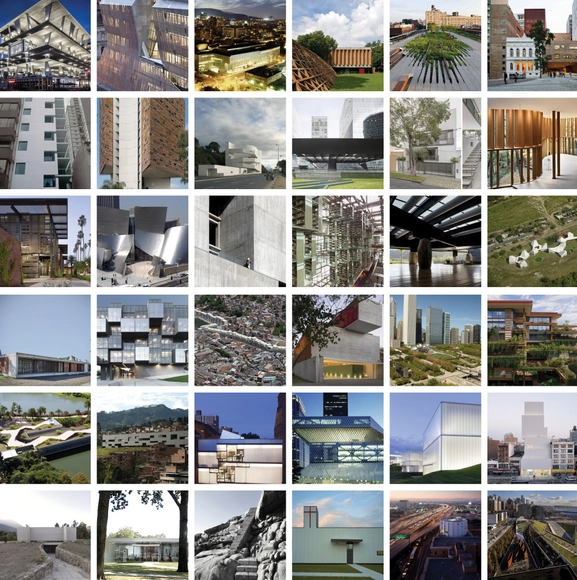
Wiel Arets, Dean of the College of Architecture at Illinois Institute of Technology (IIT) and Dirk Denison, Director of the Mies Crown Hall Americas Prize (MCHAP), have announced the inaugural MCHAP shortlist – 36 “Outstanding Projects” selected from the 225 MCHAP nominees.
“The rich diversity of these built works is a testament to the creative energy at work in the Americas today,” said Arets. “When viewed alongside the innovative work by the MCHAP.emerge finalists and winner, Poli House by Mauricio Pezo and Sofia von Ellrichshausen which we honored in May, we see the evolution of a distinctly American conversation about creating livable space.” See all 36 winners after the break.
Steven Holl's design for Maggie's Centre St Bart's. Image Courtesy of Steven Holl Architects
Michael Hopkins has added his thoughts to the row over Steven Holl's plans for the New Maggie's Centre at St Bart's Hospital in London, with a letter to London City Planners saying that the design is in the wrong place and would ruin the setting of the 18th Century Great Hall. Hopkins, whose rival scheme received planning permission last month, says that the construction of the Maggie's Centre represented a "once-in-a-lifetime opportunity" to restore the great hall to its original design which was only met by his plans to build the Maggie's centre in a different part of the St Bart's site.
A rival to Steven Holl Architects' design for the Maggie's Centre at St Barts Hospital in London has received planning permission. The alternative scheme was commissioned by a group called “Friends of the Great Hall and Archive”, who believe the proposal by Steven Holl Architects would threaten the 18th century, Grade I* listed Great Hall. The newly approved scheme, designed by Hopkins Architects, proposes a different site for the new cancer care centre.
After their initial scheme was rejected, Steven Holl Architects' revised design was submitted for planning approval last week, with a decision expected in the summer.
UPDATE: Three teams have been selected to move forward in the competition: Allied Works Architecture (Portland/New York), Tod Williams Billie Tsien Architects (New York), and the team of Patkau Architects (Vancouver, B.C.) and Fong & Chan Architects (San Francisco). The finalists will present their proposals April 3 and a winner will be announced shortly after.
Seven high-profile teams have been shortlisted to design a new research, museum and performing arts center for the University of California, Santa Cruz (UCSC). Planned for a stunning site overlooking the Pacific Ocean, the $32 million project is intended to be “an innovative educational experiment” that will “blur the lines between disciplines to beautiful effect.” The shortlist ranges from Steven Holl to Tod Williams Billies Tsien. The complete list of competitors, after the break.
Steven Holl Architects has shared with us an impressive gallery of images of their recent project, Nanjing’s Sifang Art Museum. Rising above the lush landscape of the Pearl Spring, the new museum was designed as a physical manifestation of the parallel perspective, a technique prevalent in early Chinese paintings. From a subtly distorted courtyard with no vanishing points to an upper level gallery with calculated views and pristine light, the experience through the Sifang Art Museum is unlike any other.
Steven Holl has, again, teamed up with Spirit of Space to produce two short films on the recently completed Sifang Art Museum. In the first video (above) Holl explains the project’s inspiration - the mysteries of parallel perspective seen in early Chinese paintings - and how the design subtly distorts any concept of a vanishing point at the ground level yet contrasts this notion in the upper galleries by framing the distant view of Nanjing. In the second video (after the break), Spirit of Space allows you to experience this space by revealing it from all perspectives and scales.
In this article originally published by Metropolis Magazine as "Urban Hopes, Urban Dreams", Samuel Medina reviews a new book on the work of Steven Holl in China. Focusing on five major projects, the book places Holl's work in the wider context of his urbanistic influences - including ideas from his own early paper architecture that are just now resurfacing.
Steven Holl is the rare architect whose concepts are equally known as his buildings. Chalk that up to Holl’s prolific output, in both buildings and monographs, and his knack for branding his ideas. Urban Hopes: Made in China (Lars Müller, 2014), a condensed reader on Holl's latest work in China, is the latest in a stream of small books that have continually repackaged the architect's growing body of work.
Anchoring and Intertwining appeared in 1996 and expounded on architectural themes and spatial notions only partially evinced by his work up until that time. In both, the buildings were few and far between, scattered between pages imprinted with “paper architecture,” the primary outlet for Holl’s creative energies in the prior decades since his move to New York in 1976. These and more titles were followed up by Parallax in 2000, a blend of philosophical, scientific, and poetic references that invest the architecture with the aura of the Gesamtkunstwerk. Holl’s idea of “porosity” made its debut here, if prematurely, where it was applied rather literally to Simmons Hall at MIT and its sponge-like facade. It wasn’t until a few years later, when the architect first got his feet wet in China, that the concept would be baptised as a core tenet of 21st-century urban design. 2009’s Urbanisms advances as much, while further recapitulating the big ideas of the previous book installments.
Read on after the break for the review of Urban Hopes
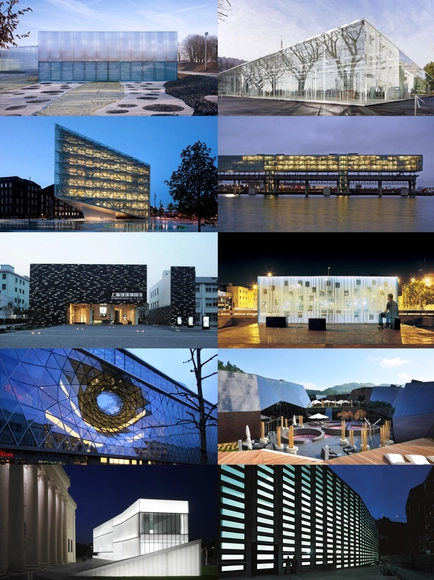
To celebrate the launch of ArchDaily Materials, our new product catalog, we've rounded up 10 awesome projects from around the world that were inspired by one material: glass. Check out the projects after the break...