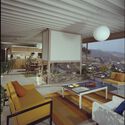
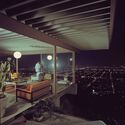
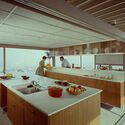
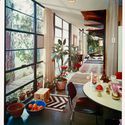
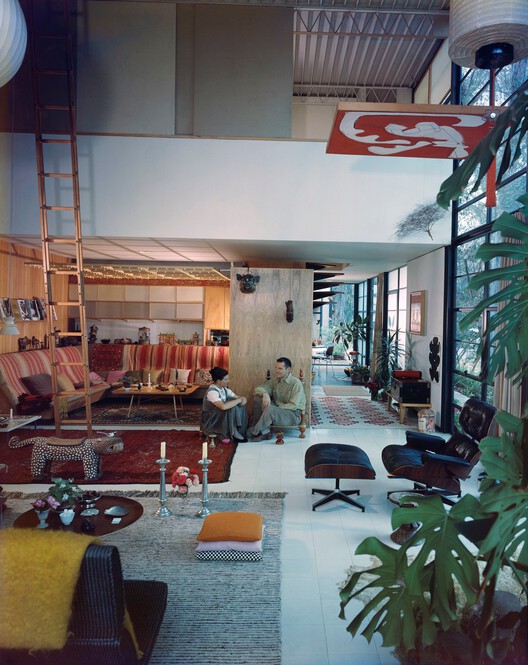
Sitting on low benches, casually talking, dressed in comfortable clothes, and surrounded by books, design objects, and works of art, Charles and Ray Eames appear in one of the most emblematic images of postwar modern domesticity in the United States. The house does not appear as an explicit architectural manifesto, but rather as an inhabited, appropriated, everyday space. Still, nearly everything in that scene functions as the condensation of a carefully constructed ideal: modern informality, the integration between architecture and daily life with the coexistence of industrial production. The photograph projects a way of living more than it represents a residence. And perhaps that was, from the very beginning, the central ambition behind the Case Study Houses.
Vana Vasa Resort by MJ Kanny Architect, Steel Architectural Awards ASEAN 2024 Winner. Image Courtesy of NS BlueScope
The Steel Architectural Awards ASEAN 2026 is a regional architectural awards program presented by NS BlueScope to recognize built projects that demonstrate architectural excellence through the use of coated steel solutions. Under the theme Shaping Resilient Futures: Timeless Design with Coated Steel, the program highlights projects across Indonesia, Malaysia, Thailand, and Vietnam, progressing from the Country Awards to ASEAN-level recognition. This article explains how the two-stage pathway works, what categories are included, and how projects are assessed through Design Excellence, Innovation, and Sustainability.
How did a material conceived for bridges, factories, and large-scale structures make its way to the living room bench, the apartment bookshelf, the café table? For centuries, metal was associated with labor, machinery, and monumentality—from the exposed structures of 19th-century World’s Fairs to the productive logic of modern industry. Its presence in domestic interiors is not self-evident but rather a cultural achievement: the transformation of an industrial material into an element of everyday, intimate use, in close proximity to the body.
What is architecture? For some, its traditional role is to bring together imagination, technical knowledge, and problem-solving, allowing architects to design and construct while balancing ideas with the means to realize them. From the stone and wood of early buildings to the steel and concrete of the 20th century, each era demanded not only an understanding of form but also of the properties and potential of the materials in use. This grasp of materials has always been a core part of the creative process, though its scope was limited by the know-how and technologies available.
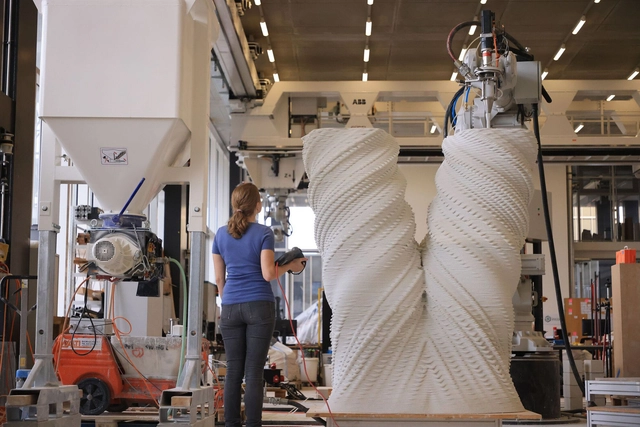
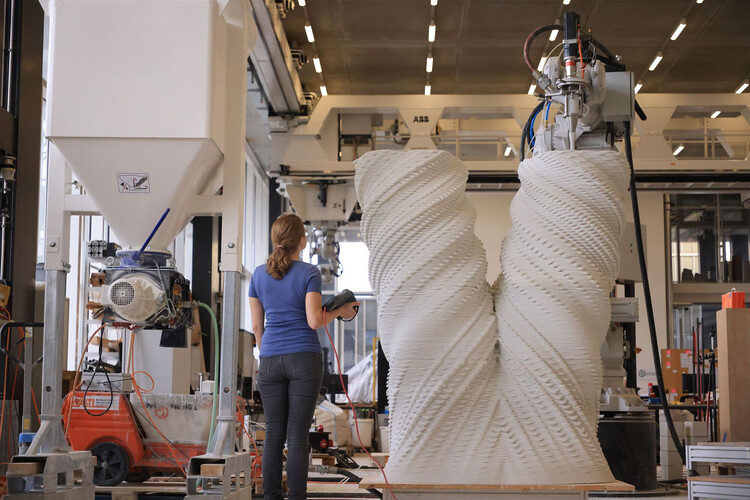
Over time, that balance has begun to shift. Architects have moved from merely using materials to actively designing them, applying scientific principles and experimenting with biological, chemical, and computational processes. This evolution has expanded the possibilities of architecture, intersecting nature, technology, and art, while pushing the role of the architect into a more experimental, science-driven dimension, where the manipulation and creation of materials becomes central to the creative act rather than merely a means to achieve forms or structures.
Spain combines cultural diversity and a long constructive tradition that is directly reflected in its architecture. The country is home to influential schools, a consistent body of theoretical production, an active generation of architects, and a well-established construction industry with strong capabilities in innovation, standardization, and export. Contemporary Spanish architecture is marked by a plurality of approaches and by the articulation between material tradition, technology, and performance.
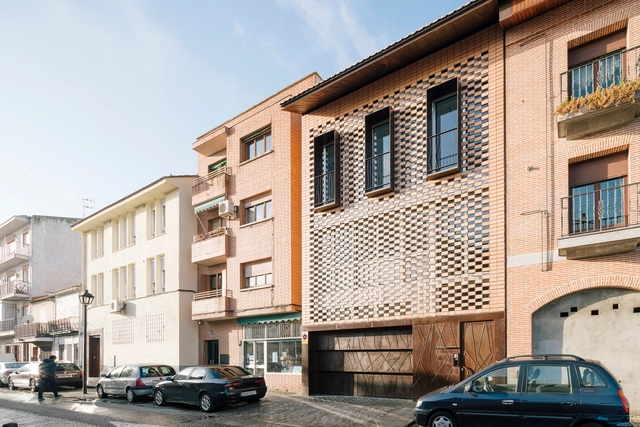
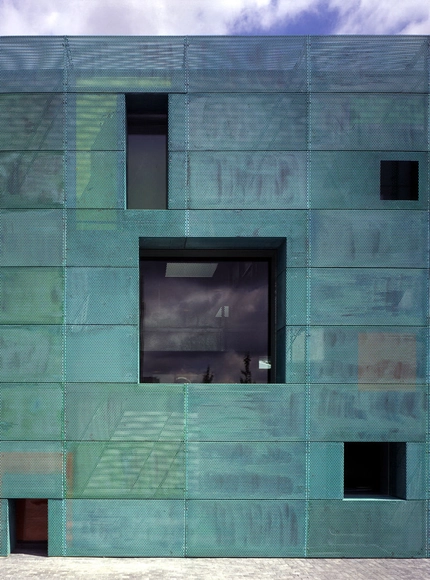
In this context, materials play a central role in the conception, expression, and functionality of buildings. Steel, glass, brick, stone, and wood remain essential inputs in architectural practice, but their role goes far beyond raw matter. Once industrially processed, these materials unfold into a wide range of products and systems such as technical panels, ventilated façades, structural components, extruded cladding, and brise-soleil systems.
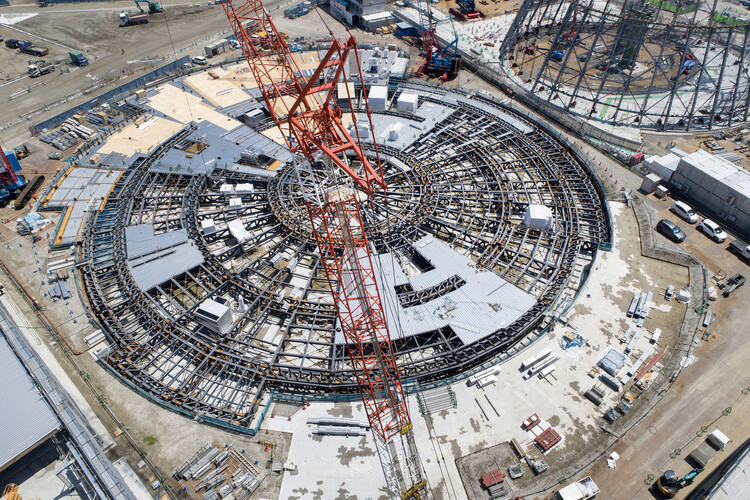
Osaka Expo 2025 Japan Pavilion / Nikken Sekkei. Image Courtesy of Ministry of Economy, Trade and Industry
In certain parts of the world, construction is still dominated by wet systems—concrete, masonry, and cementitious materials that are poured, cured, and fixed in place. While this has long been considered the norm in some south-east Asia countries, such as Singapore, Thailand, Malaysia, and China, in most of these regions, they typically share a common trend where labor is relatively inexpensive. This serves as one of the reasons to make concrete more easily available, as one of the typical downside of concrete is its intensive labour cost - this further differentiates concrete as a cheaper and more efficient material system to be building out of.
However, not enough considerations in the region are given to the sustainability aspect when using these wet construction materials,often overlooking the significant drawbacks of its material lifecycle and the difficulty to recycle it without downcycling - making it one of the more unsustainable materials available to be built out of.
When designing a space—whether at the scale of interiors, architecture, or infrastructure—materiality is a central concern. Beyond aesthetics, materials determine how a project functions, ages, and endures. Some architects—such as Wang Shu and Kengo Kuma—have built their practices on a deep sensitivity to the potential and limits of materials. But even in the most pragmatic sense, the question arises: What lasts? What doesn't? And how do materials change over time? Naturally, materials shape atmosphere and appearance—qualities that often matter most to clients. Yet increasingly, the discourse around materiality has shifted from structural substance to surface treatment. When did we start focusing more on "decorating" our spaces by layering one material over another, rather than relying on the inherent beauty and performance of the building fabric itself?
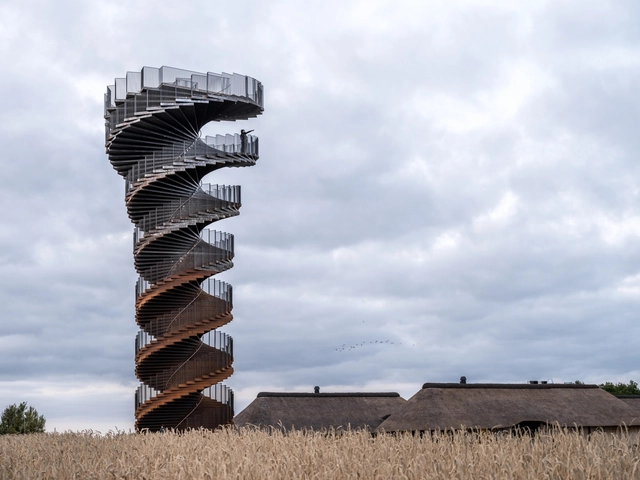
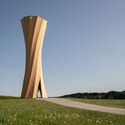
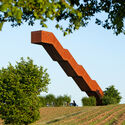
The desire to see the world from above transcends cultures and time — an almost instinctive impulse to seek new horizons, gain perspective, and momentarily step outside everyday life. Observation towers embody that desire: built in forests, mountains, urban parks, or coastal landscapes, they invite us to pause, look closely, and discover the surroundings in a quiet or playful way. These structures offer more than just views; they offer experiences. As we climb their steps or ramps, our bodies take part in a ritual of transition — from ground to sky.
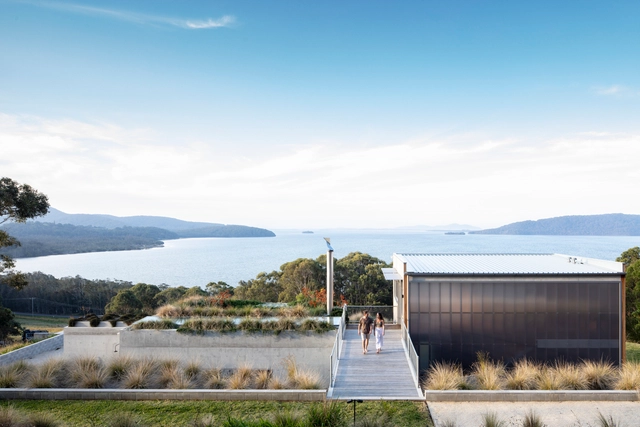
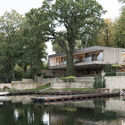
On the shores of serene lakes, where water reflects the harmony between architecture and nature, homes emerge as true retreats. Designed to offer comfort and a deep connection with the surroundings, these residences stand out worldwide for their diverse materials and scales, adapting to different landscapes and lifestyles. From remote woodencabins to sophisticated concrete and glass mansions in urban areas, each project takes advantage of natural resources and the unique characteristics of its setting.
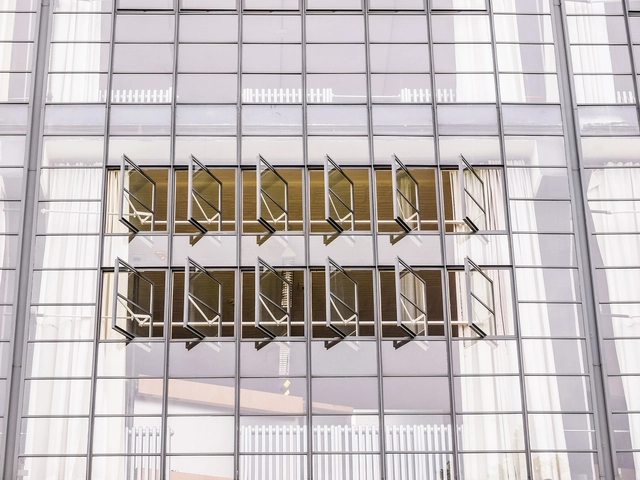
In 2024, a diverse range of topics have been comprehensively explored, some focusing specifically on architectural details and construction systems. These articles provide valuable insights into architecture's often-overlooked technical and functional aspects. By shifting attention away from aesthetics, materials, and spatial massing, they reveal the importance of intricate details and the construction systems underpinning contemporary projects' larger architectural vision.
Executing these seemingly small elements is crucial in shaping how architecture is perceived and experienced. Specifying and drawing a thoughtfully designed detail is not dissimilar to determining the correct screw in building a car—its thread count, material, and length—can dramatically influence not only the success of an architectural design but also the quality of the human experience it fosters. Such details, while often dismissed as mundane and may not be the most recognizable features of stellar projects, profoundly impact the cohesiveness and functionality of architectural projects.
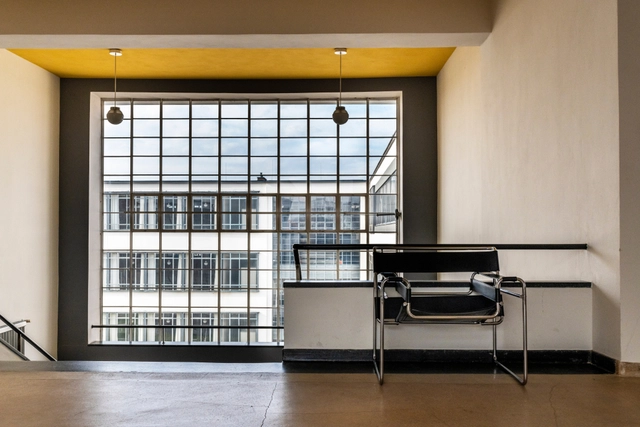
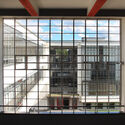
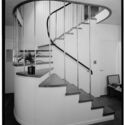
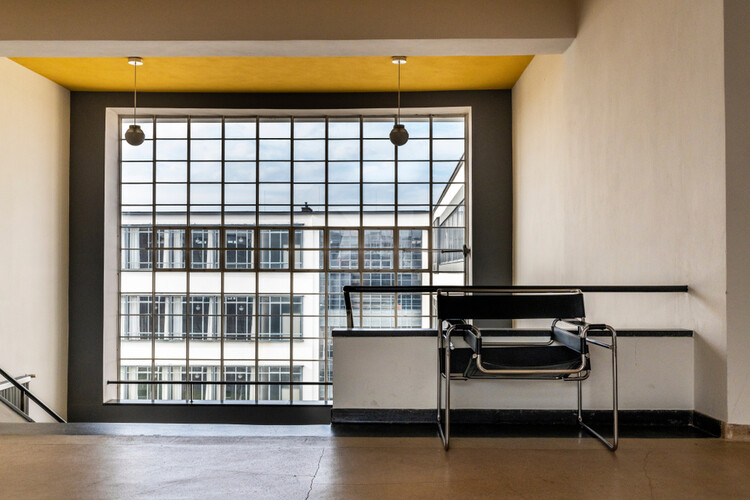
Bauhaus's designs have influenced our contemporary society in obvious and subtle ways. Iconic examples include Marcel Breuer’s Wassily Chair, the B55 Chair, the Bauhaus typeface, and the graphic design principles emphasizing clean lines, primary colors, and geometric shapes. However, the architectural construction details of the Bauhaus movement are much less discussed. While most can readily identify modern or Bauhaus buildings by their geometric forms, functionality, and industrial materials, their architectural details are often overlooked. They not only echo the design language of Breuer’s renowned furniture pieces but also have influenced the much-celebrated architectural glass details of Mies van der Rohe. How were Bauhaus's details executed, and how might they be translated into contemporary details today?
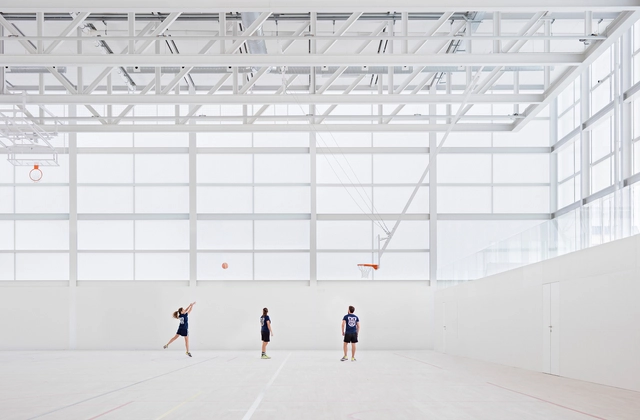
The Roman Colosseum is arguably the most iconic versatile venue in the world. Although this structure was not intended for sporting activities, it hosted various events, from the well-known gladiatorial combats to theatrical performances and the dramatic naumachia (naval battles). This demonstrates that flexible use of space has been relevant since ancient times. Centuries later, in the context of the ever-changing built environment and urban development, sports venues have similarly evolved, becoming outstanding examples of multi-purpose spaces.
These athletic complexes have transformed from highly specialized venues into dynamic, multifunctional structures. Whether hosting major international events such as the Olympic and Paralympic Games or serving as gathering spots for local communities, these spaces strike a delicate balance between addressing the needs of specific sports and maintaining the flexibility to accommodate a range of activities. How do these diverse functions coexist and interconnect? This analysis will explore how sports facilities are configured as flexible hubs for other disciplines and everyday activities.
https://www.archdaily.com/1020243/from-wooden-shells-to-polycarbonate-panels-the-materials-shaping-flexible-sports-spacesEnrique Tovar
It’s now clear that approximately 80% of emissions from landscape architecture projects come from materials. This includes the extraction of natural resources, and their manufacturing, transportation, and construction in parks, plazas, streets, campuses, and neighborhoods. A significant portion of emissions in the built environment can be traced back to two materials: concrete and metal, which includes steel and aluminum.
The challenge lies in the fact that we use a large amount of both materials, they are difficult to replace due to their strength and utility, and improving their environmental impact is a complex process. But progress is being made.
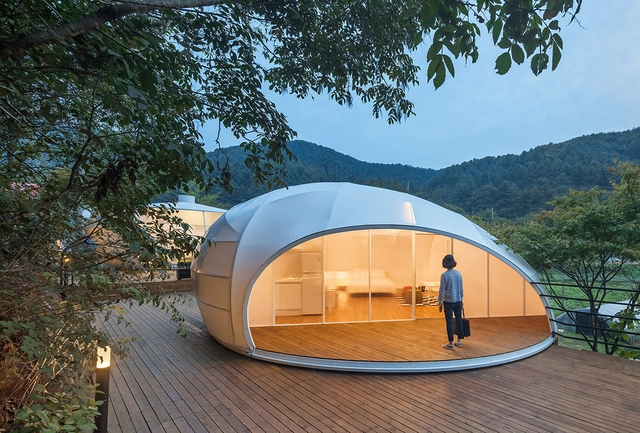
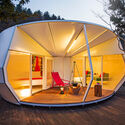
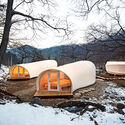
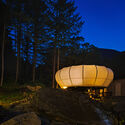
Camping, as defined in dictionaries, involves temporarily staying outdoors, setting up makeshift accommodations, and settling in natural surroundings. In architecture, tents symbolize these aspects, representing a typology that has endured across centuries and cultures, often linked with notions of impermanence and vulnerability.
In light of this common understanding, the term 'glamping' emerged in the early 2000s, blending 'camping' with 'glamour,' suggesting a fusion of camping with luxurious amenities. However, despite its recent popularization, the concept is far from original. Camping has not always been seen as the antithesis of luxury.
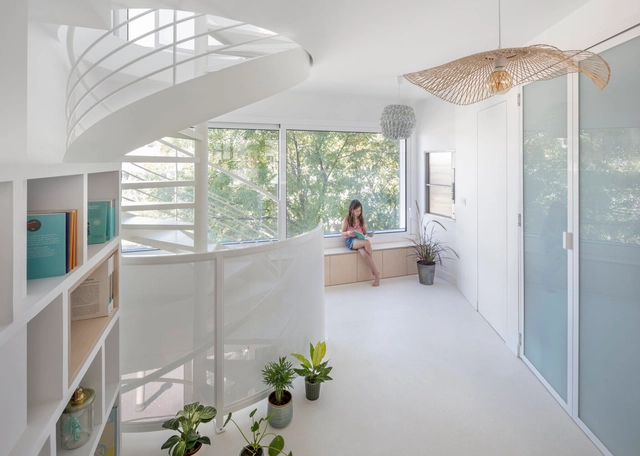
Whether rising to the highest room of the tallest tower in a Disney-esque castle, giving an admirer the chance to confess their love on an apartment buildingfire escape, or connecting a basement or attic room with a decorative period feature, there’s something unavoidably romantic about spiral staircases. But there’s more function behind these coiling forms than just their good looks.
One common-held theory is that spiral staircases were first installed in historic castles as vertical baffles, tiring out enemy infiltrators before they could make it to the top. This is why – it is said – many are set to turn clockwise on the ascent, so attackers have a smaller arc for swinging weapons (mostly held in right hands) than defenders making their descent.
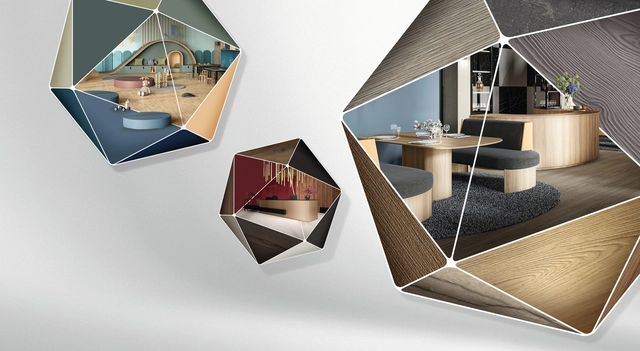
Nowadays, the cycles of change around society and architecture have generated new urban models, emerging technologies, and design trends that underline the need for constant adaptability in all areas. In this context, aspects such as flexibility, reliability, and simplicity emerge as distinctive elements, both in architecture and in the components that constitute it, including materials. This is why lines such as the EGGER Decorative Collection 24+, crafted from wood-derived materials, seek to redefine concepts through a rolling series, updated at most every two years. This dynamic enables a more agile response to new trends, influences, and product innovations that arise in the built environment.
https://www.archdaily.com/1012771/from-wood-stone-steel-and-uni-colors-a-decorative-collection-for-fast-moving-trendsEnrique Tovar
For a small child, understanding the concept of time and its passage is very difficult. As a result, children are often impatient when expecting something or confused when trying to remember something from the past. They live in the present, and learn the notion of time only little by little. But accepting the passage of time, and the reality of aging, is something that plagues us even as adults. The lucrative cosmetic and plastic surgery industries show how humanity seeks to control or deny the passage of time, an urge that has proved to be relentless.
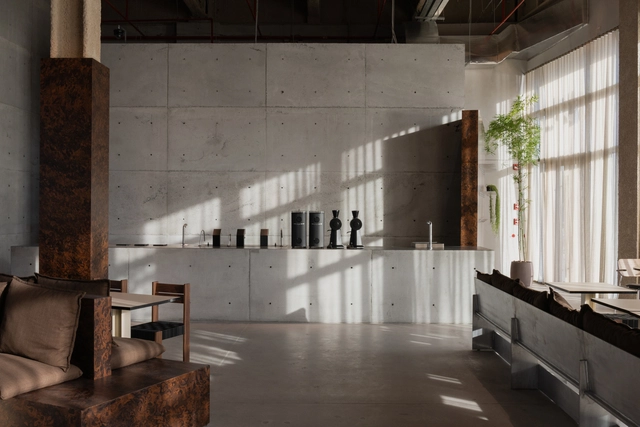
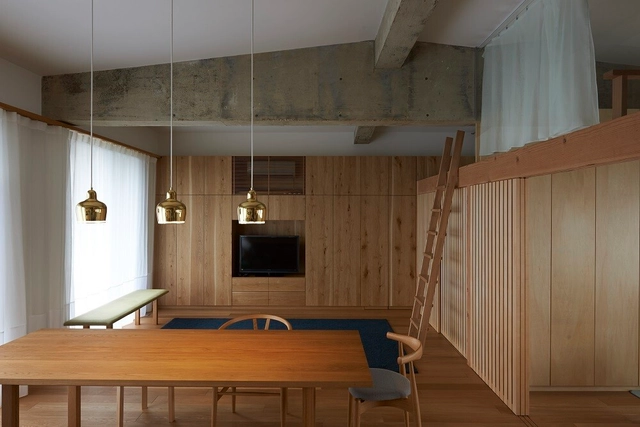
Contemporary Japanese interiors incorporate elements both of tradition and modernity to embody the country's innovative spirit while maintaining a profound respect for its history and cultural heritage. Though traditional materials like wood, paper, and bamboo continue to hold significance, modern Japanese interiors also often feature a fusion of glass, steel, concrete, and metals. The juxtaposition of smoother, sleeker textures and finishes with warmer and more organic ones reflects a dynamic synthesis of old and new, and results in visually striking and functional spaces that honor the essence of the country's design principles.