1. ArchDaily
  2. Standard

Standard: The Latest Architecture and News

The Most Liveable Cities in the World in 2024: Discover Top Quality of Life Locations Globally

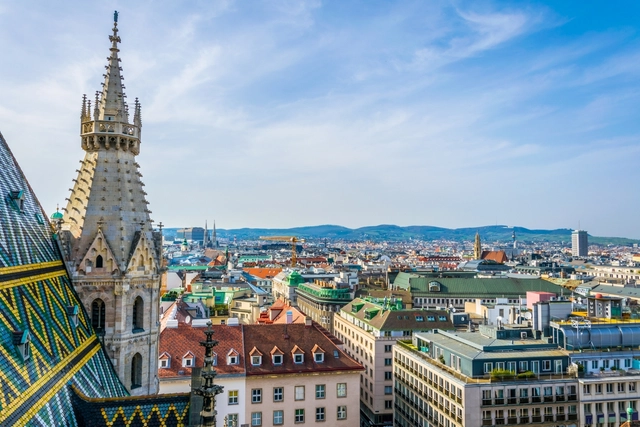
The pursuit of an ideal city has long been a topic of debate among architects and urban planners. In addition to aesthetic identity and cultural heritage, the quality of life in every city represents perhaps the most important marker in this pursuit. This year, the Economist Intelligence Unit (EIU), a sister company of The Economist, has released its Global Liveability Index 2024, highlighting the cities that excel in this ongoing quest. For the third consecutive year, Vienna ranked as the most liveable city in the world. European cities Copenhagen, Zurich, and Geneva also rank high, attributed to their smaller populations, which contribute to lower crime rates and less congestion. In comparison with the 2023 ranking, the numbers for North American and Australian cities have been dragged down by the ongoing housing crisis.

The assessment ranks 173 cities from around the world. Each city is scored based on 30 qualitative and quantitative factors evaluating 5 categories: stability, healthcare, culture and environment, education, and infrastructure. The scores are based on external data points, in-house analysts, and in-city contributors. The category of stability has registered the biggest decline, as protests and armed conflicts increased in incidence. At the bottom of the cist, the city of Damascus, Syria, continues to be ranked as the least liveable city in the survey, followed by Tripoli, Libya, reflecting severe instability.

The Most Liveable Cities in the World in 2024: Discover Top Quality of Life Locations Globally  - Image 1 of 4The Most Liveable Cities in the World in 2024: Discover Top Quality of Life Locations Globally  - Image 2 of 4The Most Liveable Cities in the World in 2024: Discover Top Quality of Life Locations Globally  - Image 3 of 4The Most Liveable Cities in the World in 2024: Discover Top Quality of Life Locations Globally  - Image 4 of 4The Most Liveable Cities in the World in 2024: Discover Top Quality of Life Locations Globally  - More Images+ 8

What is Over-Providing? A Strategy for Resilient Architecture

Subscriber Access | 

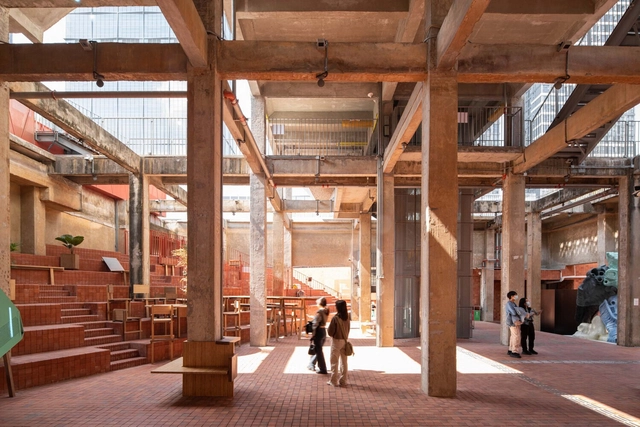
Over-providing traditionally implies offering more than is necessary, often carrying a negative connotation due to the potential for excess and waste. However, could there be scenarios within the built environment where over-providing proves advantageous? The question critically examines how overprovisioning might enhance a building's flexibility and adaptability to diverse and evolving conditions.

The underlying assumption of accurately providing what is needed for a building is that stakeholders—including owners, architects, and designers—can accurately predict and cater to a structure's current and future needs. This assumption, however, is challenging to realize, as societal, economic, and cultural shifts frequently occur in unpredictable ways. In this context, over-providing emerges as a counterintuitive yet potentially beneficial strategy. As buildings and structures inevitably transform, those designed with inherent adaptability reduce the need for costly renovations or complete rebuilds.

What is Over-Providing?  A Strategy for Resilient Architecture - Image 1 of 4What is Over-Providing?  A Strategy for Resilient Architecture - Image 2 of 4What is Over-Providing?  A Strategy for Resilient Architecture - Image 3 of 4What is Over-Providing?  A Strategy for Resilient Architecture - Image 4 of 4What is Over-Providing?  A Strategy for Resilient Architecture - More Images+ 7

Standard Receives Honors for Hidden House

Subscriber Access | 
Standard Receives Honors for Hidden House - Featured Image

Standard, a Los Angeles-based architecture and design practice, received an award from the Los Angeles Business Council (LABC), as winner of the Single Family Housing category at the 40th Annual Los Angeles Architectural Awards for the Hidden House project. The modern single family residence was chosen as an example of local architectural innovation for the home’s eco-friendly construction, which involved incorporating an existing two bedroom cottage into a new, larger structure, without marring the natural context of the home’s expansive and rare 7-acre site.

The Standard Hotel, New York / Polshek Partnership Architects

Subscriber Access | 
The Standard Hotel, New York / Polshek Partnership Architects - Image 1 of 4

A few months ago we had the chance to enjoy the Standard Hotel in downtown Los Angeles for Postopolis! LA. The renovation of an old building was very well done, very good work in terms of details.

And for the Standard Hotel in New York, André Balazs repeats the formula of good design and details, but on a brand new building by Polshek Partnership Architects. The concrete building reminds of Le Corbusier works, standing over The Highline. The integration at the public space level turns this building into more than just another addition to the NY skyline, becoming an urban piece of the Meat Packing district, a detonator of the current renovation of the area.

The 20-story tall building includes 337 rooms, a restaurant (The Standard Grill) and a bar (The Living Room). Interiors were designed by NY based architects Roman and Williams.

Photos of the construction at Plataforma. More photos of the building by Jeff Goldberg at Esto after the break, interiors to come on a future article.

AD Interviews: Standard

Subscriber Access | 

While in LA we had the chance to visit Standard, a small firm doing residential and retail projects. We visited their Tree House, featured earlier on AD, where i was able to see for myself the minimalism found in their works. A simple work, but with lots of well executed details and spaces designed to benefit from the views and the shadow of the tree.

The practice was founded in 1996 by Jeffrey Allsbrook (M Arch USC, studies at the at the Städelschule in Frankurt, Germany and at the Berlage Institute in Amsterdam) and Silvia Kuhle (Architect Technische Universität Darmstadt, Germany, M Arch Columbia University).

Completed projects include residential, retail, educational, office and manufacturing spaces for a diverse clientele of artists, writers, filmmakers, clothing designers, educators and entrepreneurs in California, New York, Las Vegas, Paris and Mexico. While Standard continues to grow, its partners insist upon maintaining a practice that is rigorous and attentive. Direct accessibility and sustained dialogue between clients and the firm’s partners are viewed as essential to project success.

It was a very good talk, and i really liked their point of view on an central aspect of the profession: the clients.