1. ArchDaily
  2. spatial planning

spatial planning: The Latest Architecture and News

7 Unbuilt Houses Shaped by Site, Climate, and Constraints

Subscriber Access | 

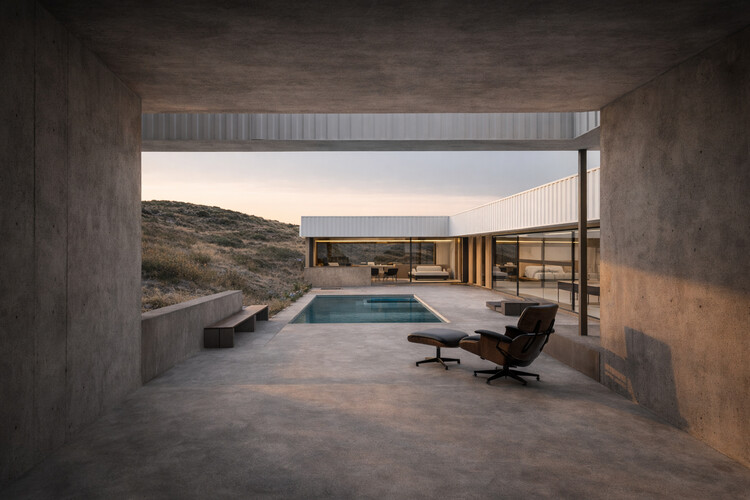
Residential architecture continues to offer a productive ground for unbuilt exploration, revealing how architects respond to site, climate, and constraint at the scale of the domestic. In this Unbuilt edition, submitted by the ArchDaily community, the selected projects bring together a range of proposals that reconsider the house not as an isolated object, but as a spatial system shaped by its environment. These works position architecture as a framework that negotiates between ground, material, and inhabitation, often emerging directly from the conditions of the site.

Across varied geographies, from Kerala and Cartagena to Amman, Tromsø, and Zwolle, the projects demonstrate diverse responses to domestic architecture. They include compact urban dwellings organized through vertical layering, courtyard houses partially embedded within the ground, residences adapted to sloping terrains, and typological transformations shaped by regulatory constraints. Some projects explore linear spatial sequences rooted in traditional proportions, while others organize domestic life around atria or excavated voids that mediate light, ventilation, and privacy. Together, these proposals examine how the house can be structured through section, material, and environmental performance rather than formal expression.

7 Unbuilt Houses Shaped by Site, Climate, and Constraints - Image 6 of 47 Unbuilt Houses Shaped by Site, Climate, and Constraints - Image 10 of 47 Unbuilt Houses Shaped by Site, Climate, and Constraints - Image 28 of 47 Unbuilt Houses Shaped by Site, Climate, and Constraints - Image 36 of 47 Unbuilt Houses Shaped by Site, Climate, and Constraints - More Images+ 42

Setbacks as Courtyards: How Civil Architecture Reimagines the Gulf House in Bahrain

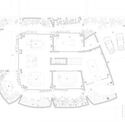
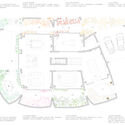
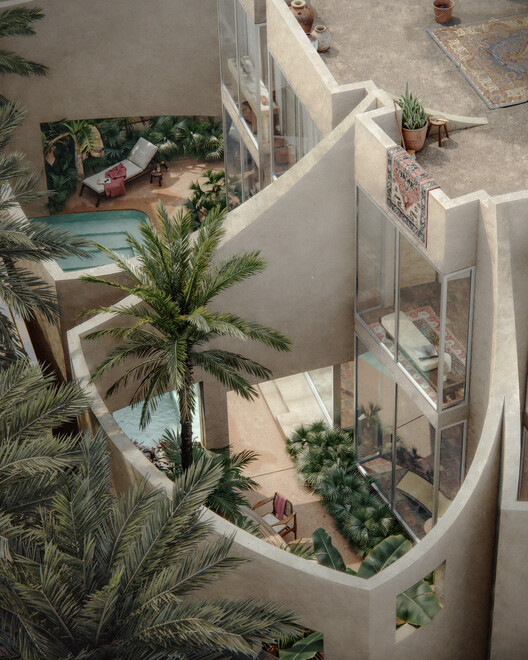
For centuries, domestic architecture throughout the Gulf has been organized around the courtyard. Houses presented thick exterior walls and limited openings to the street, turning inward toward a shaded garden that structured everyday life. This spatial arrangement responded to both climate and culture. The courtyard brought daylight into deep plans, enabled cross-ventilation, and provided a protected outdoor environment within dense urban fabrics. In the House with Seven Gardens, in Diyar Al Muharraq, Bahrain, the Bahrain-based practice Civil Architecture, one of the winners of the ArchDaily 2025 Next Practices Awards, revisits this spatial tradition through the conditions of contemporary suburban housing. Rather than reproducing the courtyard house as a historical model, the project reinterprets its environmental logic within the regulatory frameworks and spatial conditions that shape much of today's urban development in the Gulf.

Setbacks as Courtyards: How Civil Architecture Reimagines the Gulf House in Bahrain - Image 1 of 4Setbacks as Courtyards: How Civil Architecture Reimagines the Gulf House in Bahrain - Image 2 of 4Setbacks as Courtyards: How Civil Architecture Reimagines the Gulf House in Bahrain - Image 3 of 4Setbacks as Courtyards: How Civil Architecture Reimagines the Gulf House in Bahrain - Image 4 of 4Setbacks as Courtyards: How Civil Architecture Reimagines the Gulf House in Bahrain - More Images+ 3

The Second Studio Podcast: Concepts in Architecture Offices

The Second Studio (formerly The Midnight Charette) is an explicit podcast about design, architecture, and the everyday. Hosted by Architects David Lee and Marina Bourderonnet, it features different creative professionals in unscripted conversations that allow for thoughtful takes and personal discussions.

A variety of subjects are covered with honesty and humor: some episodes are interviews, while others are tips for fellow designers, reviews of buildings and other projects, or casual explorations of everyday life and design. The Second Studio is also available on iTunes, Spotify, and YouTube.

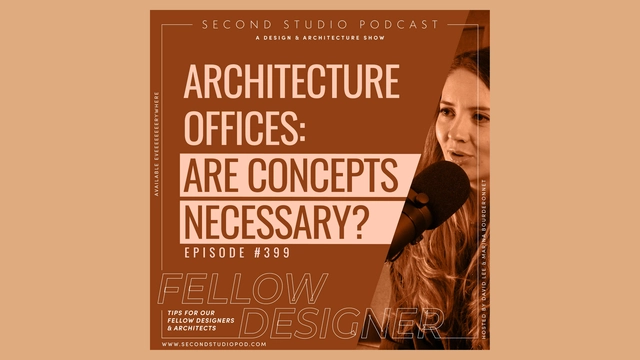
This week David and Marina of FAME Architecture & Design discuss architecture concepts in the office. The two cover the importance of conceptual thinking, the lack of concepts in architecture offices, projects in architecture school vs in practice, the challenges of merging conceptual thinking and technical aspects in practice, and more. Enjoy!

How Can Cities Create Resilience in the Face of Natural Disasters

As the world grapples with the effects of climate change, natural disasters like flooding, and the spread of incontrollable wildfires are increasingly threatening cities and inhabitants. While architecture and urban planning cannot prevent these occurrences, they still possess strategies to minimize the damage associated with these events and help protect the citizens. Unfortunate events over the course of last year, like the earthquake that hit central Turkey and north-west Syria this February or the more recent earthquake in western Afghanistan, the flooding and dam failures in Libya, and the wildfires that devastated the city of Lahaina, Hawaii, demonstrate the urgency of implementing preventative and mitigation measures in addition to creating procedures for emergency intervention. This article explores the strategies and resources available to architects and urban planners to address these challenges in three types of natural disasters: flooding, wildfires, and earthquakes.

How Can Cities Create Resilience in the Face of Natural Disasters - Image 1 of 4How Can Cities Create Resilience in the Face of Natural Disasters - Image 2 of 4How Can Cities Create Resilience in the Face of Natural Disasters - Image 3 of 4How Can Cities Create Resilience in the Face of Natural Disasters - Image 4 of 4How Can Cities Create Resilience in the Face of Natural Disasters - More Images+ 11

The Fractals at the Heart of Indigenous African Architecture

Subscriber Access | 

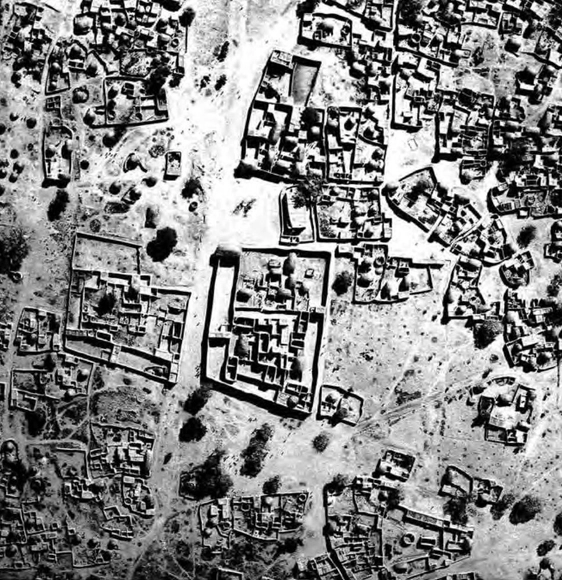
Fractals are complex geometric shapes with fractional dimensional properties. They have emerged as swirling patterns within the frontiers of mathematics, information technology, and computer graphics. Over the last 30 years, these patterns have also become important modeling tools in other fields, including biology, geology, and other natural sciences. However, fractals have existed far beyond the birth of computers, and have been observed by anthropologists in indigenous African societies. One of which is Ron Eglash; an American scientist who presents the evidence of fractals in the architecture, art, textile sculpture, and religion of indigenous African societies. In his book, “African Fractals: Modern Computing and indigenous design”, the fractals in African societies are not simply accidental or intuitive but are design themes that evolve from cultural practices and societal structures.

The Fractals at the Heart of Indigenous African Architecture - Image 1 of 4The Fractals at the Heart of Indigenous African Architecture - Image 2 of 4The Fractals at the Heart of Indigenous African Architecture - Image 3 of 4The Fractals at the Heart of Indigenous African Architecture - Image 4 of 4The Fractals at the Heart of Indigenous African Architecture - More Images+ 2

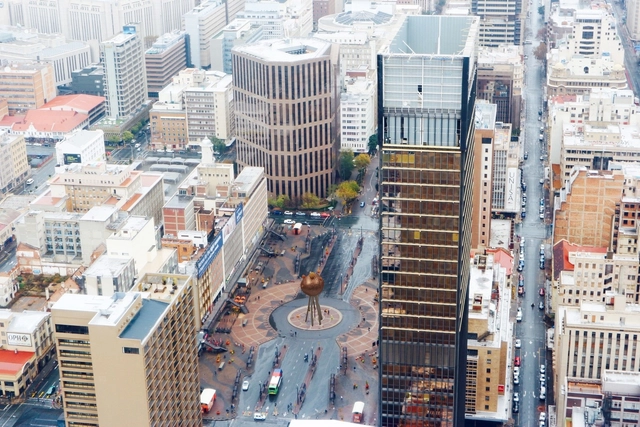
Michelle Mlati's Afrofuturist Approach To Spatial Planning

With an academic background that includes social sciences, curatorship, and architecture, Michelle Mlati's trajectory is an interesting one; more so for the way her current work dabbles in these areas simultaneously.  

Describing herself as an afrofuturist critical spatial designer, Johannesburg-based Mlati’s practice investigates elements of the city, from sustainability through to social dynamics, architecture to aural and visual cultures.