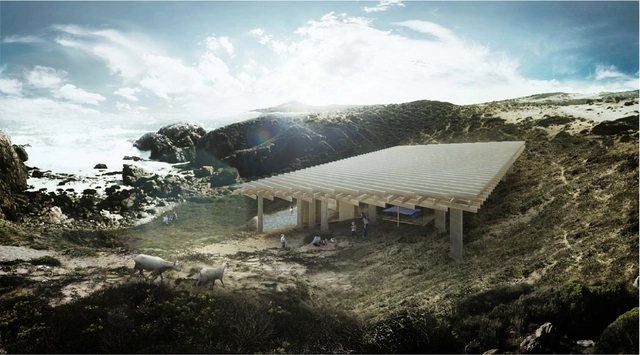
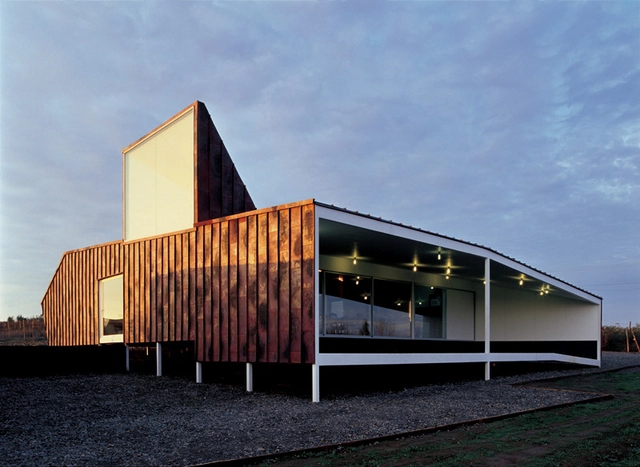
The Solo Houses project has just announced the incorporation of the Venta d'Aubert Winery in Crete, Spain, and the construction of a hotel designed by Chilean architect Smiljan Radic. Solo Hotel will become the centerpiece of the community and a catalyst for tourism and cultural activities around the project.
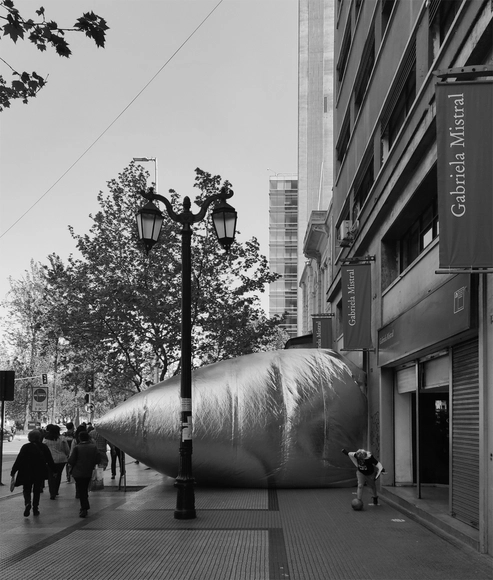
An inflatable and soft body—a silver balloon—scatters towards the sidewalk in the heart of Santiago, Chile. People walk by touching the strange artifact, curiously looking at the object moving over the public space. Behind the pillow, the Gabriela Mistral Gallery disappears.
Chilean architect Smiljan Radic has designed and installed a perfectly transparent dome for Alexander McQueen's Spring / Summer 2022 fashion show earlier this week in London.
The proposal consisted of traveling a modular oak lamella shed to Dubai, originally built in Chile back in the mid-twentieth century. At the time of its official presentation in 2019, the architects defined the project as "a primitive mark on the ground, as nomadic tribes have done for centuries in this now globalized desert [Dubai]. This physical and cultural dimension is necessary to adapt the pavilion as a friendly and austere space."
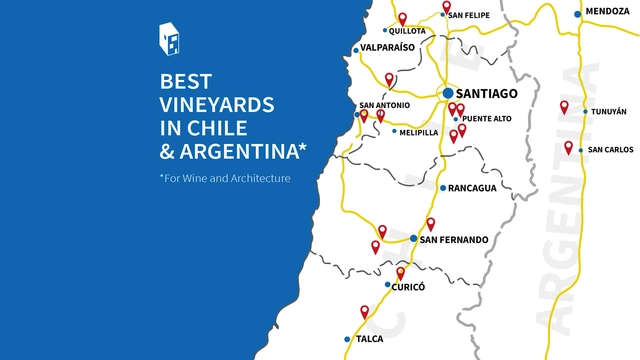
Each year millions of wine enthusiasts travel the globe in search of memorable tasting experiences. And architecture-loving Oenophiles (wine aficionados) are likely to seek vineyards that not only produce outstanding libations, but also those with impressive architecture. With world-famous wines and evergrowing international renown, the vineyards of South America accommodate thousands of wine tourists each year. Chile and Argentina currently sit in the top 10 wine-exporting countries; Chile exported $1.9 billion worth of wine in 2016 and Argentina exported $816.8 million in the same year.
Separated by the Andes, the valleys surrounding Argentina's Mendoza and Chile's central valley (including Elqui, Limarí, Aconcagua, Maipo, Casablanca, Colchagua, Cachapoal, Maule and Curicó valleys) attract a high number of enotourists. The wineries and vineyards featured below have moved away from the traditional image of the historic country house in both aesthetic terms and (sometimes) in the use of materials in the winemaking process. These properties also exist in natural harmony with the surrounding landscape to make the most of sunlight, air circulation and topography for the construction of wine cellars, hotels, tasting rooms, lookouts and viewing points, and research centers. The new and vibrant architectural designs serve as innovation inspiration in their production of the wines as well.
https://www.archdaily.com/881430/best-vineyards-in-chile-and-argentina-for-wine-and-architectureArchDaily Team
There’s no doubt that one of the best things about architecture is its universality. Wherever you come from, whatever you do, however you speak, architecture has somehow touched your life. However, when one unexpectedly has to pronounce a foreign architect’s name... things can get a little tricky. This is especially the case when mispronunciation could end up making you look less knowledgeable than you really are. (If you're really unlucky, it could end up making you look stupid in front of your children and the whole world.)
To help you out, we’ve compiled a list of 22 architects with names that are a little difficult to pronounce, and paired them with a recording in which their names are said impeccably. Listen and repeat as many times as it takes to get it right, and you’ll be prepared for any intellectual architectural conversation that comes your way.
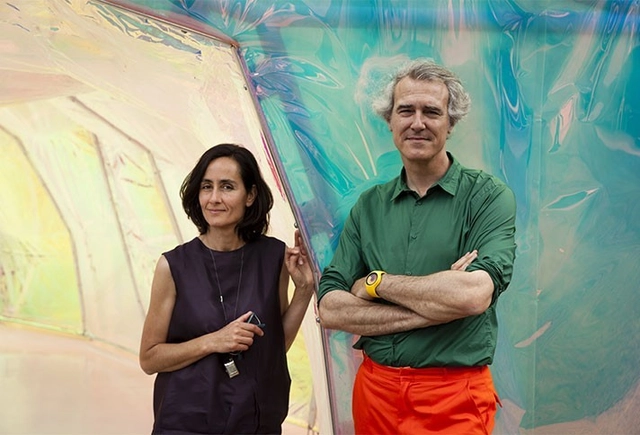
Last month, as part of their Park Nights event series, COS assembled Spanish architects José Selgas and Lucía Cano (SelgasCano) at their new pavilion for the Serpentine Gallery in London's Hyde Park to discuss the concepts behind their design and the history of the Pavilion Commission with Serpentine directors Julia Peyton-Jones and Hans Ulrich Obrist. They were joined by Chilean architect Smiljan Radić, designer of the 2014 pavilion, and Japanese architect Sou Fujimoto, designer of 2013's, in an hour long conversation moderated by Sarah Ichioka.
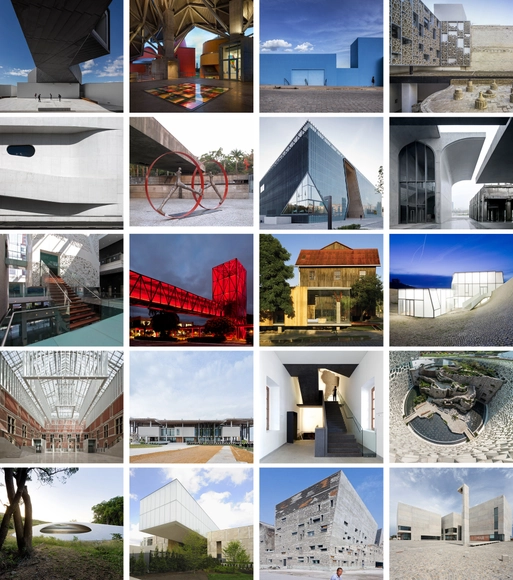
In honor of International Museum Day we’ve collected twenty compelling museum projects. In this round up you’ll find a truly global selection; from Wang Shu's Ningbo Historic Museum in China and Tod Williams + Billie Tsien's Barnes Foundationin Philadelphia to Monoblock's Contemporary Art Museumin Buenos Aires, see all of our editors’ favorites after the break!
https://www.archdaily.com/631994/archdaily-editors-select-20-more-amazing-21st-century-museumsAD Editorial Team
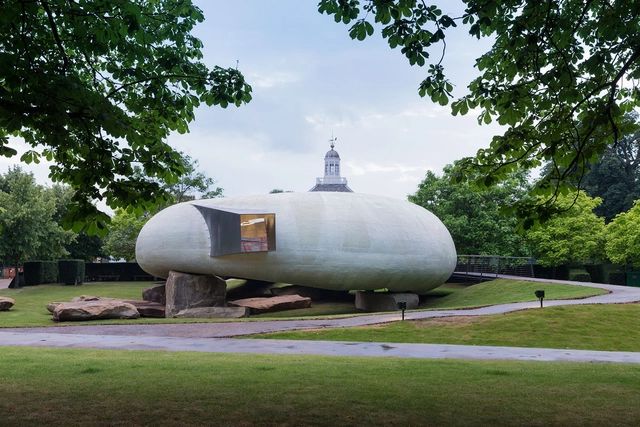
Chilean architect Smiljan Radić’s shell-shaped Serpentine Pavilion has been relocated from Hyde Park to the gardens of Hauser & Wirth Somerset in Bruton. Just under three hours from London, the new site positions the translucent fiberglass structure in short proximity to a main gallery complex designed by Paris-based Argentine architect Luis Laplace and within an lush garden designed by Dutch landscape architect Piet Oudolf.
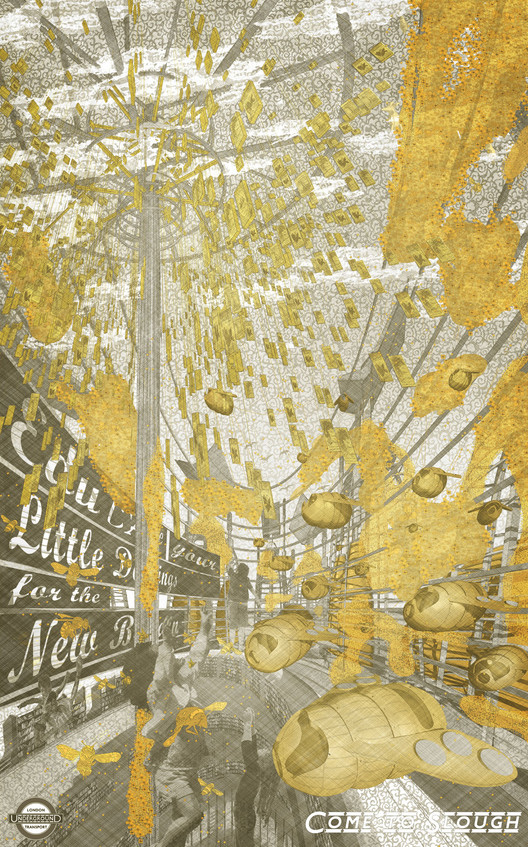
Winner of the RIBA Silver Medal: Nick Elias of the Bartlett School of Architecture. Image Courtesy of RIBA
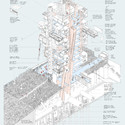
The Royal Institute of British Architects (RIBA) have announced the President’s Medals Student Awards at a special event today in London. The awards, recognised as the world’s most prestigious set of awards in architectural education, were inaugurated in 1836 (making them the institutes oldest award, including the RIBA Gold Medal). Three medals in particular – the Bronze for a Part I student, the Silver for a Part II student, and the Dissertation Medal – are awarded to “promote excellence in the study of architecture [and] to reward talent and to encourage architectural debate worldwide.” In addition to these, the winners of the Serjeant Award for Excellence in Drawing and the SOM Foundation Fellowships are also announced.
The use of fiberglass allowed for the pavilion to be thin and brittle, but also had the strength to span a large face. The pigment made it fire retardant. Image Courtesy of Louis Webb Bird/AECOM
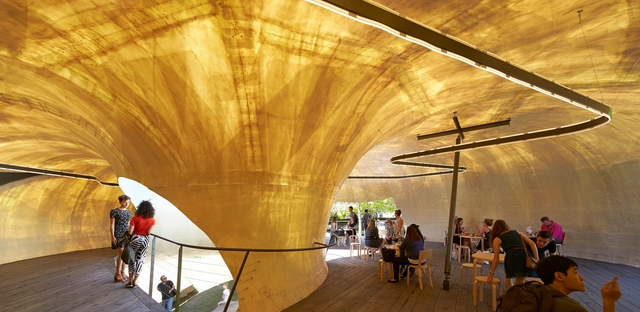
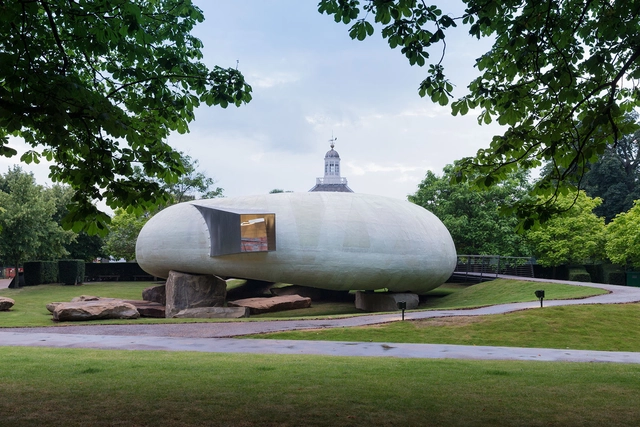
Settled neatly in the quiet hum of London's Kensington Gardens rests Smiljan Radić's 2014 Serpentine Pavilion, an ethereal mass of carefully moulded fiberglass punctuated by precisely cut openings. Radić desired a structure that appears thin and brittle, yet was strong enough to support itself, and his affection for the rudimental layered qualities of papier-mâché - his maquette medium of choice - inspired the use of fiberglass by AECOM, who engineered Radić's wild ideas. In this article, originally published by Metropolis Magazine as "Paper-Thin Walls," an AECOM engineer explains their solution. Read on after the break to find out more.
Kengo Kuma's proposal. Image Courtesy of Ochoalcubo
Ochoalcubo (Eight-Cubed) is a pioneering project in Chile that seeks to unite leading Chilean and Japanese practices with ground-breaking architecture. The collaborative enterprise was started by Eduardo Godoy, a design impresario who began working in Chile in the 1980s and who has always been a strong advocate for innovative design and architecture in the country. For a nation that boasts more than forty individual schools of architecture, the ever growing number of professionals seems to have had a relatively small impact on Chilean cities. Faced with the seemingly infinite landscape of 'cookie-cutter housing' in the suburbs, Godoy implemented Ochoalcubo in order to provide opportunities for young professionals, alongside fostering a new kind of appreciation for the profession itself. With a large number of architects having taken part in the first stage, including Smiljan Radic (designer of the 2014 Serpentine Pavilion), the third and fourth stage of what is certainly one of the world's largest active architectural laboratories will be launched in the coming days.
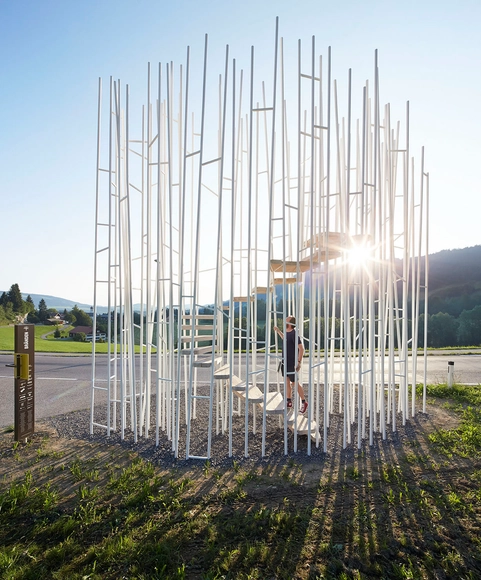
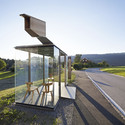
Hufton + Crow's brilliant photography captures the inimitable originality and sensational quality of the uniquely crafted pavilions embedded within the Austrian landscape. Immerse yourself in Krumbach and check out the latest images after the break.
Photography studio Hufton+Crow is the latest to capture the 2014 Serpentine Gallery Pavilion, designed by Chilean architect Smiljan Radic. Step inside this glass-fibre reinforced plastic shell with Hufton+Crow’s photos after the break.
To determine the finalists, the five jury members - Francisco Liernur, Sarah Whiting, Wiel Arets, Dominique Perrault, and Kenneth Frampton - spent the last twelve days visiting projects, speaking with the architects, users and owners of the spaces, and entering into intense debate among each other.
As jury member Dominique Perrault noted, “There’s a lot of means by which to evaluate projects - models, drawings, images - but we took all opportunities to test the quality of the architecture. In the end, only by visiting can you sense the ‘touch of god’ - the presence of the building itself in the context.”
The resulting finalists show tremendous variety - in terms of scale, place, typology, program, materials, etc. - making the task of choosing a winner all the more challenging. See all seven finalists, as well as a video of Kenneth Frampton discussing the selection process, after the break.
Last week, the 2014 Serpentine Pavilion opened in London's Hyde Park. The Serpentine Pavilion program invites architects who are yet to work in the UK to create a temporary installation at the gallery's grounds for one summer, and this year it was the turn of Chilean architect Smiljan Radic, who rarely builds outside his native country and is arguably the least well-known architect in the Pavilion's 14 year history.
Always a highlight in London's architectural calender, critics almost line up to write their reviews. This year, they are almost entirely unanimous: Radic's pavilion is, unquestionably, weird. But they're also unanimous on another judgement: it may be one of the best Serpentine Pavilions yet.
Read on after the break to find out what the critics said about this year's design

















.jpg?1408972517&format=webp&width=640&height=580)