1. ArchDaily
  2. Smart Buildings

Smart Buildings: The Latest Architecture and News

Architecture as a Platform: What Makes a Building Evolve?

Subscriber Access | 

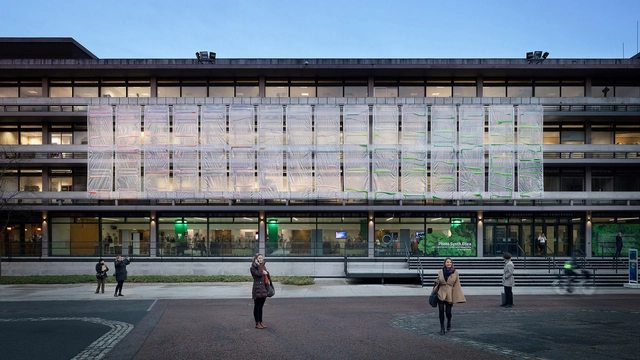
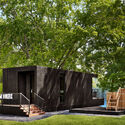
Not long ago, recent enough to feel current, architecture entered a moment in which buildings became legible as products. The framing offered discipline and a refreshed perspective to an industry that often deems novelty more precious than operational clarity. Nudging exercises of "form" towards repeatability, user experience, performance, and scalability prepared buildings to be a "product" that could now be evaluated. Architecture is more answerable to how well it works, how clearly it communicates its use, and how consistently it delivers its intended experience.

The discipline of product design refreshes the perspectives of architects designing for a changing future. Along with offering a new vocabulary and a rubric for design, the field brings in accountability: a product must perform reliably across time and context. It must hold together as a system of decisions rather than a collection of parts. Quality, therefore, is no longer measured solely by uniqueness, but by consistency and by the ability to produce a predictable experience for its occupants.

Architecture as a Platform: What Makes a Building Evolve? - Image 1 of 4Architecture as a Platform: What Makes a Building Evolve? - Image 2 of 4Architecture as a Platform: What Makes a Building Evolve? - Image 3 of 4Architecture as a Platform: What Makes a Building Evolve? - Image 4 of 4Architecture as a Platform: What Makes a Building Evolve? - More Images+ 2

Designing with Empathy: From Smart to Sensitive Cities

Subscriber Access | 

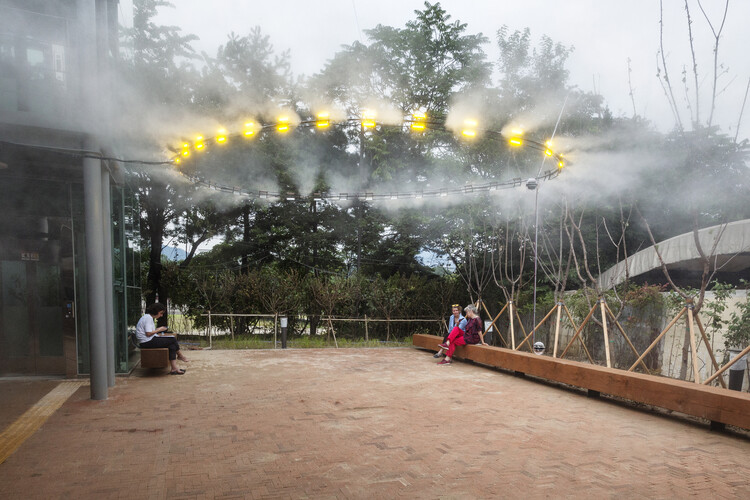
The future of cities has long been defined by intelligence: networks of sensors, data, and engineered systems. From traffic-flow algorithms to climate dashboards, the smart city promised to make urban life optimized, measurable, and predictable. Yet amid this technological abundance, something essential feels absent: sensitivity. Cities are becoming increasingly equipped to process information but less able to perceive atmosphere, emotion, or care.

As recent global debates on urban innovation reveal, the next challenge is not about adding more devices but cultivating new forms of awareness. A sensitive city listens to its climate, adapts to its inhabitants, and responds to the subtle rhythms of the environment. In this shift from computation to perception, architecture and urban design are rediscovering intelligence as a form of empathy.

Designing with Empathy: From Smart to Sensitive Cities - Image 1 of 4Designing with Empathy: From Smart to Sensitive Cities - Image 2 of 4Designing with Empathy: From Smart to Sensitive Cities - Image 3 of 4Designing with Empathy: From Smart to Sensitive Cities - Image 4 of 4Designing with Empathy: From Smart to Sensitive Cities - More Images+ 14

From Smart to Intelligent: Evolution in Architecture and Cities

"The limits of our design language are the limits of our design thinking". Patrik Schumacher's statement subtly hints at a shift occurring in the built environment, moving beyond technological integration to embrace intelligence in the spaces and cities we occupy. The future proposes a possibility of buildings serving functions beyond housing human activity to actively participate in shaping urban life.

From Smart to Intelligent: Evolution in Architecture and Cities  - Image 1 of 4From Smart to Intelligent: Evolution in Architecture and Cities  - Image 2 of 4From Smart to Intelligent: Evolution in Architecture and Cities  - Image 3 of 4From Smart to Intelligent: Evolution in Architecture and Cities  - Image 4 of 4From Smart to Intelligent: Evolution in Architecture and Cities  - More Images+ 2

From Modernism to Multiculturalism: The Historical Evolution of Student Housing

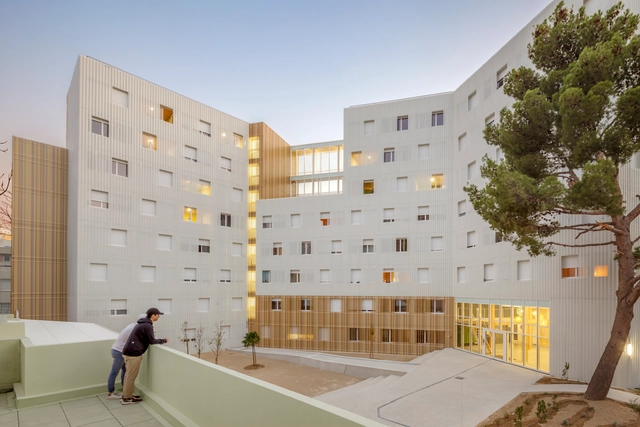
Student housing has undergone a remarkable transformation over the last century. Once seen as a utilitarian necessity, providing shelter and basic amenities for students, this architectural typology has evolved to address increasingly complex societal, cultural, and urban demands. Starting with Le Corbusier's modernist approach at the Cité Universitaire in Paris, student housing has reflected broader trends in architecture, urbanism, and social change.

Today, these buildings must cater to a highly diverse and transient population, navigating the pressures of affordability, density, and the evolving living standards of young adults. With rapid urbanization and increasing student mobility, universities now face the challenge of designing housing that is not only functional but also adaptable to different cultural and social contexts. This has led to more flexible, innovative solutions that promote both privacy and community living.

From Modernism to Multiculturalism: The Historical Evolution of Student Housing - Image 1 of 4From Modernism to Multiculturalism: The Historical Evolution of Student Housing - Image 2 of 4From Modernism to Multiculturalism: The Historical Evolution of Student Housing - Image 3 of 4From Modernism to Multiculturalism: The Historical Evolution of Student Housing - Image 4 of 4From Modernism to Multiculturalism: The Historical Evolution of Student Housing - More Images+ 55

The Future of Work: Sentient Workplaces for Employee Wellbeing 

Subscriber Access | 

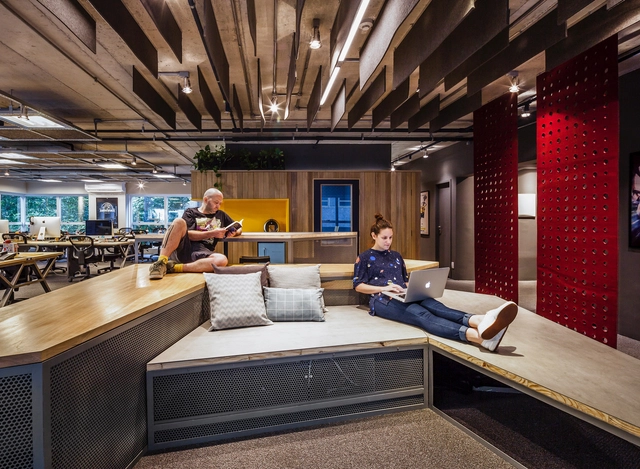
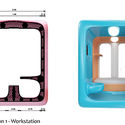
Imagine stepping into an environment that fully understands you, knows your habits, and actively works to support your wellbeing as an occupant. Air quality might be monitored and managed, and occupant circadian rhythms might be tracked to suggest ideal states of productivity. Workplace designers have been considering occupant wellbeing and health in their designs for offices of the future. Hypothesizing what time ahead may contain, there is a strong case to be made for sentient architecture and interior design being disruptive forces in how we interact with our work environments.
The Future of Work: Sentient Workplaces for Employee Wellbeing  - Image 1 of 4The Future of Work: Sentient Workplaces for Employee Wellbeing  - Image 2 of 4The Future of Work: Sentient Workplaces for Employee Wellbeing  - Image 3 of 4The Future of Work: Sentient Workplaces for Employee Wellbeing  - Image 4 of 4The Future of Work: Sentient Workplaces for Employee Wellbeing  - More Images+ 2

Building a City from Scratch: The Story of Songdo, Korea

Subscriber Access | 

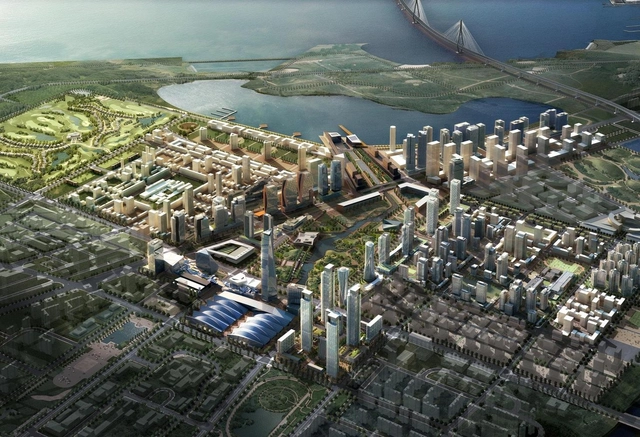
What does it take to build a smart city from nothing? Or maybe the better question is, what does it take to build a smart city from nothing and make it successful? For over a decade, architects and urban planners worked hand in hand to create Songdo, a brand new business district that sought to represent South Korean advancements in technology and infrastructure. Songdo was once a model for how we would live in cities of the future- but now, the reality of what this smart city quickly became has us rethinking how the combination of technology and community might have gone wrong.

The New Disruptor on the Block: How Proptech is Changing the Way We Interact with Real Estate

Subscriber Access | 

Would you be willing to buy a home from a robot using only an app? As technology becomes more and more integrated into the design and real estate sector, that once an outlandish idea has become a reality. Only a decade ago, almost no one talked about technology and start-ups in the built environment. The real estate industry, which has historically lacked technological innovations compared to other sectors, is now taking a stance to reinvent itself as an industry that is more efficient, flexible, and automated- all resulting in one of the newest buzzwords that has taken the world by storm, proptech or Property technology.

CRA-Carlo Ratti Associati Designs New Workplaces, Addressing Post-Pandemic Challenges

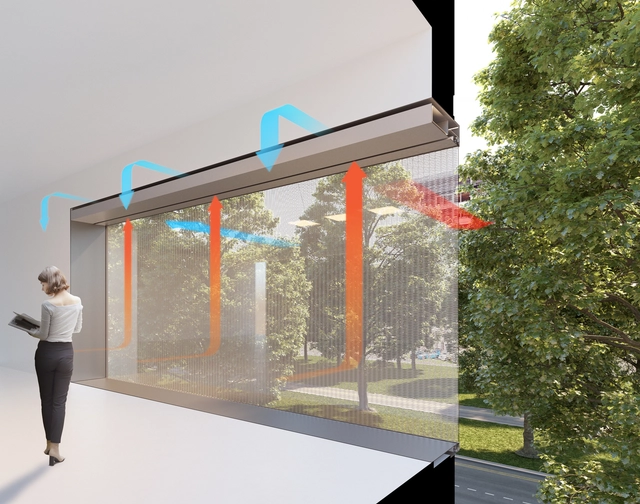
CRA-Carlo Ratti Associati has created a pilot project for Sella Group’s Open Innovation Center in Turin, Italy, addressing post-pandemic challenges. The new workplace design features automated desk sanitizing, collaborative digital platforms, and smart windows to ensure health, safety, and sociability.

7 Architectural Considerations that are Shaping Future Cities

7 Architectural Considerations that are Shaping Future Cities - Featured Image
Hong Kong . Image Courtesy of Soledad Sambiasi

By 2050, the world’s population is expected to have exceeded 10 billion people, making overcrowded cities one of the most pressing issues of the present. Data analysis, machine learning, transportation developments, and the rapid development of new social technologies are increasingly changing the needs of people and communities, which will have a direct impact on the issue of overcrowding and on our built environment more largely.

London Launches Open Source App for Homebuilding

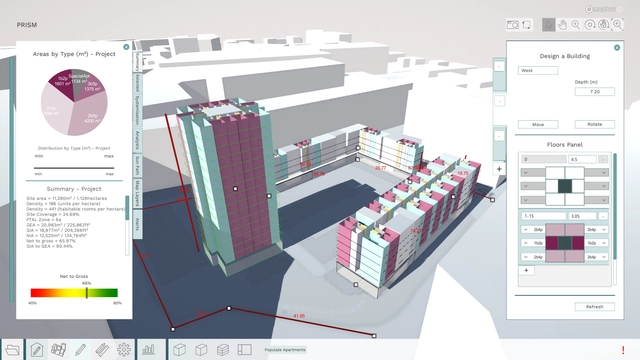
Bryden Wood, Cast, and the Mayor of London have launched a new app to speed up the capital’s home building. The freely-available app, titled PRISM, is aimed at the design and construction of high-quality, factory-built homes to address the current demand of 50,000+ houses per year.

SLICE Creates Apartments from Plugin Modules for Future City Living

Iranian architect and concept designer Nasim Sehat has developed an alternative living module driven by adaptability for the gig economy. SLICE is described as a “sustainable, people centric, connected, self-contained, and flexible plug’n-play urban solution” targeted at future city dwellers.

SLICE consists of a layered module of functional plugins, combined to create basic spatial configurations. In tandem with the design of SLICE’s spatial profile, Shanghai-based Sehat has proposed a shared, on-demand digital service for module rental, maintenance, and payment.

SLICE Creates Apartments from Plugin Modules for Future City Living - Image 1 of 4SLICE Creates Apartments from Plugin Modules for Future City Living - Image 2 of 4SLICE Creates Apartments from Plugin Modules for Future City Living - Image 3 of 4SLICE Creates Apartments from Plugin Modules for Future City Living - Image 4 of 4SLICE Creates Apartments from Plugin Modules for Future City Living - More Images+ 2

Call for Entries: Tomorrow's Challenges in Today's Buildings

Designing Buildings Wiki have joined forces with BSRIA to launch a new competition looking for fresh and innovative ideas in response to the question: How can tomorrow's challenges be met by today's buildings?

CEBRA Wins Competition to Design Smart School in Russia

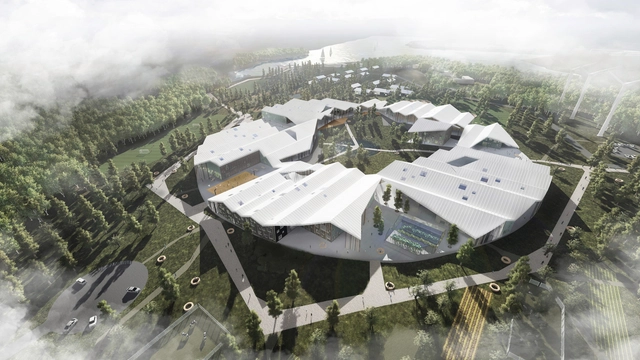
Denmark-based architects CEBRA have won a competition to design a Smart School educational complex in Irkutsk, Russia. Their winning design, dubbed Smart School Meadow, fulfills the competition’s call for a new typology of school that combines architecture and landscaping into a learning environment and local community center.

The design integrates buildings and landscape together through a ring of individual structures connected by a large, ridged rooftop. With this roof, spaces between the buildings can be used as multifunctional, semi-covered learning spaces, activity zones, and flow areas, all of which diffuse into the central and outer landscaped areas.

CEBRA Wins Competition to Design Smart School in Russia - Image 1 of 4CEBRA Wins Competition to Design Smart School in Russia - Image 2 of 4CEBRA Wins Competition to Design Smart School in Russia - Image 3 of 4CEBRA Wins Competition to Design Smart School in Russia - Image 4 of 4CEBRA Wins Competition to Design Smart School in Russia - More Images+ 5

When Buildings React: An Interview with MIT Media Lab's Joseph Paradiso

Subscriber Access | 
When Buildings React: An Interview with MIT Media Lab's Joseph Paradiso - Image 1 of 4
Responsive Environment lab "Chain mail" project ("a flexible, high-density sensor network"). Image Courtesy of MIT Media Lab

Not so far in the future, smartphones and laptops will go the way of the beeper and fax machine, fading into obsolescence. Soon, according to MIT Media Lab's Joseph Paradiso, we will interface with the physical world via wearable technologies that continually exchange information with sensors embedded all around us.

Paradiso has been at the forefront of these developments for decades, exploring new applications for sensor networks in everything from music (he will lead a presentation of the lab’s musical innovations later this month at Moogfest) to baseball. In recent years, his group’s research has focused increasingly on smart buildings. I spoke with him about the implications of his work for the future of architecture and the built environment.

You run the Responsive Environments group at the Media Lab. Can you describe some of your work in the building realm?