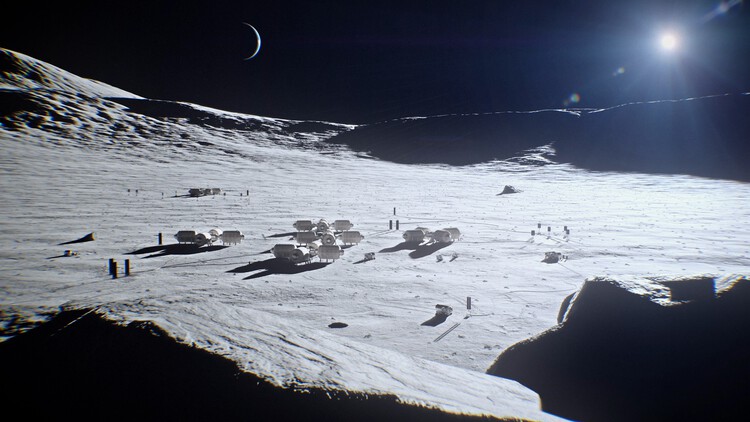
Concept : Living and Working on the Moon. Image Courtesy of NASA
After Artemis II's return to Earth, NASA unveiled a new phased plan to establish a Moon Base. Although most of the media's attention went to rockets, budgets, and geopolitical competition, a quieter question was lingering for architects in the background: How can a human being actually live on the surface of the Moon, and for how long? The establishment of a permanent human presence on the Moon marks a fundamental shift in space exploration that requires a new architectural paradigm. In their presentation, NASA officials suggested the strategy would drift away from highly constrained, vehicle-dependent environments toward autonomous, site-adaptive, and eventually permanently habitable structures.
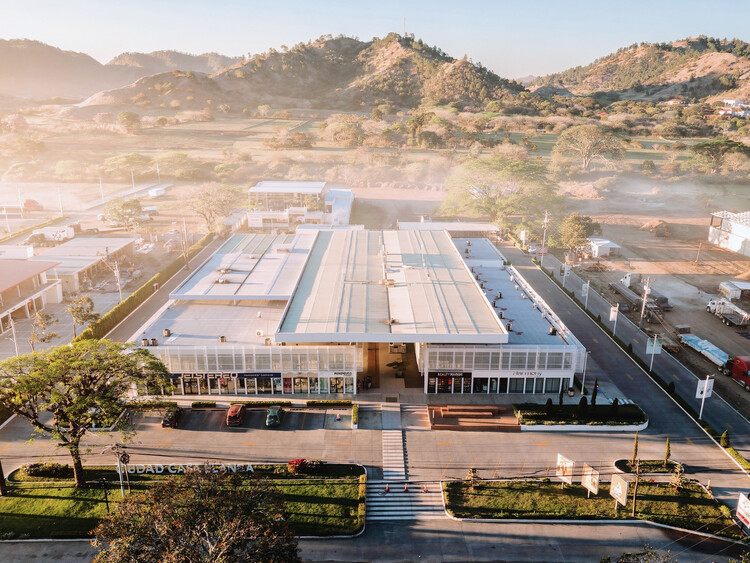
Honduras is the second-largest country in Central America, both in territory and population. Today, its urban fabric remains heavily influenced by modernist principles from the 1970s that prioritised high-speed arterial corridors and automobile-dependent "point-to-point" mobility. In addition, the country faced many challenges regarding public safety during the 2010s, which contributed to creating an urban space characterised by blind facades, high perimeter walls, and gated enclosures designed to isolate the interior from the public realm.
We had the opportunity to talk to Alejandra Ferrera, a Honduran architect raised in Danlí, a city in eastern Honduras. With over 15 years of practice across Brazil, the Netherlands, and Australia, she argues that while the security-driven design was a functional necessity of its time, it has resulted in a fragmented urban experience where the street serves only as a transit void rather than a place for social encounter. She suggests that even though this isolation was a justified safety measure, it created detachment between the inhabitants and the city. She also argues that overall, the public safety situation contributed to the creation of a wounded national identity that often looks outward for quality, dismissing the potential of its own context.
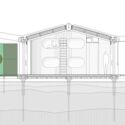
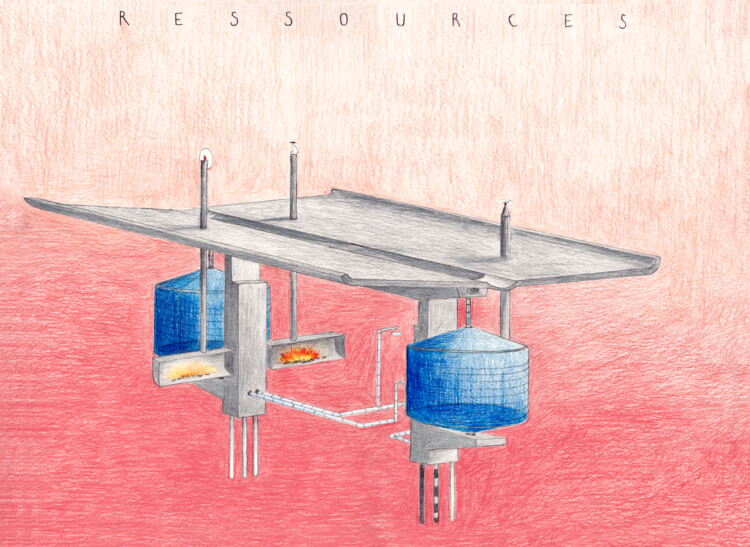
Diagram of the services in Barba Jupiter. Image Courtesy of Géométral
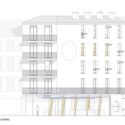
Founded in 2022 by Clément Masurier and based in Paris, France, Géométral is an architectural practice defined by design strategies that are linked to the landscape, which it treats as a primary determinant of form. The studio, one of the winners of the ArchDaily 2025 Next Practices Awards, approaches each project as a small universe that combines program, atmosphere, and spatial narratives. Rather than a single signature style, they focus on crafting moods and situations tailored to each context and user.
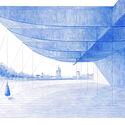
In its early stages, the studio lacked a built portfolio and responded by developing "fictional architectures" situated on real topographies. This exercise was not merely an aesthetic pursuit but a methodological anchor, as it allowed the firm to establish a rigorous process of site analysis and typological testing before receiving physical commissions. By treating imaginary projects with the same technical scrutiny as real ones, the studio developed a library of formal responses to environmental constraints that now dictate their built work.
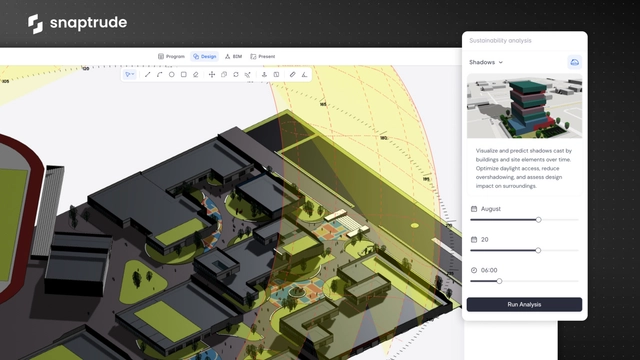
Two students sit one desk apart. One excels in science. The other struggles. One receives praise, the other criticism. One gains confidence, the other slowly loses it. It's easy to assume the difference comes down to effort, parenting, or natural ability. But what if the real factor was the classroom itself? Imagine the student who fell behind sat at a desk flooded with glare from poorly placed windows every single day. With fixed homeroom seating, they couldn't move. Over time, that small but constant distraction turned into disengagement, and disengagement eroded their confidence. A chain reaction triggered not by effort, but by design.
With the heightening of ecological and social crises all around the world, architects have had to re-evaluate their role, impact, and design approach. As the "new needs" of people arise, new architectural processes must be explored to answer them. However, this still comes with much resistance from the standing practices and push for financial gain that often makes it difficult to implement more comprehensive solutions. These notions led the CCA (Canadian Center for Architecture) to launch their new 3-part film and exhibit series called " Groundwork", curated by the associate director, Francesco Garutti. Through this project, the CCA selected and followed three renowned contemporary architects/practices as they developed their concepts and field research, which allowed them to engage respectfully with their site and residing communities. It's an up close and personal look into what motivates the selected architects to examine alternative ways of designing and the challenges they go through as the three parallel stories unfold.
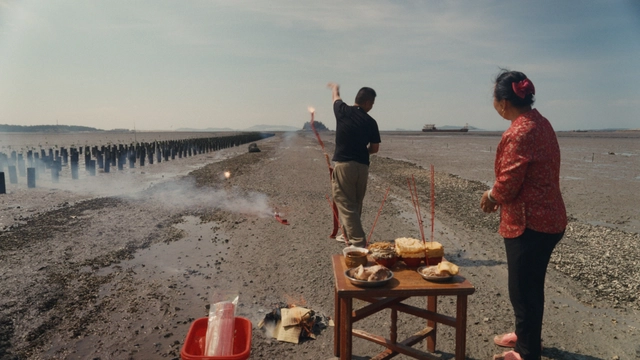
The first exhibit opening and movie screening was held in May 2024, followed by an in-conversation event with the program curator and architect, where the question of "What is architecture today" was discussed. The exhibit and its many showcased elements, channels visitors along to the first site exploration with DnA's Xu Tiantian as she ventures "Into the Island" of Meizhou, China, in the summer of 2022.
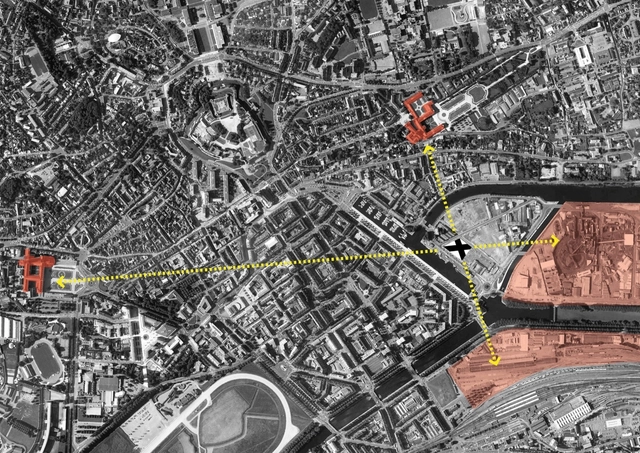
Deciding where a building should go is a complex negotiation of visible and invisible, objective and subjective forces. Architects perform site analysis in order to identify and choreograph all these factors, but which factors do they focus on? This video is a survey (pun intended) of what goes into locating where a building should go on the Earth’s surface. From legal requirements like lot lines and setbacks, to infrastructural concerns like service hookup locations and pedestrian ways, to environmental factors like sunlight and topography, the video goes through how architects and contractors position structures. In addition to reviewing general rules of thumb, the video also includes some important architectural examples like the Casa Malaparte and OMA’s Student Center at IIT to inspire unique ways to approach the subject.
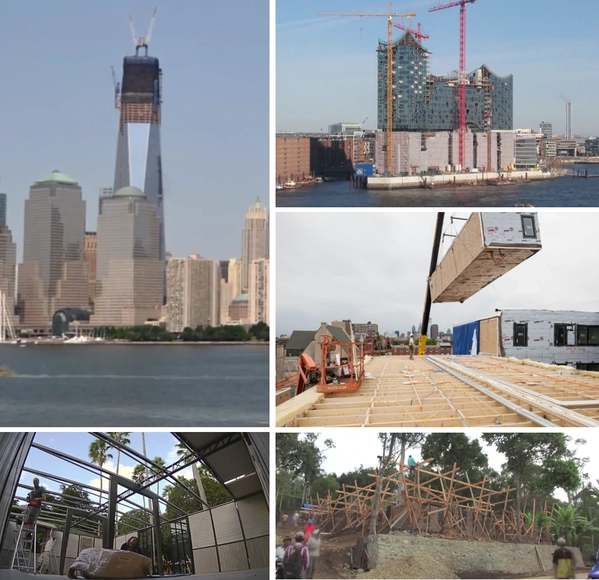
Designers are trained to consider the context for a finished building, but often neglect to consider the construction phase. When architecture is primarily judged based on the impacts it has on their surroundings once they are built, what can be learned from the process of building? The time-lapse is a method that can help architects to do just that, as it can capture years of complex development in a matter of minutes. This can uncover patterns of impact on social and economic levels, as months to years are played back over several minutes.
What is shown by time-lapse videos, though, can be as disturbing as it is interesting; when uncovered, the construction process is a revealing process, and the ramifications in regard to energy consumption can be as monumental as the buildings themselves. The time-lapse allows the viewer to get a better understanding of the types and amounts of materials being put into the construction of buildings, and the impact construction has on its immediate surroundings. By comparing time-lapse videos of different projects, what insight can we gain about how the physically generative process of architecture affects people and place?