1. ArchDaily
  2. Shipping Containers

Shipping Containers: The Latest Architecture and News

Carlo Ratti’s First Intensive Care Pod Installed at a Temporary Hospital in Turin, Italy

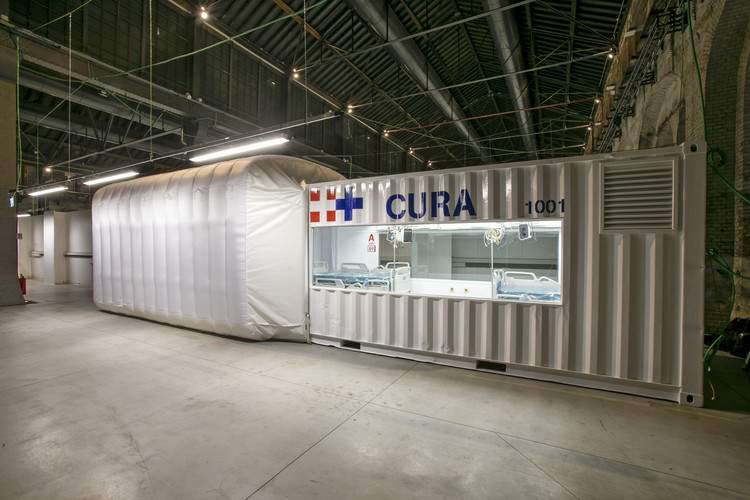
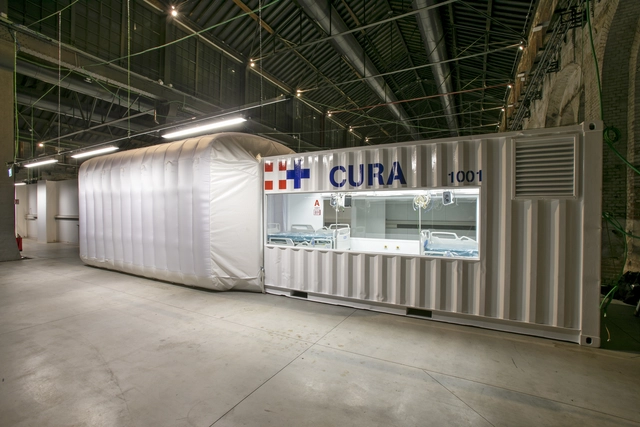
The first unit from Carlo Ratti’s CURA project was built at a temporary hospital in Turin, north of Italy, one of the world’s hardest-hit regions by the pandemic. Launched four weeks ago, the initiative to convert shipping containers into plug-in Intensive-Care Pods for COVID-19 patients was assembled at record speed.

Carlo Ratti’s First Intensive Care Pod Installed at a Temporary Hospital in Turin, Italy - Image 1 of 4Carlo Ratti’s First Intensive Care Pod Installed at a Temporary Hospital in Turin, Italy - Image 2 of 4Carlo Ratti’s First Intensive Care Pod Installed at a Temporary Hospital in Turin, Italy - Image 3 of 4Carlo Ratti’s First Intensive Care Pod Installed at a Temporary Hospital in Turin, Italy - Image 4 of 4Carlo Ratti’s First Intensive Care Pod Installed at a Temporary Hospital in Turin, Italy - More Images+ 9

Carlo Ratti Converts Shipping Containers into Intensive-Care Pods for the COVID-19 Pandemic

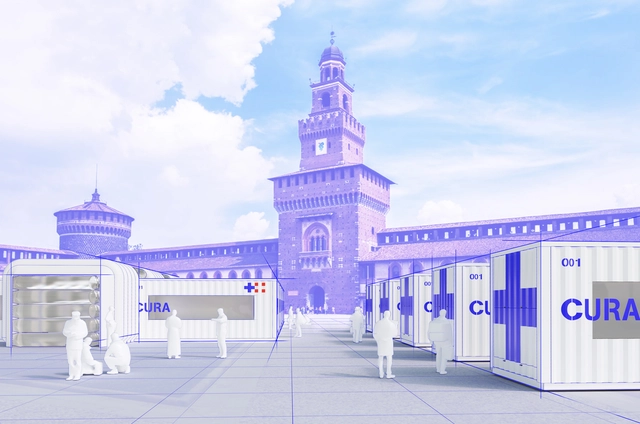
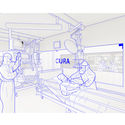
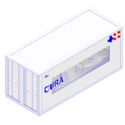
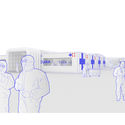
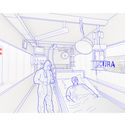
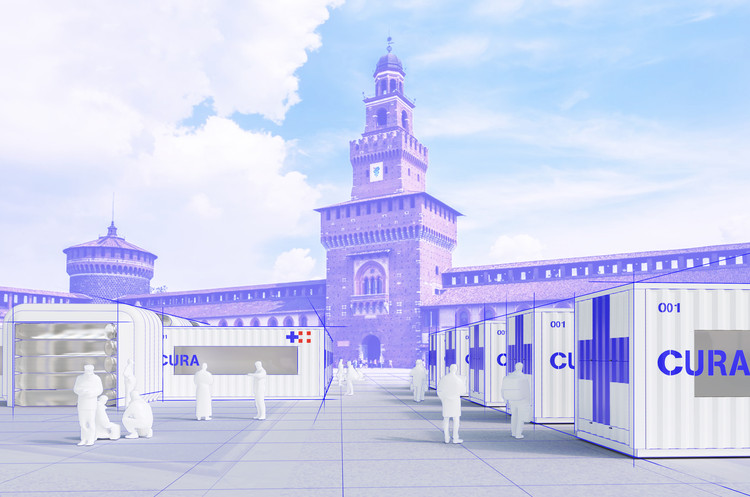
CRA-Carlo Ratti Associati with Italo Rota in collaboration with an international team of experts developed CURA (Connected Units for Respiratory Ailments), plug-in Intensive-Care Pods for the COVID-19 pandemic. An open-source design for emergency hospitals, the project’s first unit is currently under construction in Milan, Italy.

Carlo Ratti Converts Shipping Containers into Intensive-Care Pods for the COVID-19 Pandemic - Image 1 of 4Carlo Ratti Converts Shipping Containers into Intensive-Care Pods for the COVID-19 Pandemic - Image 2 of 4Carlo Ratti Converts Shipping Containers into Intensive-Care Pods for the COVID-19 Pandemic - Image 3 of 4Carlo Ratti Converts Shipping Containers into Intensive-Care Pods for the COVID-19 Pandemic - Image 4 of 4Carlo Ratti Converts Shipping Containers into Intensive-Care Pods for the COVID-19 Pandemic - More Images+ 3

UK Artist Designs Sculptural Building From Shipping Containers

Subscriber Access | 

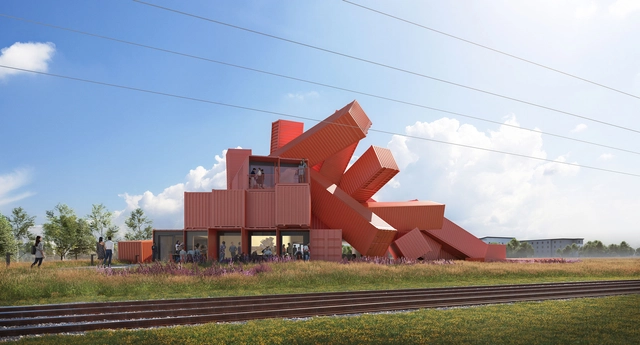
The showpiece of a planned new development at Edinburgh Park will be UK-artist David Mach’s first-ever building, named “Mach 1” by the project’s developers and investors, Parabola. Working with Stirling Prize-nominated architects Dixon Jones, Mach’s building will be created from over 30 shipping containers - but not in the modular, linear method to which shipping container buildings typically lend themselves. Instead its sculptural shape is meant to draw attention to the new quarter and catch the public’s eye, especially those traveling by on the nearby tram.

Call for Ideas: Unbox 2017 Architecture Competition

The world today has become aware of the reckless utilization of natural resources and is now making conscious efforts to move towards a sustainable future. In this endeavor, it has become imperative to rethink our approach towards building materials to ease the pressure on the conventional ones.

The Renaissance City: 3 Architectural Initiatives Point the Way Forward For Detroit

 | Sponsored Content

Detroit is a long-standing symbol of innovation in America, especially in the production of automobiles, music, and, at one point in history, airplanes. It has, correspondingly, been called the Motor City, Motown, and the Cradle of Democracy. Over the last half-century, racial tension, urban migration, and disinvestment have shifted the city’s identity, causing it to become a symbol of post-industrial America and the attendant urban deterioration. Together, these elements render Detroit’s more recent nickname—the Renaissance City—tragically ironic.

How a Transportable Student Village Could Alleviate Copenhagen's Housing Shortage

Subscriber Access | 

Thanks largely to its status as a hotbed of contemporary design innovation, the city of Copenhagen has become one of the most desirable places in the world to live. Yet, as has been seen in places like Manhattan, increased desirability can come at a cost to local residents. Due to rapid growth and a successful university system, Copenhagen has fallen upon a shortage of both student housing and land available for traditional development. The only open, affordable land in the city is located within ports – but it is currently zoned to be protected from any permanent construction projects.

Enter Danish company CPH Containers and architect Søren Nielsen, a partner at Danish firm Vandkunsten Architects. By creating a structure of shipping containers, the team has created a student village that acts a temporary complex, able to vacate the land upon short notice with its close proximity to existing transportation infrastructure.

How a Transportable Student Village Could Alleviate Copenhagen's Housing Shortage - Image 1 of 4How a Transportable Student Village Could Alleviate Copenhagen's Housing Shortage - Image 2 of 4How a Transportable Student Village Could Alleviate Copenhagen's Housing Shortage - Image 3 of 4How a Transportable Student Village Could Alleviate Copenhagen's Housing Shortage - Image 4 of 4How a Transportable Student Village Could Alleviate Copenhagen's Housing Shortage - More Images+ 2