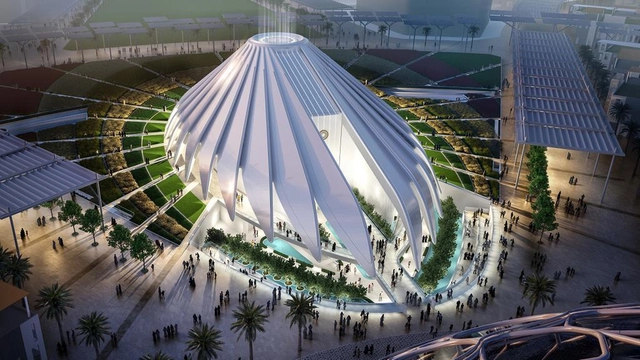
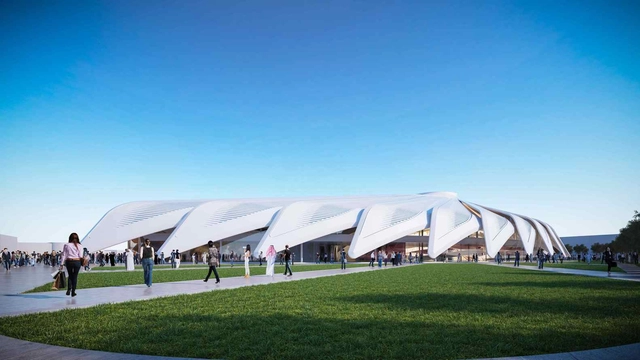
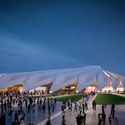
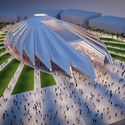
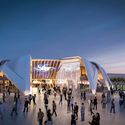
Construction has begun on one of the centerpiece structures at the upcoming Expo 2020 Dubai, the Santiago Calatrava-designed UAE Pavilion.
Inspired by the shape of a flying falcon, the UAE Pavilion covers more than 15,000 square meters and four floors, including a 1,717-square-meter top-story hospitality lounge. A 588-square-meter mezzanine will house support functions, with the remaining two floors containing 12,000 square meters will of exhibition space showcasing displays that respond to the Expo theme of “Connecting Minds, Creating the Future.”
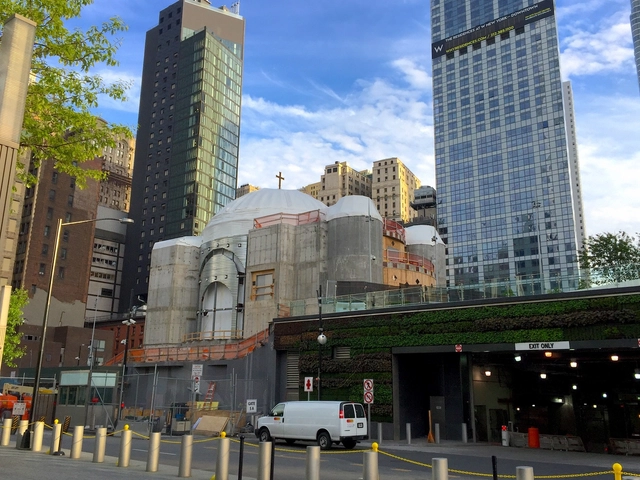
Construction on the Santiago Calatrava-designed St. Nicholas National Shrine at the World Trade Center has halted, after the church failed to make a series of payments over a several month period to contractor Skanska.
As revealed by the Pappas Post, last week the construction company distributed a letter to its subcontractors informing them that the building contract had been terminated after The Greek Orthodox Archdiocese of America defaulted on making payment. In the letter, Skanska directed subcontractors to stop all work and to remove all tools and materials from the site, or risk not being able to recover them.
What did Pritzker Prize winner Frank Gehry get when he designed the Stata Center, an exuberantly whimsical academic complex for MIT? A very large check, plus a major lawsuit, alleging negligence and breach of contract due to rampant leaks, mold, cracks, drainage problems and sliding ice. Sometimes the most inspired designs can go awry. And when they do, some clients lawyer up. Here are 9 fascinating examples.
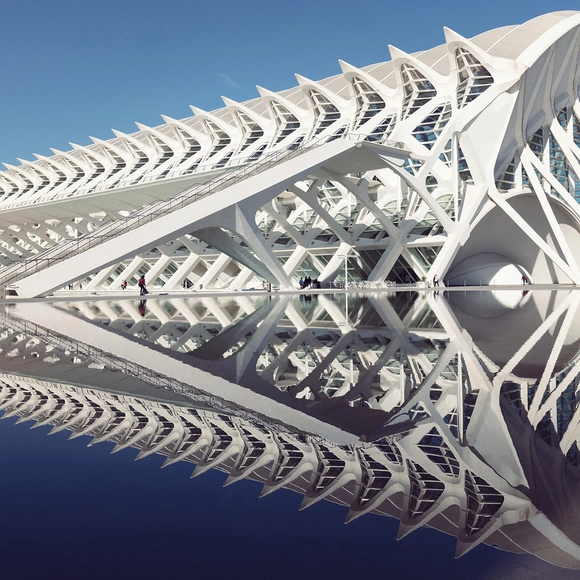
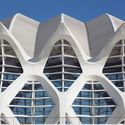
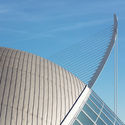
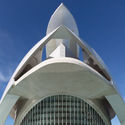
As a young boy, Santiago Calatrava's fascination with light in his native Valencia fueled his determination to draw, design, and eventually build. His Ciudad de Artes y Ciencias (City of Arts and Sciences) is a perfect example of the influence of the Valencian sun on the architect's work. The seven cultural buildings define a formal vocabulary all their own, with a dynamism between blanched curves and rhythmic visual patterns. So bright it almost glows on clear days, the materiality of the structures emphasizes the ability of light to outline the spatial relationships between Calatrava's shapes, and shift them as the sun moves through the sky.
In his most recent photo series, Sebastian Weiss has captured the tendency of the shapes of the City of Arts and Sciences to "complement each other and even merge to a harmonic unity," as the photographer himself puts it. The photos were originally featured on his Instagram, @le_blanc, and develop a new way of looking at the oft-photographed tourist spot. His images imagine the complex as a pulsating "light-space installation" of equally systematic and creature-like forms in constant conversation with one another. The series gives the sense of looking at different sections of a particularly beautiful beast—its ribs, underbelly, horns, etc.—captured within the complex's shallow pools.
Earlier this month, Hong Kong-owned developer Knight Dragonrevealed plans for an billion-dollar urban-development scheme that will completely transform London’s Greenwich Peninsula. In this edition of Section D, Monocle 24's weekly review of design, architecture and craft, the team speak to Santiago Calatrava—who will be designing the core of this grand new project—about this and his public-spirited design philosophy. Why, they ask, has he’s always wanted to leave a mark on the "Big Smoke?"
https://www.archdaily.com/806495/santiago-calatrava-ground-zero-design-philosophy-greenwich-peninsula-project-monocleAD Editorial Team
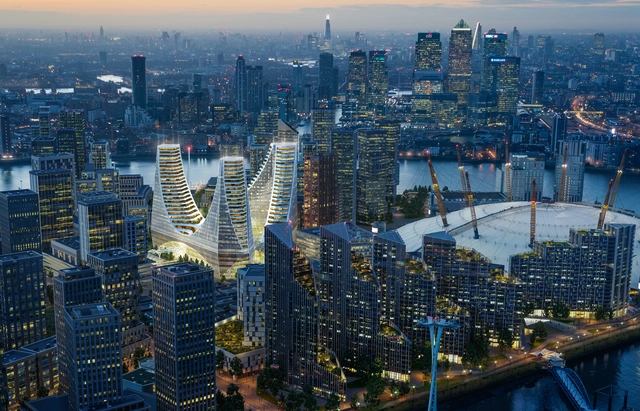
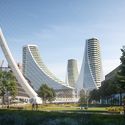
Santiago Calatrava has unveiled designs for a £1-billion mixed-use project in Greenwich Peninsula, East London. Named Peninsula Place, the 1.4-million-square-foot (130,000-square-meter) project will be located adjacent to the Roger Stirk Harbour + Partners-designed O2 Arena (formerly known as the Millennium Dome). It will include a new tube and bus station, a theater, cinema and performance venue, bars, shops and a wellbeing hub on the lower levels, with three towers rising above featuring offices, hotels, and apartments. The scheme will also be served by a new land bridge, also designed by Calatrava.
"You see, the first goal in this place was to deliver something beautiful where such an ugliness was there before,” says Calatrava in the film. “To deliver something optimistic looking to the future where so much sadness and depression was there.”
Santiago Calatrava has won the competition to design the United Arab Emirates Pavilion for the Expo 2020 Dubai in 2020. Nine finalists submitted 11 concepts that were evaluated on three criteria: their expression of Expo’s theme, “Connecting Minds, Creating the Future,” whether the design was evocative of the UAE, and if a balance was struck between the country’s past and future. Calatrava’s design proposes a 15,000 square meter pavilion with exhibition areas, an auditorium, food and beverage outlets, and VIP lounges. The design is meant to evoke the wings of a falcon in flight, linking itself to the country’s history of falconry to emphasize the country’s present-day goals of global connectedness.
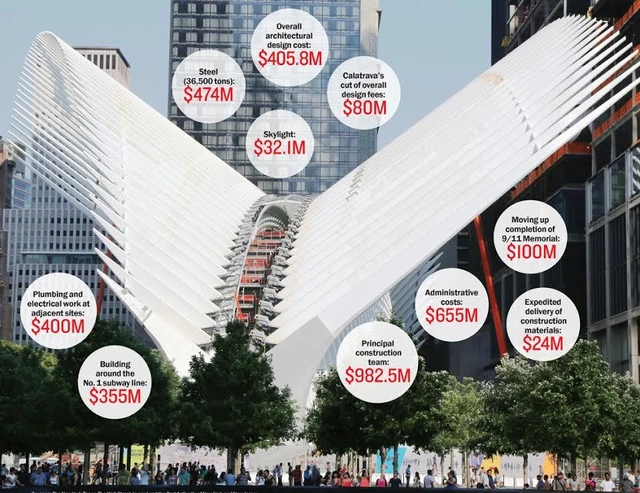
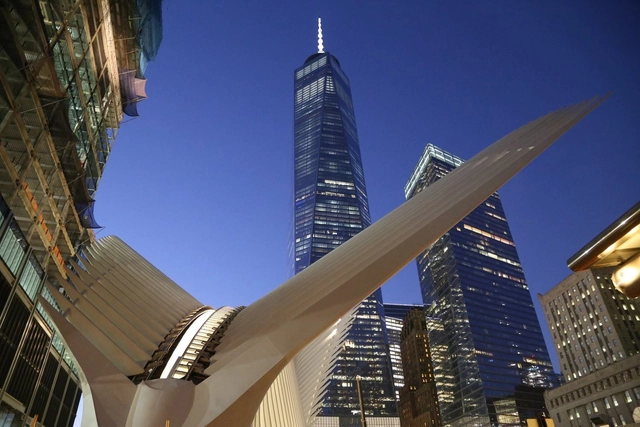
Twelve years after Santiago Calatrava revealed his design for the World Trade Center Oculus, the PATH station finally opened to the public in March. Although not officially confirmed by the Port Authority, the total cost of the Oculus is estimated to be nearly four billion dollars - almost double the original budget. The Real Deal has broken down the big-ticket costs that went into the making of the Oculus.
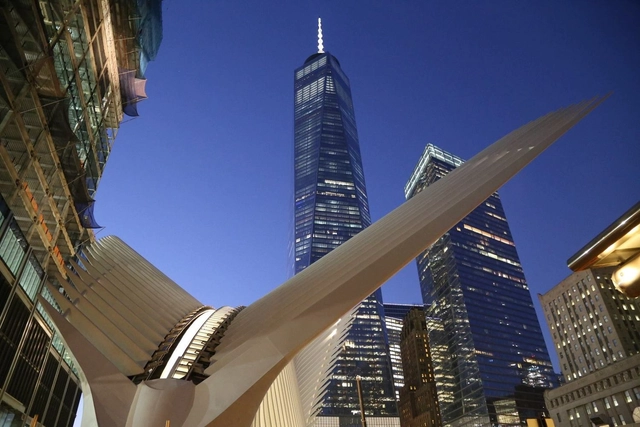
Since it opened to the public two months ago, Santiago Calatrava's World Trade Center Transportation Hub has been the subject of intense debate. Critics and the public alike have tried to answer whether the building, while undeniably unique and striking, was worth the $4 billion price tag that made it the world's most expensive train station. Key to this question's answer will be the way that the building settles into its role as a piece of the city's fabric.
With construction work still surrounding the building - both on the site itself and at the nearby skyscrapers - photographer Laurian Ghinitoiu turned his camera lens onto the station to see how it has been absorbed into the life of the city, capturing the way the structure is revealed from unexpected vantage points and showing how its users react to the sublime internal space of the "oculus."
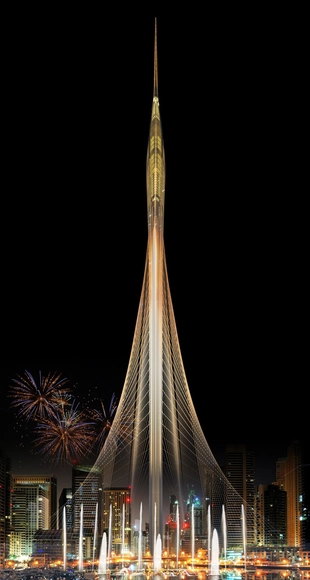
New images and information has been released regarding Santiago Calatrava's competition-winning design for Dubai's new "landmark" observation tower. Planned for a site in Dubai Creek Harbor, near the Ras Al Khor National Wildlife Sanctuary, the tower was inspired by the "natural forms of the lily and evokes the shape of a minaret, a distinctive architectural feature in Islamic culture."
"The building’s design is inspired by the Islamic tradition, evoking the same history that brought the world the Alhambra and the Mosque of Cordoba. These architectural marvels combine elegance and beauty with math and geometry," commented Calatrava. "The design of the tower of Dubai Creek Harbor is rooted in classical art and the culture of Dubai itself."
Santiago Calatrava's long-awaited World Trade Center Oculus has officially opened. Thanks to EarthCam and the project's contractor Skanska USA, you can watch the $4 billion transportation hub take shape over the course of 42 months in just 65 seconds, from June 2011 to December 2014. For more, see what the critics have to say about the newly opened building here.
After 12 long years and a series of construction headaches, Santiago Calatrava’s $4 billion World Trade CenterTransportation Hub has finally opened to the public. Once widely regarded as a symbol of hope for post-9/11 New York, the project’s ballooning budget and security-related revisions gradually soured the opinions of the public and top design minds including Michael Graves and Peter Eisenman, and provoked a multitude of mocking nicknames ranging from “Calatrasaurus” to “squat hedgehog” to “kitsch dinosaur.” All the while, Calatrava urged critics to reserve their opinion until the project’s opening. Now that day has arrived - did Calatrava receive the vindication he was insistent would come? Read on for the critics’ takes.
Santiago Calatrava has won an international competition to design a "landmark" observation tower in Dubai Creek Harbor. Selected over five other proposals, the design was inspired by Islamic architecture with the intention to "fuse modern, sustainable design with the rich culture and heritage of the United Arab Emirates."
“This architectural wonder will be as great as the Burj Khalifa and the Eiffel Tower,” said Sheikh Mohammed, Vice President and Prime Minister of the United Arab Emirates.
Last week marked the opening of Santiago Calatrava's Museum of Tomorrow in Rio de Janeiro. Prior to the its opening, ArchDaily sat down with Calatrava to learn more about the museum's design and how the project's fruition resulted in the removal of an elevated highway that once isolated the city from the harbor.
Santiago Calatrava is celebrating the opening of the Museu do Amanhã (The Museum of Tomorrow) this week in Rio de Janeiro. The highly anticipated museum, built on the Pier Mauá, features a distinct cantilevering roof that stretches 75-meters over the museum's 7,600-square-meter plaza and 45-meters towards the sea.
"The city of Rio de Janeiro is setting an example to the world of how to recover quality urban spaces through drastic intervention and the creation of cultural facilities such as the Museum of Tomorrow and the new Museum of Art,” said Santiago Calatrava. "This vision led us, in our first designs, to propose the addition of a plaza outside the Museum. The plaza creates a more cohesive urban space and reflects the neighborhood’s greater transformation.”



.jpg?1494051634)







.jpg?1462114184&format=webp&width=640&height=580)
.jpg?1462114296 "© Laurian Ghinitoiu")
.jpg?1462114241 "© Laurian Ghinitoiu")
.jpg?1462114195 "© Laurian Ghinitoiu")
.jpg?1462114422 "© Laurian Ghinitoiu")
.jpg?1462114184)
_Credit_Santiago_Calatrava.jpg?1460390254&format=webp&width=640&height=580)
.jpg?1450368012&format=webp&width=640&height=580)