1. ArchDaily
  2. Salvaged Materials

Salvaged Materials: The Latest Architecture and News

Barbara Buser Recognized With the 2026 Jane Drew Prize for Her Work In Circular Construction

The AJ and The Architectural Review have named architect Barbara Buser as the winner of the 2026 Jane Drew Prize. The prize, named after English modernist architect and urban designer Jane Drew, is part of the W Awards and the W Programme, which recognise women's contributions to the architectural profession. Swiss-based architect Barbara Buser is known as an innovator in the field of recycling and reuse, and as an expert in circular construction, recognised for pioneering repurposing practices in Switzerland. The award, therefore, recognises not only her contribution to architecture itself, but above all her efforts to reduce the industry's environmental impact through socialisation initiatives. The recognition follows Anne Lacaton's award in 2025, as well as other prominent figures in the field, such as Kazuyo Sejima in 2023, Farshid Moussavi in 2022, and Yasmeen Lari in 2020.

Modern Spolia: Harvesting Building Materials from Demolition Sites

Subscriber Access | 

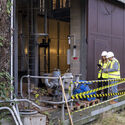
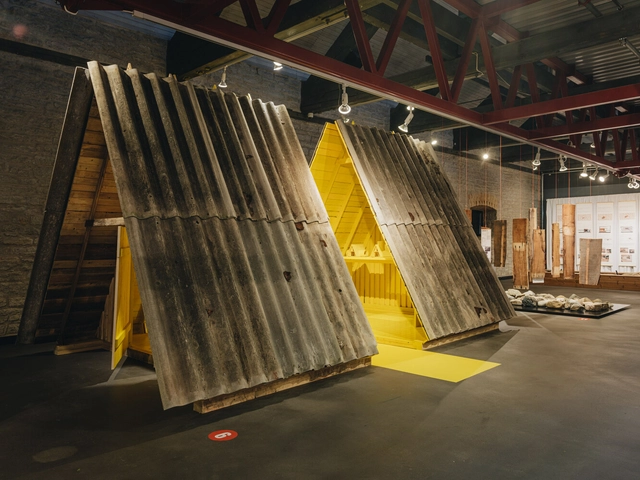
The circular economy, including the reuse of building materials, is fast becoming a key component in the fight against carbon emissions. This involves designing to minimize waste and utilize materials that can be reused at the end of the building's life. On the opposing side, the reuse of materials from partially or wholly demolished buildings can also reduce waste and carbon emissions that would have resulted from using virgin materials. Sustainability purposes aside, the reuse of building materials has a centuries-old history, both for symbolic reasons and simply out of necessity.

Modern Spolia: Harvesting Building Materials from Demolition Sites - Image 1 of 4Modern Spolia: Harvesting Building Materials from Demolition Sites - Image 2 of 4Modern Spolia: Harvesting Building Materials from Demolition Sites - Image 3 of 4Modern Spolia: Harvesting Building Materials from Demolition Sites - Image 4 of 4Modern Spolia: Harvesting Building Materials from Demolition Sites - More Images+ 8

OMA Unveils Hillside Redevelopment Project in Busan, South Korea

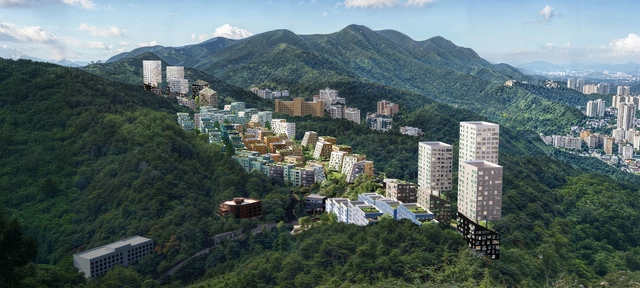
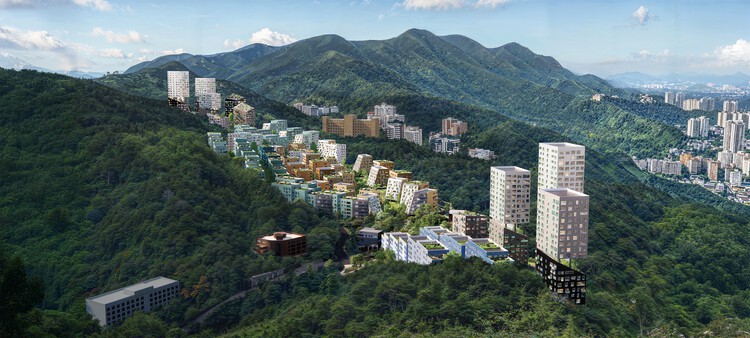
The Busan Slope Housing project by OMA addresses urban redevelopment on the steep hillsides of Busan, South Korea, drawing on the city's topographical complexity and historical settlement patterns. Developed in collaboration with the Busan Architecture Festival and the Department of Housing and Architecture, the project explores strategies to rethink hillside neighborhoods while responding to both contemporary housing needs and the social and spatial legacies of these areas. Rather than replacing these areas with conventional high-rise estates, OMA envisions a flexible, context-responsive framework that integrates contemporary housing typologies with the site's inherited structure.

OMA Unveils Hillside Redevelopment Project in Busan, South Korea - Image 1 of 4OMA Unveils Hillside Redevelopment Project in Busan, South Korea - Image 2 of 4OMA Unveils Hillside Redevelopment Project in Busan, South Korea - Image 3 of 4OMA Unveils Hillside Redevelopment Project in Busan, South Korea - Image 4 of 4OMA Unveils Hillside Redevelopment Project in Busan, South Korea - More Images+ 4

Focused on Future Resources, the Tallinn Architecture Biennale 2024 Opens in Estonia

Tallinn Architecture Biennale 2024 has officially opened to the public. Hosted at the Museum of Estonian Architecture and across multiple venues in the center of the city, the event is centered around the theme "Resources For a Future." The head curator Anhelina L. Starkova along with co-curators Daniel A. Walser and Jaan Kuusemets hope to open up conversations about emerging approaches to designing and building architecture, including the potential of reused and repurposed materials. The event is held between October and November 2024, with free participation.

Focused on Future Resources, the Tallinn Architecture Biennale 2024 Opens in Estonia - Featured ImageFocused on Future Resources, the Tallinn Architecture Biennale 2024 Opens in Estonia - Image 1 of 4Focused on Future Resources, the Tallinn Architecture Biennale 2024 Opens in Estonia - Image 2 of 4Focused on Future Resources, the Tallinn Architecture Biennale 2024 Opens in Estonia - Image 3 of 4Focused on Future Resources, the Tallinn Architecture Biennale 2024 Opens in Estonia - More Images+ 12

Cobe's Creative Reuse Strategy Set to Transform Tallinn's Industrial Site into a New City District

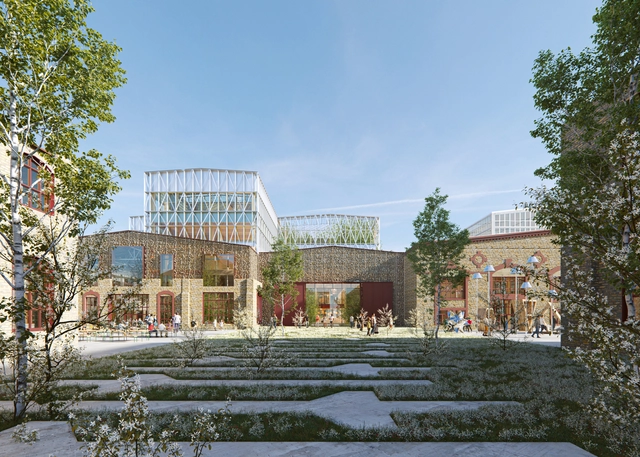
Danish architecture firm Cobe has announced a new project to transform the historic 'Krulli' steelworks, a large-scale former industrial site in Estonia's capital, into a mixed-use city district. The strategy for the project is developed to optimize for material reuse, as materials, components and even entire buildings have been evaluated for their potential to be reintegrated into the scheme. This way, the decommissioned industrial area provides the foundation for an innovation hub, maintaining its history while adapting to the necessities of modern workspaces and city life.

Cobe's Creative Reuse Strategy Set to Transform Tallinn's Industrial Site into a New City District - Image 1 of 4Cobe's Creative Reuse Strategy Set to Transform Tallinn's Industrial Site into a New City District - Image 2 of 4Cobe's Creative Reuse Strategy Set to Transform Tallinn's Industrial Site into a New City District - Image 3 of 4Cobe's Creative Reuse Strategy Set to Transform Tallinn's Industrial Site into a New City District - Image 4 of 4Cobe's Creative Reuse Strategy Set to Transform Tallinn's Industrial Site into a New City District - More Images+ 5

Architectural Salvage: Cultural Hotspots using Adaptive Reuse

Subscriber Access | 

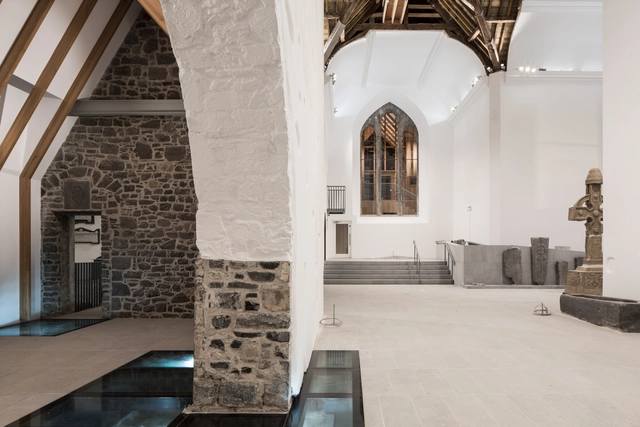
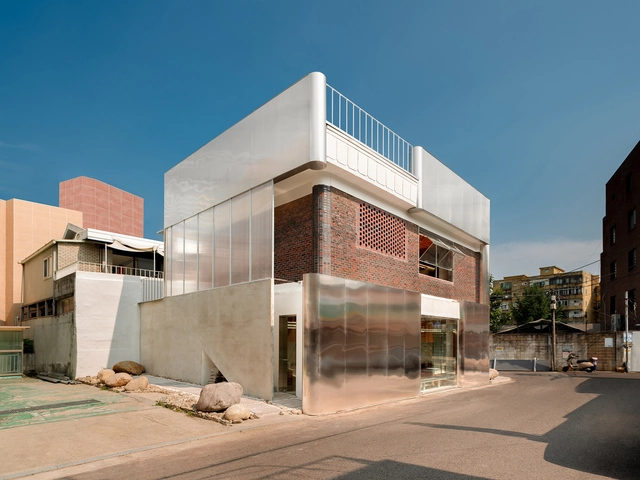
The dawn of the Anthropocene has thrown the idea of adaptive reuse into the limelight: effectively the pinnacle of urban regeneration and revitalization. It utilizes the presence of existing buildings with historic and cultural value and re-purposes them to be functional. Essentially a form of architectural salvage; a sustainable and viable means of rebuilding.

Recent events such as the pandemic has highlighted inequalities in our cityscape, the inadequate segments in a state of disuse and disrepair. Adaptive reuse can replenish these areas and create new cultural hotspots, encouraging activity and creating vibrant and healthy mixed-use environments.

Below is a diverse selection of cultural hotspots using Adaptive Reuse

Architectural Salvage: Cultural Hotspots using Adaptive Reuse  - Image 1 of 4Architectural Salvage: Cultural Hotspots using Adaptive Reuse  - Image 2 of 4Architectural Salvage: Cultural Hotspots using Adaptive Reuse  - Image 3 of 4Architectural Salvage: Cultural Hotspots using Adaptive Reuse  - Image 4 of 4Architectural Salvage: Cultural Hotspots using Adaptive Reuse  - More Images+ 10

10 Architectural Projects that Give New Life to Recycled Doors and Windows

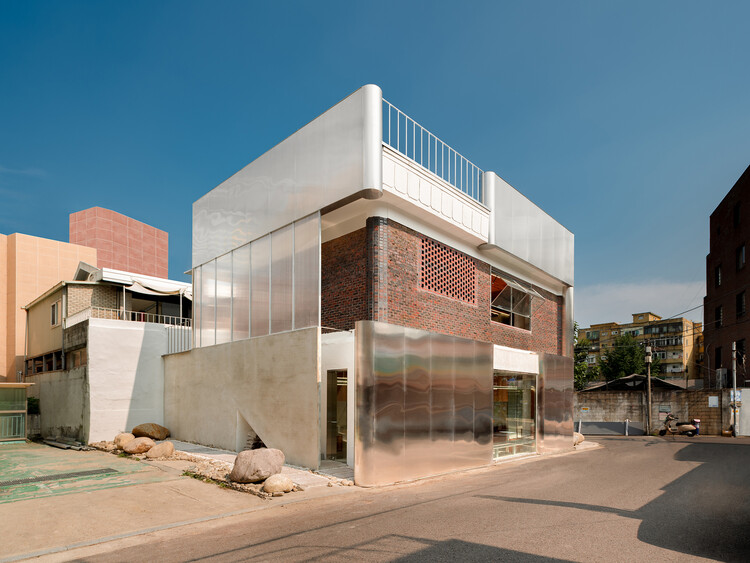
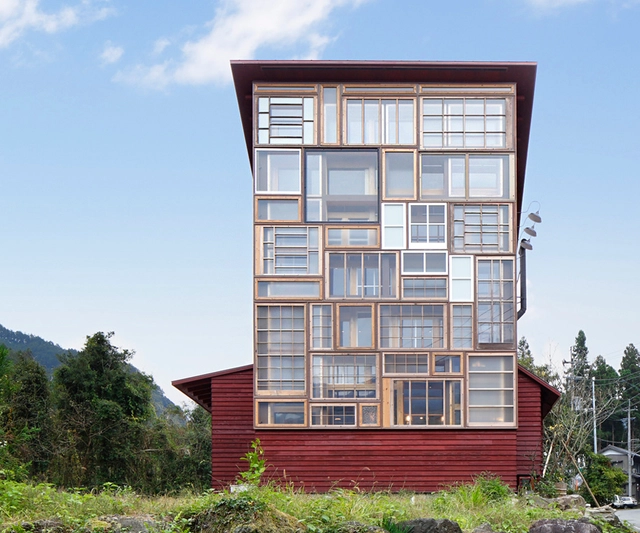
When a material runs its course and becomes obsolete, whether because of wear and tear, a change of style, a tear-down, or a remodel, many are tempted to simply toss it into a scrap heap and send it to the landfill. In the grand majority of cases, however, these materials can be repaired, recycled, and reused in a vast array of creative endeavors. Of course, depending on the material and its characteristics, this can also present a challenge. In the case of windows and doors, particular care must be taken to keep them intact throughout the dismantling or demolition process and even afterwards, an inspection may be necessary to determine their viability for future use. Of course, many avoid the path of re-utilization altogether and opt for new materials that make for an easier and more uniform project.

Three Projects That Transform Low-Tech Materials Into Innovative Design

Subscriber Access | 

The following article is presented by Materials, ArchDaily's new US product catalog.

How many times in the last year have you heard 3d printing mentioned? What about double-skinned curtain walls or “smart” buildings? High-tech materials almost always seem to dominate the conversation - at least in architectural circles. But using the latest invention in material technology usually does not make a building “innovative.” More often than not, it just makes it expensive and flashy.

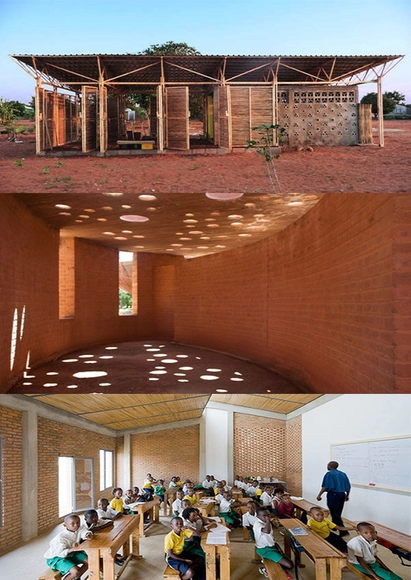
Low-tech materials like lumber, stone and brick, on the other hand, are often overlooked, even though the use of local and locally produced materials offers the lowest possible carbon footprint. And while these common materials may seem boring, with a bit of imagination and technical skill, an architect can transform these materials into something fresh. With that in mind, check out three truly innovative projects which use low-tech materials in different and exciting ways.

The 100 Mile House: Innovative 'Locatat' or Just Plain Loca?

Subscriber Access | 
The 100 Mile House: Innovative 'Locatat' or Just Plain Loca? - Image 2 of 4

If you could construct your house out of materials made, recycled, or found within 100-miles of your lot, would you? And if you did, would you feel proud that you never once stepped into The Home Depot? Would you tout the fact that you took an environmental stand, that you did your bit to help the world?

Would you have?

As we mentioned in February, The Architecture Foundation of British Colombia has launched a competition to construct the 100-mile House. Inspired by the 100-mile Diet of locavore fame, in which you only eat what is grown or harvested within 100 miles of your home, the 100-mile house challenges you to construct historically, “using only materials and systems made/ manufactured / recycled” within a 100 mile radius.

But is this method truly better for the environment? Or just another example of pretentious pseudo-greenery?

More after the break…