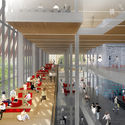
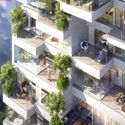
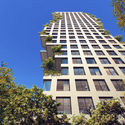
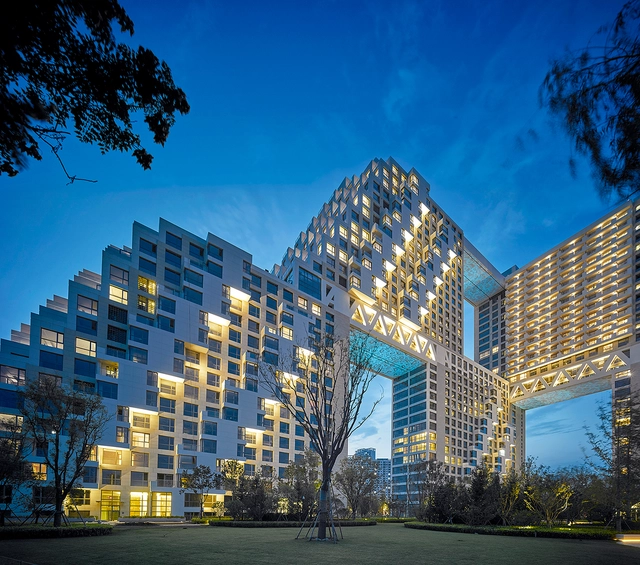
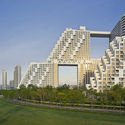
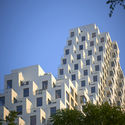
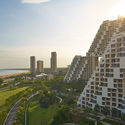
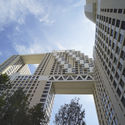
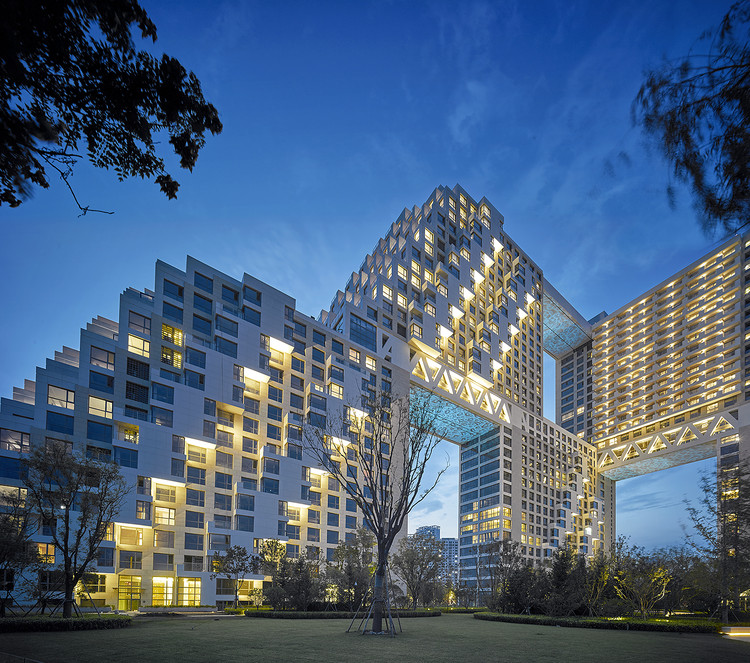
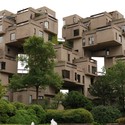
By now an architectural classic, Safdie’s Habitat ’67 represents a highly influential vision for a community-oriented, nature-infused urban housing model, and at the same time, a critical example of the possibilities of prefabrication. Fifty years after the design of Habitat ’67, Safdie is still exploring this vision of urban living, further developing the concept with projects such as Altair Residences, Qorner Tower and Habitat Qinhuangdao. Rooted in the architect’s motto - “for everyone a garden”, the new projects capitalise on outdoor terraces, natural light and ventilation, as well as communal spaces.
“We need a new spatial contract." This is the call of Hashim Sarkis, curator of the Venice Biennale 2021, as an invitation for architects to imagine new spaces in which we can live together. Between a move towards urban flight and global housing crises, the growth of more low-rise, dense developments may provide an answer in the countryside. Turning away from single family homes in rural areas and suburbs, modern housing projects are exploring new models of shared living in nature.
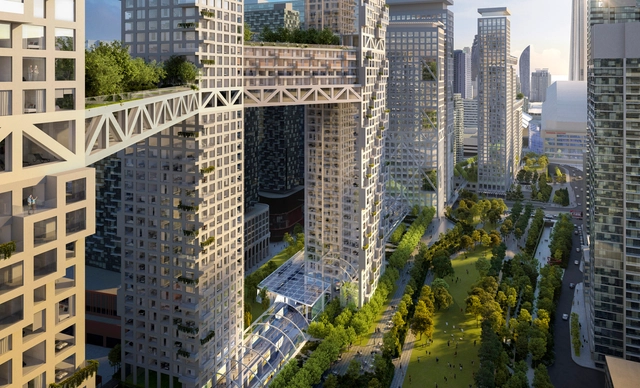
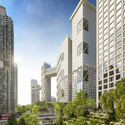
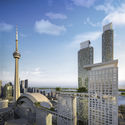
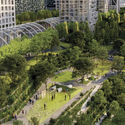
Safdie Architects have released the images of 'ORCA Toronto', a mixed-use urban development with an integrated park in the heart of downtown Toronto. The project covers 6.5 hectares (65,000 sqm) west of the CN Tower, 4.5 hectares (45,000 sqm) of which are dedicated to the publicly-accessible urban park, while 2 hectares (20,000 sqm) are for residential, commercial, retail, and transit facilities. The proposed project reconnects the downtown area to the city’s waterfront, promising to become a vital hub that animates the underutilized parts of the city.
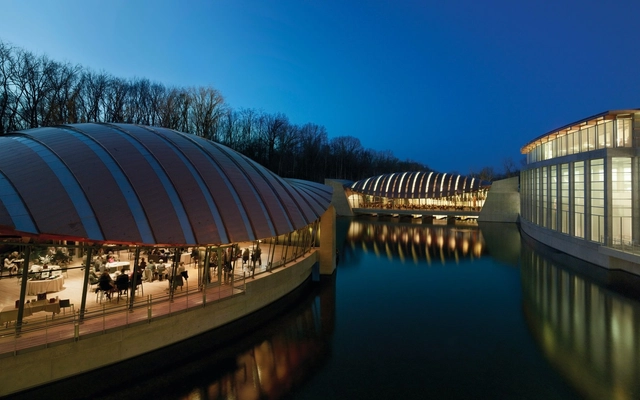
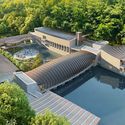
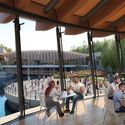
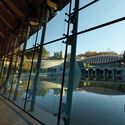
Crystal Bridges Museum of American Art has announced plans for a major expansion by Safdie Architects in Arkansas. The new addition will increase the size of the current facilities by 50 percent, adding nearly 100,000 square feet to the 200,000-square-foot facility. The expansion will showcase the museum's growing collection and provide space for educational and outreach initiatives, cultural programming, and community events.
A new webcast and podcast series, Design Disruption, has been launched by architectural writer Sam Lubell and social entrepreneur Prathima Manohar. In a partnership with ArchDaily, the first episode today at 11 am (EST) on ArchDaily, YouTube and Facebook. This episode explores high density housing with guests Moshe Safdie, founder of Safdie Architects, and Ma Yansong, founder of MAD architects. The goal of the series is to provide an international perspective on disruptive issues with guests from different continents.
Design:ED Podcast is an inside look into the field of architecture told from the perspective of individuals that are leading the industry. This motivational series grants unique insight into the making of a successful design career, from humble beginnings to worldwide recognition. Every week, featured guests share their personal highs and lows on their journey to success, that is sure to inspire audiences at all levels of the industry. Listening to their stories will provide a rare blueprint for anyone seeking to advance their career, and elevate their work to the next level.
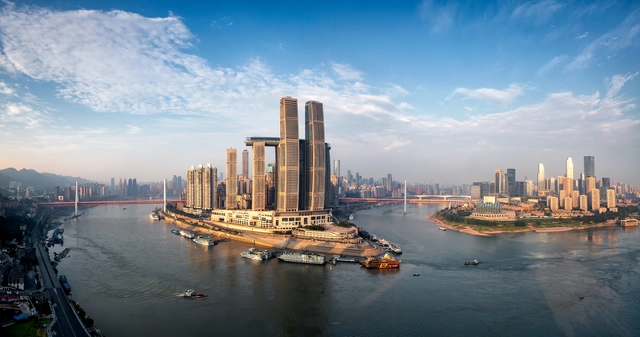
In this episode, host Aaron Prinz speaks with Chris Mulvey, Managing Principal of Safdie Architects. Chris provides the podcast with an inside look into the design of Raffles City Chongqing, what it is like to work side-by-side with Moshe Safdie, and the firm’s unique approach to architecture as a global design firm.
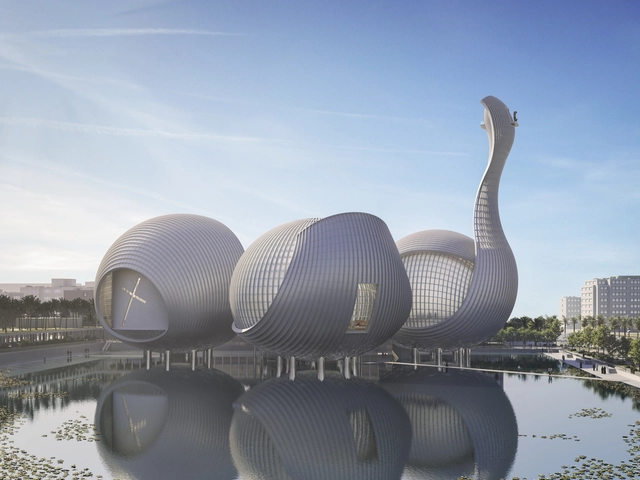
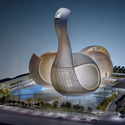
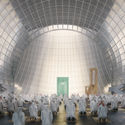
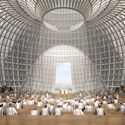
Safdie Architects’ entry for the Abrahamic Family House competition located in the Saadiyat Island Cultural District, in Abu Dhabi, brings together a mosque, a synagogue, and a church within a shared public park.
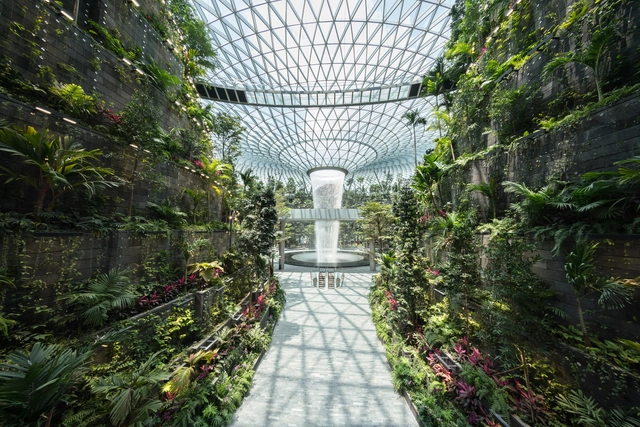
Jewel Changi Airport. Image Courtesy of Changi Airport Devt.
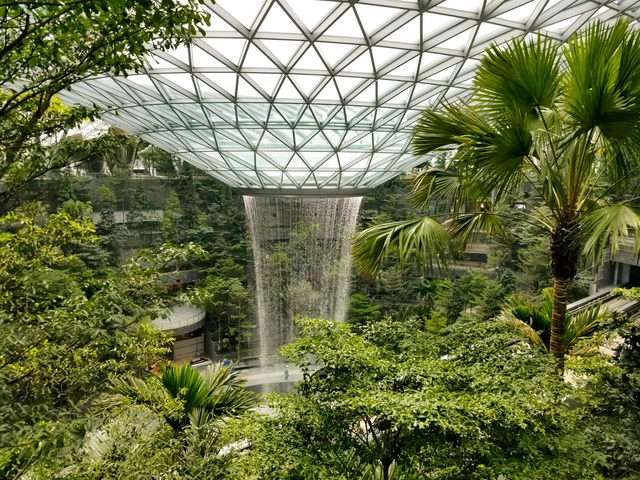
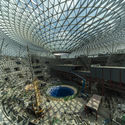
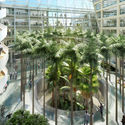
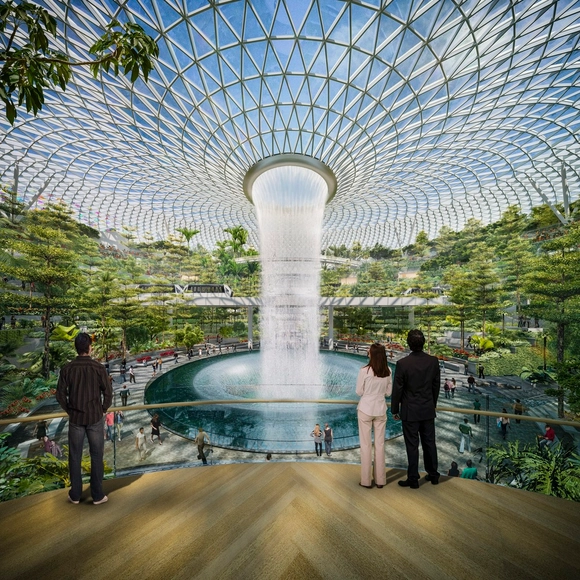
Safdie Architects has completed construction of the world's tallest indoor waterfall in Singapore's Jewel Changi Airport. Featuring a lush indoor forest and a green trail of airport amenities, the Jewel Changi Airport was designed to reinvent the concourse as a public attraction. The project was built with a torus-shaped glass dome the includes an oculus at its center. Dubbed the Rain Vortex, the oculus allows water to cascade into the airport.
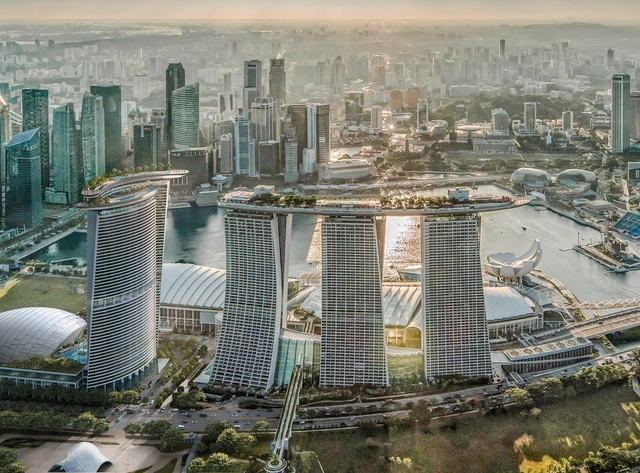
Safdie Architects have announced an expansion to the Marina Bay Sands Resort in Singapore. Linking to the existing resort and waterfront development, the project takes cues from the original three hotel towers completed in 2011. Safdie Architects will expand the existing resort with a new stand-alone hotel tower with about 1,000 suites and its own sky roof and swimming pool, as well as a 15,000-seat music arena.
Safdie Architects have published an update of their iconic Jewel Changi Airport, as construction continues in Singapore. Featuring the world’s tallest indoor waterfall, a lush indoor forest, and a green trail of airport amenities, the scheme is set to open on April 17th of this year.
Jewel Changi Airport seeks to reinvent the public concourse not just as an in-between space for travelers, but as a major public attraction. Public transit form the city passes through the city and the large garden and shopping space within the central dome establishes it as a node for public gathering. In the future, an event space on the north side of the park will host public events for up to 1000 people.
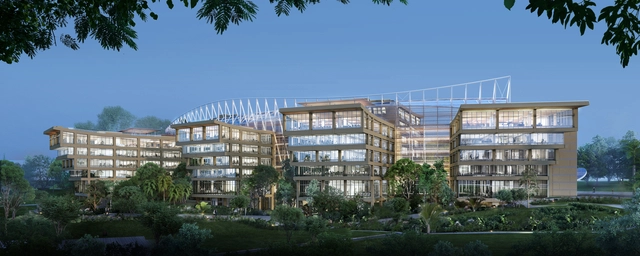
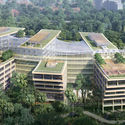
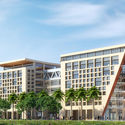
Safdie Architects have unveiled details of their proposed corporate headquarters for Surbana Jurong in Singapore. The scheme seeks to reflect the mission of Surbana Jurong (Singapore’s leading architecture, urban design, and infrastructure firm) of characterizing Singapore as the “Garden City.” Located on a previously undeveloped site, the campus will “integrate harmoniously with its natural landscape” while also offering over 740,000 square feet of space for the firm’s 4000 employees. The scheme marks the first initiative for the Safdie Surbana Jurong joint venture, which was established in 2017 to develop innovative and iconic projects in Asia-Pacific.
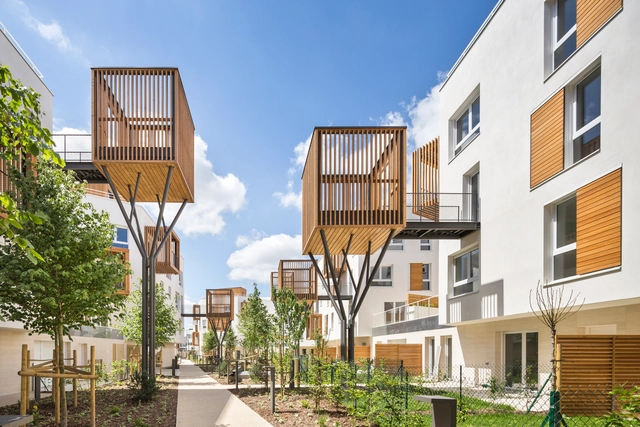
The scheme manifests as a series of treehouse-like pavilions united by a central pedestrian “street,” all shaped by a careful examination of, and respect for, the site’s existing trees and unique flora. The result is a distinctive network of offices embedded within surrounding parkland, with the glazed pedestrian street interweaving interior and exterior landscapes.
Airport architecture is a complex typology in which to innovate. Restrictive technical, security, and circulatory requirements force designs along limited (and precedented) paths; little budget is left over to create space for respite, let alone beauty.
Which makes the central space of Safdie Architect's design for Singapore's Changi Airport all the more unusual. Jewel Changi Airport reinvents the public concourse not just as an in-between space for travelers, but as a major public attraction. Public transit form the city passes through the city and the large garden and shopping space within the central dome establishes it as a node for public gathering. In the future, an event space on the north side of the park will host public events for up to 1000 people.
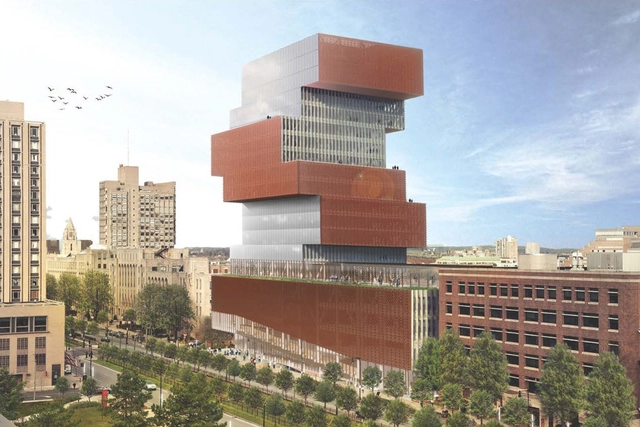
Data Sciences Center. Image Courtesy of KPMB Architects
KPMB Architects have released a design to construct a 17-floor tower for Boston University's new Data Sciences Center. Located on the university’s main Charles River campus, the project will become the tallest building at the university. The vertical design was made to bring together the mathematics, computer science and statistics departments under one roof. Overlooking the Boston skyline and the Charles River, the stacked design will become a new landmark for Boston University.
Safdie Architects have released their design for ‘Quorner’, a new residential tower to be built in Quito, Ecuador. The 24-storey structure, a collaboration with Ecuadorean construction firm Uribe & Schwarzkopf, is to be one of Quito’s tallest buildings and Safdie’s first in Ecuador.
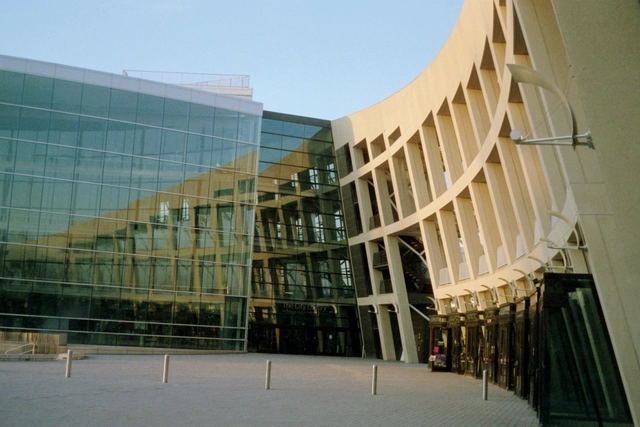
Last week, Boise City Council unanimously approved world-renowned Safdie Architects to lead the local design team for the new cultural and civic center in downtown Boise. The center will expand the main library and bring it into the 21st century as well as becoming the new home for Boise Department of Arts & History that will house a performing arts venue for 400 capacity, gallery, and retail space.
Theorist, architect, and educator Moshe Safdie (born July 14, 1938), made his first mark on architecture with his master's thesis, where the idea for Habitat 67 originated. Catapulted to attention, Safdie has used his ground-breaking first project to develop a reputation as a prolific creator of cultural buildings, translating his radicalism into a dramatic yet sensitive style that has become popular across the world. Increasingly working in Asia and the Middle East, Safdie puts an emphasis on integrating green and public spaces into his modernist designs.
The world’s largest indoor waterfall is currently being built in Singapore’s new Jewel Changi Airport extension. Designed by Safdie Architects, the spheroid-shaped dome will be a new luxury lifestyle destination for one of the world’s busiest airports and is a feat of engineering and sustainability. At approximately 134,000 sqm in size, the Jewel offers a range of facilities including airport services, indoor gardens, shopping and leisure attractions – including a canopy park in the upper levels of the dome.The 40m-tall waterfall is designed by water design firm WET, whose commissions include the Bellagio fountains and Burj Khalifa. Dubbed the Rain Vortex, the ambitious cascade will be the centerpiece for the project’s “Forest Valley” urban garden.


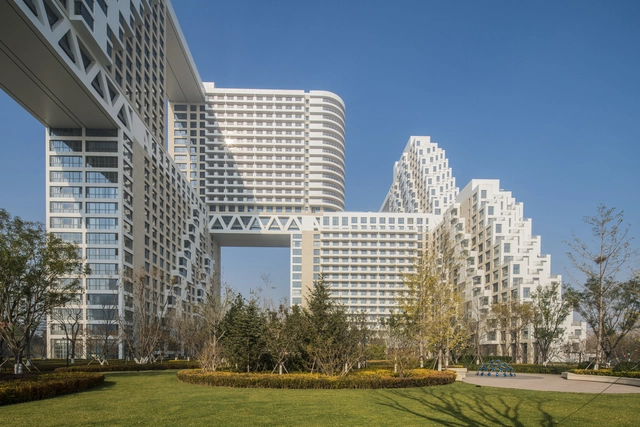














.jpg?1546710149 "© Safdie Architects")

.jpg?1546710181 "© Safdie Architects")